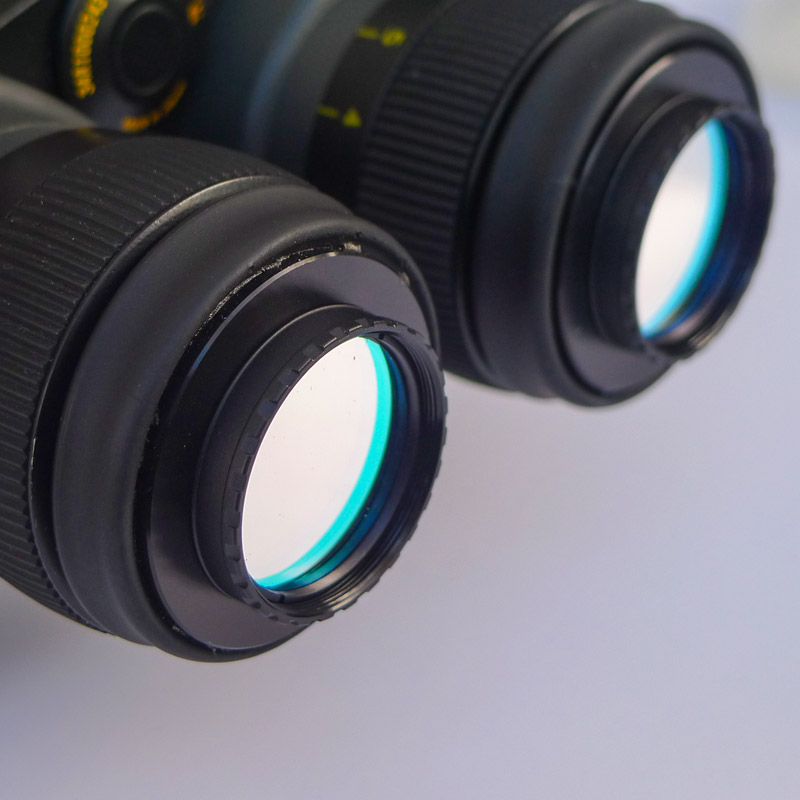
Die neue Generation von CMOS-optimierten Baader Filtern zeichnet sich aus durch:

CMOS-optimierte Baader Filter
- erhöhter Kontrast, abgestimmt auf typische CMOS-Quanteneffizienz und s/n-Verhältnis
- Reflex-Blocker™-Beschichtungen, für größtmögliche Unempfindlichkeit gegen Retro-Reflektion von nächstgelegener Hilfspoptik, auch unter widrigsten Bedingungen
- identische Filterdicke zu bestehenden Standards, mit größter Sorgfalt bezügl. Homofokalität
- geschwärzte Ränder rundum, mit Filter-Frontseiten-Indikator in Form eines teleskopseitigen schwarzen Außenrandes, um zusätzlich jegliche Reflexion durch auf den Filterrand fallendes Licht zu vermeiden
- jedes Filter individuell feinoptisch poliert und beschichtet, mit versiegeltem Beschichtungsrand (NICHT aus einer größeren Platte herausgeschnitten – mit dadurch freiliegenden Beschichtungsrändern mehr dazu siehe hier)
- Life-Coat™: nochmals härtere Beschichtungen, um eine alterungsbeständige Beschichtung über eine unbegrenzte Lebensdauer zu ermöglichen – selbst bei widrigsten Umgebungen
Weitere Informationen, Testberichte und Bildergebnisse finden Sie hier:

Zum Unterschied CMOS- / CCD-Filter
Die völlig neu konstruierten, CMOS-optimierten Filter arbeiten hervorragend mit allen bestehenden Kameratechnologien, seien es CMOS- oder CCD-Chips.. Allerdings – wer CCD-Kameratechnik besitzt, wird mit unseren bisherigen, extrem preisgünstigen, CCD-Schmalbandfiltern weiterhin hervorragend arbeiten können. Aber "Das Bessere ist des Guten Feind".
UV/IR-Cut / L-Filter 50x50mm – CMOS-optimiert
Produktdaten
- Artikelnummer2961575
- EAN Code4047825048332
- HerstellerBaader Planetarium
- Nettogewicht (kg)0.02
Verwendung & Eigenschaften
- AnwendungsartCMOSCCDIR-SperrLuminanzUV-Sperr
- Besondere MerkmaleCMOS-optimiert mit Life-Coat™
- Einzeln oder im Set?Einzelfilter
Optische Eigenschaften
- Durchlassbereich420 – 685 nm
- FiltertypBandpass
- Geeignet für Öffnungsverhältnisf/15 bis f/1,8
- Vergütung (Entspiegelung)Reflex-Blocker™ hartvergütetplanoptisch poliert
- ZWL (Zentralwellenlänge)UV/IR-Cut
Mechanische Eigenschaften
- Filterdicke (ohne Fassung)3 mm
- Filterfassungungefasst
- Filterformquadratisch
- Filtergröße50 x 50 mm
Empfohlene Blog-Beiträge





Customer Reviews
Top customer reviews
Good quality and great support
The filter is of good quality. Also, I wasn’t sure about availability of the filter and delivery options. Customer support helped me with that.
Good quality
Lack of technical specifications and documentation, e.g. design temperature.
Works as intended
I've bought this filter and the UV bandpass filter so I can take UV and VIS images with my adapted camera. It works really nice, nothing to complain.

Thanks for your kind review. We do indeed offer our UFC Universal Filter Changer System.
Please check out the following GIF which is example setup of a UFC system mounted on a camera lens with M72 thread (the example shows an unmounted 50x50 filter slider, other sliders are available as well): https://assets.baader-planetarium.com/media/extendware/ewimageopt/media/inline/ca/1/baader-ufc-universal-filter-changer-5cd.gif
Filters the UV and IR so that I can still use my modified camera as a regular one
I now connect it using a step down ring, so when I switch between UV and VIS it is a bit of a hassle. Probably there is a slide in filter system available that solves this issue. I might not be the only one, if this exists a hint on the webpage would be great. This isn't something directly related to the product, so still 5/5.
Beautifully engineered filters to use in
The long story short goes like this: we needed an UV cut filter with a cut-off wavelength in range of 400-420nm. The issue was we needed the filter at an "impossible" size, of precisely 5.6mm diameter. Luckily for us, the 39mm diameter, 0.55mm thick UV/IR cut filter from Baader was thin enough so we could cut it ourselves to measure. Although we do not encourage anybody to cut /shape the filters themselves (it's tedious, highly time-consuming process) the end result was a precise 5.6mm UV cut filter that we could finally mount in our UV fluorescence photography setup. The filter itself performs flawlessly to its purpose but that is quite expected when it comes to Baader filters, right?
The results:
Attached is an animated GIF. The first shot of a 1000x150 mm rock sample is taken in visible light, the second one in UV light with Baader UV/IR Cut Filter. On the sample there are 3 veins saturated with crude oil. In visible light, those crude oil veins appears dark brown (surrounded by the light grey rock background). In UV fluorescence, the crude oil appears yellowish - brown (while the rest of the rock sample appears deep blue), that is the classic oil UV fluorescence signature. The scans are not actually a single picture, but they were obtained by stitching together slices representing about 5mm of sample (about 200 pictures stitched together to cover the entire 1m length of the sample - our setup does this automatically, virtually in real-time).
The third frame of the GIF is a detail picture (mostly purple) that shows how that UV picture would look like WITHOUT Baader UV cut filter. As we can see, the faint fluorescence light we’ve seen in the UV scan is overpowered by the reflected 365nm UV excitation light so a UV cut filter to eliminate the reflected excitation light is critical.
Thank you, Baader Planetarium for bringing quality products to the market!
P.S.: Attached is also a detail snapshot of the camera setup. The actual camera is the one surrounded by 4 LED (those 4 LEDs are for taking pictures in visible light) while next to the camera there is a black disk made out of ZWB2 (365nm filter) that covers the UV light source (a Nichia 365nm high power UV LED). The overall setup details are available here:
https://www.roscientific.com/miniperm.html
Many thanks for the kind review! We would like to add, that the mention 39mm diameter (0,55mm thick) UV/IR Cut filter was already also a custom production for a research project and is not for sale regularly. We're glad that you were able to modify it further to fit your needs.
It was exactly what we needed, when we needed. Thank you, Baader Planetarium!
There is nothing to dislike. The filter does precisely what it was meant to.
Macht was er soll
Ein Filter, der tut was er soll. Er leistet seinen Beitrag zu scharfen Sternabbildungen oder detailreichen Jupiterfotos. Ich möchte ihn nicht missen.
tu was er soll
-
FAQ - Team Baader / 25. November 20221 Antwort
Anonymous / 16. März 2022
Waqas Ahmad / 10. Oktober 20161 Antwort