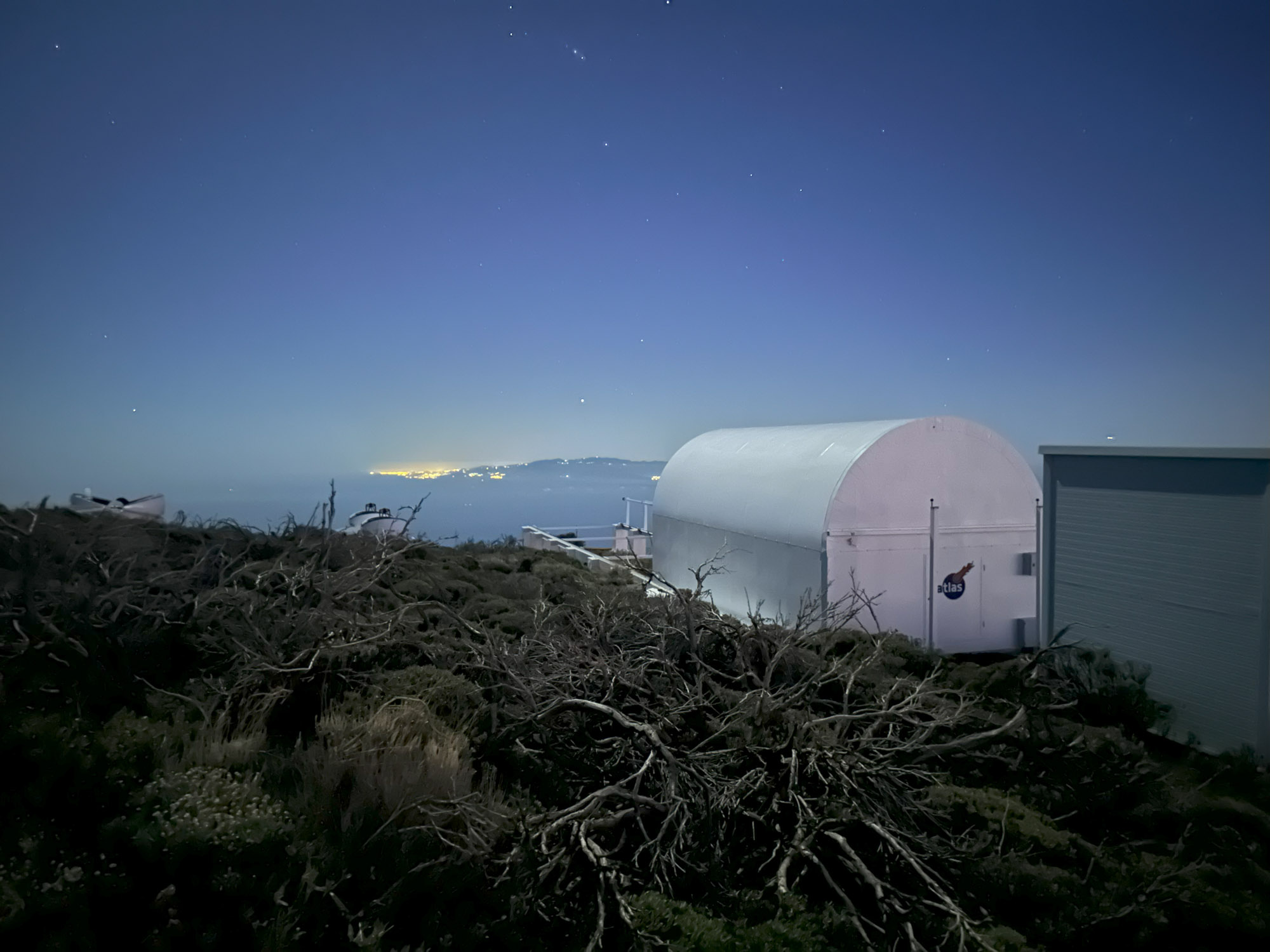

In January 2025, we completed a special and long-planned project: the comprehensive implementation of the ATLAS-Teide network at the Instituto de Astrofísica de Canarias (IAC). ATLAS (Asteroid Terrestrial-impact Last Alert System) is an internationally established early warning system for the detection of near-Earth asteroids, operated by the University of Hawaii and funded by NASA. This network serves to identify potentially dangerous objects at an early stage, thus making a significant contribution to global safety.
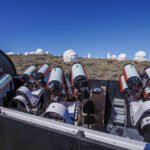 IAC – Atlas-P New Generation
 Discover this Telescope Installation with a detailed customer review on our world map - First of all I would like to thanks all the Baader team that made a wonderful work. This includes the effort and work done for the prototype, the tendering process and the installation of the final ATLAS-Teide unit. ATLAS-Teide is… » Read full review
From Prototype to Large-Scale Project
Originally, the IAC on Tenerife began with a prototype designed to demonstrate that commercially available components (so-called COTS – “Components off the Shelf”) could be used for a telescope network of this kind – and at a significantly lower cost (see also Atlas-P the First Module Prototype of the New Generation of Atlas Units). The success of this prototype led to a longer tender phase in which various providers presented their solutions. Eventually, Baader Planetarium was awarded the contract for the entire project.
Before all components were shipped to Tenerife, we carefully inspected each individual part in Mammendorf to ensure everything worked smoothly and was prepared for the challenging conditions on the Izaña Plateau. Only then did we pack the components and prepare them for transport. Once we received confirmation that all parts had arrived safely and cleared customs, they were taken to the IAC facility – ready for our assembly teams.
Four Mounts, Sixteen Telescopes
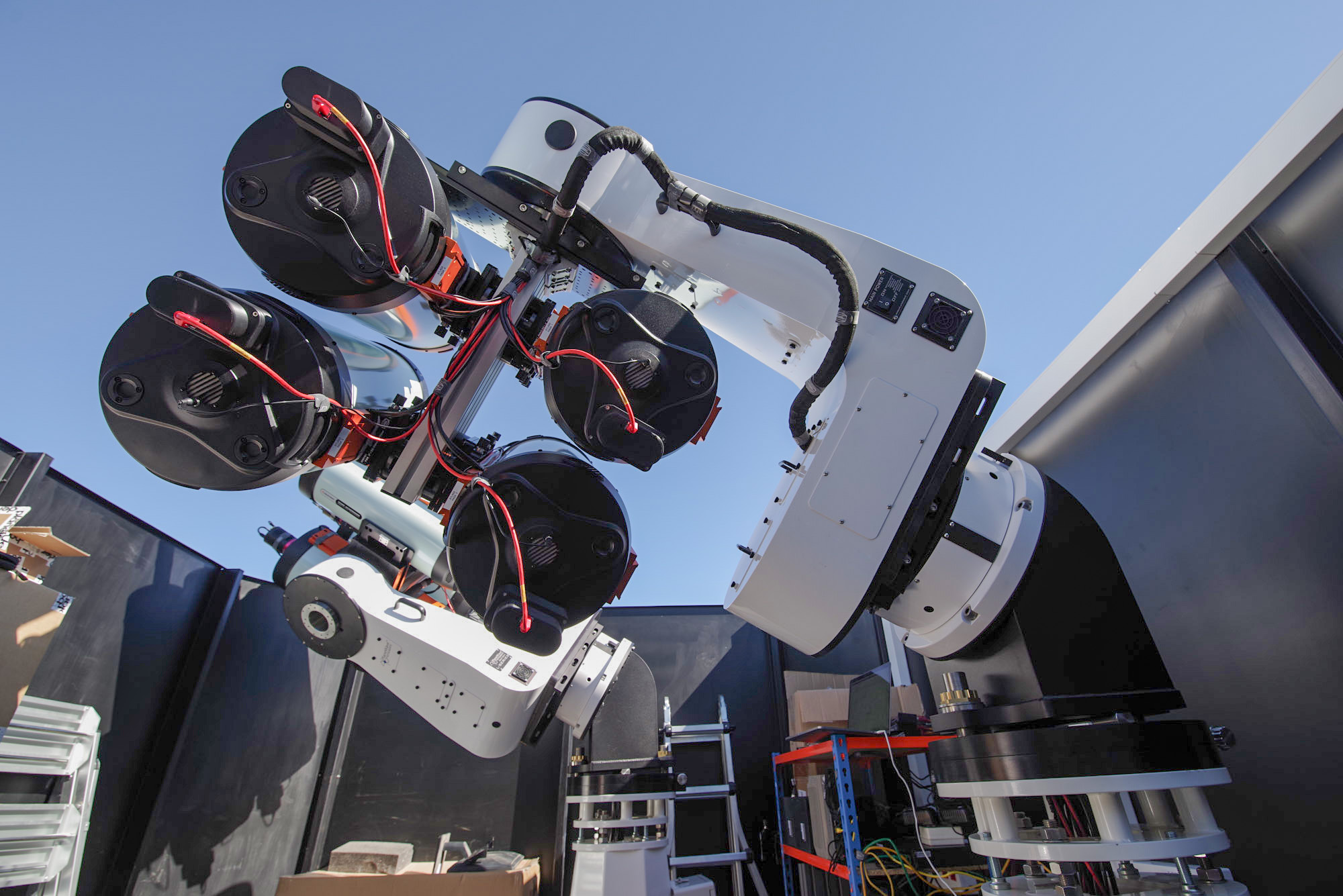
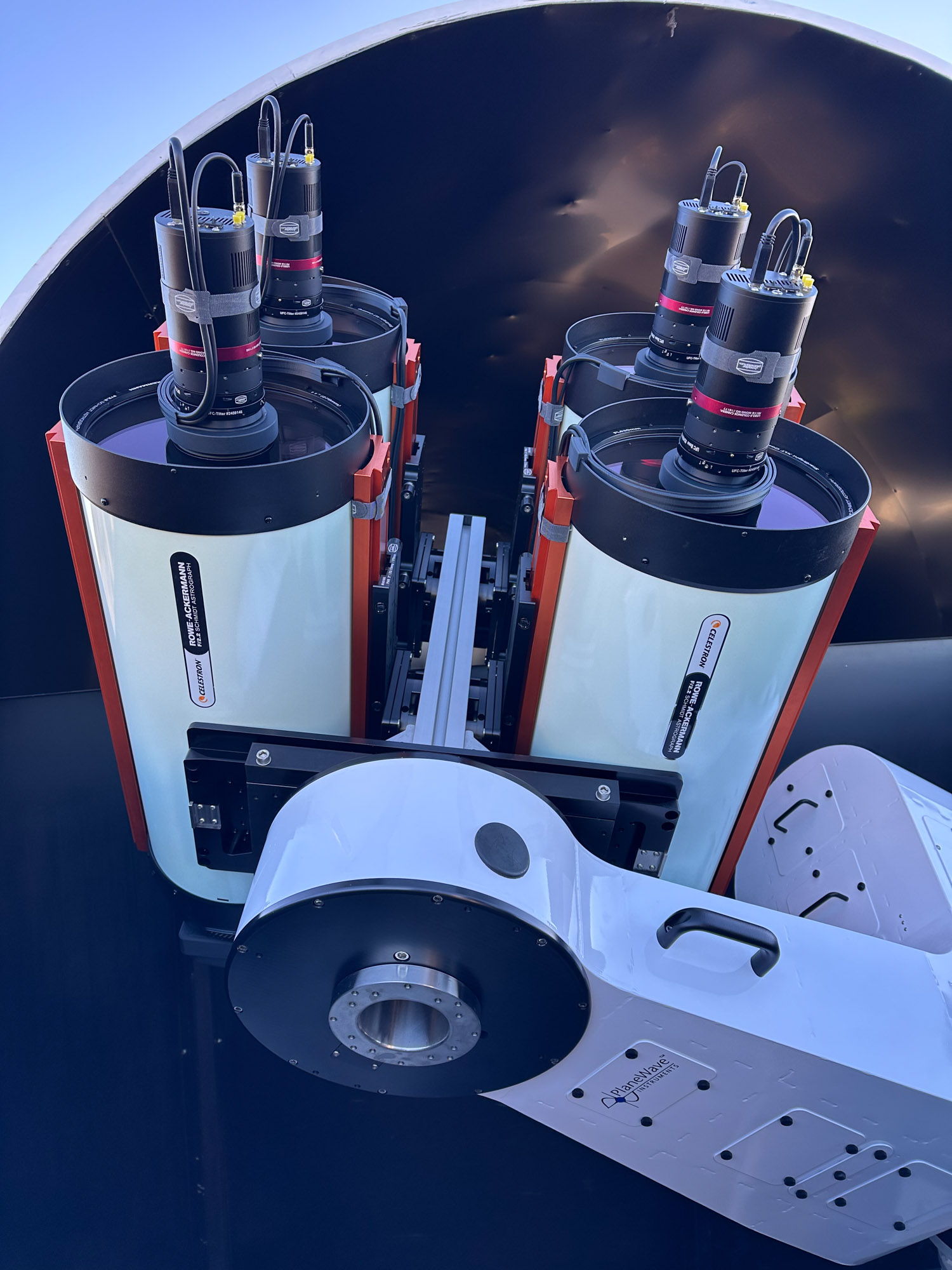
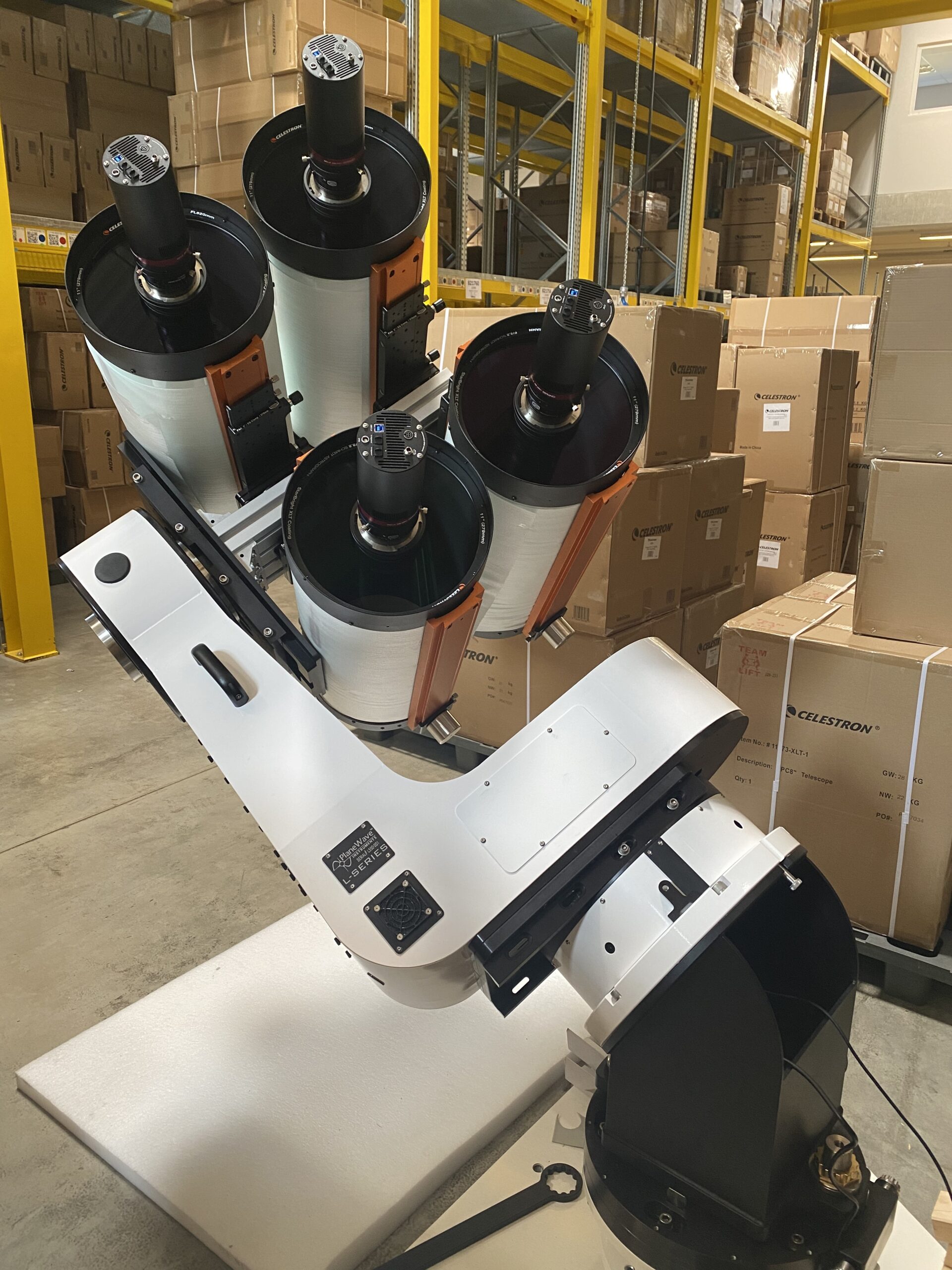
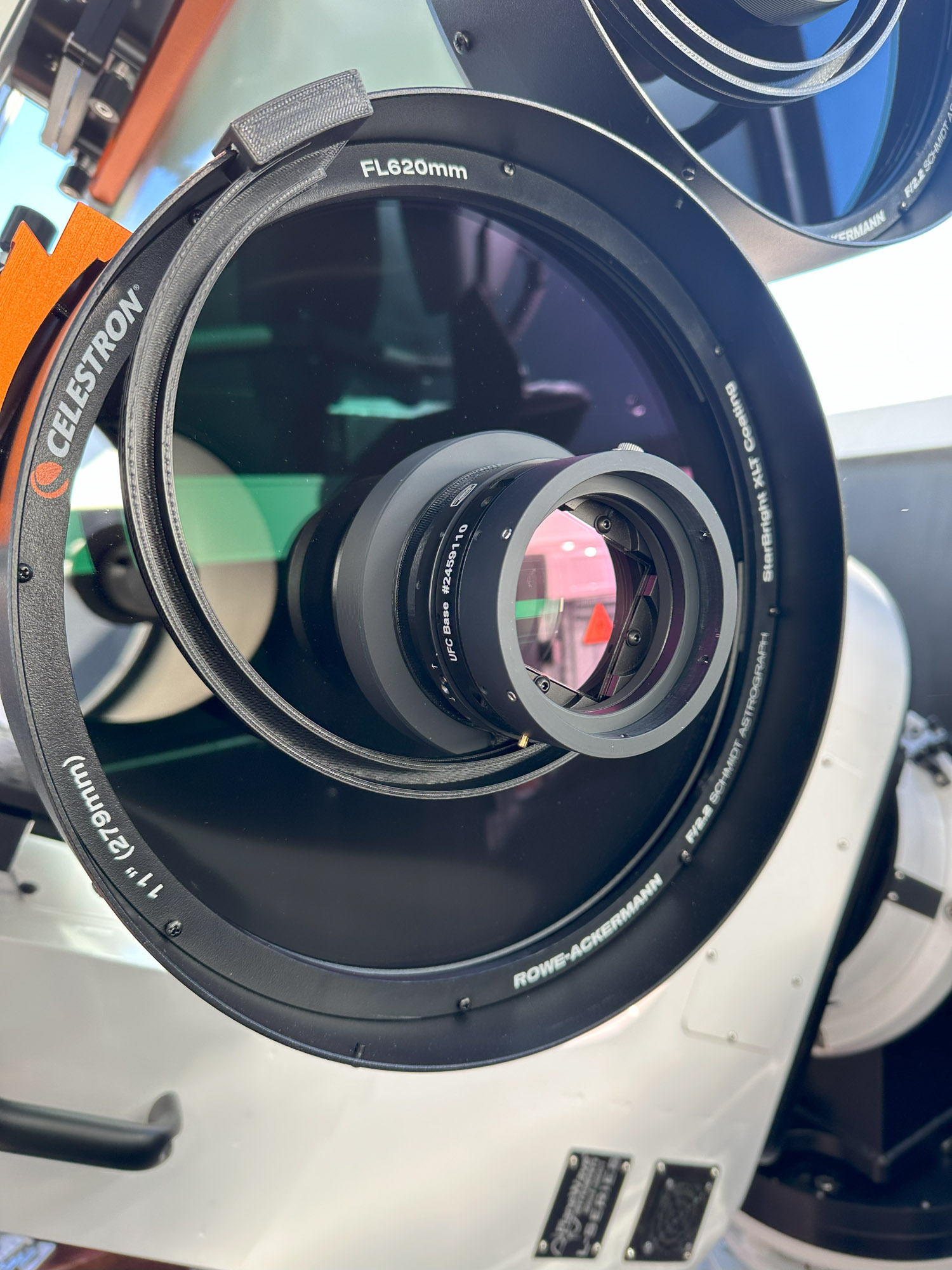
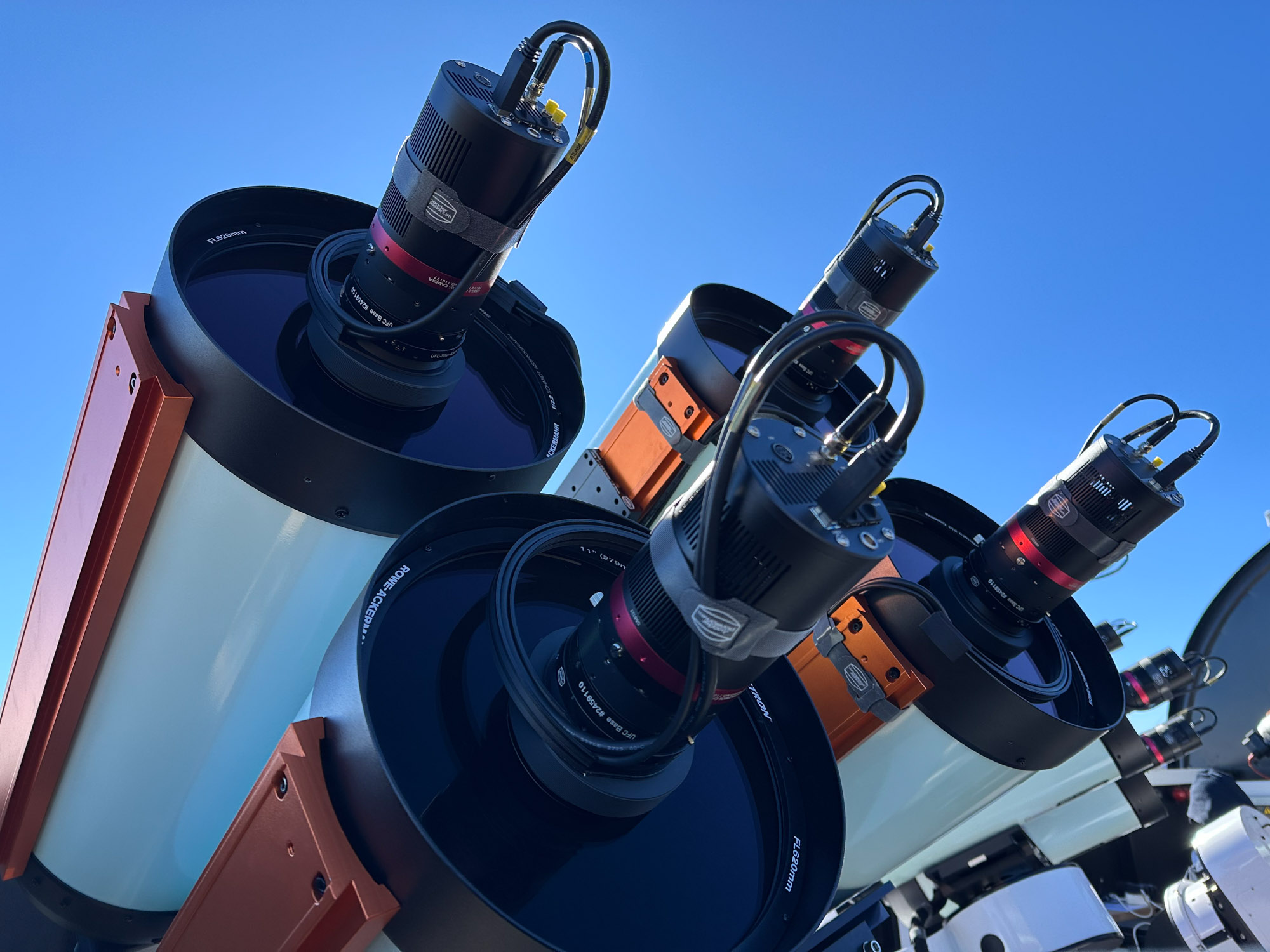
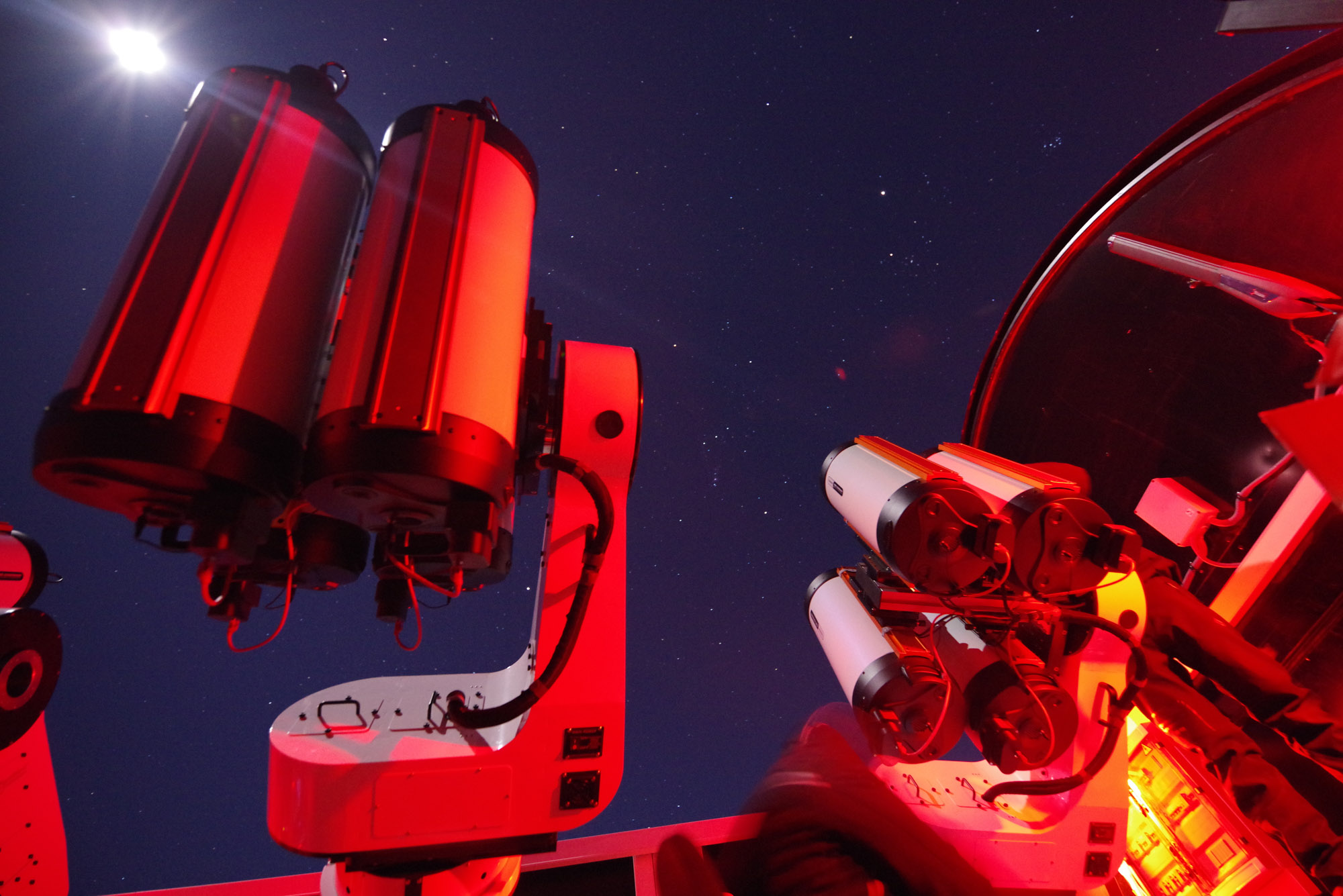
The core of the system consists of four specially manufactured PlaneWave L-550 mounts, whose dimensions match the well-known L-500, but they are fitted with the powerful motors and load capacity of the L-600. Each of these mounts carries four Celestron RASA 11" telescopes, resulting in a total of 16 units. Each is equipped with QHY 600M PRO I BSI Cooled Camera (#1931560 , € 10050,- ) and UFC filter drawers holding UV/IR filters, enabling highly efficient sky surveying.
Focusing of the telescope systems is provided by 16x Steeldrive II Motor Focuser with Controller (#2957165 , € 665,- ) .
Custom Adaptations
To achieve this combined telescope performance, we developed our own massive holding and alignment structure. Each of these special constructions is equipped with four of our
PAN 3" / EQ Dual clamp, 370mm (Losmandy/Vixen)
(#2451565 ,
€
315,-
)
, which in turn carry the four telescopes.
At the telescope aperture, each unit features a 3D-printed cable guide, and for the focus motors, we produced custom housings on our 3D printers.


Installation in Record Time
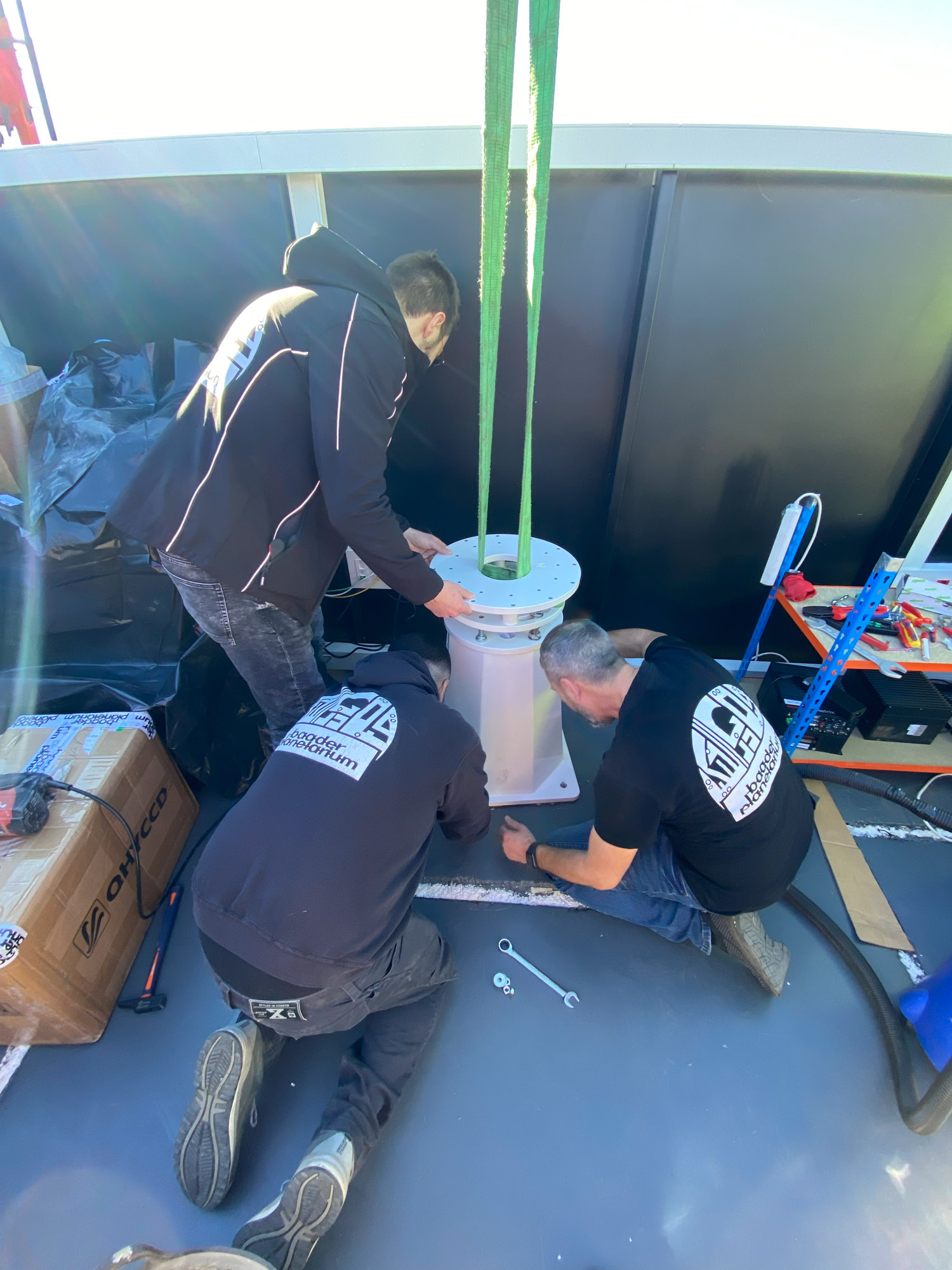
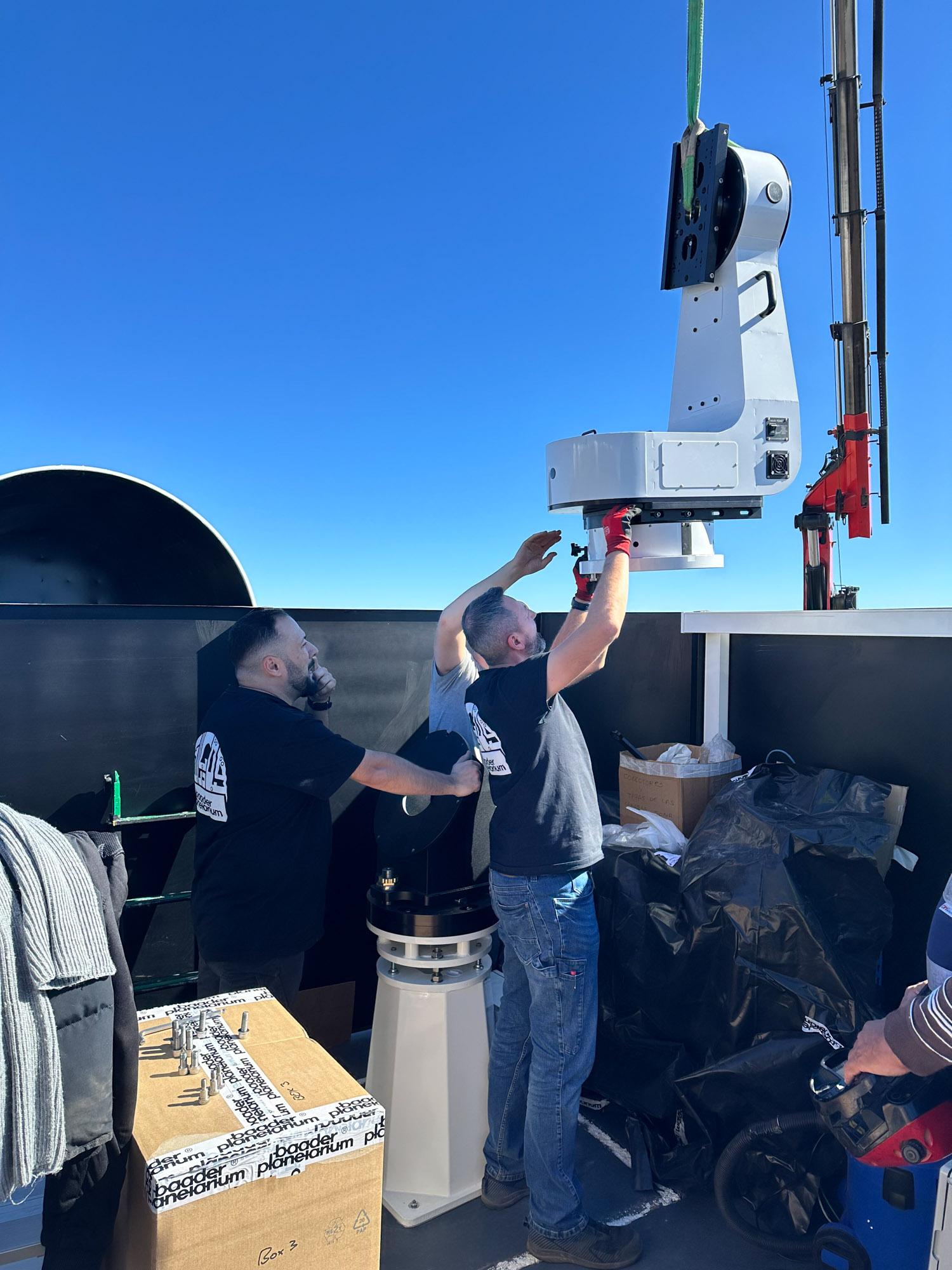
Nine days were scheduled for the complete setup—from delivery to commissioning. On the very first day, all pillars, flanges, altitude wedges, and mounts for the four systems were hoisted into the station by crane and installed.
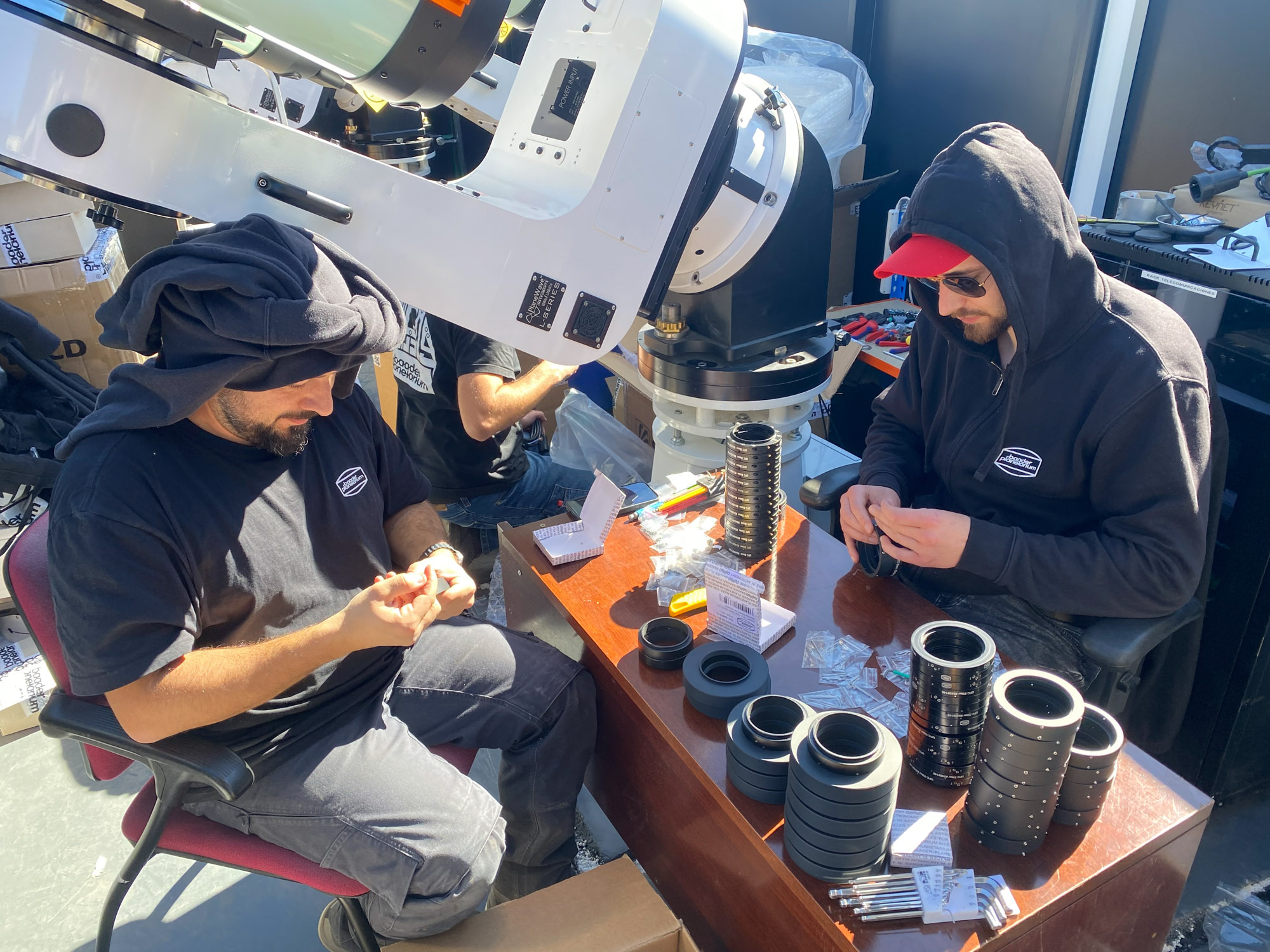
On the second day, the installation of the specially developed telescope mounts (including PAN-Adjuster – for adjusting the optical axis of parallel mounted telescopes (#2451515 , € 1185,- ) and the aforementioned PAN EQ clamps) as well as the first four RASA 11" optics took place. In the following days, we positioned the remaining RASA 11 telescopes and aligned them on the star. Our team then tackled the extensive cable management, laying the 16 cables per system so they would not hinder the mount’s movements.
Particular care was taken to separate data lines for the QHY cameras from power lines in order to reduce signal noise while maintaining the mount’s freedom of movement.


First Light and Data Volumes
After this work was completed, the “First Light” followed. With the help of UFC-Tilter (0 - 1° image correction) – Optical height: ca. 10 mm (#2459146 , € 276,- ) , we spent three nights aligning the cameras precisely to the optical axes of the respective telescopes. This ensured that all 16 units delivered the same outstanding image quality. Such fine adjustment is especially important for scientific projects to achieve uniform, reproducible results across the entire field.
All systems ran almost simultaneously, and the result was extremely impressive. The IAC uses a custom-developed, Linux-based software solution capable of controlling all 16 cameras in parallel. This generates enormous data volumes, which can be processed simultaneously using a powerful GPU-based system at the IAC.


A Major Step for Global Asteroid Early Warning
The ATLAS-Teide project significantly expands the existing ATLAS network. The fact that multiple telescopes now simultaneously cover the same area of the sky allows for faster and more precise detection of potentially hazardous objects. At the same time, this project illustrates how efficiently astronomy systems can be realized when custom adaptations are intelligently combined with COTS components.
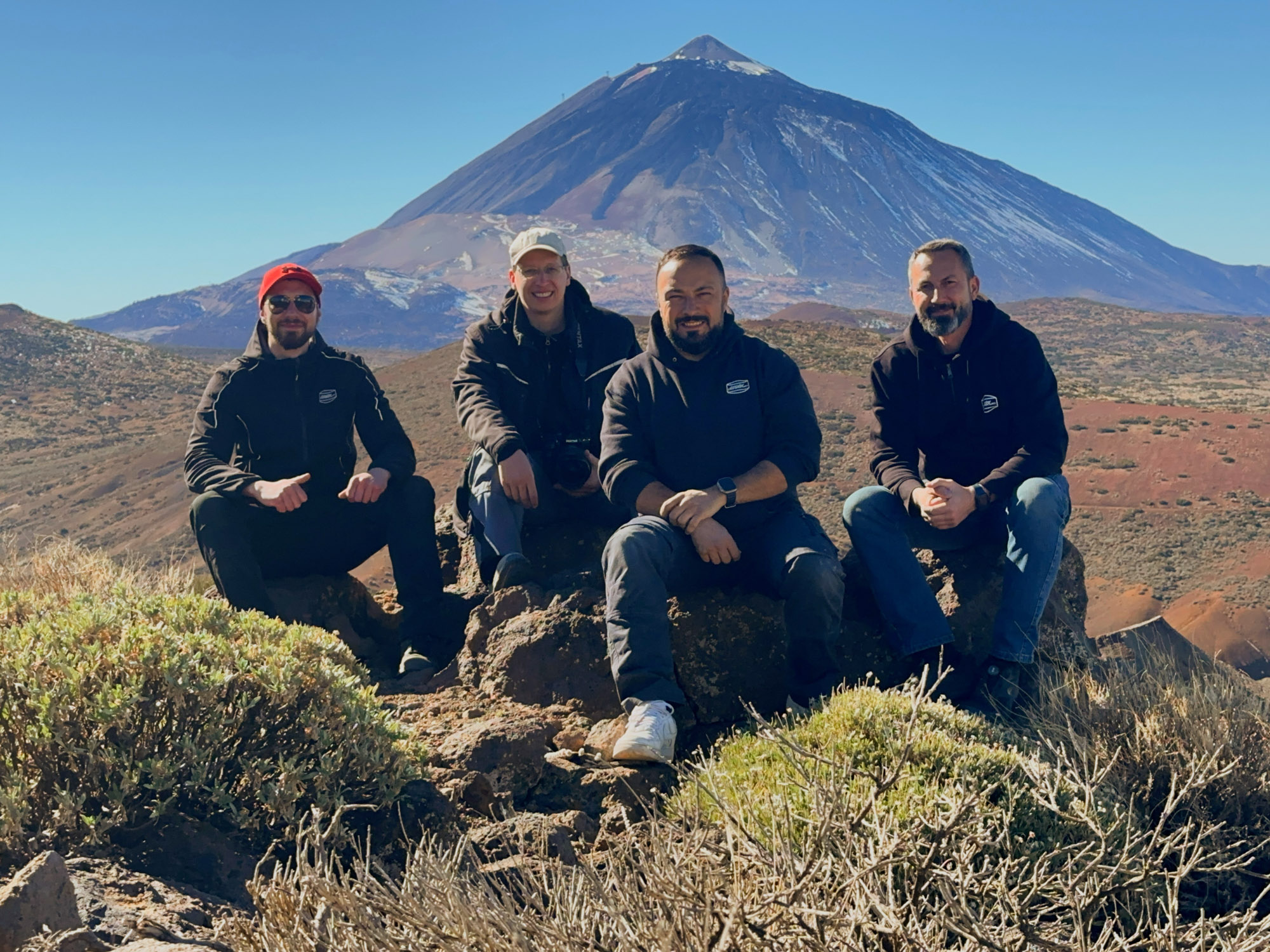
We are pleased that Baader Planetarium was chosen to carry out this extensive project.