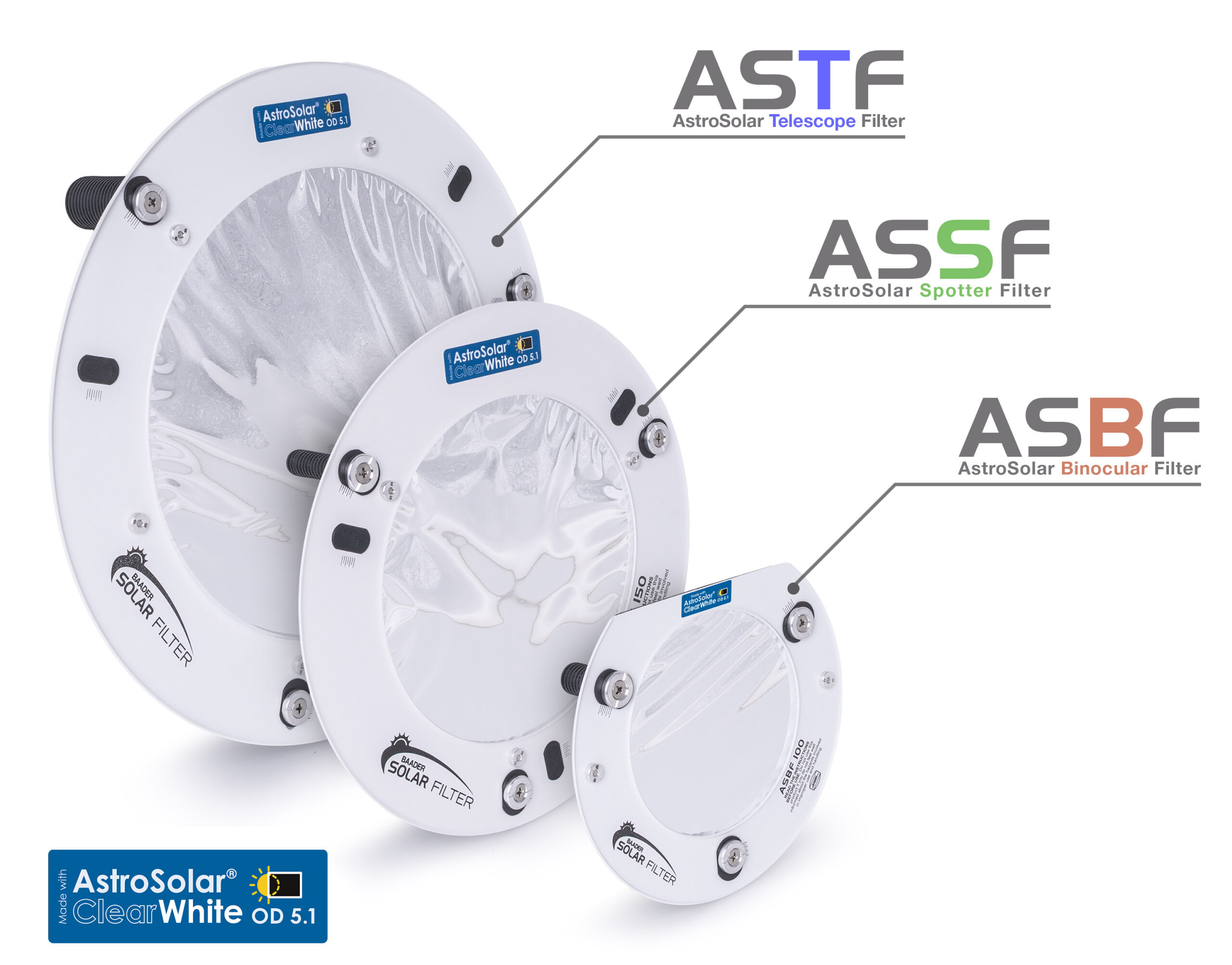
In mid-June 2026, I received an email from Baader asking whether I would be interested in testing the new AstroSolar® ClearWhite Safety Film OD 5.1 (100x50, 117x117cm) (various versions available) . Since I had repeatedly written field reports on Baader products for amateur solar observing over the past 25 years, I agreed, and a delivery from Baader arrived one week later.
Why introduce a film with OD 5.1 for visual solar observing instead of the proven AstroSolar® film with optical density (OD) 5.0 used by many solar observers? According to my online research, the EN ISO 12312-2:2015 standard has apparently existed since 2015. This standard defines the stringent requirements that filters must meet to protect the eyes safely from hazardous radiation during direct observation of the Sun. Such filters must block visible light, UV-A, UV-B and infrared radiation almost completely. Light transmission must be below 0.001% (OD 5.0). I therefore assume that Baader had to change to an optical density of 5.1 in order to meet the transmission requirements.
Optical density is a dimensionless quantity that indicates the ratio of incident to transmitted light intensity (transmission = T). Examples: an optical density of 1.0 results in a transmission of 10%, while an optical density of 2 results in 1%. OD 5.0 results in a transmission of 0.001%, while OD 5.1 results in a transmission of 0.0008%. Filter technology also uses another quantity known as neutral density (ND), which is used to specify the transmission of neutral-density filters. Anyone interested in the relationship between optical density, transmission and neutral density will find a useful overview here. So much for the theory.
Setup and Conditions
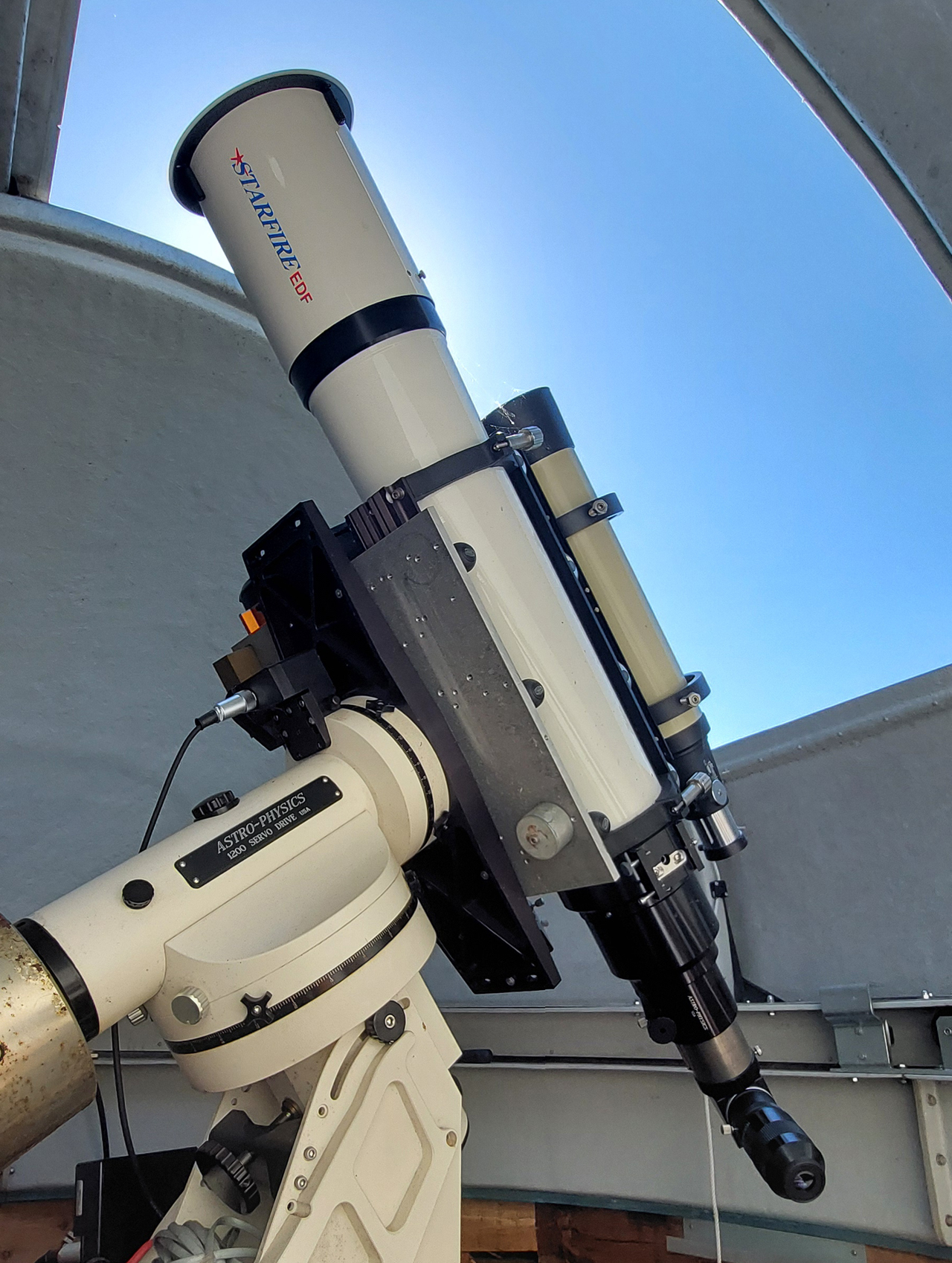
For the test, I used my Astro-Physics 155 mm refractor, which has served me reliably for solar observing for many years, not only in white light but also for photographic observations in H-alpha and calcium light (CaK). It has a focal length of 1200 mm, corresponding to a focal ratio of f/8. Nagler eyepieces with focal lengths of 20 mm (60x) and 10 mm (120x) were used for visual observation.
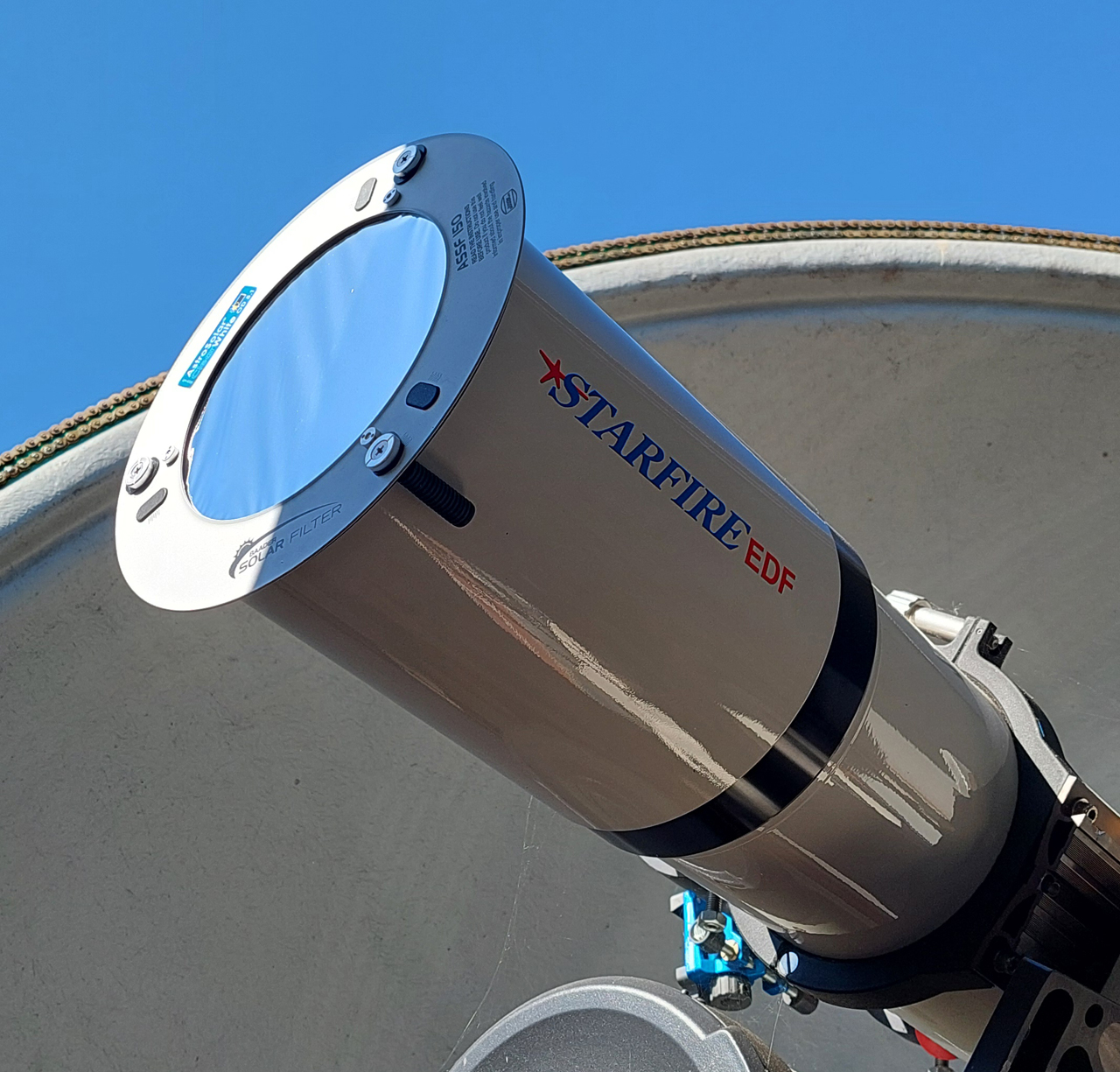
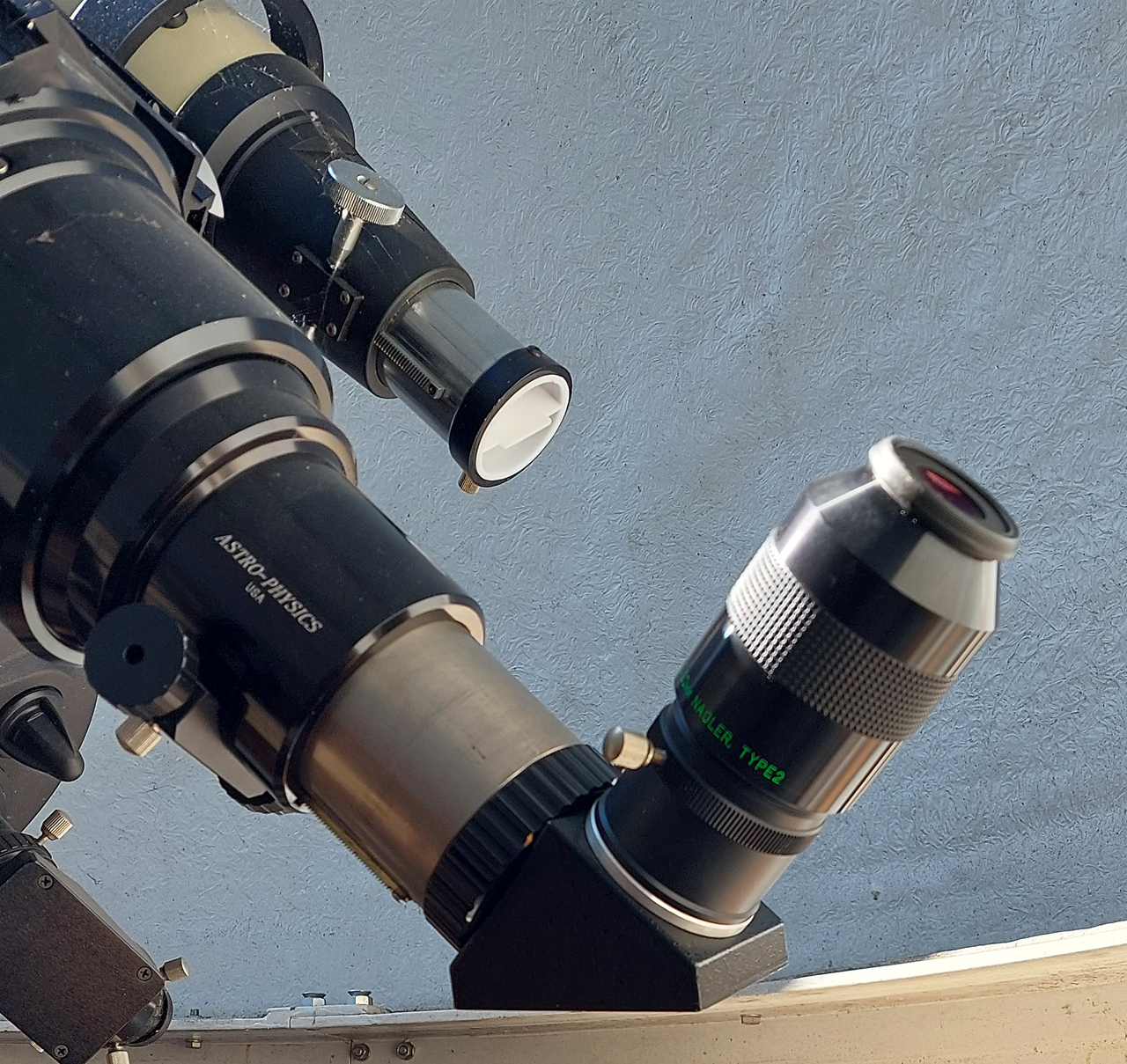
The test observations took place on 11 and 12 July. Solar activity was low on both days, with only a single sunspot (AR 4482) and a smaller sunspot group (AR 4485) near the western limb of the Sun. Seeing conditions were also less than optimal because of the second heatwave of the year, but there were sufficiently calm periods to assess the optical quality.
Practical Test
At 60x magnification, the AP refractor shows the entire Sun. The image is genuinely pure white, and the Sun’s limb darkening is clearly visible. The single sunspot shows strong contrast between the dark umbra and the brighter penumbra. Light bridges, penumbral filaments and small pores near AR 4482 stand out clearly against the solar surface. During periods of better seeing, the granular structure of the solar granulation practically “jumps out” at the observer.
The group AR 4485 near the limb appears with high contrast and is surrounded by facular regions that resolve into individual fibrous structures at 120x magnification.
So far, so good—and excellent. I also have the previous film with an optical density of 5.0, and thanks to the mounting frame, the film could be exchanged quickly. I could not detect any difference in optical imaging quality between the two films. The image produced by the new film appeared only minimally darker than with the previous version, so the overall visual impression remained consistently good and sharp.
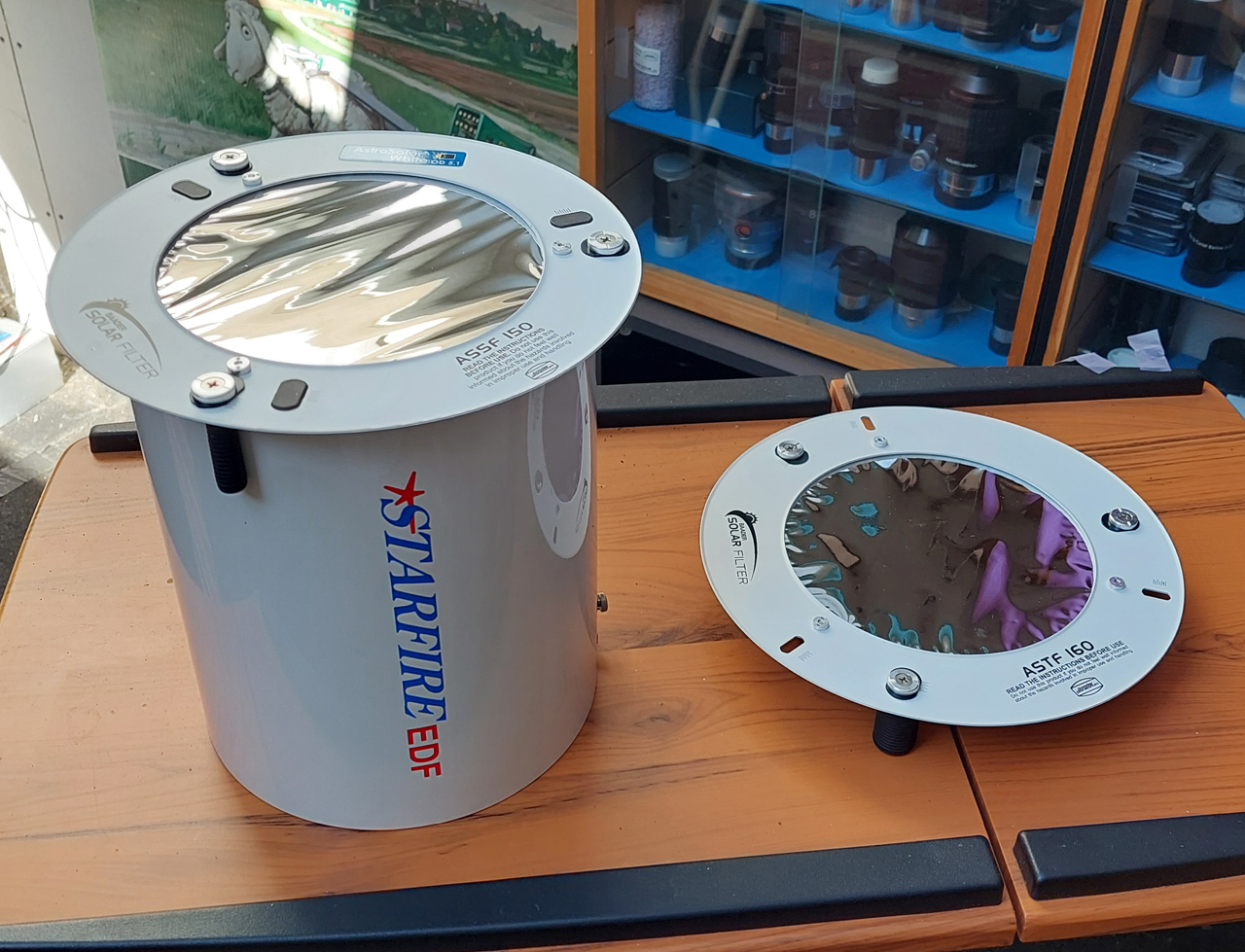
All of the following images, except for the H-alpha image, were captured using the new AstroSolar® ClearWhite Safety Film OD 5.1.
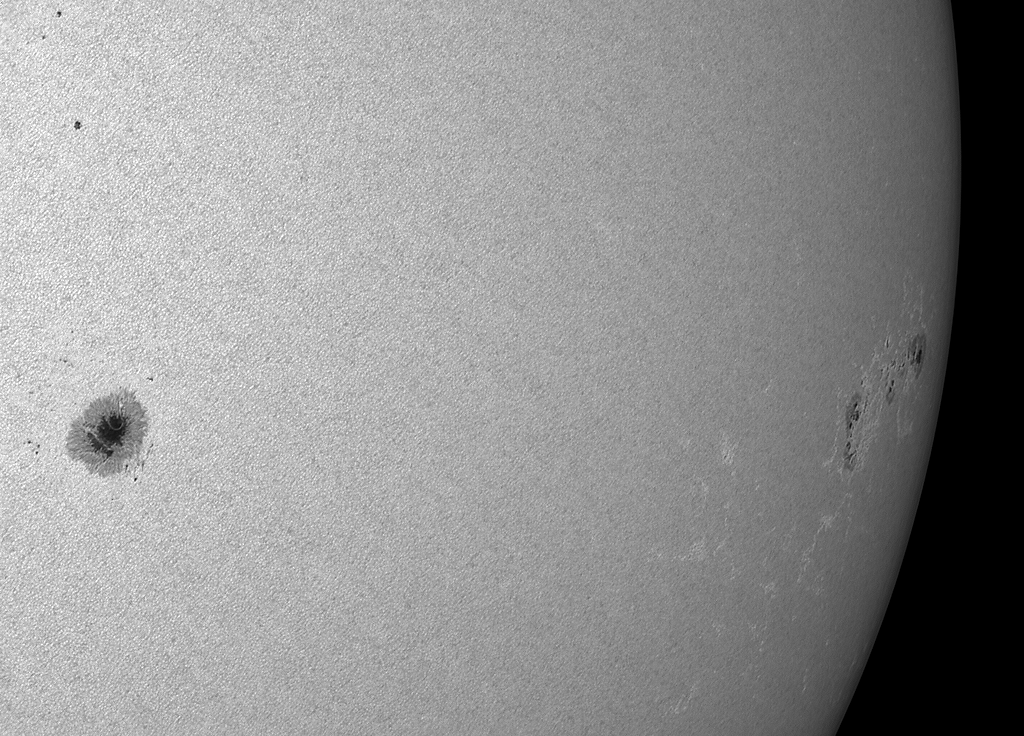
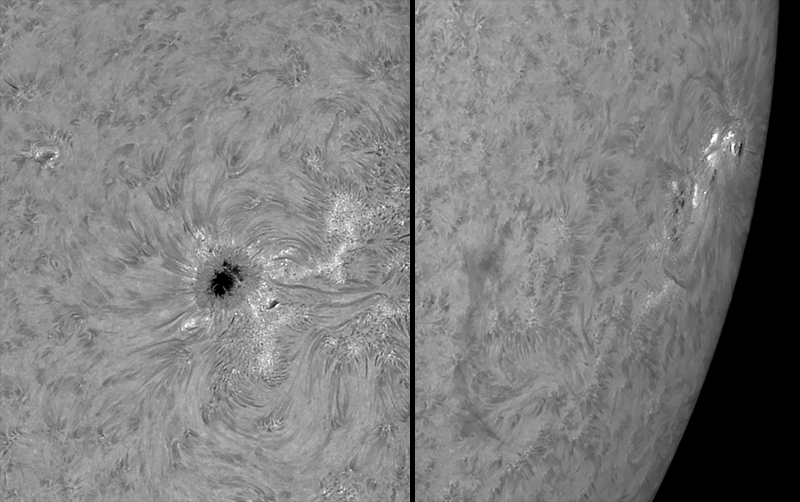
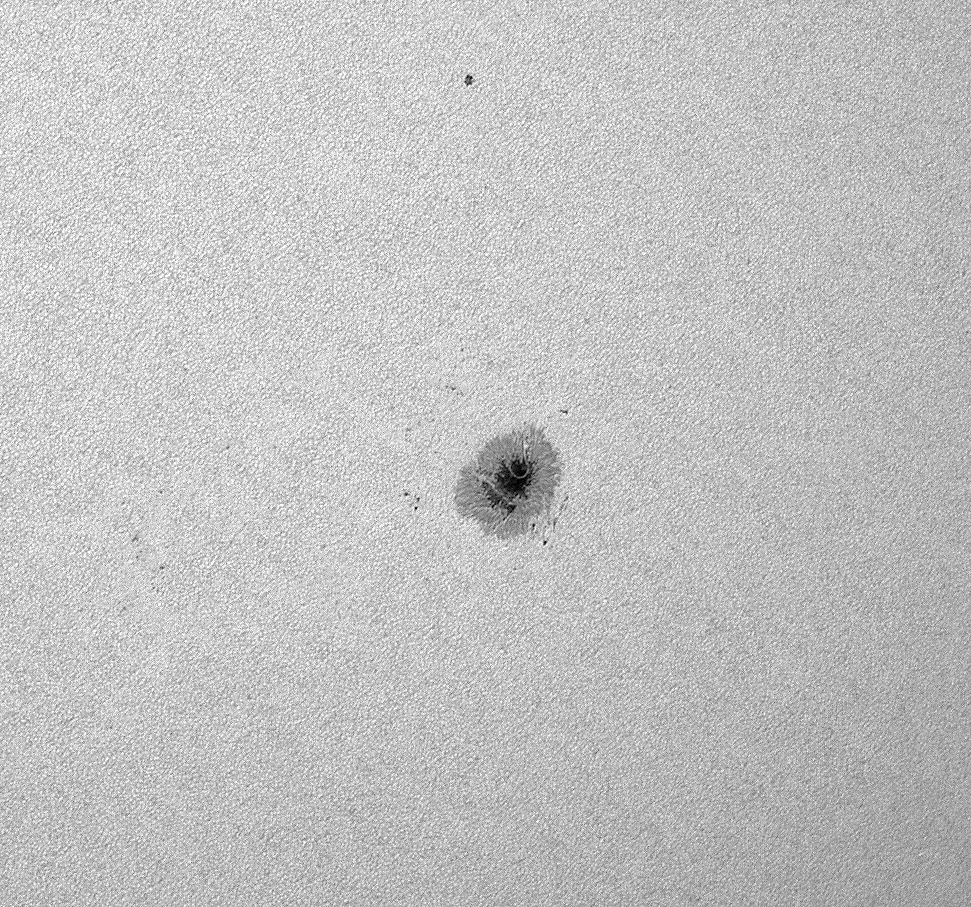
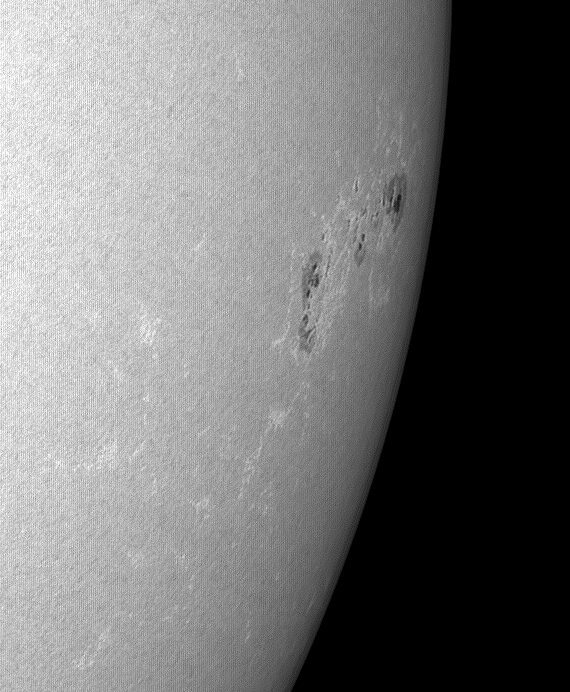
Since the optical density of 5.1 still provides sufficient light for photographic observations at the relatively short focal length of 1200 mm and a focal ratio of f/8, I attached my ZWO ASI 290MM and captured several images using “lucky imaging” to demonstrate the genuinely high optical quality of the Baader film. A total of 2,000 individual frames were recorded for each image, of which 8% were stacked.
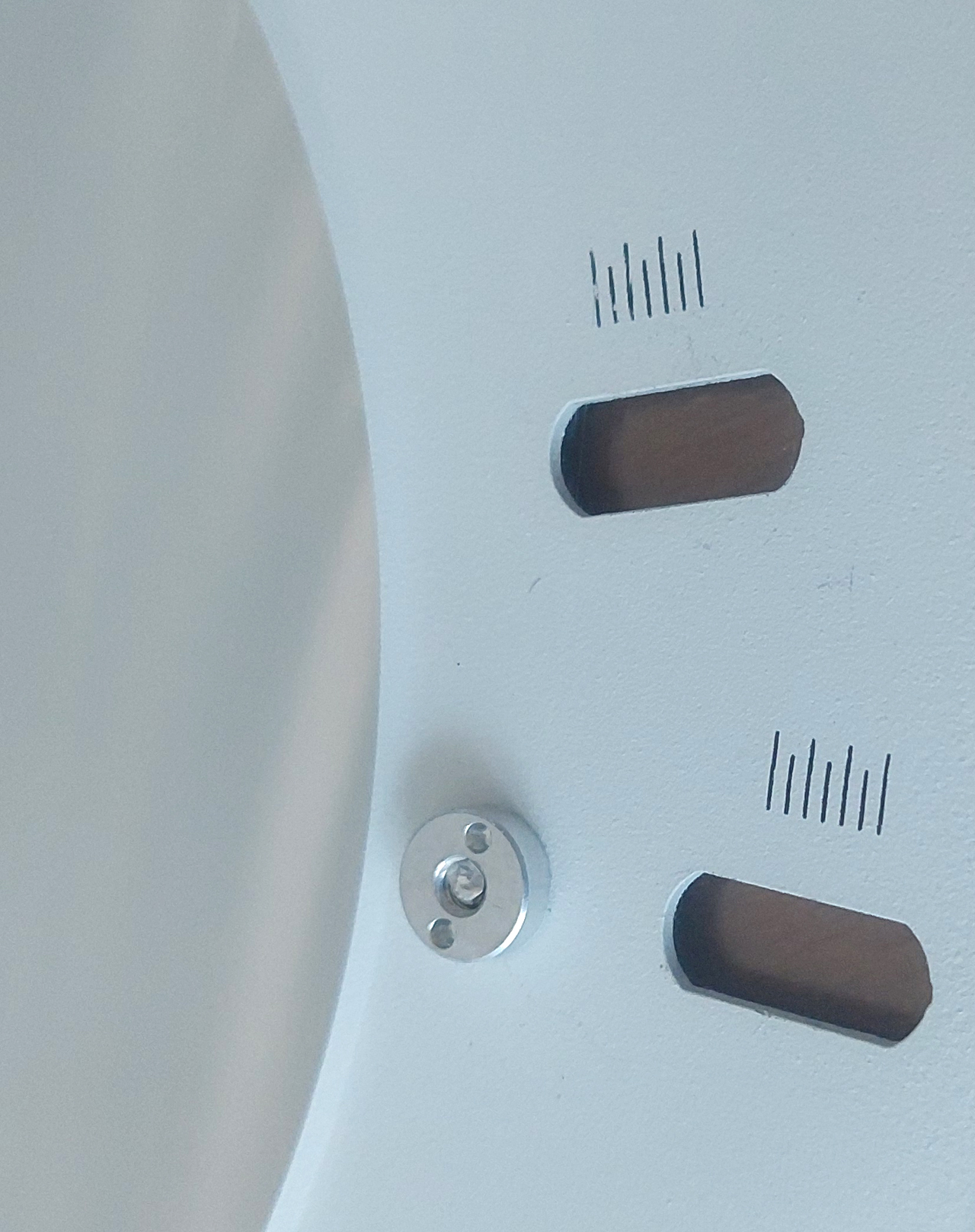
Is there anything to criticise? Hardly. The only additional feature I would find useful would be an indication of the minimum and maximum tube diameters at the markings on the ASSF and ASTF filter cells, so that users would not need to experiment for long to determine the correct diameter. This information would not necessarily have to be printed on the cells themselves; a simple leaflet would be sufficient.
I spent a long time considering how this report could be made a little more interesting. From the outset, I had no doubt that the new Baader film would at least match the high quality of the previous film. This gave me the idea of looking back to the time before Baader AstroSolar® film entered the market. That was in 1999, which was also the year Baader launched its online presence. In 1999, AstroSolar® film was the first and only product on the Baader website.
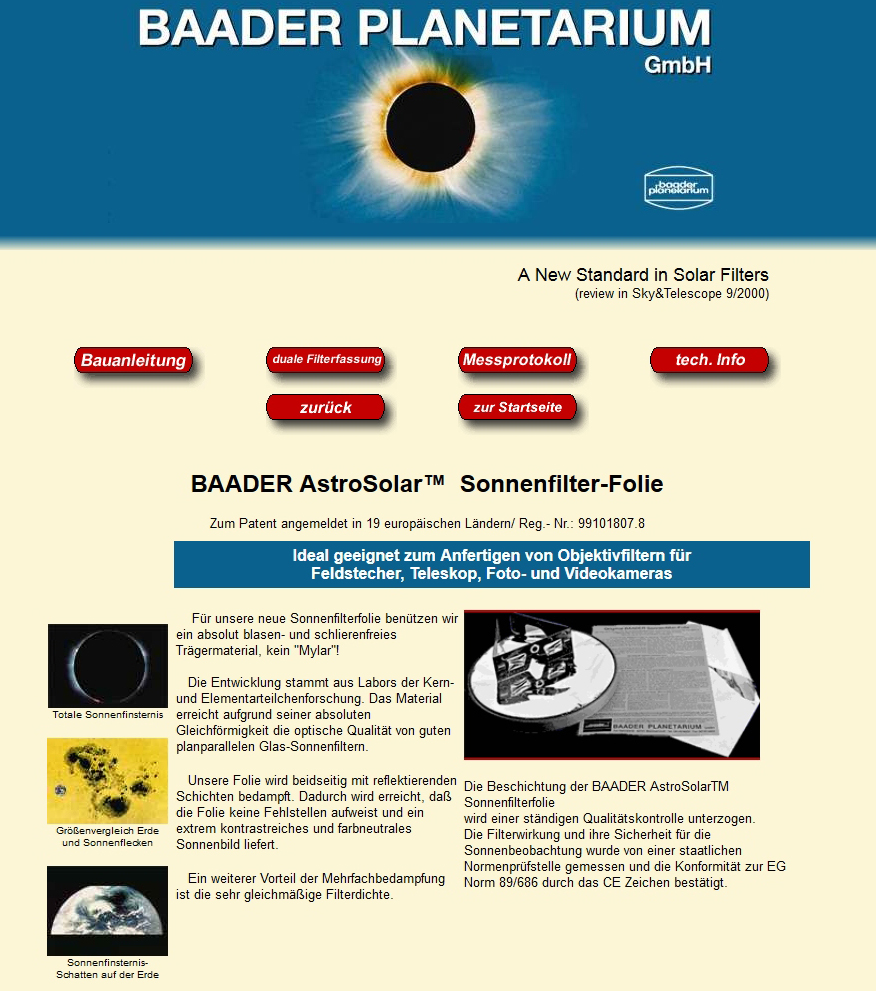
A Brief Personal Journey Back in Time...
What options were available to amateur solar observers for attenuating white light before Baader film? Small department-store telescopes with apertures of 60 or 70 mm were supplied with eyepiece filters, which were always used with a certain degree of unease—my own first solar observations date back to 1967. Because these filters were positioned close to the focal plane, there was always a risk that the high thermal load could cause them to shatter, exposing the eye to unfiltered sunlight and potentially causing severe eye damage. A DIN standard certainly did not exist at the time.
Then, of course, there was solar projection, in which the image of the Sun was projected onto a white screen. This method was commonly used to determine the relative sunspot number. In practice, however, it was suitable only for larger, permanently installed telescopes. Baader has now reintroduced this approach with the Baader Solar Projection Screen (BSPS) (#2420400 , € 39,- )
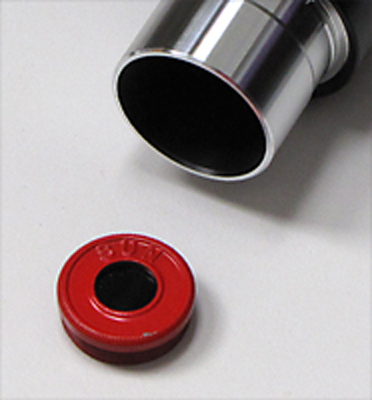
The Zeiss Colzi Prism, the Lichtenknecker Pentaprism and the Herschel Prism
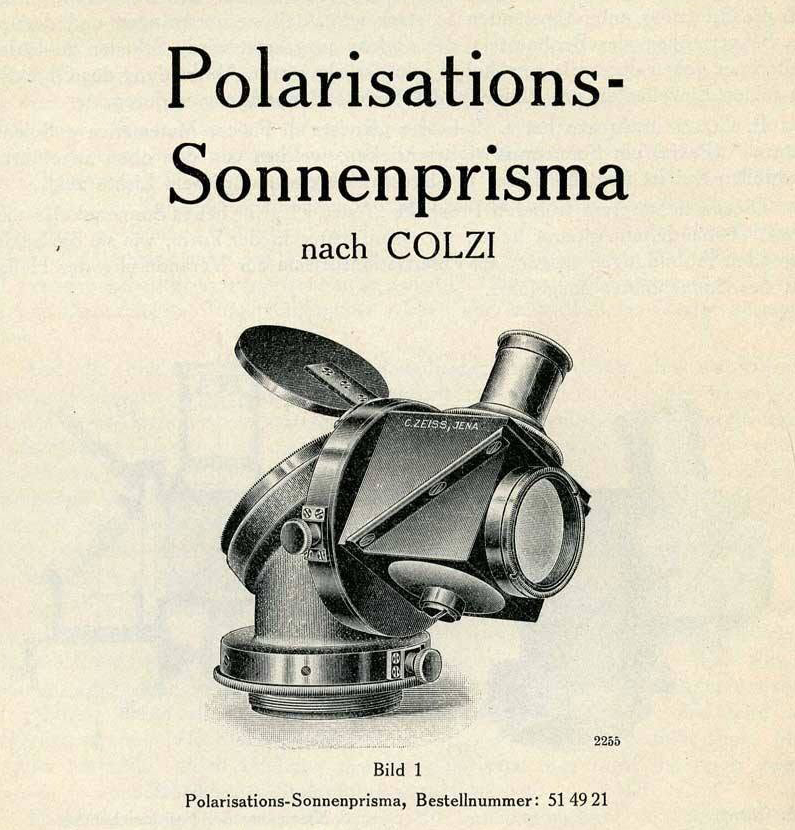
Accessories for filtering sunlight at the eyepiece end existed long before Baader AstroSolar® film. One example was the Colzi polarising prism made by Zeiss Jena, which had already been known since the 1920s. A detailed description of its operating principle would go beyond the scope of this article, but in essence it consists of two chambers filled with oils of different refractive indices and arranged so that they can be rotated relative to one another. A large proportion of the incoming sunlight is diverted out through a prism, while rotating the two oils relative to one another allows the brightness of the solar image to be adjusted continuously. After the Second World War, the Colzi prism was no longer available as an accessory for the amateur market.
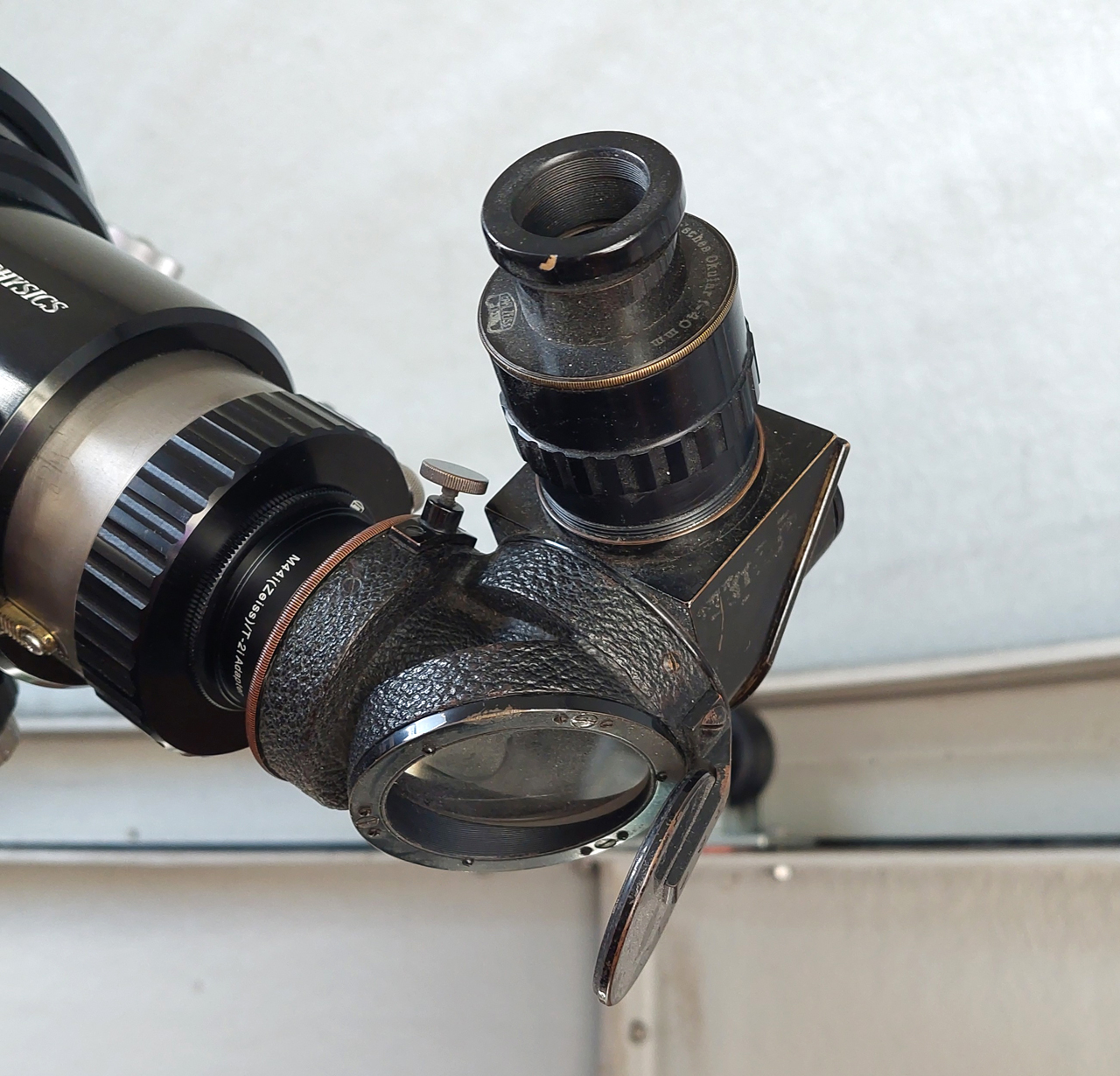
Until the death of the company’s founder, Lichtenknecker supplied special pentaprisms in two sizes for visual white-light solar observing. For decades, Lichtenknecker set a high standard of quality for amateur telescopes and accessories. Anyone interested in the company’s history can find more information here.
The Herschel prism can be traced back to Friedrich Wilhelm Herschel, who first described it in the 18th century. In a Herschel prism, sunlight strikes an uncoated glass plate inclined at an angle of 45°. Approximately 5% of the light is deflected by 90°, while by far the largest proportion exits the prism again and is directed out of the housing by a mirror or dispersed by a “light trap”. Baader reintroduced this concept around 2001 and later improved it with the Baader 2" Cool-Ceramic Safety Herschel Prism Mark II – (Visual / Photo) (various versions available) .
The ADAC Emergency Blanket
Films used by solar observers to attenuate sunlight existed long before Baader film. One example was the so-called ADAC emergency blanket, which could be found in the first-aid kit of practically every car. It consisted of an extremely thin Mylar film coated with chromium. It was inexpensive and, when placed in front of a telescope objective, produced an orange-reddish image. It was nevertheless always used with an uneasy feeling for visual observations because it was unclear whether the film absorbed infrared, UV-A and UV-B radiation. For photography, it had a density of approximately 3.0, corresponding to a transmission of 0.1%. It was suitable for smaller telescope apertures or photographic telephoto lenses, but it had one major disadvantage when used with larger optics: the chromium coating was not homogeneous and contained countless microscopic defects, which generated stray light and caused a dramatic loss of contrast in the solar image. Do NOT use emergency blanket material for visual observation.
Before Baader film, the ultimate solution for amateur solar observers was the range of glass solar filters made by Lichtenknecker, which was available with optical densities of 3.0 (photographic, T = 0.1%) and 5.0 (visual, T = 0.001%). These filters consisted of a glass plate, likewise coated with chromium, that had been polished plane-parallel to an accuracy of 1/10 of the wavelength of light at 550 nm. When placed in front of a telescope objective, their high precision meant that they caused no imaging errors; in other words, the resolution of the solar images remained diffraction-limited. They were available in standard sizes corresponding to the objective diameters of Lichtenknecker telescopes, in threaded cells with diameters of up to 200 mm.
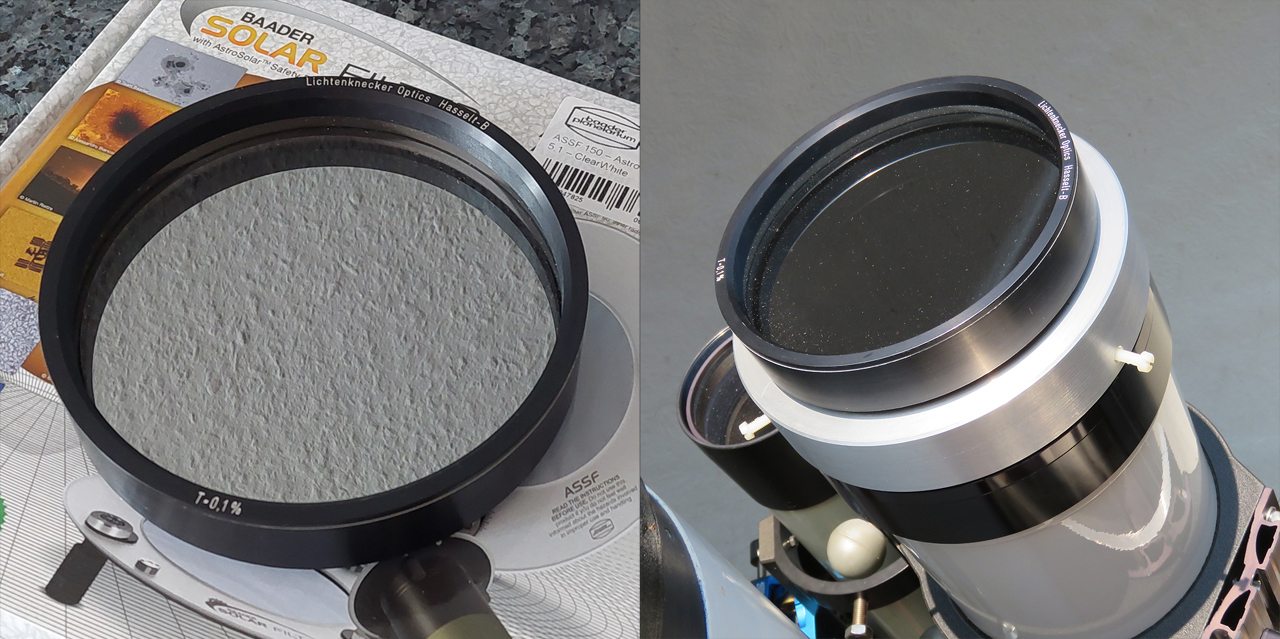
However, these filters also had one major disadvantage: their high price, which resulted from the considerable manufacturing effort required for a plane-parallel glass plate. Filters with a standard diameter of 100 mm cost several hundred Deutsche Mark, while larger versions cost several thousand, making them unaffordable for most solar observers.
Alongside the Lichtenknecker filters, solar filters were repeatedly imported from the United States, usually with diameters of around 100 mm. These were made of so-called float glass. This type of glass is manufactured in a continuous process in which molten glass is poured onto a bath of liquid tin, where it floats and cools slowly. Such glass is reasonably flat, but not plane-parallel, and was therefore only of very limited suitability for solar observing. In contrast to the Lichtenknecker filters, however, these products were relatively inexpensive.
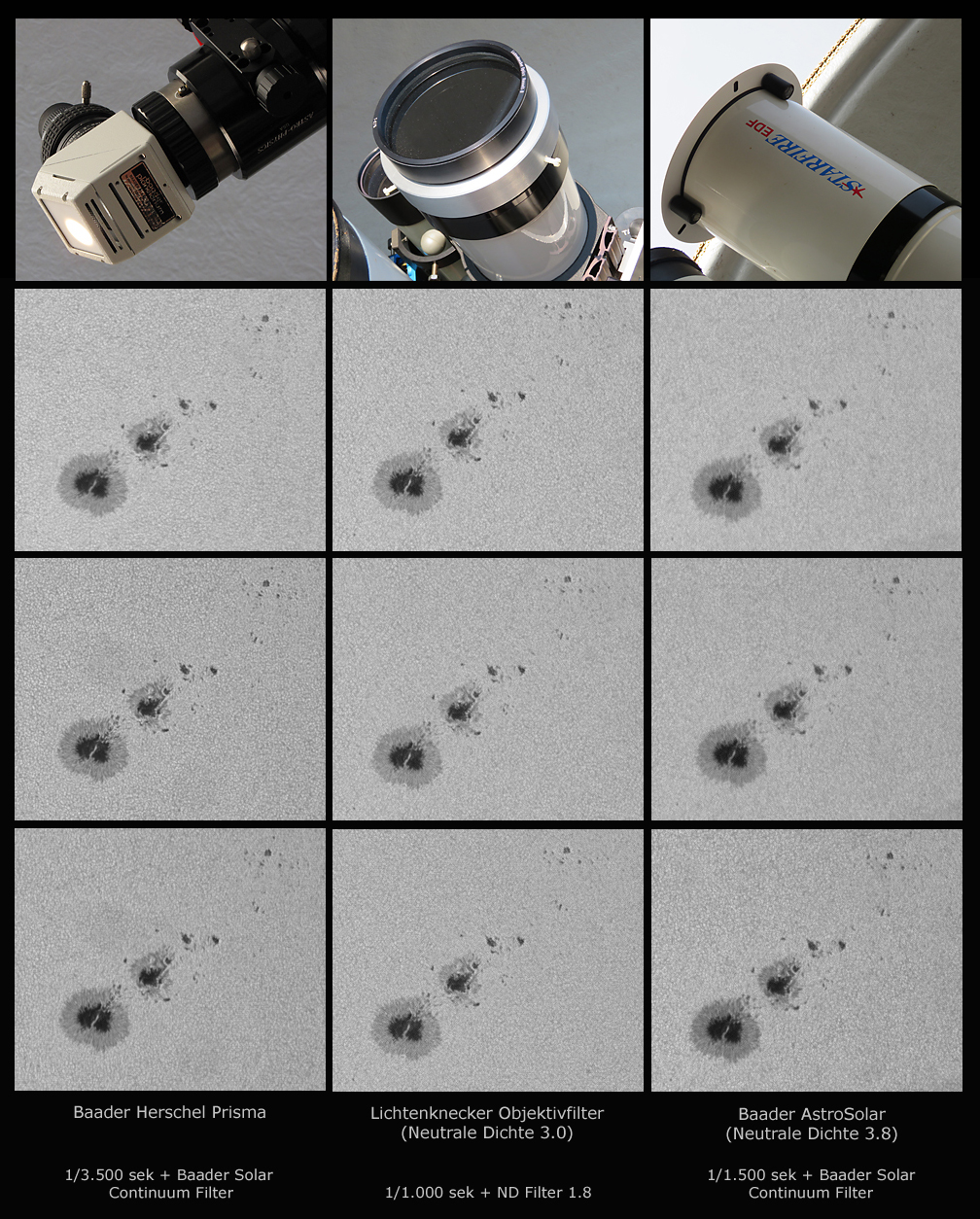
In 2015, I conducted a detailed test comparing Baader film (OD 3.8, T = 0.016%) with the 150 mm Lichtenknecker glass filter (T = 0.1%) and the Baader Herschel prism. The result was that Baader film delivered the same high image quality as the expensive glass filter.
My Personal Conclusion:
It is fair to say that, with the introduction of AstroSolar® film more than 25 years ago, Baader provided amateur solar observers around the world with an affordable means of white-light solar observing at diffraction-limited image resolution. The film, however, was only the beginning. In the years that followed, Baader repeatedly introduced innovative products for amateur solar observers, including the Baader Cool-Ceramic Herschel Prism, the Solar Continuum Filter, and graduated neutral-density and polarising filters in various sizes. Baader also remained active in other spectral ranges used for solar observing: the D-ERF filter for reducing thermal load in H-alpha observations, the development of telecentric systems, and CaK filters for solar photography in calcium light. Last but not least, there are the Baader Triband SCT telescopes.
For information on the wide range of available versions of the new AstroSolar® film, please read the article by Alexander Kerste or visit the Baader website.