The
 AstroSolar® ClearWhite Safety Film OD 5.1 (100x50, 117x117cm)
(various versions available)
, , which was introduced in summer 2026, is the most recent version of Baader solar filter film for safe white-light observation of the Sun. It is suitable for visual solar observation as well as for photography with telescopes, spotting scopes, binoculars and camera lenses.
The ClearWhite Film is suitable for DIY construction of suitable solar filters and is also available in ready-made mounted solar filters (ASBF, ASTF and ASSF).
To provide the best possible information about this product, we have compiled some questions and answers on this page. Please also read the safety and application instructions and inform yourself on our website. If you have any further questions, use the comment function or contact us.
You can also find more information on our AstroSolar® ClearWhite website.
Definition of terms
What is the Baader AstroSolar® ClearWhite Safety Film OD 5.1?
The Baader AstroSolar® ClearWhite Safety Film OD 5.1 is a high-quality, double-sided metallized solar filter film for direct observation of the Sun as well as for the construction of front-mounted objective filters on telescopes, binoculars, spotting scopes and camera lenses.
It reduces sunlight to a safe level and produces a particularly clear, white solar image with high sharpness and high contrast. The film is the successor to the Baader AstroSolar® Safety Film OD 5.0, which has been proven since 1999.
What does “OD 5.1” mean?
“OD” stands for optical density. The AstroSolar® ClearWhite Safety Film has an optical density of OD 5.1. It reduces the intensity of sunlight by approx. 99.9992% or by a factor of about 1:125,000.
This makes it suitable for safe solar observation if it is undamaged and used properly.
Why is the new film called “ClearWhite”?
The name “ClearWhite” describes the particularly neutral, clear-white image of the new film. Through the AstroSolar® ClearWhite Safety Film OD 5.1, the Sun appears white, sharp and high in contrast.
Unwanted bluish, yellowish or orange color casts, which can often be seen with simpler solar filters, are largely avoided.
Differences
What is the difference to the previous AstroSolar® Safety Film OD 5.0?
The new OD 5.1 film offers a slightly higher optical density and a particularly clear-white solar image. The previous AstroSolar® Safety Film OD 5.0 is, when used properly, still a long-proven product for front-mounted objective filters.
The new AstroSolar® ClearWhite Safety Film OD 5.1 is the current successor generation with an improved clear-white image and adjusted light reduction.
It is a further development and a new product. New materials and manufacturing techniques have enabled even better quality, which also takes into account the increased sensitivity of modern cameras and, in direct comparison, delivers an even clearer and higher-contrast image with further improved stray-light suppression.
Does the new OD 5.1 film meet a standard?
The AstroSolar® ClearWhite Safety Film OD 5.1 meets the applicable transmittance requirements of EN ISO 12312-2:2015 for filters for direct observation of the Sun. The previous OD 5.0 film must only be used in combination with optics (telescope, lens or similar); the OD 5.1 film may also be used, for example, in DIY solar viewing glasses for looking directly at the Sun.
Nevertheless, the following remains important: Even a filter material that conforms to the standard must be mounted correctly and checked before every use.
A CE marking of the film cannot be issued due to the many different DIY and mounting possibilities, since the finished solar filter is only created by cutting and mounting it in a suitable holder.
Is OD 5.1 safer than OD 5.0?
The new OD 5.1 film has a slightly higher optical density and reduces sunlight somewhat more than the previous OD 5.0.
The previous AstroSolar® Safety Film OD 5.0 was and is a proven product when used properly and can continue to be used for solar observation / photography with additional optics. Safety always depends on the appropriate intended use, undamaged material and correct mounting.
According to DIN standards, the 5.0 film has too high a transmission for use, for example, in solar viewing glasses, which is why it is intended only as a filter for optics. The 5.1 film is also permissible for viewing with the naked eye.
What is the difference between AstroSolar® Safety Film and AstroSolar® Photo Film?
AstroSolar® Safety OD 5.0 / OD 5.1 Film is intended for visual solar observation and photography, provided it is used correctly.
AstroSolar® Photo Film OD 3.8 is significantly more light-transmissive and is intended exclusively for photographic applications. It must not be used for visual observation. The film continues to be available in A4 size.
The AstroSolar® ClearWhite Photo Film for photographic use in the size 100x50 cm will not be available in time for the solar eclipse in August 2026.
Further detailed explanations of the different film types can also be found on the product pages as well as on our website www.astrosolar.com
What is the difference between AstroSolar® Film and solar viewing glasses?
Solar viewing glasses are designed for direct observation with the naked eye. Telescope or objective filters, on the other hand, are intended for optical instruments and high magnifications, they must be mounted at the front.
The new AstroSolar® ClearWhite Safety Film OD 5.1 meets the applicable transmittance requirements for direct solar observation, but must always be used in a suitable, safe holder.
In contrast to the AstroSolar® ClearWhite Safety Film OD 5.1, the AstroSolar® Silver/Gold Film OD = 5.0, which is used in solar viewing glasses, has a dark rear side. It is not designed for the same high magnifications as the ClearWhite film; instead, it is even more robust and avoids reflections on the rear side. With solar viewing glasses with a reflective rear side, you can also see your eye as a mirror image, for example, due to lateral scattered light; this is not the case with our AstroSolar® Silver/Gold solar viewing glasses. In a closed telescope, the inside of the tube remains dark; here there are no reflections on the rear side.
Should I replace my existing OD 5.0 filter?
If your existing OD 5.0 filter is undamaged, has been mounted correctly and sits securely on the optics, it can continue to be used.
Replacement is sensible or necessary if the film is damaged, if the holder no longer sits securely or if you deliberately want to switch to the new AstroSolar® ClearWhite Safety Film OD 5.1.
Why are OD 5.0 and OD 5.1 temporarily offered in parallel?
During the transition to the new film generation, existing products with the previous OD 5.0 film may still be available. At the same time, new products with the AstroSolar® ClearWhite Safety Film OD 5.1 are coming onto the market. Products such as the ASTF, ASSF or ASBF will also still be available with the previous OD 5.0 film in parallel during the transition. This is due to existing stock and ongoing production batches.
In addition to a slightly higher price, the ClearWhite versions also receive new item numbers and are thus clearly distinguishable from the old variant by their labels. This allows you to decide whether you prefer the old film with the lower price or the new film with an even darker and higher-contrast solar image.
These products remain proven solutions for their intended area of use.
The changes currently affect neither the BDSF nor the AstroSolar® Photo Film OD 3.8 used in it. The AstroSolar® Safety Film OD 5.0 also remains available in the ECO-size and A4 versions as long as stocks last.
Why does OD 5.0 still appear on some products?
Please always note the product description, packaging, instructions and dealer information as to which variant you are ordering. Products marked as OP 5.0 come from previous production or from stock. They were still manufactured with the proven AstroSolar® Safety Film OD 5.0. All products that contain OD 5.1 are also marked with OD 5.1.
Observation & photography
Can I look directly at the Sun through the film?
Yes, the AstroSolar® ClearWhite Safety Film OD 5.1 is also suitable for direct solar observation with the naked eye when used properly. The prerequisite is an undamaged film in a suitable, light-tight and securely attached holder.
Can I observe through a telescope or binoculars with the film?
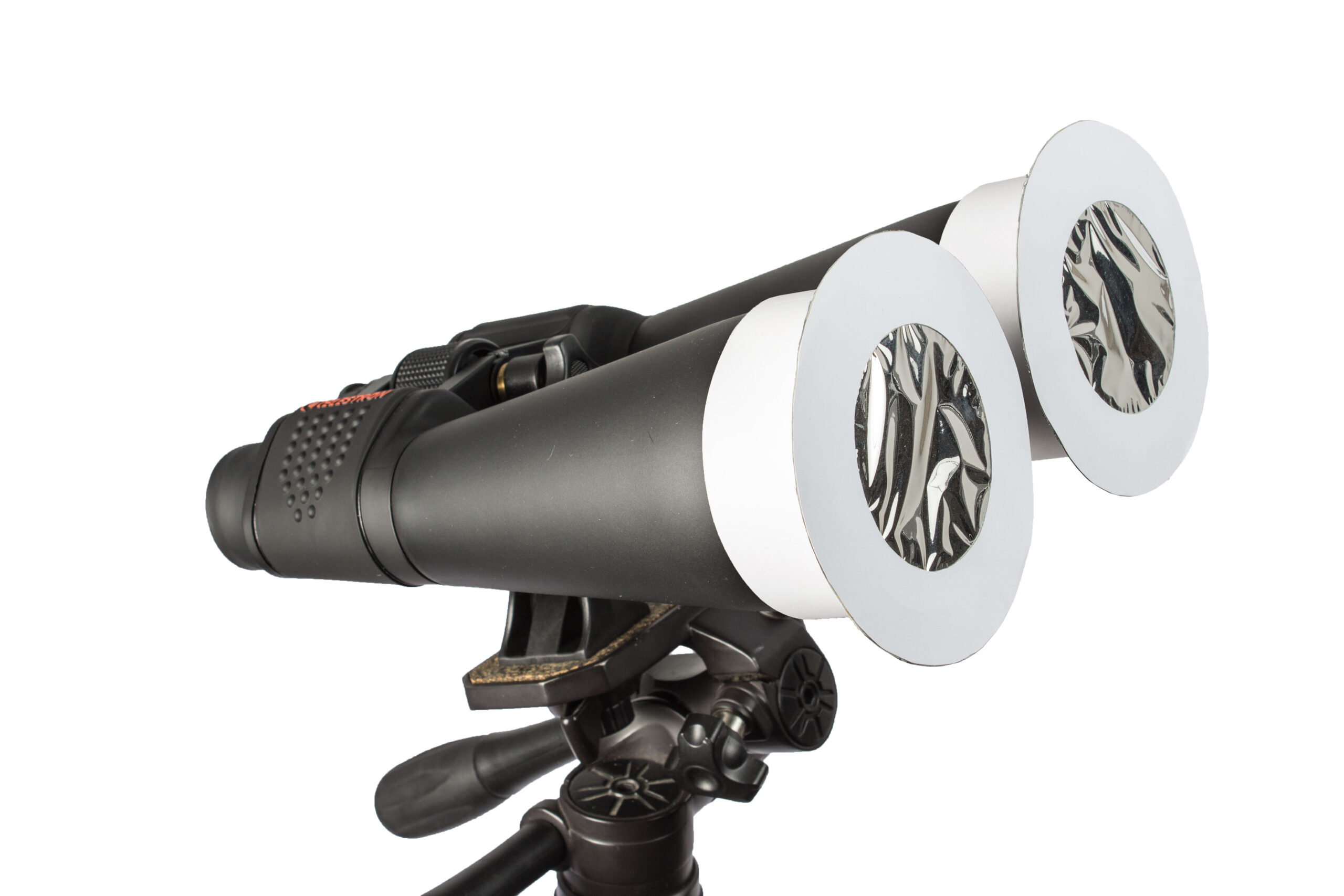
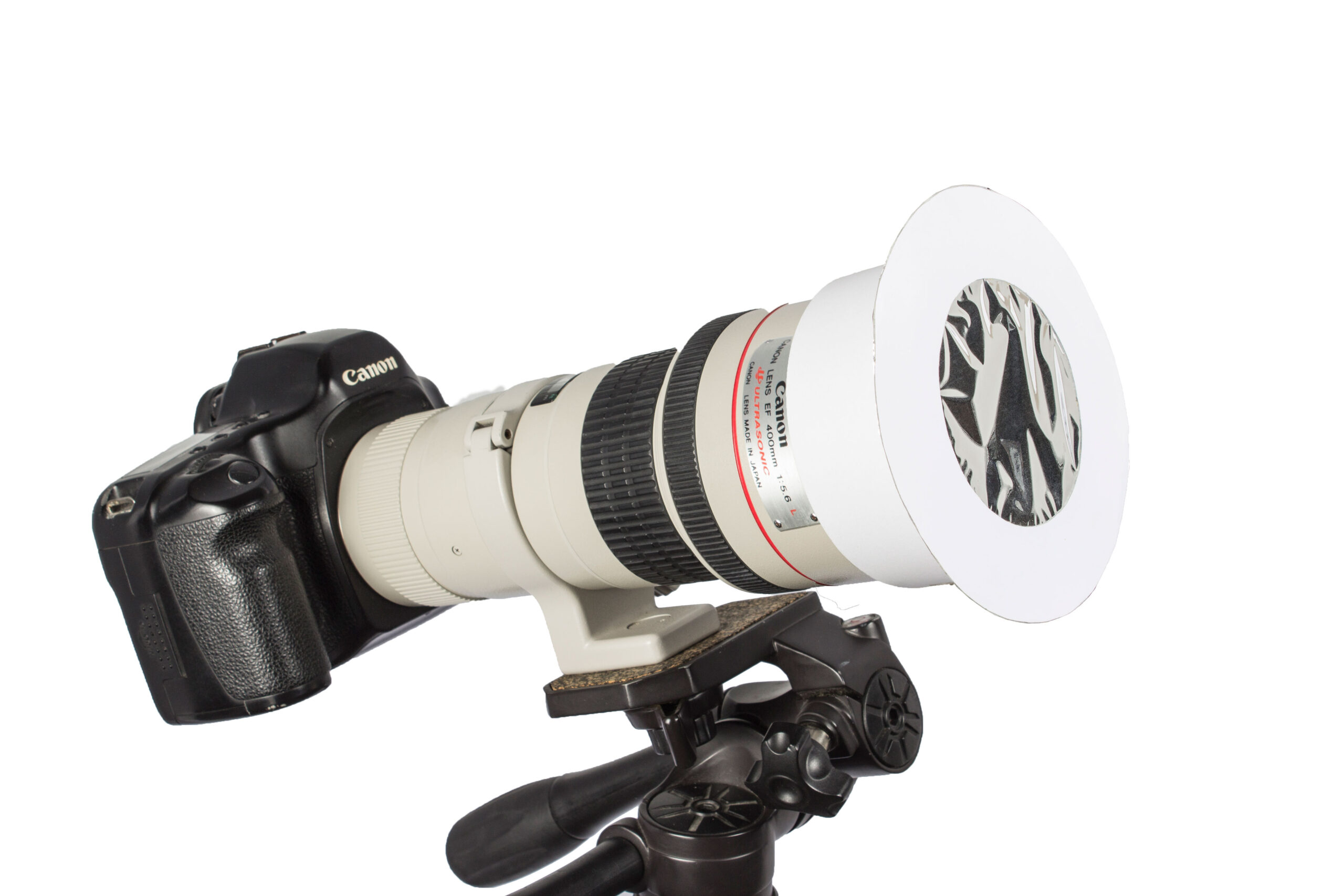
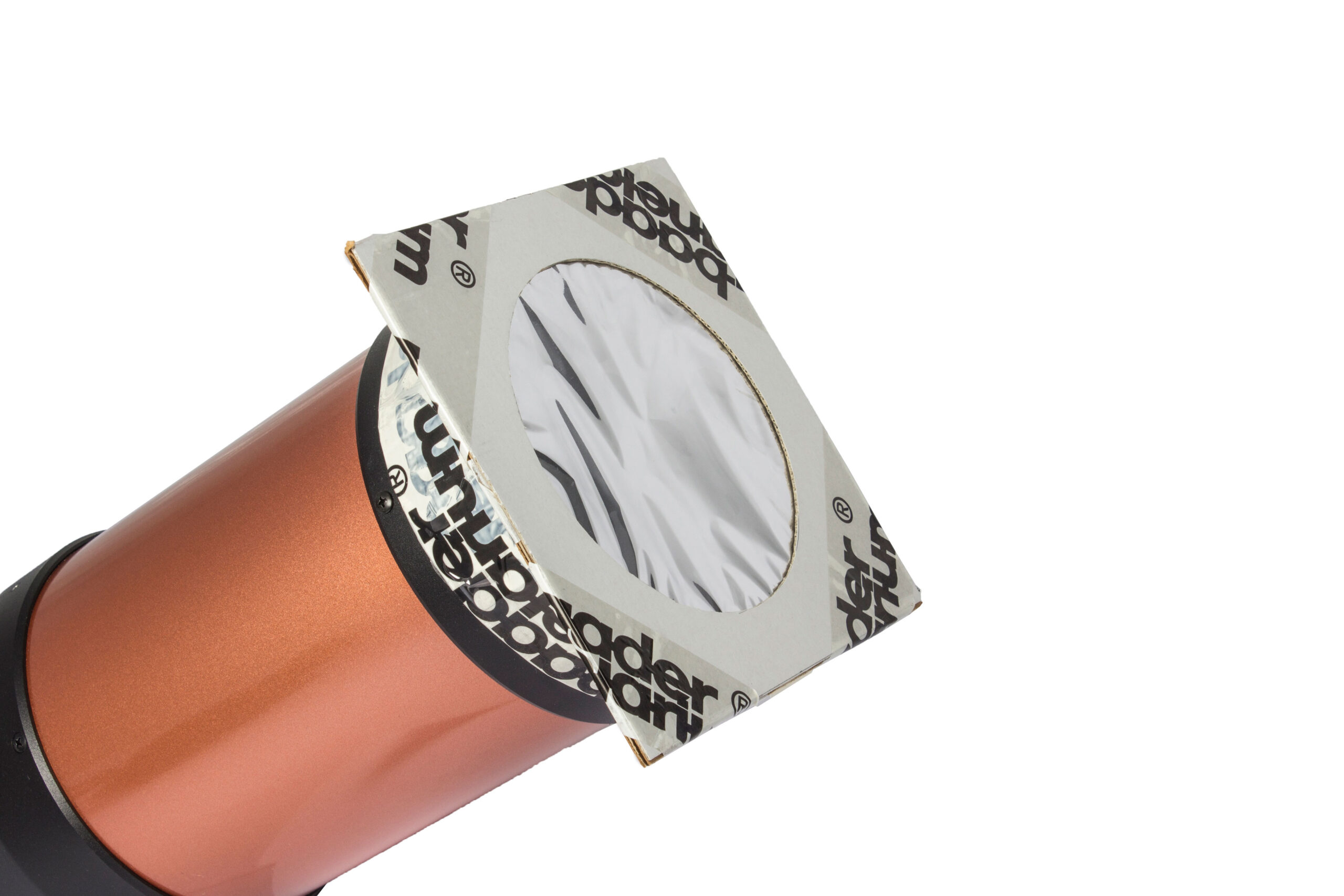
Yes, but exclusively as a front-mounted objective filter. The film must be attached in front of the entrance aperture of the telescope, binoculars, spotting scope or camera lens.
It must never be used at the eyepiece, behind the objective, in the focal point or at any other point in the path of the concentrated beam of light.
Why must the filter be placed in front of the objective?
Telescopes, binoculars, spotting scopes and camera lenses bundle sunlight. Behind the objective or in the focal point, very high concentrations of light and heat are created as a result. A filter in the wrong place can be damaged and would allow dangerous radiation to pass through.
Therefore the solar filter must always be placed in front of the entrance aperture of the optics. Also never use a solar filter or solar viewing glasses behind the eyepiece.
Does the finder of my telescope also have to be protected?
Yes, absolutely. Every finder, every guide scope and every additional opening must either be fitted with a suitable front-mounted solar filter or be securely covered or removed.
An unfiltered finder is just as dangerous as an unfiltered main telescope.
Can I also photograph with the AstroSolar® ClearWhite Safety Film OD 5.1?
Photography of the entire Sun or also of the partial phase of a solar eclipse is possible without problems as long as the focal ratio of the telescope or the aperture value of the lens is in the range that you also use during the day – i.e. around f/6–f/12. Only if you use high magnifications for detailed images of the Sun or use additional narrowband filters such as the CaK filter on the telescope do you need a photographic film.
Why does the Sun appear white in the filter instead of yellow?
Our Sun is white – more precisely, its spectrum covers the entire visible light, with a maximum around 500 nm, in the turquoise-green region of the spectrum. Our eye perceives this mixture as white – otherwise we would, for example, see white walls as yellow. At sunset, when the Sun appears red due to light scattering in our atmosphere, the light color of our surroundings also changes.
The AstroSolar® ClearWhite Safety Film OD 5.1 attenuates all colors evenly. Just like with a Herschel wedge, you therefore see the Sun with this film as it really looks: white. With an additional orange filter, you can color the Sun “as expected”, but this is only an aesthetic change and actually shows the Sun in false colors.
I do not see any details on the Sun?
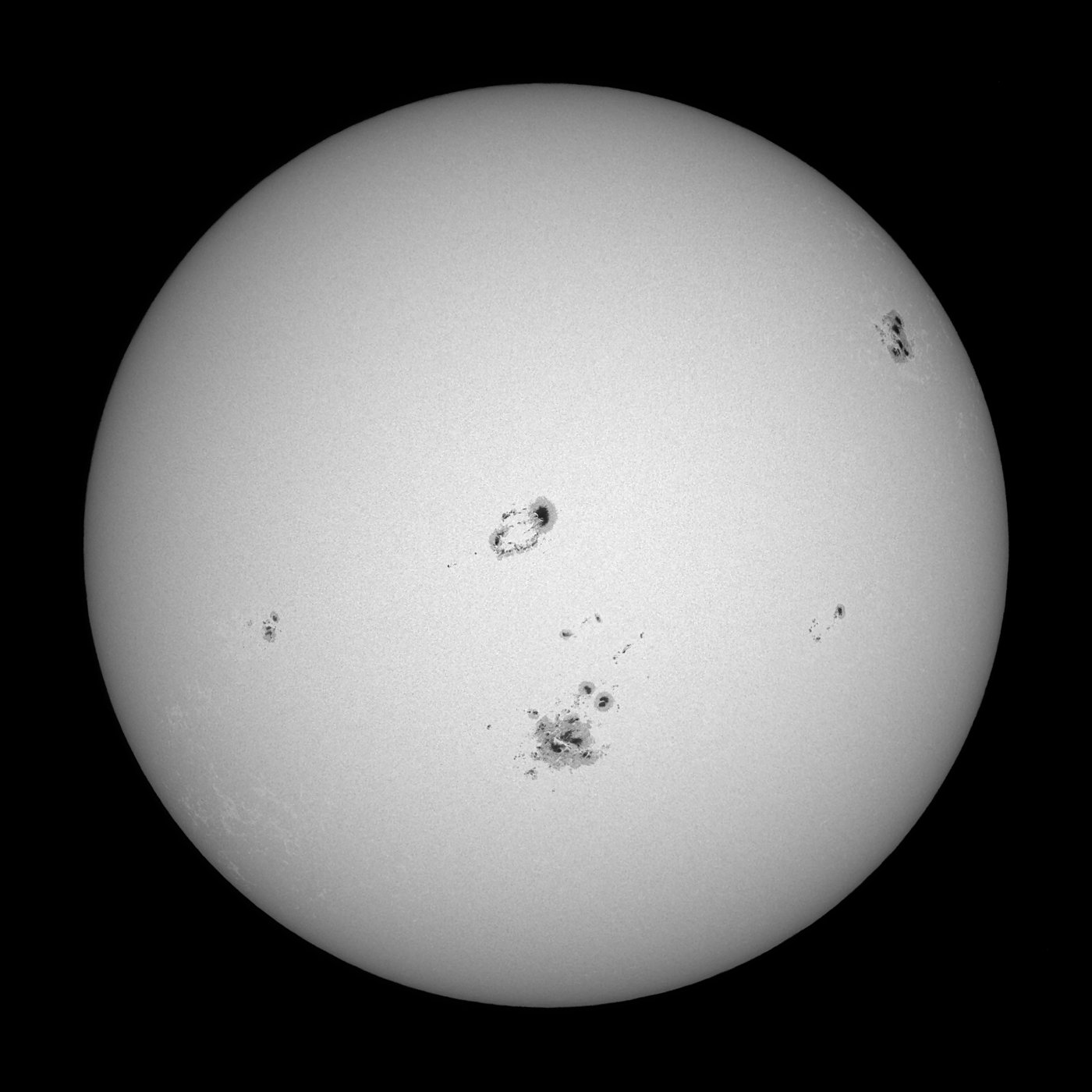
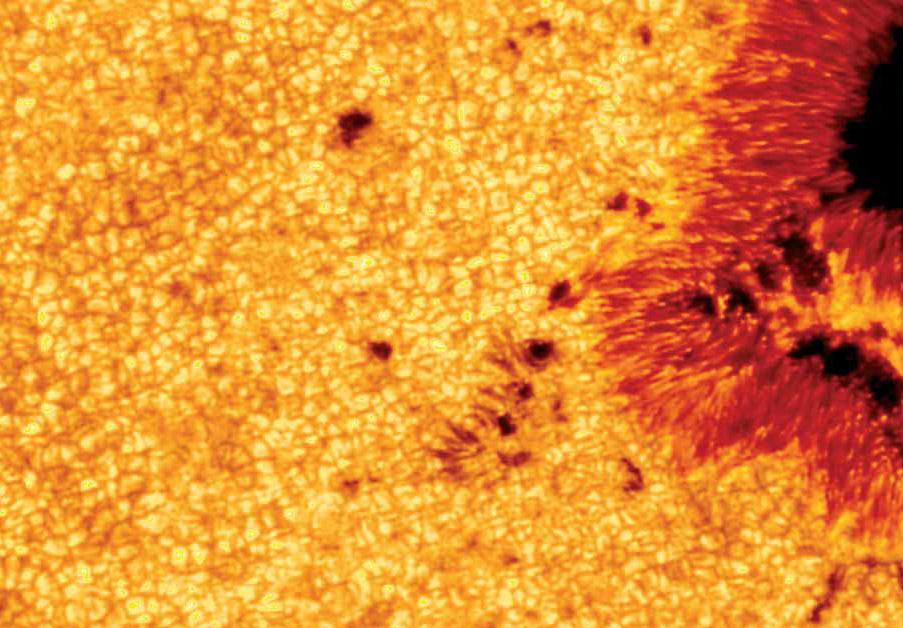
The activity of the Sun changes regularly, which makes it a particularly interesting object. During the activity minimum, it can appear completely without sunspots for days. Focus the telescope on the limb of the Sun if there are no details on the surface.
With a spotless Sun, you need good observing conditions (steady air and good transparency) in order to recognize the granulation even at low magnification as a “grainy” solar surface. The best observing conditions are usually in the morning, when the Sun has not yet heated your surroundings too much.
Especially with inexpensive achromats, the chromatic aberration of the telescope makes it more difficult to recognize details. Our Baader 7.5nm Solar Continuum Filter (540nm) (various versions available) eliminates, among other things, the chromatic aberration of these telescopes and increases the contrast, so that you can recognize these structures better.
Can I see prominences with the AstroSolar® ClearWhite Safety Film OD 5.1?
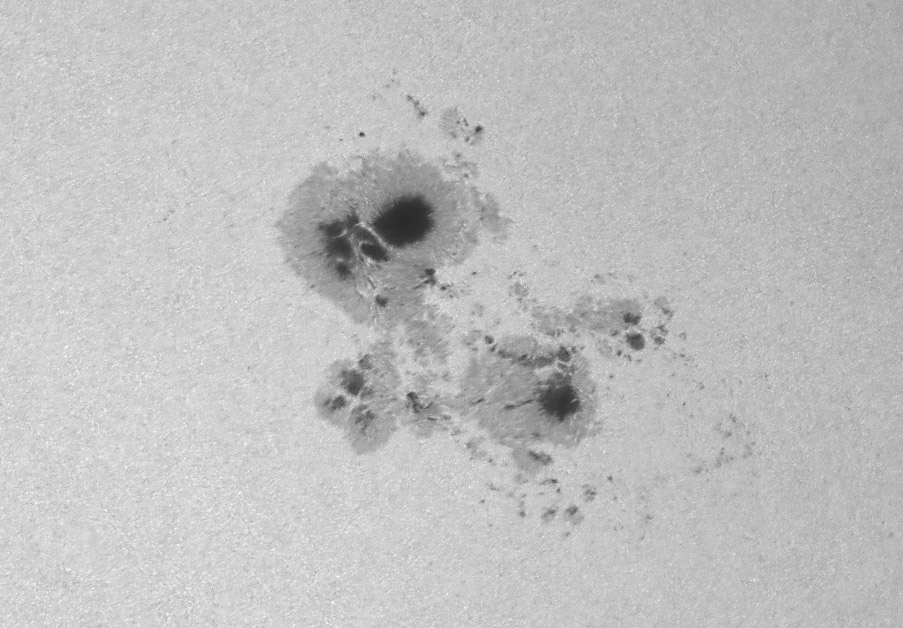
No – these filters show the Sun in white light ("continuum"), so you see the solar surface with sunspots, limb darkening and granulation. For prominences you need a significantly more expensive, narrowband H-alpha filter.
Handling
What do I have to check before every observation?
Check before every use:
- Is the film free of tears, holes, creases and larger scratches?
- Are there no detachments, loose areas or large-area wiping and abrasion marks?
- Is the film seated firmly and light-tight in the holder?
- Is the filter securely attached to the device?
- Are all optics (finder, guide scope, ...) protected?
If there is any doubt, the filter must not be used.
IIs one layer of really enough for safe observations?.
Yes. A single layer of AstroSolar® ClearWhite Safety Film OD 5.1 is sufficient to produce a safe solar filter, provided the film is undamaged and mounted correctly.
Several layers are not necessary and can worsen the optical quality, up to the point that with several layers, due to the strong filtering effect, observation is no longer possible.
Shouldn't the film be stretched tight? You show images with very wrinkled filters.
No. The film must not be stretched tight or pulled. It should be mounted with few wrinkles, but without tension.
A slight waviness is normal and does not impair the image quality.
Is there a storage container for my solar filter?
Unfortunately, we cannot offer boxes. However, you can simply use a cardboard box or a box made of plastic or wood; these are available from numerous suppliers in many sizes and also in round shapes. Make sure that the film is stored protected from dust and cannot rub against the storage container and thus be scratched.
Application examples