
This website presents high-resolution solar images accompanying our short publication, “Which Solar Structures Can Be Observed Using BAADER Accessories for Solar Observation?”, which you can download here as a german PDF file.
© All images by Wolfgang Paech unless otherwise indicated.


Solar Structures Observable in H-alpha Light
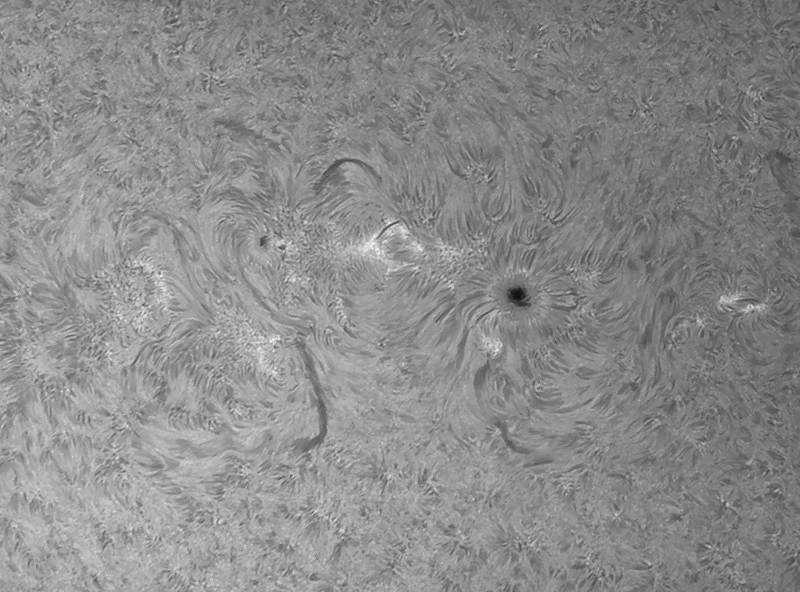
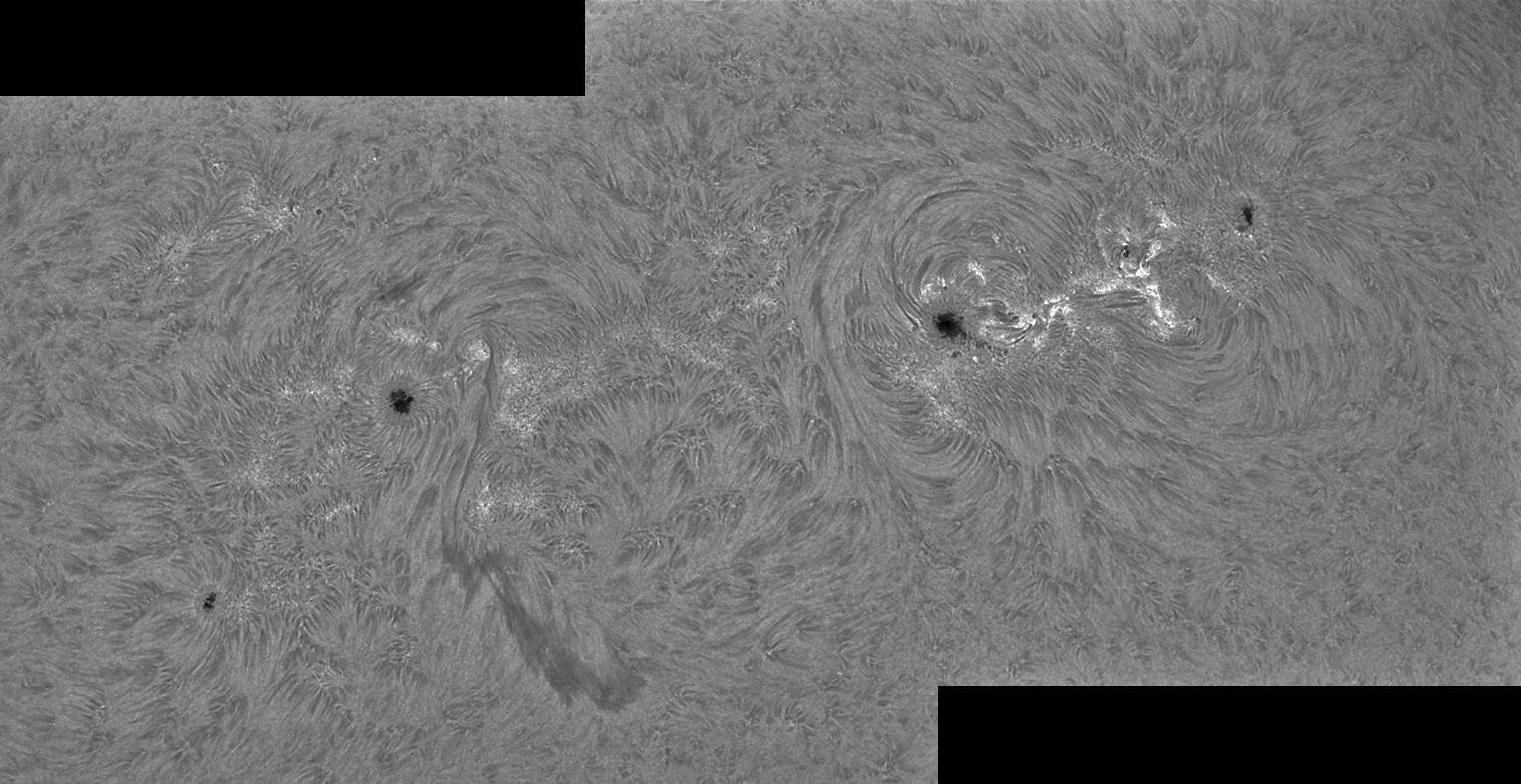
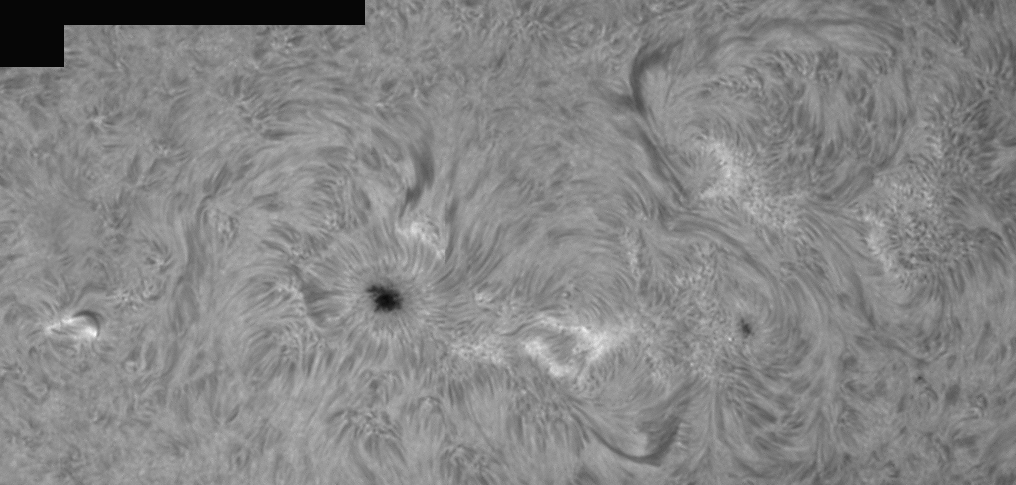
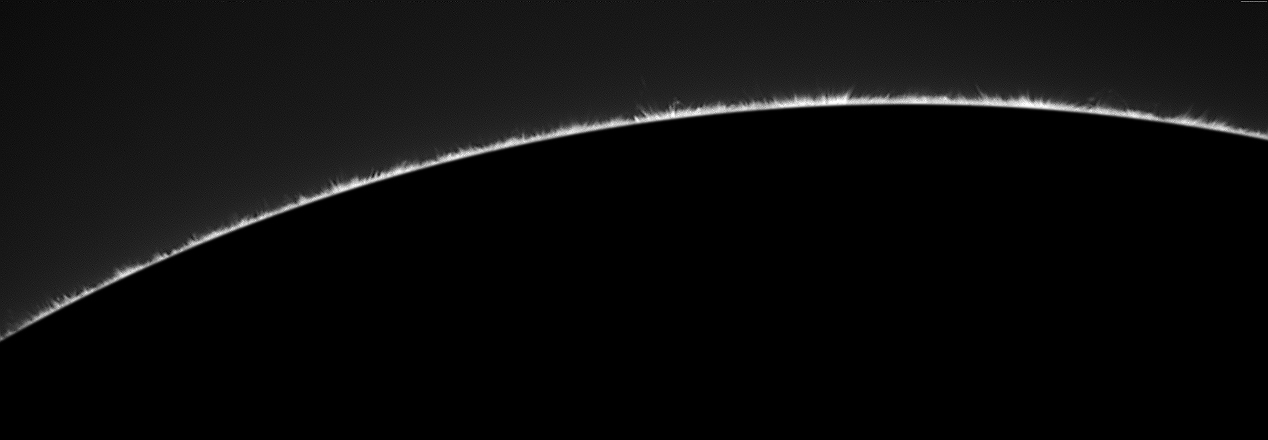
ALL images on this website were captured using a SolarSpectrum H-alpha filter with a full width at half maximum of 0.5 Å and a Baader 2x telecentric system. A D-ERF Energy Rejection Filter 110mm (8mm glass) (#2459243D , € 560,- ) was used as the prefilter. The telescopes used for imaging were various refractors with stopped-down apertures ranging from 75 to 90 millimetres. The average imaging focal length was approximately 1,750 mm. A SolarSpectrum reducer was used for all images. The images were captured using the “lucky imaging” technique. The video cameras used were a TIS DMK 31, a DMK 618 and a Celestron Skyris 445 Mono.
We present the following structures:
- Prominences
- Filaments
- Sunspots and Superpenumbrae
- Spicules
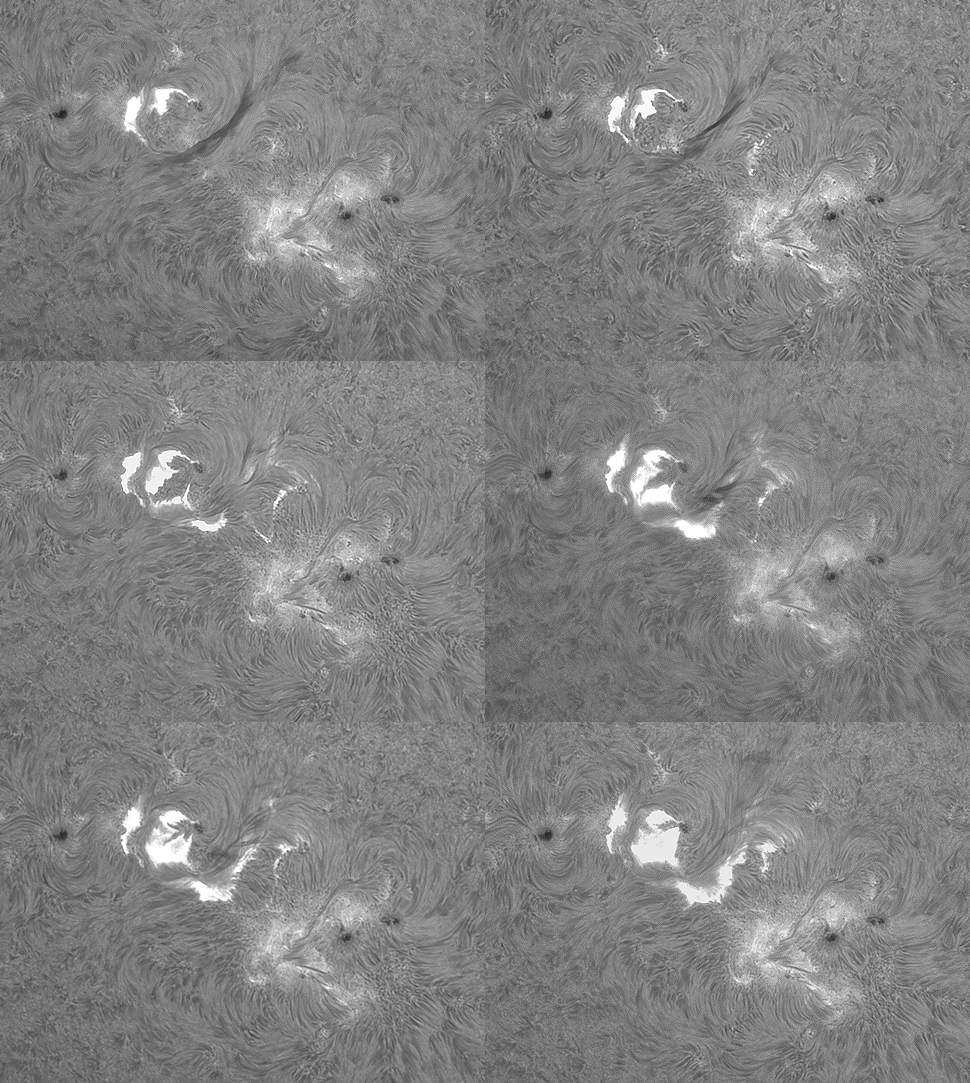
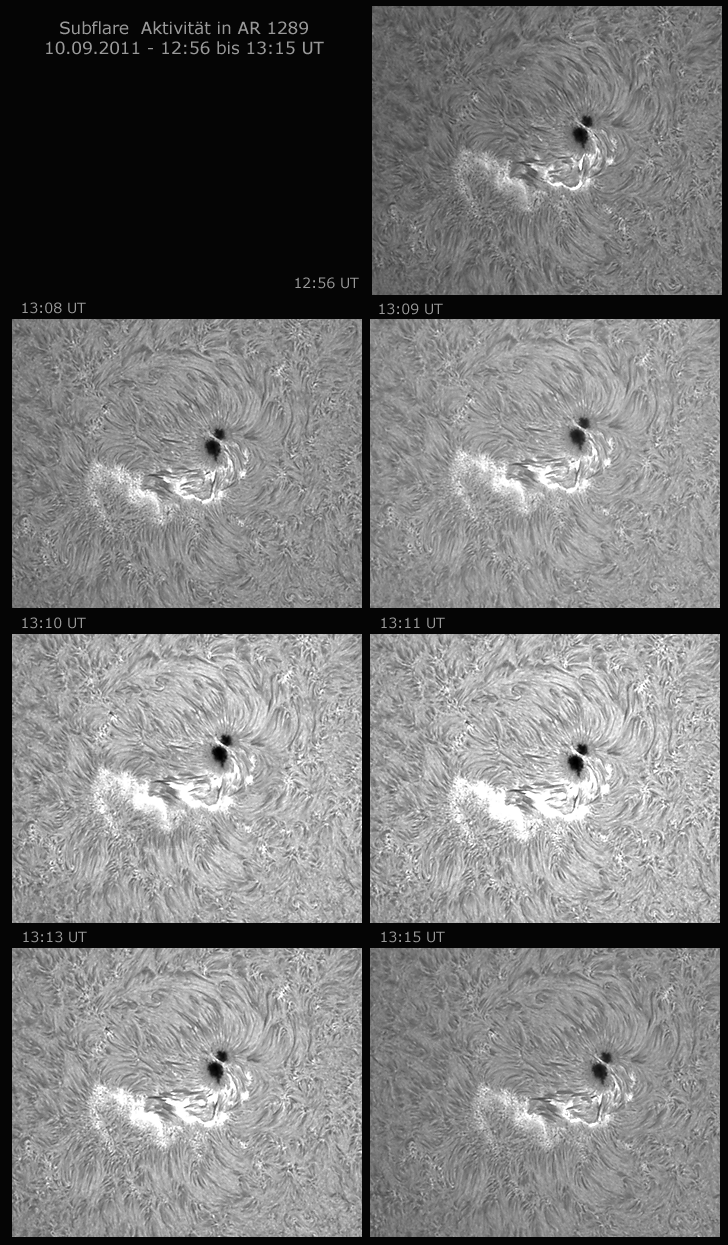
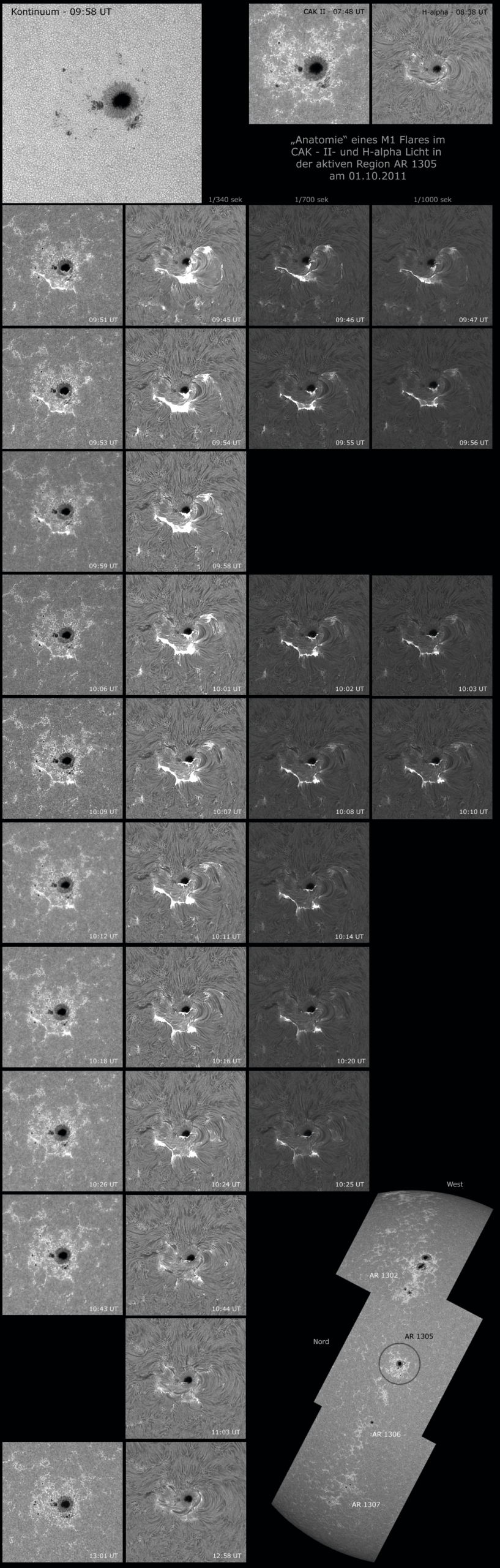
- Flares
- Ellerman Bombs
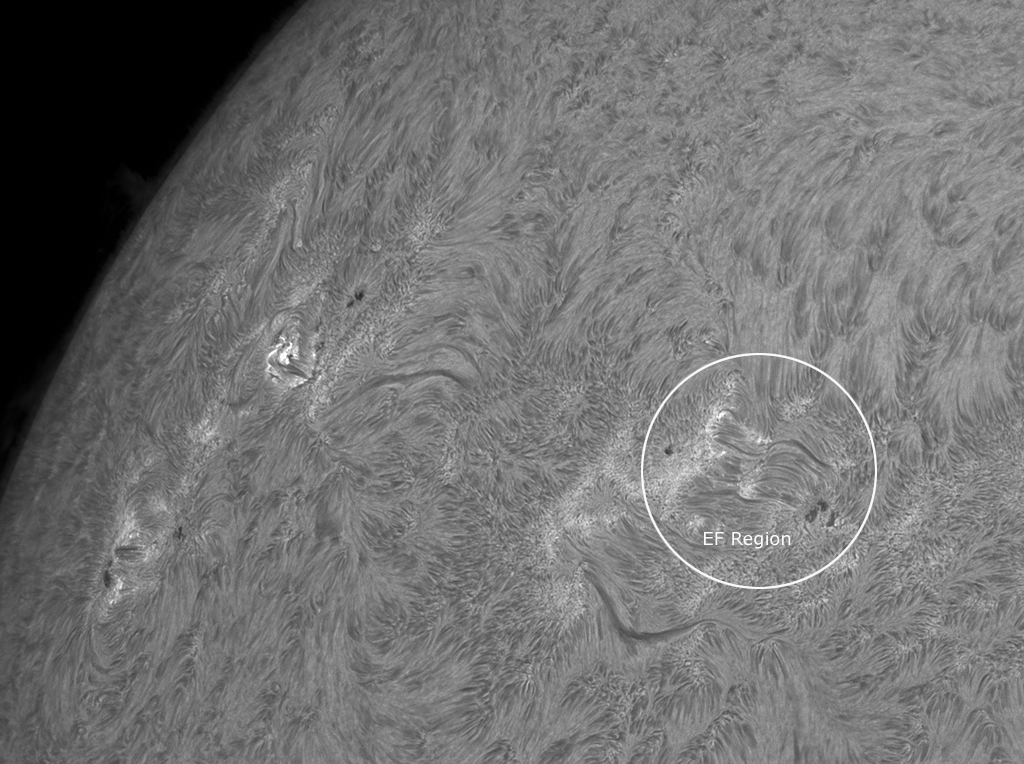
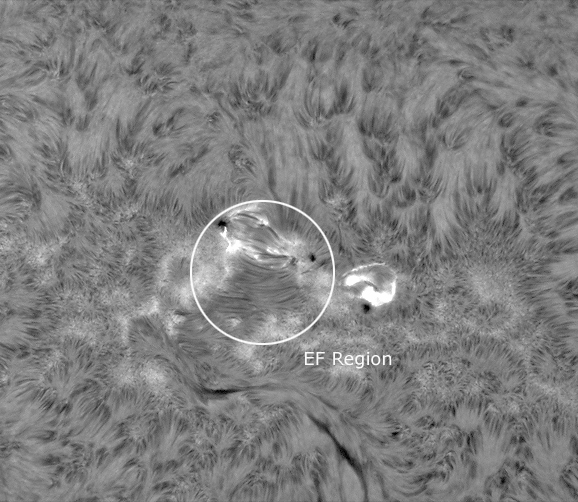
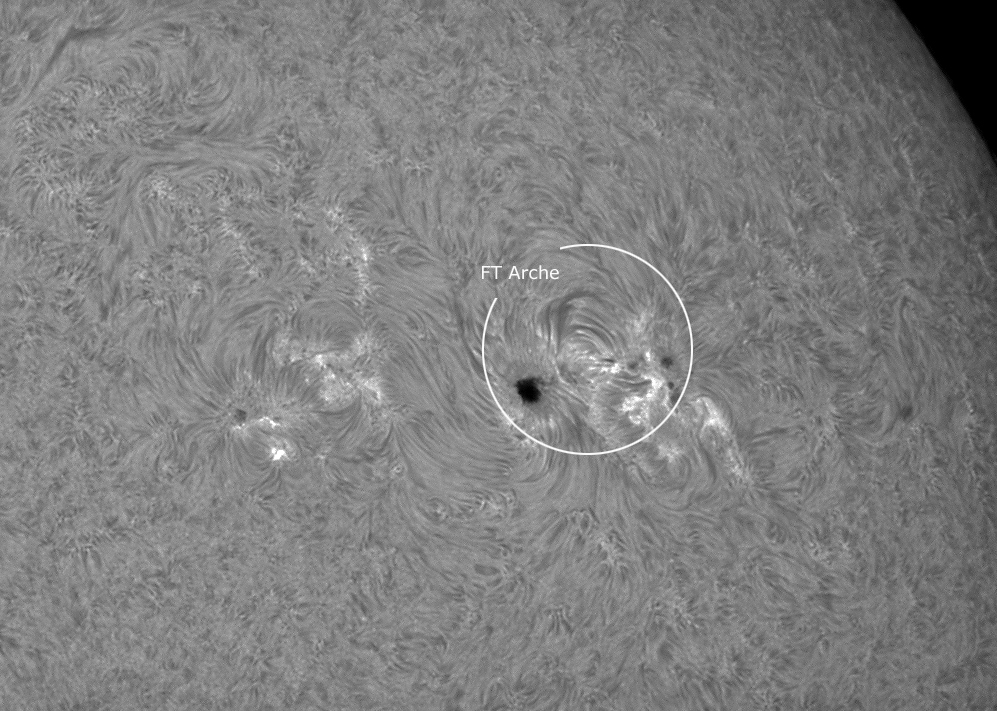
- Field Transition Arches and Emerging Flux Regions
- Animations
Prominences
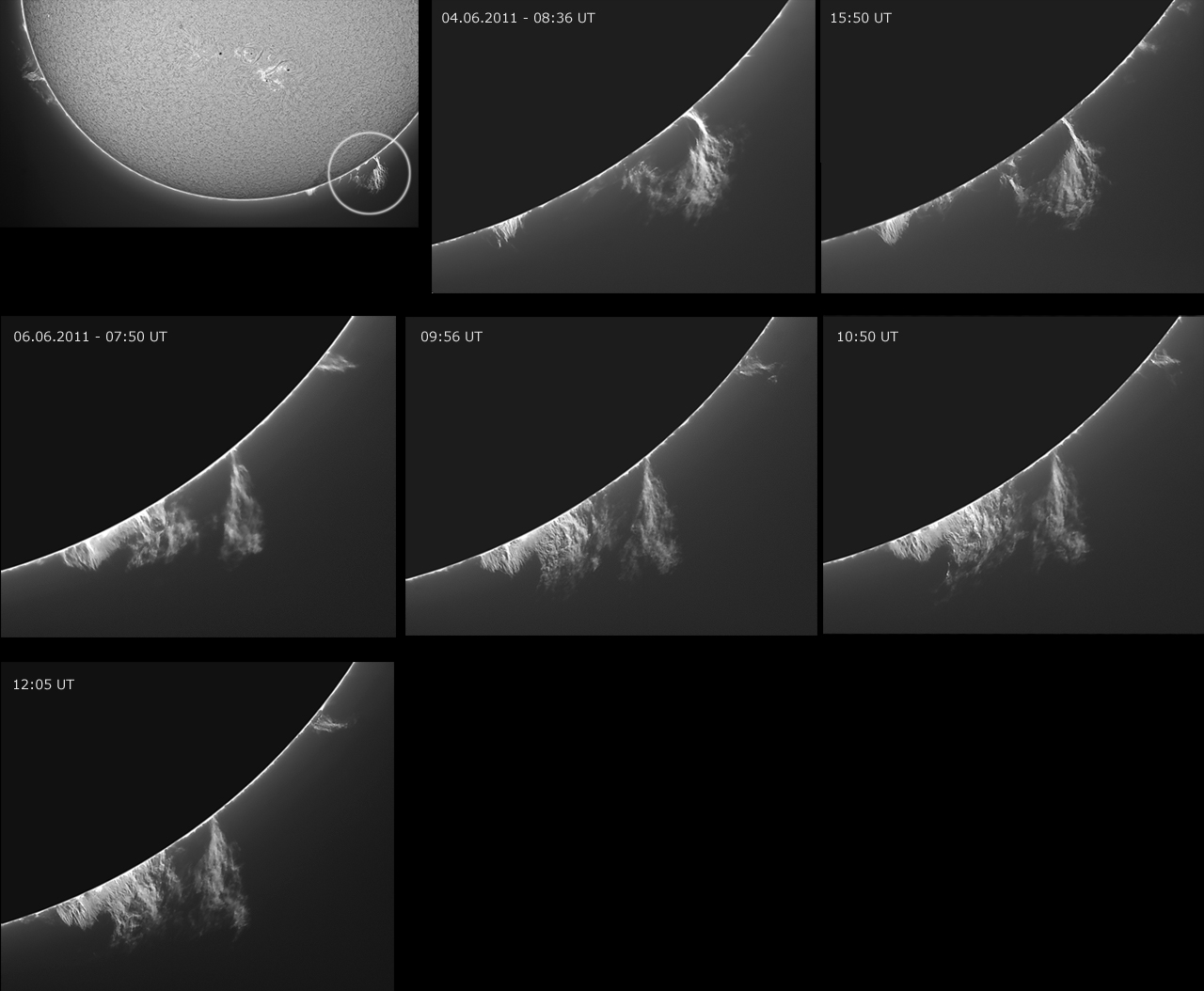
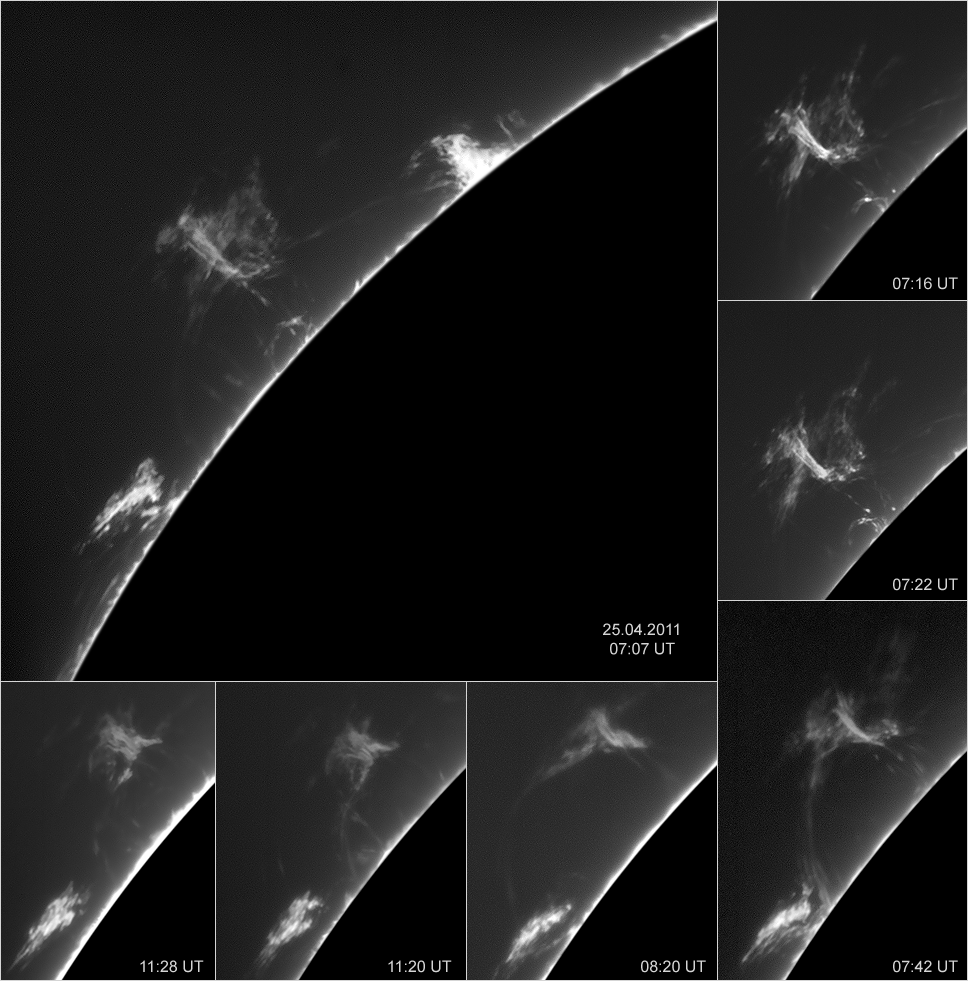
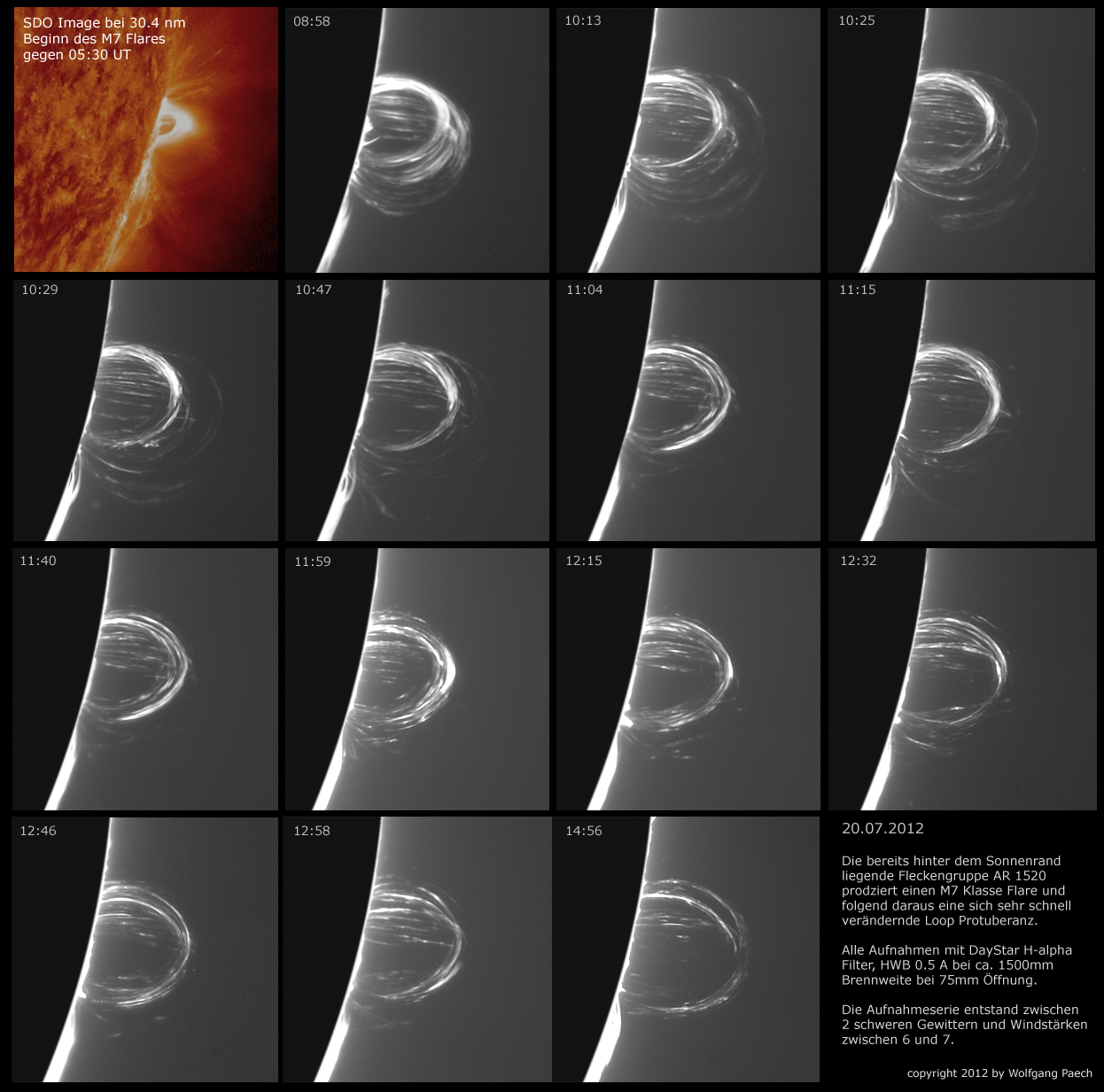
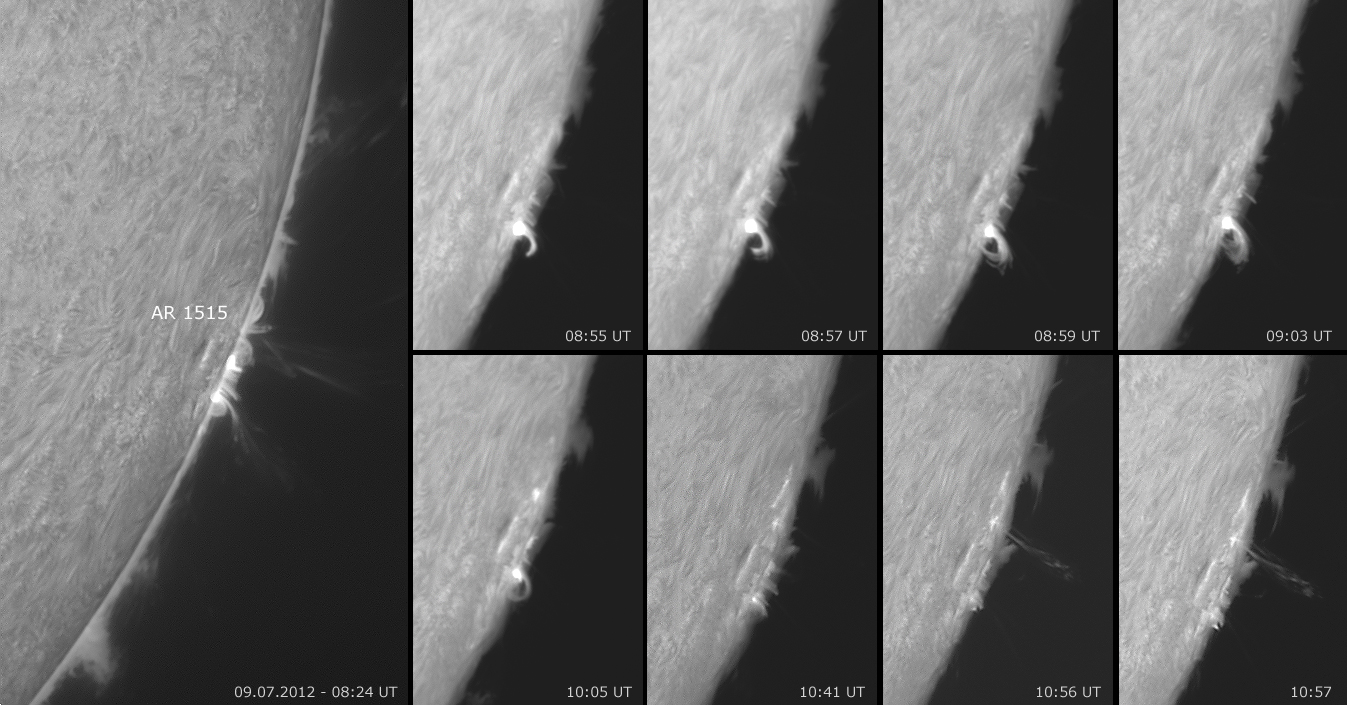
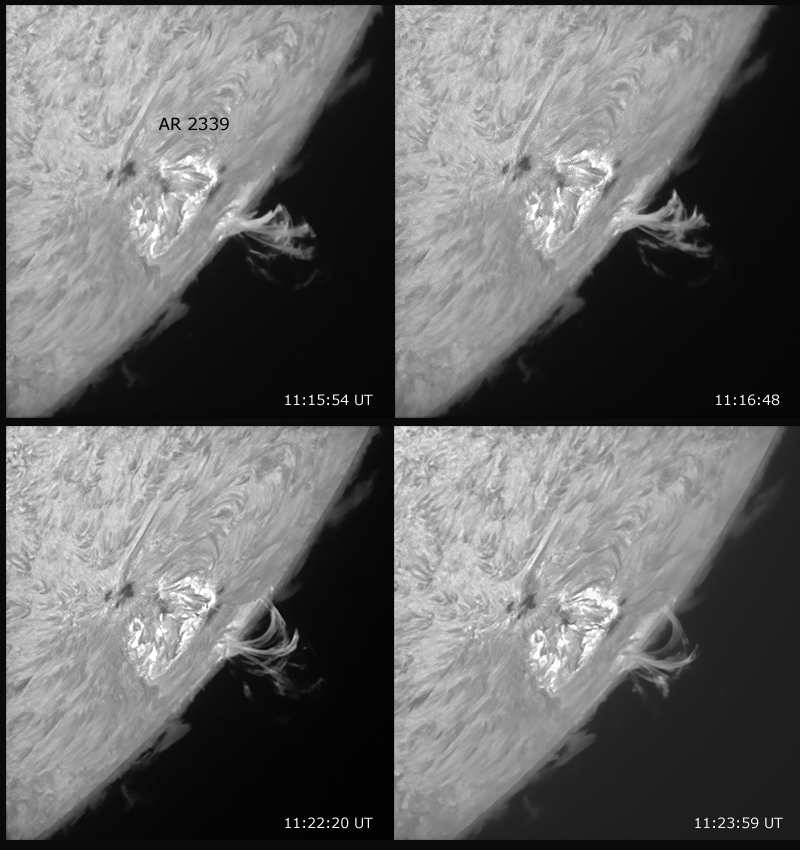
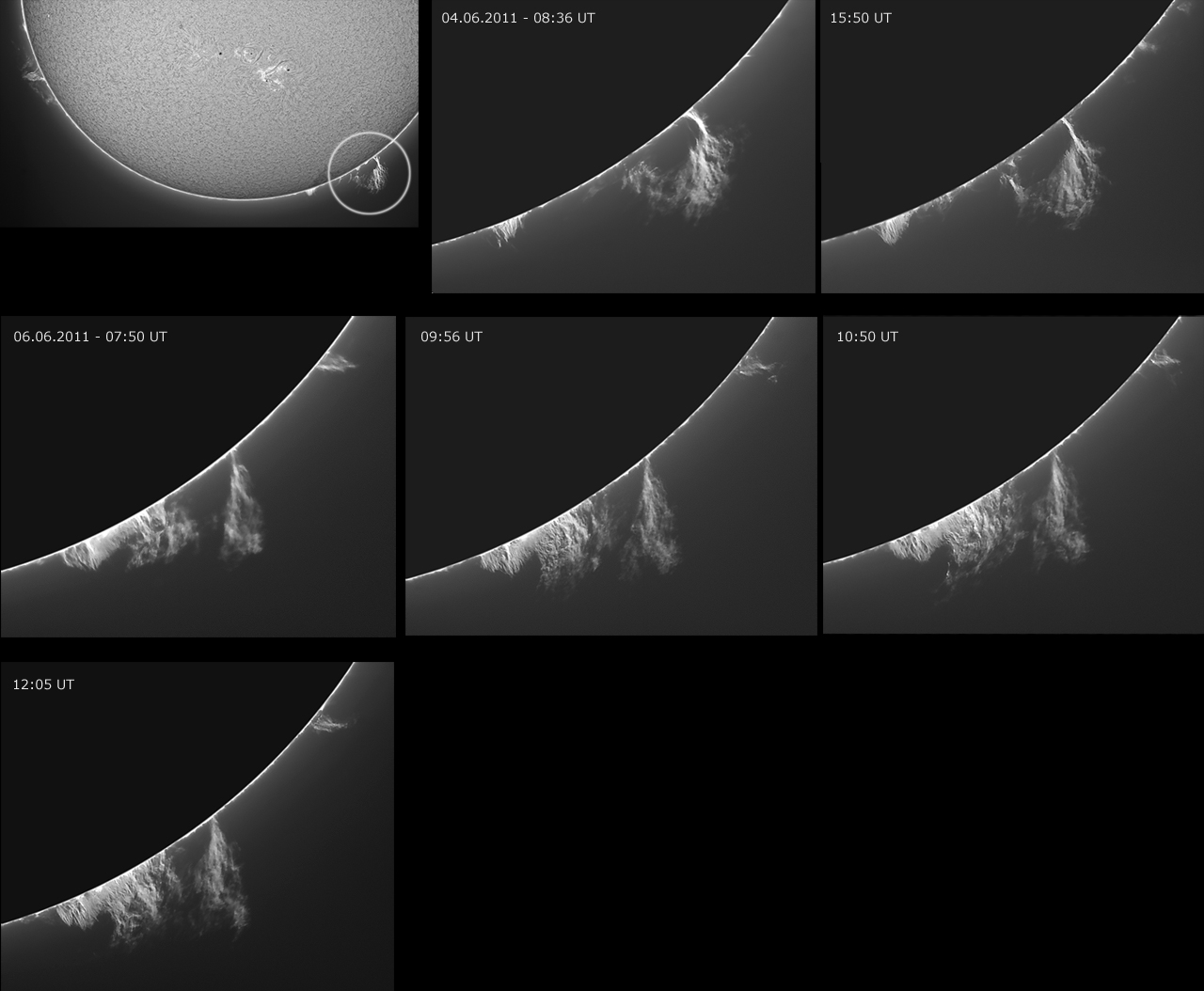
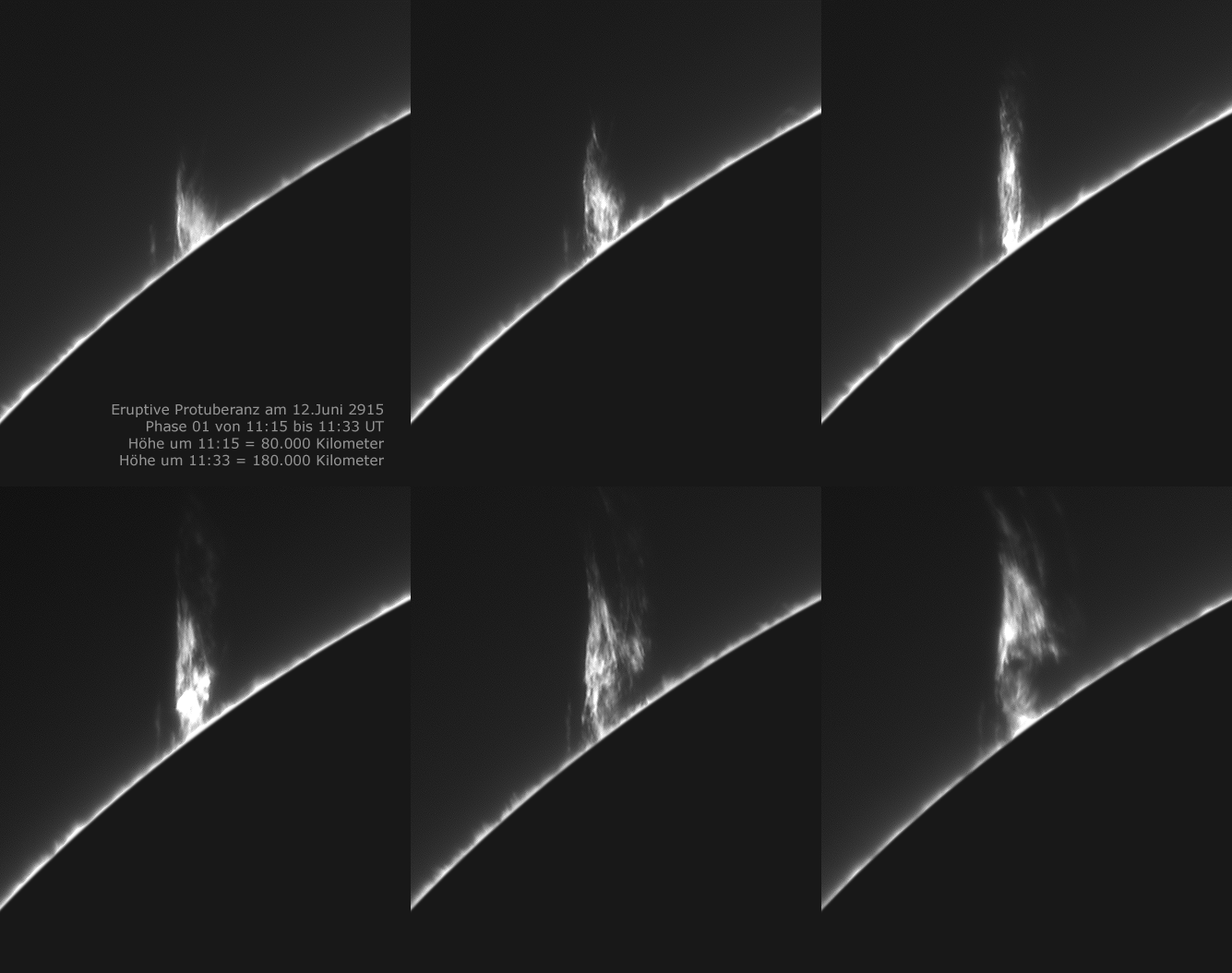
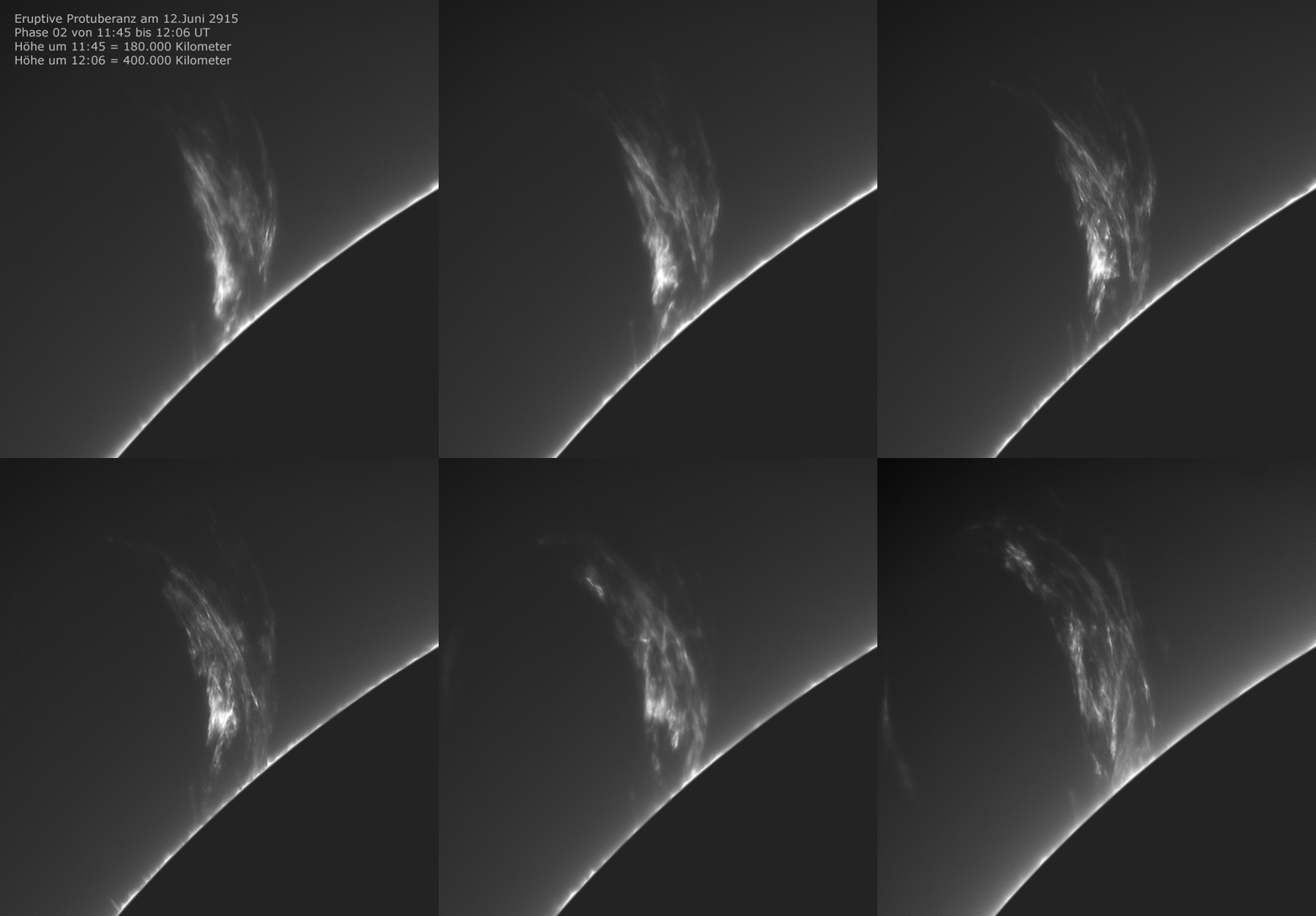
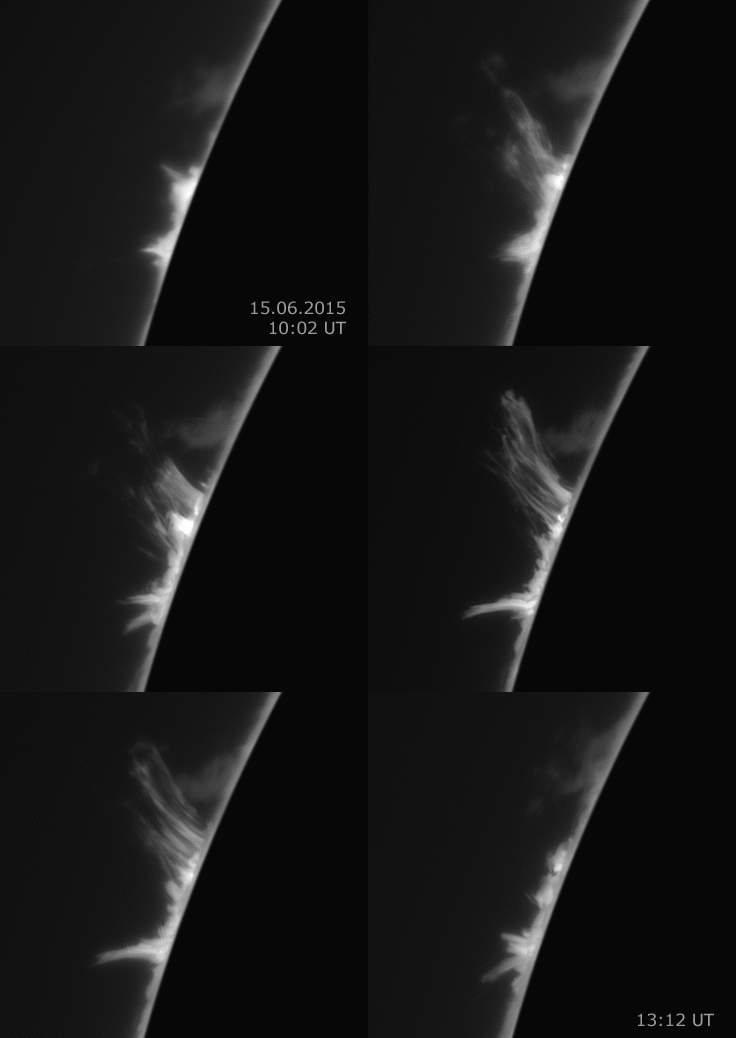
Time series of various prominence phenomena.
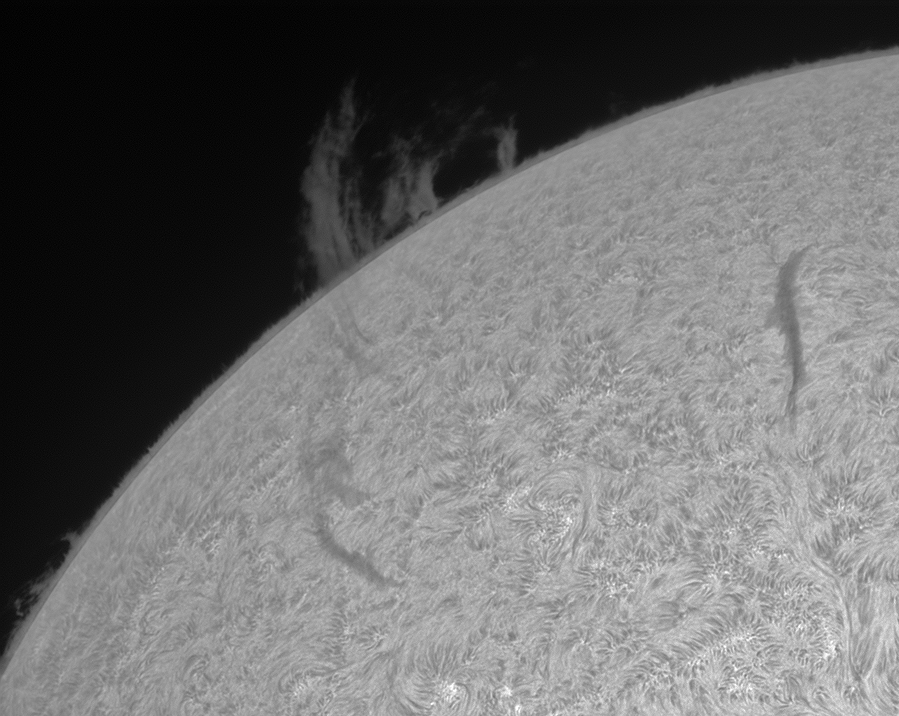
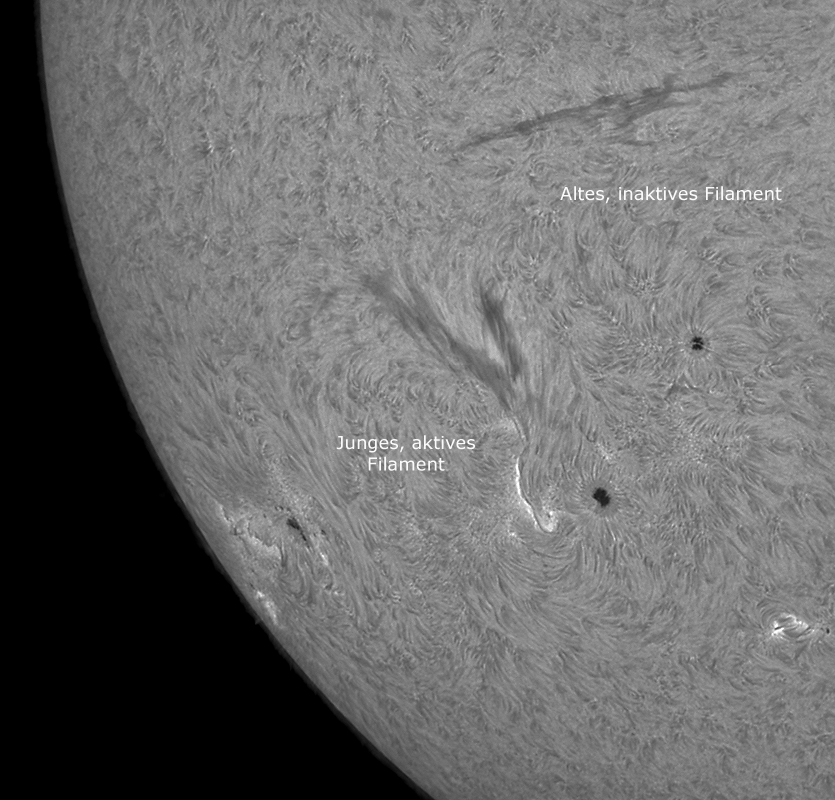
Filaments
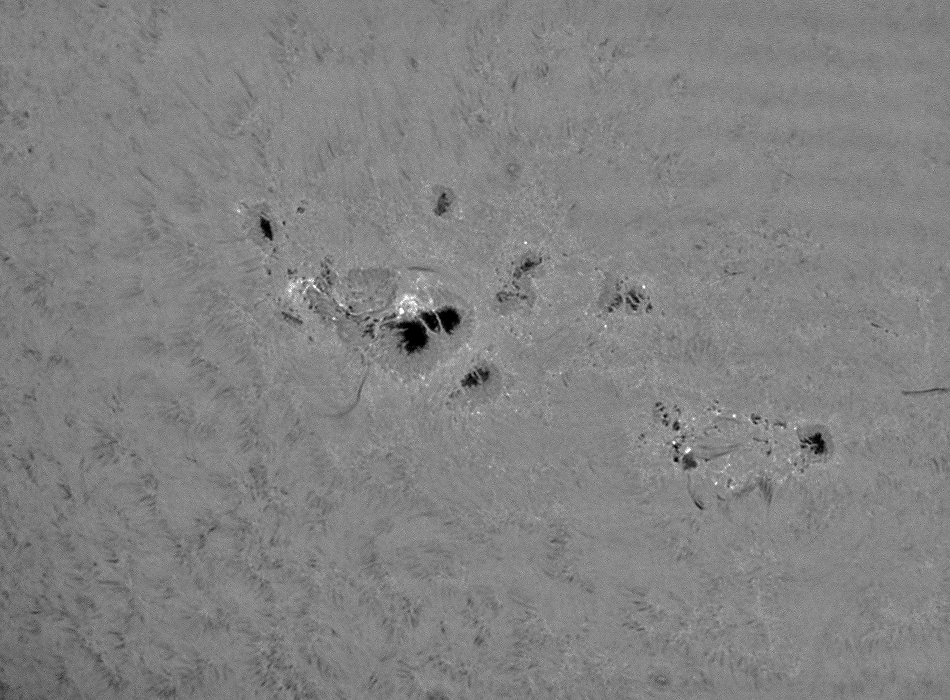
Sunspots and Superpenumbrae
Spicules
Flares
Ellerman Bombs
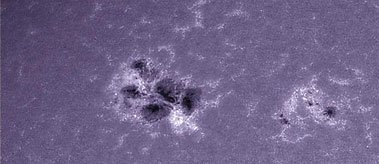
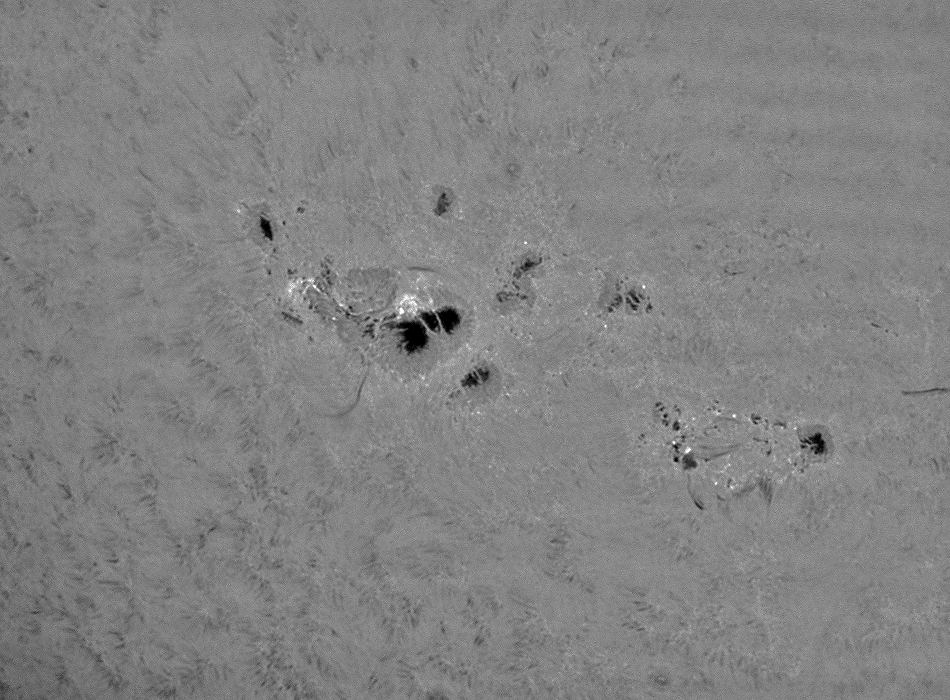
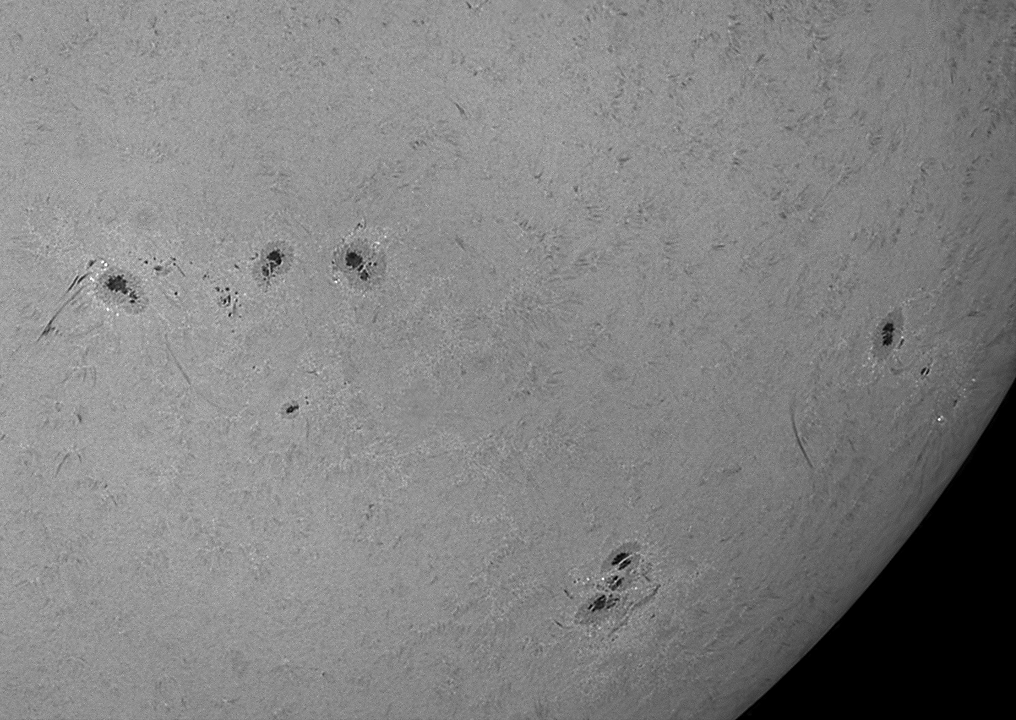
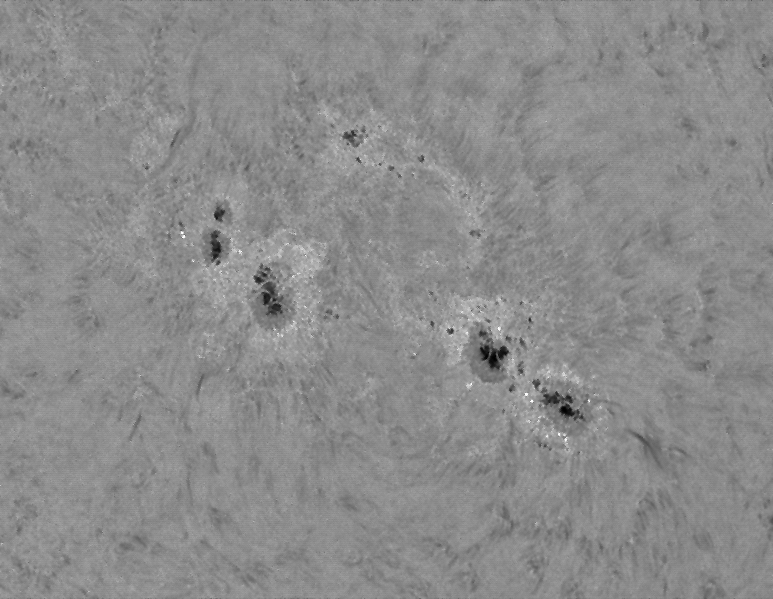
Three examples of Ellerman bombs, also known as microflares, captured in the blue wing of the H-alpha line.
Field Transition Arches and Emerging Flux Regions
Animations
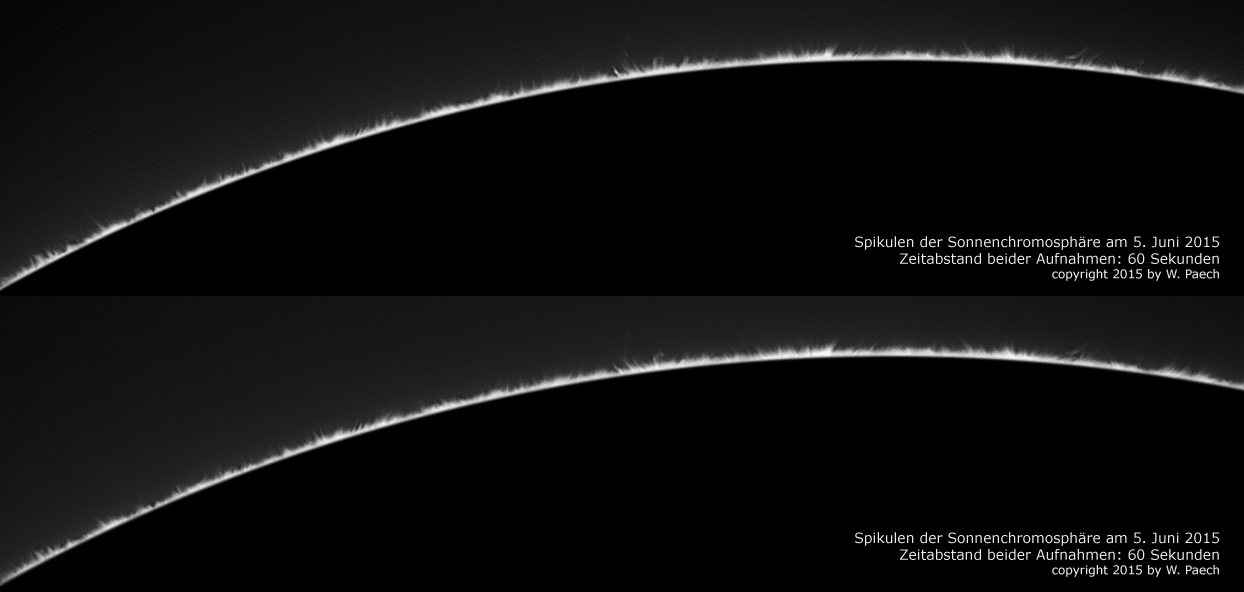
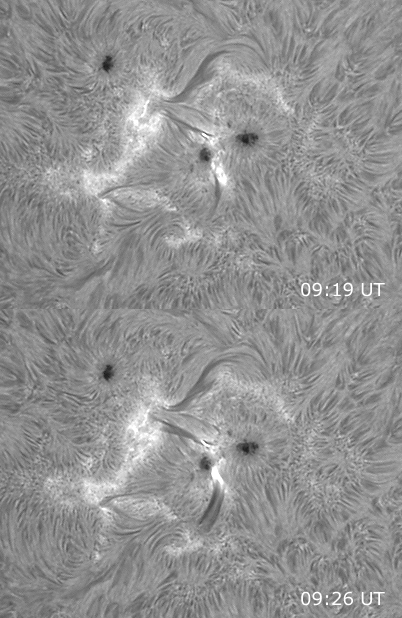
Particularly in H-alpha light, where structures can change from minute to minute as a result of changes in the magnetic fields, solar structures can be represented much more effectively through short animations or time series than through individual images. The following animation shows changes in the spicules of the solar chromosphere over a period of only one minute. The other preview images are displayed without animation. Please click the corresponding preview images to view them. In prominence animations, the solar surface was usually covered with a black mask during image processing.
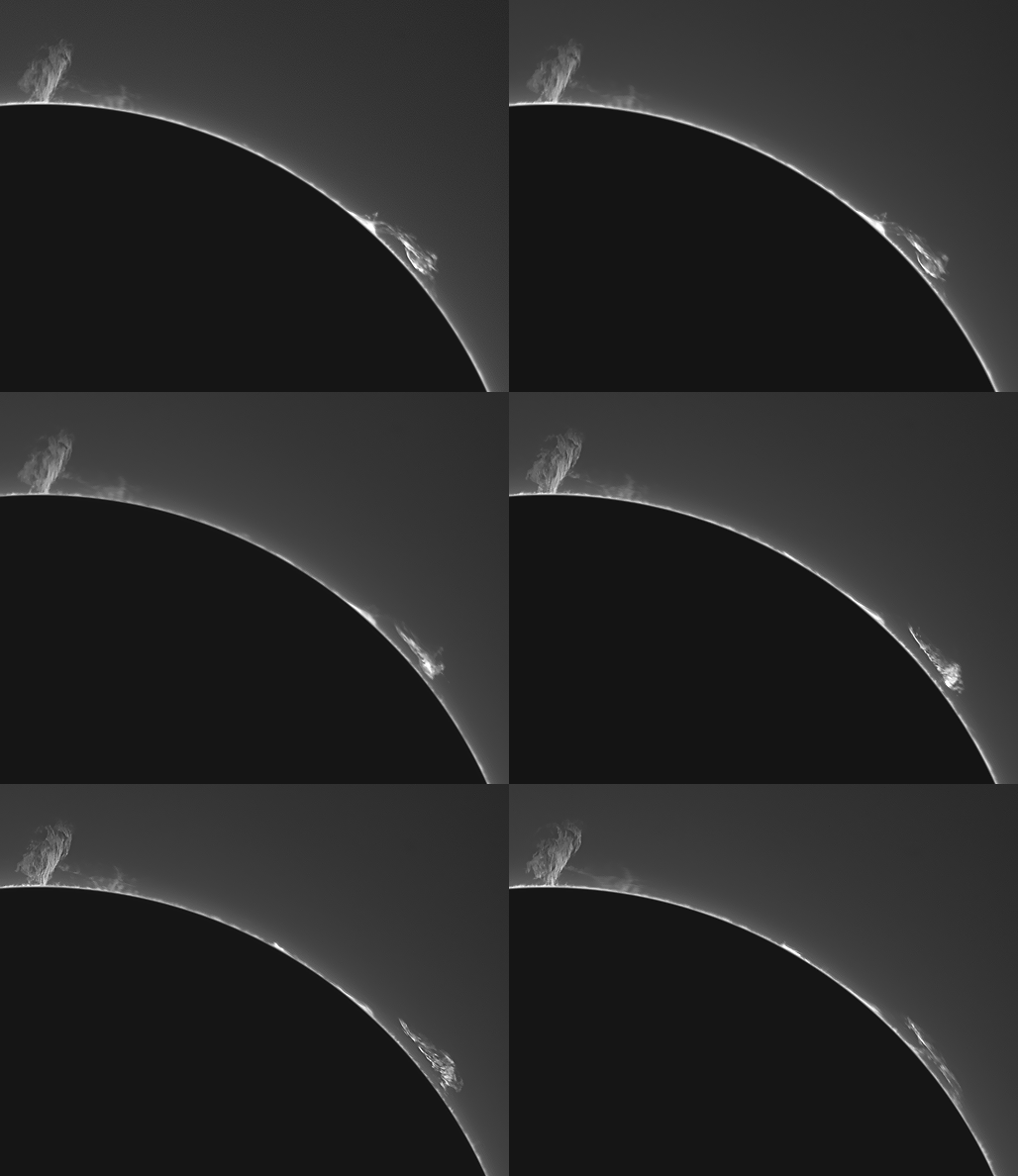

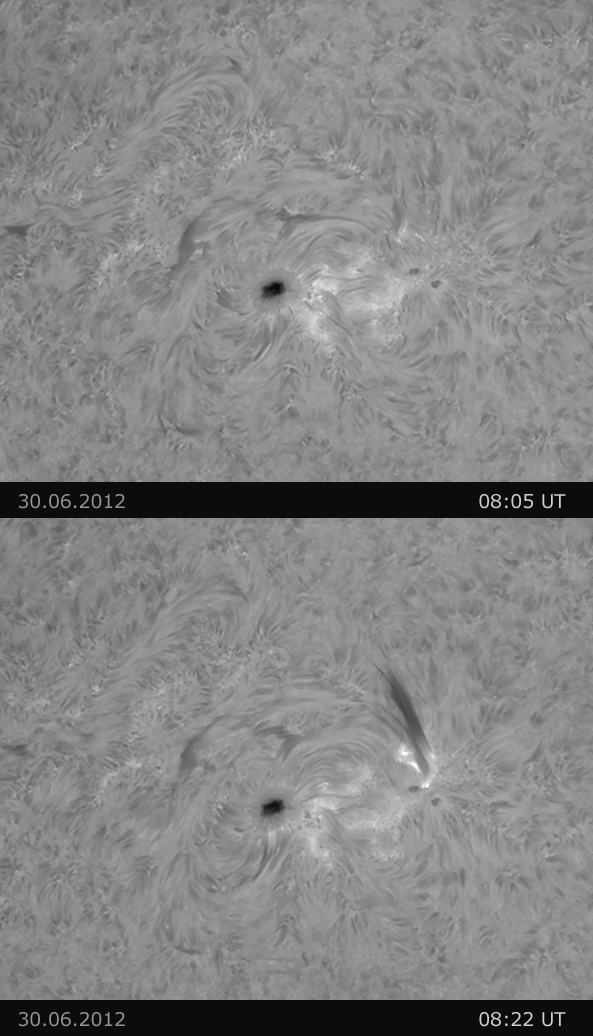
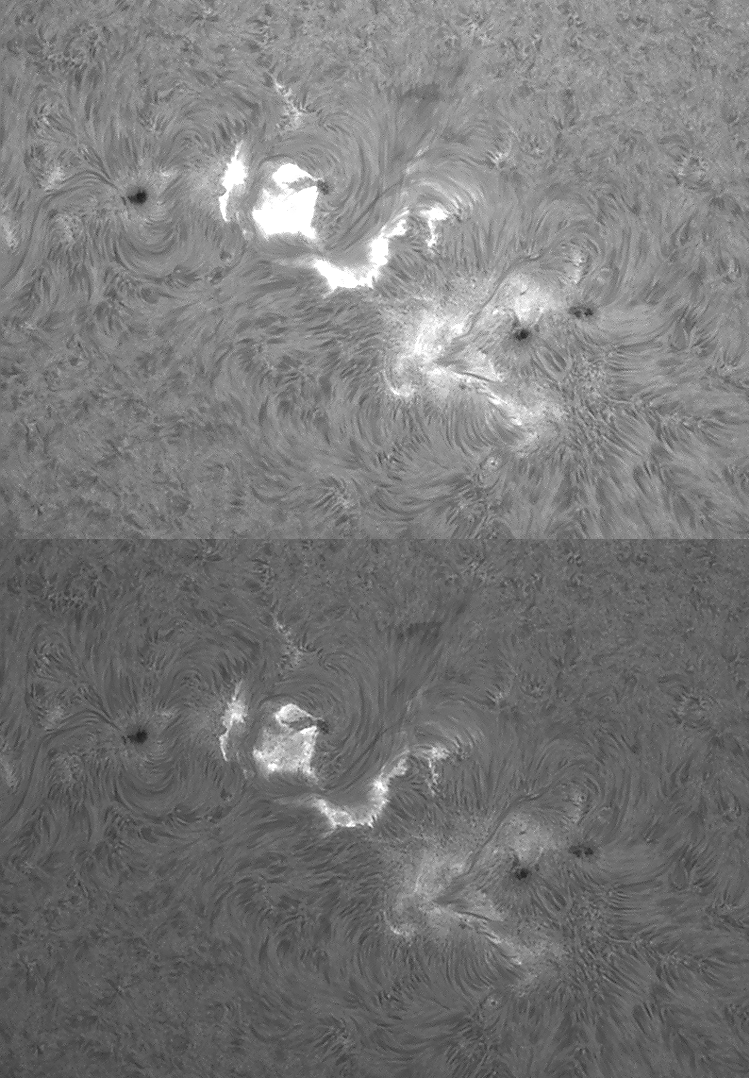
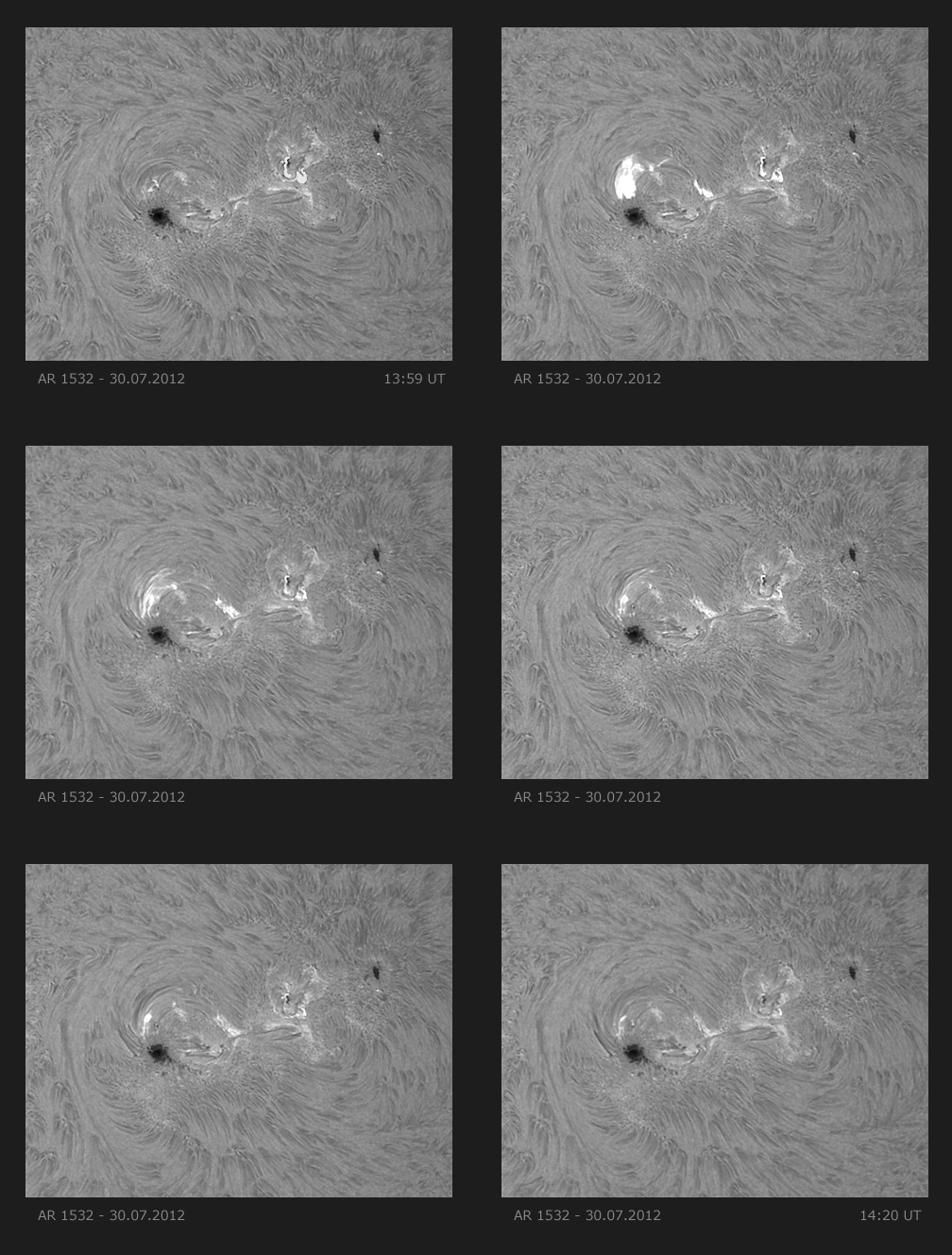
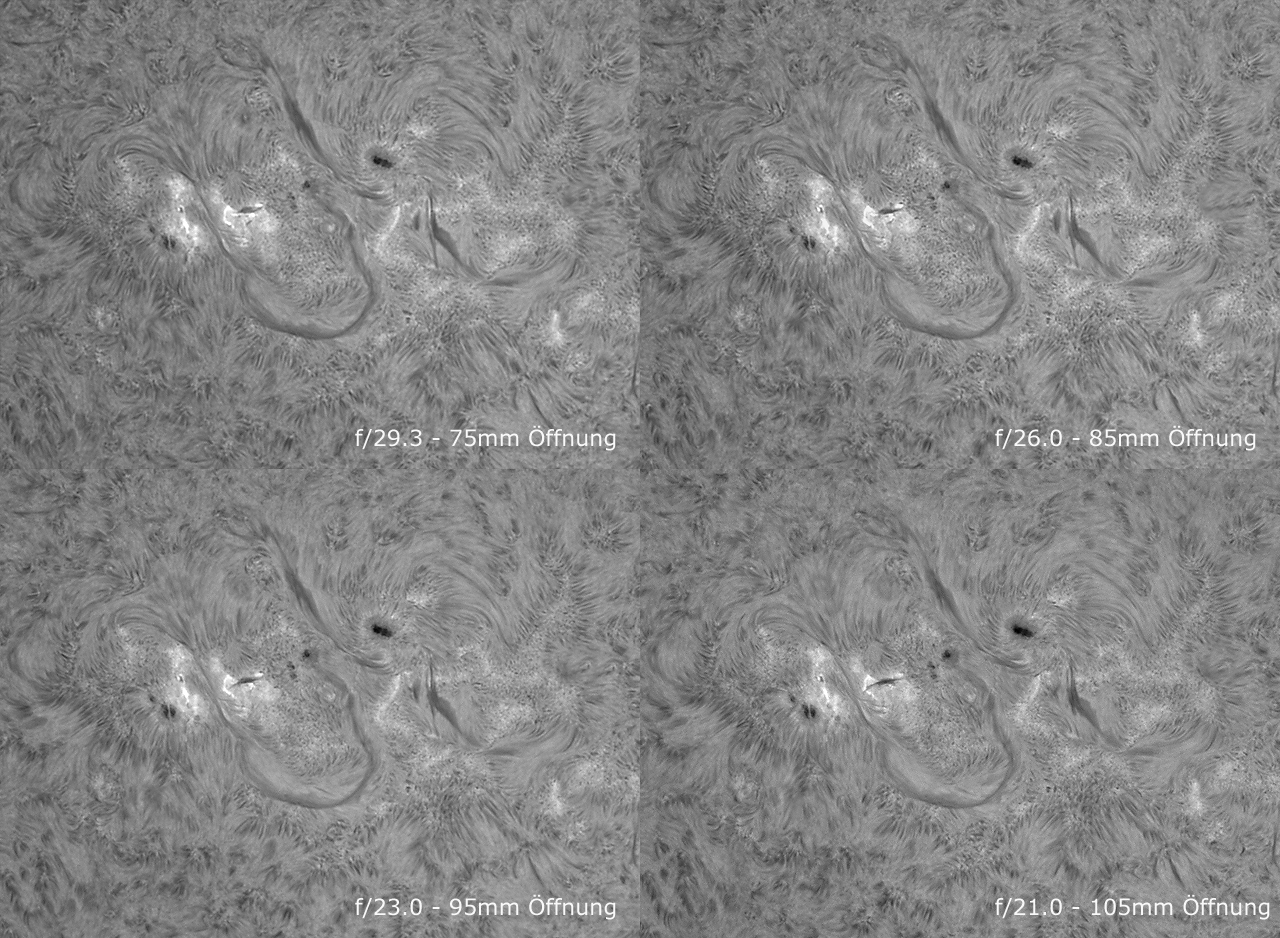
The animation on the left demonstrates that, at least for photographic H-alpha observation, the specified f/30 light path does not have to be maintained with absolute precision, as differences in contrast can be compensated for during image processing. However, this does NOT apply to purely visual observation. The animation shows the chromosphere at focal ratios of f/21, f/23, f/26 and f/30.
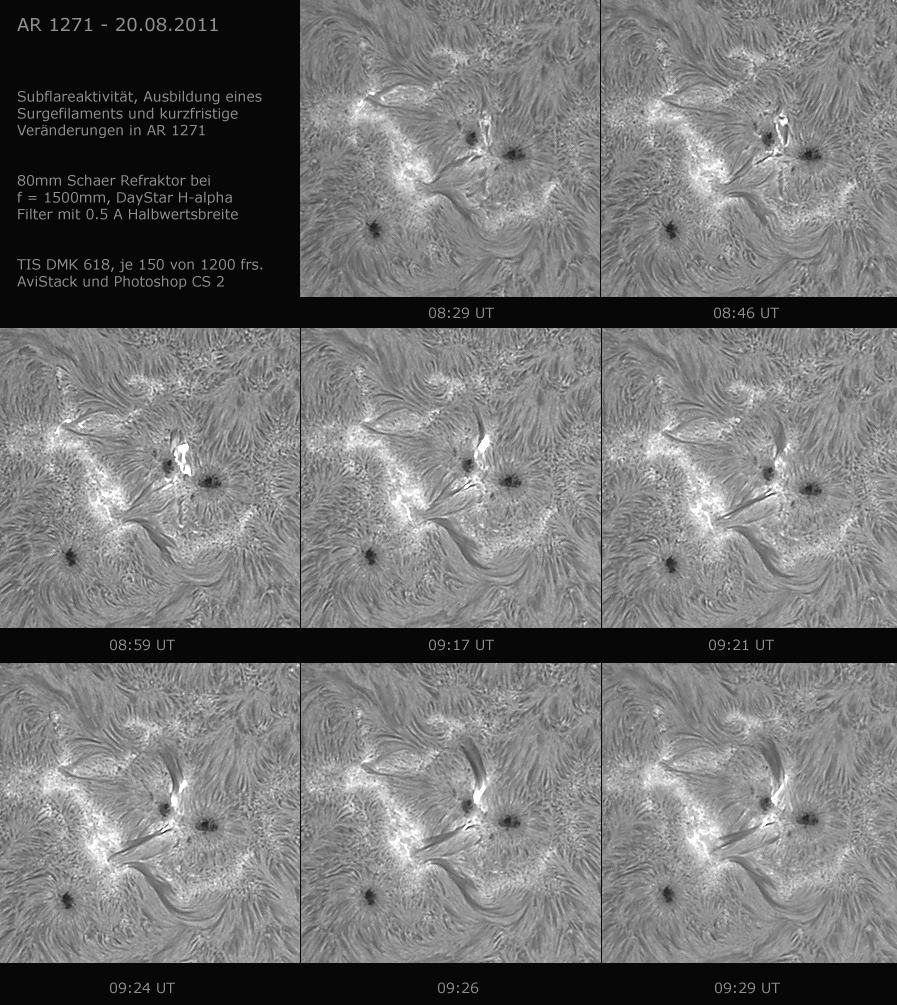
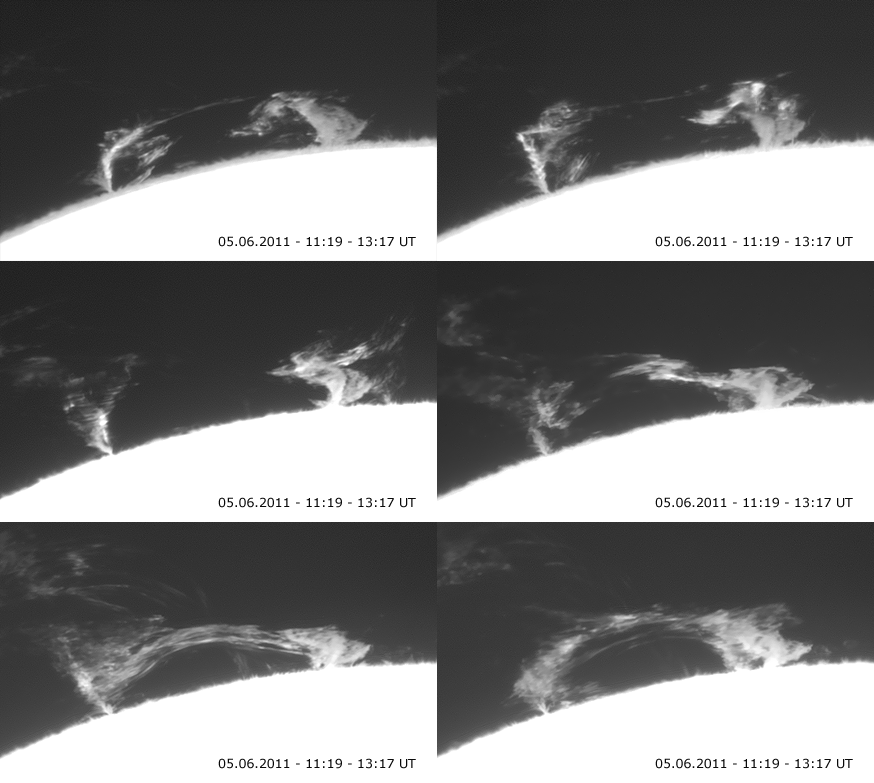
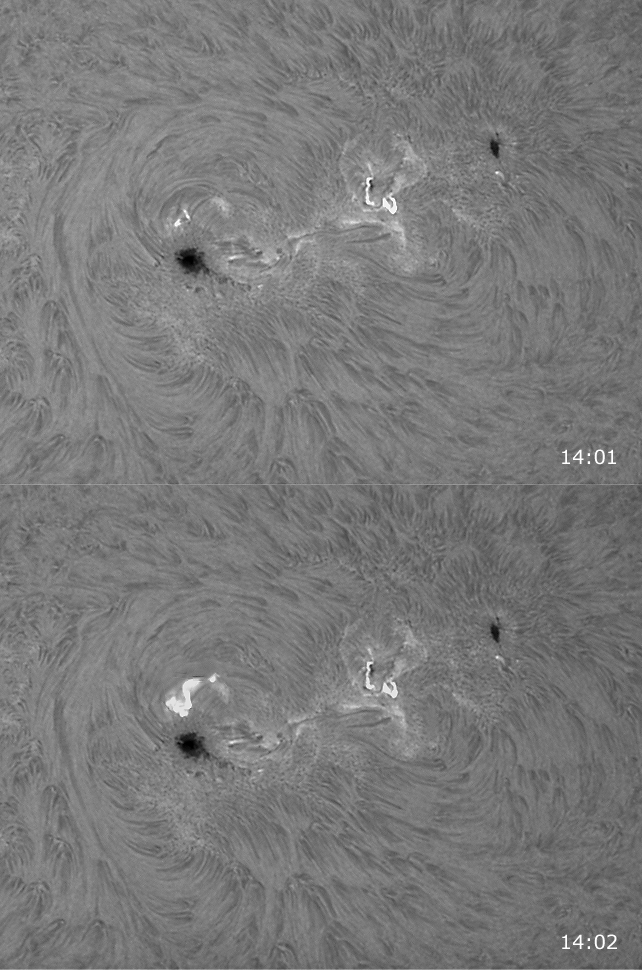
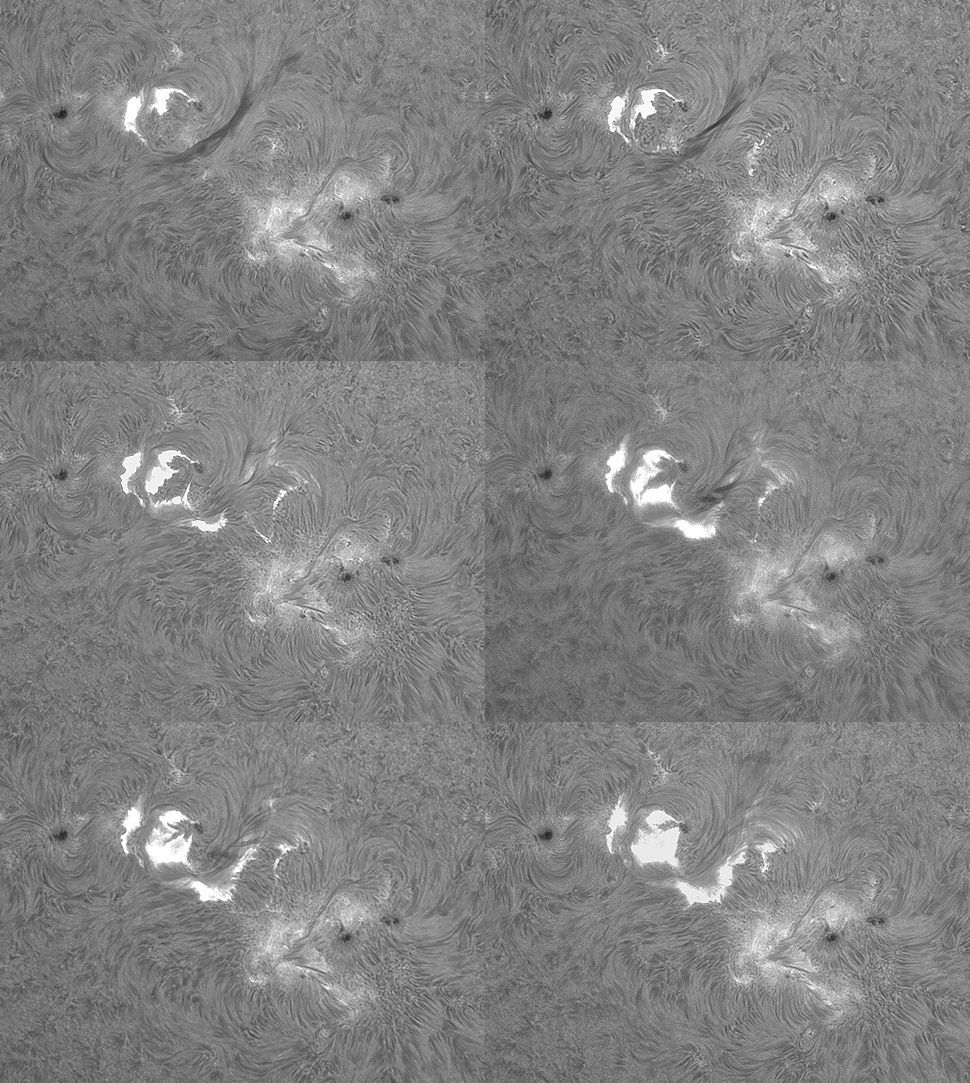
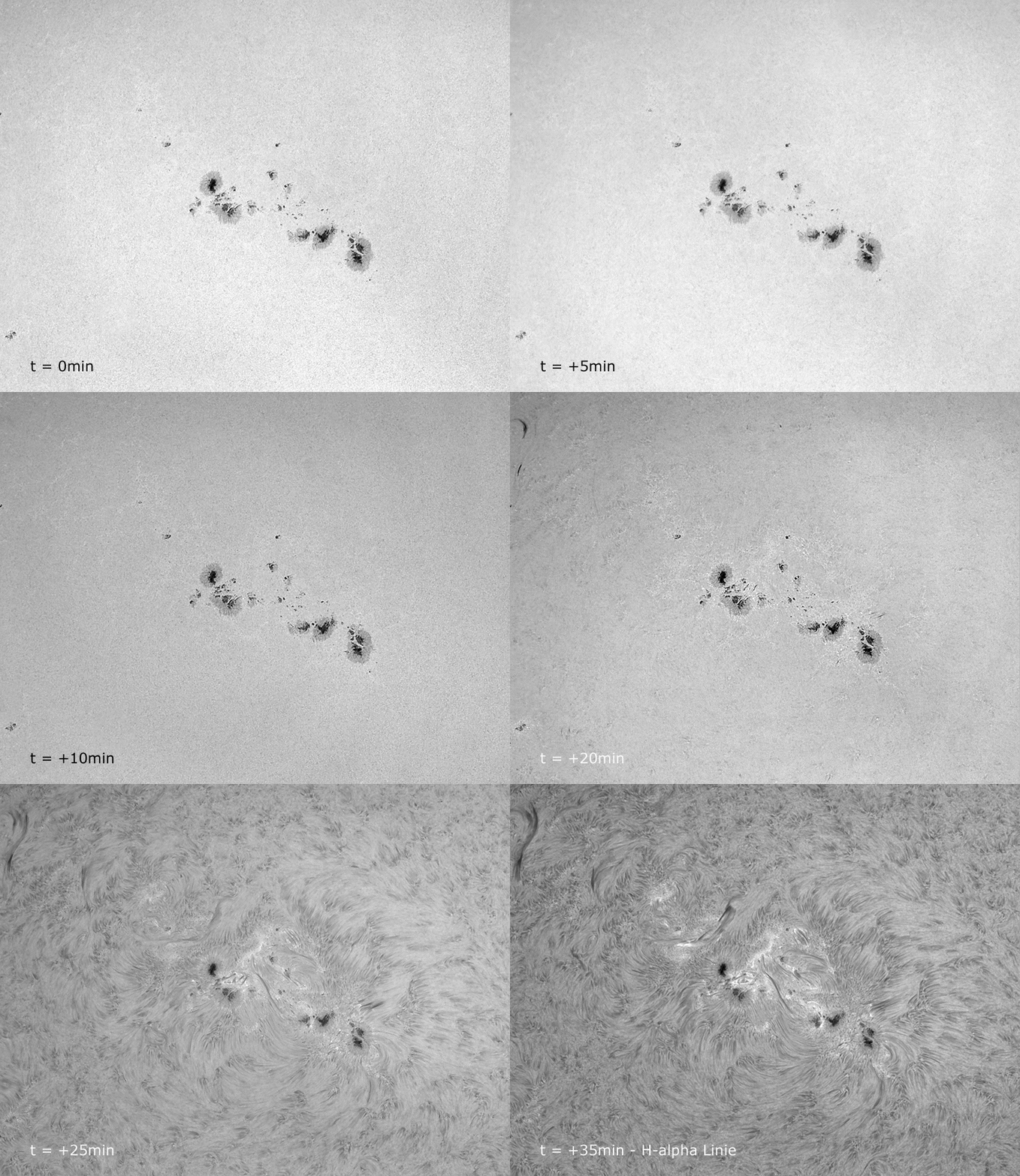
The animation shows a surge filament and the simultaneous formation of an emerging flux region at intervals of ten minutes.
Baader Accessories for H-alpha Solar Observation
Baader exclusively supplies H-alpha filters manufactured by SolarSpectrum. Unlike competing products, these filters are installed at the focal plane of the observing telescope. In principle, this makes observations possible with telescopes of virtually any aperture.
SolarSpectrum filters are available with full widths at half maximum of 0.8, 0.7, 0.65, 0.5 and 0.3 Å. To achieve these narrow bandwidths, the filters must be heated and require an approximately parallel f/30 light path. Prices depend on the full width at half maximum and the clear aperture of the filter.
These SolarSpectrum H-alpha filters are available in various product series, including:
- Solar Observer Series 1, discontinued
- Series 1.5, Advanced Solar Observer
- Research Grade Filters RG 32 and RG 46
They differ both in their full width at half maximum and in their clear filter aperture, which ranges from 19 to 46 mm.
Since 2017, SolarSpectrum has supplied H-alpha filters from the SunDancer series. These filters are available with clear apertures of either 19 or 25 mm and with full widths at half maximum of 0.7, 0.5 or 0.3 Å.
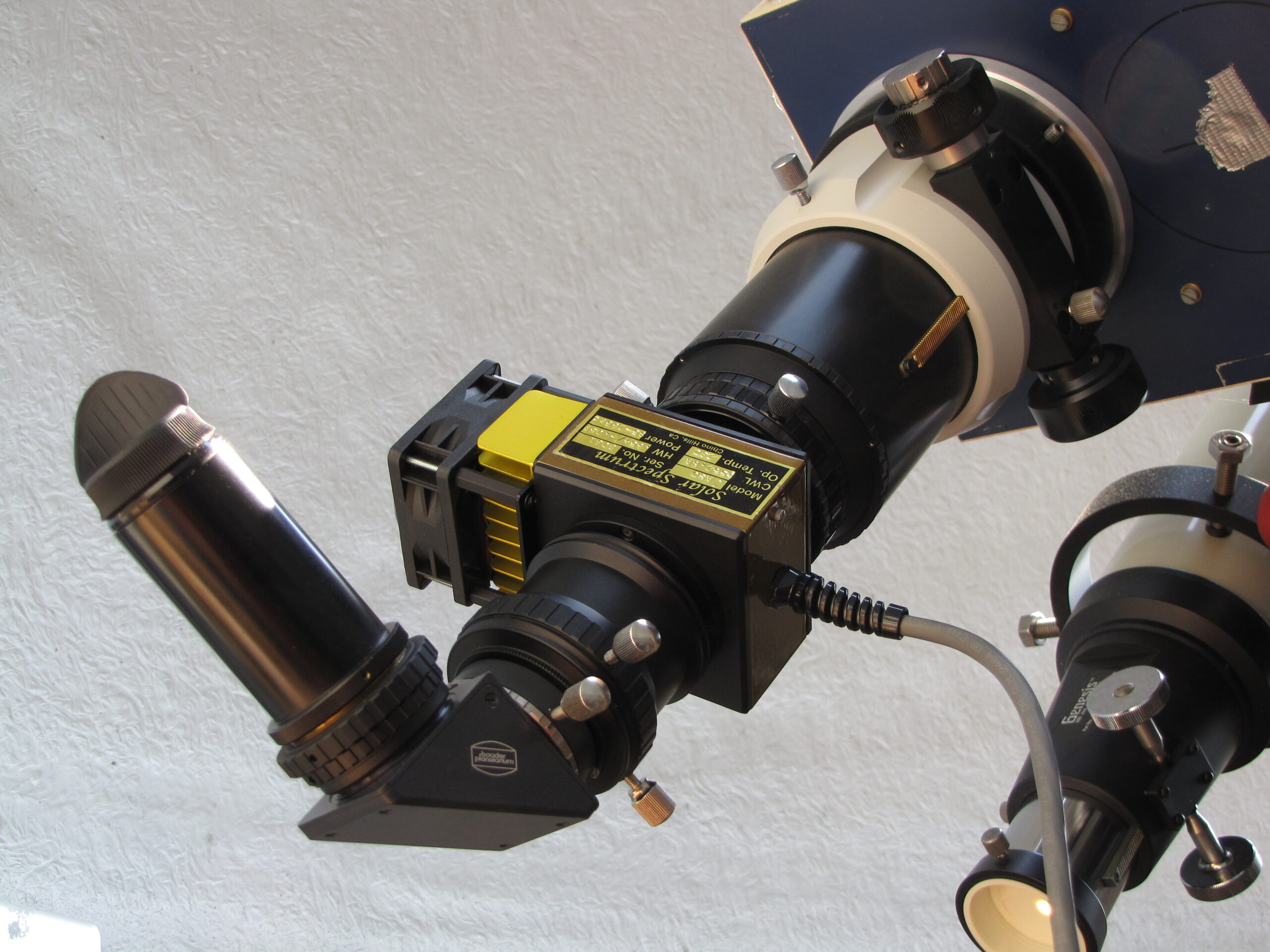
These filters are also heated. However, the H-alpha line is shifted towards the red or blue wing of the spectrum mechanically by tilting the filter within the telescope’s light path.
Unfortunately, purchasing a SolarSpectrum filter alone is not sufficient. The filters require a prefilter positioned IN FRONT OF the telescope aperture. This prefilter limits the infrared heat radiation so that it remains below the operating temperature of the filter. At the other end of the spectrum, short-wave ultraviolet radiation must also be blocked, as it can destroy the sensitive etalon coatings of the filter within a very short period of time.
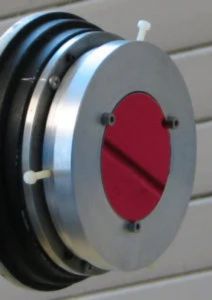
For this purpose, Baader supplies so-called D-ERF Energy Rejection Filter 110mm (8mm glass) (#2459243D , € 560,- ) , which transmit only radiation between 600 and 700 nanometres.
Baader Telecentric Systems TZ-2, TZ-3 and TZ-4
To centre the narrow bandwidth of SolarSpectrum filters precisely on the H-alpha wavelength of 656.28 nm, the filters are heated to a specific temperature.
In addition, maintaining the narrow full width at half maximum requires an approximately parallel f/30 light path from the observing telescope. With the commonly used f/15 refractors of the past, this was rarely a problem, as the objective simply had to be stopped down to half its aperture. With today’s “fast” refractors, however, this is considerably more difficult.
These telescopes commonly have focal ratios of around f/7, meaning that their objectives would have to be stopped down to one quarter of their full aperture. This would make little sense. Another way of achieving an f/30 light path is to increase the telescope’s focal length.
Important note: A conventional Barlow lens increases the focal length but does not produce a parallel beam. For this reason, using a conventional Barlow lens in combination with a narrowband SolarSpectrum filter does NOT produce satisfactory observing results. Only a narrow strip in the centre of the image will remain within the H-alpha wavelength range. For further information, please refer to the PDF file about telecentric systems.
Baader therefore supplies three different telecentric systems that extend the telescope’s focal length by factors of 2x, 3x or 4x.
Starting with a focal ratio of f/15 for the 2x system or f/7.5 for the 4x system, the telecentric system produces a parallel f/30 light path while using the telescope’s full aperture. With faster focal ratios, the aperture should be stopped down until the resulting focal ratio is once again f/30. The distance from the lens vertex to the focal point is 200 mm. This leaves sufficient space behind the telecentric system for the H-alpha filter and any additional accessories, such as a 2-inch star diagonal or virtually any camera configuration.
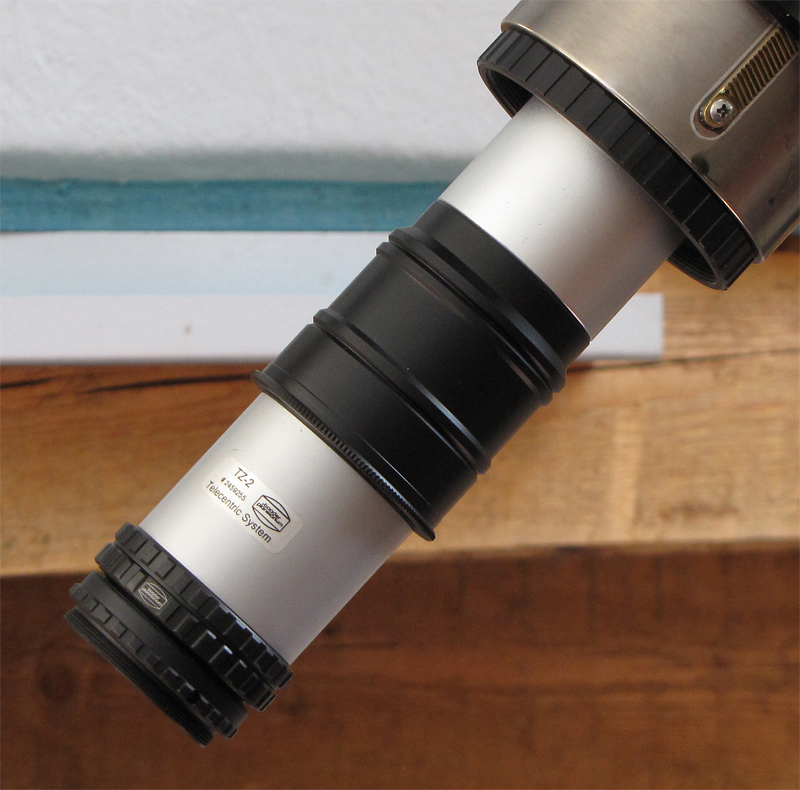
Since 2017, Baader Planetarium has supplied the TZ-3 Telecentric System 2" – Research Grade (3x focal length) (#2459257 , € 445,- ) . It increases the telescope’s original focal length by a factor of three. For example, a telescope with an aperture of 100 mm and a focal length of 1,000 mm, corresponding to f/10, is extended to 3,000 mm. The resulting focal ratio is the required f/30.
For a stable connection between the telecentric system and the SolarSpectrum filter when using larger telescopes, Baader offers the so-called M68 Telecompendium for telecentric systems and FFC (#2459258 , € 440,- ) . An overview is available here.
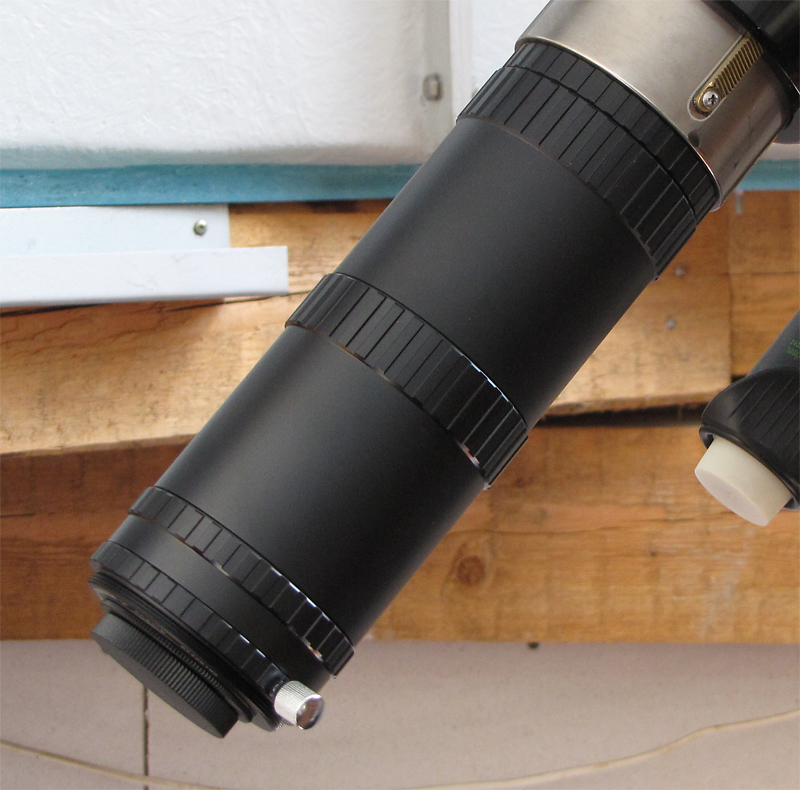
Read the field report on the Baader TZ-3 and 0.4x telecompressor by graduate engineer Wolfgang Paech here.
Telecompressors for Reducing the Focal Length
(SolarSpectrum 0.7x Telecompressor and Research Grade 0.4x Telecompressor)
Under the typical seeing conditions at our latitudes, the long focal lengths produced by telecentric systems can rarely be used to their full potential.
The focal length can therefore be reduced again BEHIND the SolarSpectrum filter using SolarSpectrum telecompressors. Depending on the distance between the reducer and the eyepiece or camera, reduction factors ranging from approximately 0.5x to 0.7x can be achieved. Fortunately, the Sun provides sufficient light, so inserting an additional optical element has no significant effect.
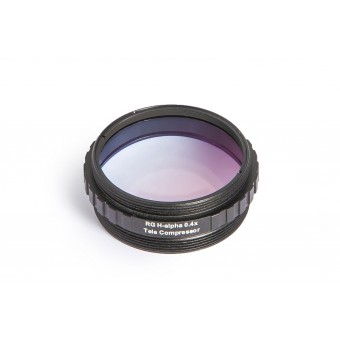
Since 2017, SolarSpectrum has supplied the Telecompressor 2" H-alpha 0.4x – Research Grade, for Solar Spectrum (#2459260 , € 366,- ) . It was designed for use in combination with the TZ-3 Telecentric System 2" – Research Grade (3x focal length) (#2459257 , € 445,- ) focal-length extender.
It is mounted directly on the eyepiece side of the SolarSpectrum filter and reduces the focal length previously extended by the telecentric system by a factor of 0.4 without loss of image quality. Its working distance of 74 mm is optimised for video imaging and for capturing the entire Sun with a corrected image field measuring 16 mm in diameter, which is sufficiently large for the small sensors used in video cameras.
A detailed description of how to use SolarSpectrum reducers is available here.
Below is another overview of selected Baader products for H-alpha solar observation:
- Solar Spectrum Filter
- Baader D-ERF Energy Rejection Filter (75 - 290mm) (various versions available)
- TZ-3 Telecentric System 2" – Research Grade (3x focal length) (#2459257 , € 445,- )
- TZ-4 Telecentric System T-2 (4x focal length) (#2459256 , € 387,- )
- TZ-3S Telecentric System T-2 for SunDancer II and more (#1363070 , € 365,- )
- Telecompressor 2" H-alpha 0.4x – Research Grade, for Solar Spectrum (#2459260 , € 366,- )
- Telecompressor 2" H-alpha 0.7x for Solar Spectrum (#2459259 , € 313,- )
This website presents high-resolution solar images accompanying our short publication, “Which Solar Structures Can Be Observed Using BAADER Accessories for Solar Observation?”, which you can download here as a german PDF file.
© All images by Wolfgang Paech unless otherwise indicated.