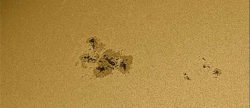
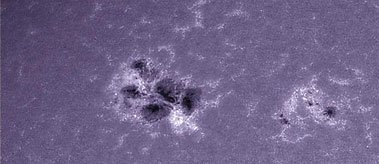
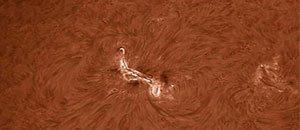
This website presents high-resolution solar images accompanying our short publication, “Which Solar Structures Can Be Observed Using BAADER Accessories for Solar Observation?”, which you can download here as a german PDF file.
© All images by Wolfgang Paech unless otherwise indicated.


Solar Structures Observable with the Baader Calcium Filter
ALL images on this website were captured using accessories manufactured by Baader. The telescopes used for imaging were a 4-inch Tele Vue refractor and a 6-inch Astro-Physics refractor, with focal lengths ranging from 500 to 1,500 millimetres. A Baader Mark I Herschel Prism was used exclusively for light attenuation. The Baader K-Line Filter, current version: Calcium GEN-II Filter 1¼" (incl. AstroSolar Photo Film OD 3.8, A4) (#2961590 , € 285,- ) , was used for all images. The images were captured using the “lucky imaging” technique. The video cameras used were a TIS DMK 31 and a Celestron Skyris 445 Mono.
We present the following structures:
- Sunspots
- Chromospheric Faculae
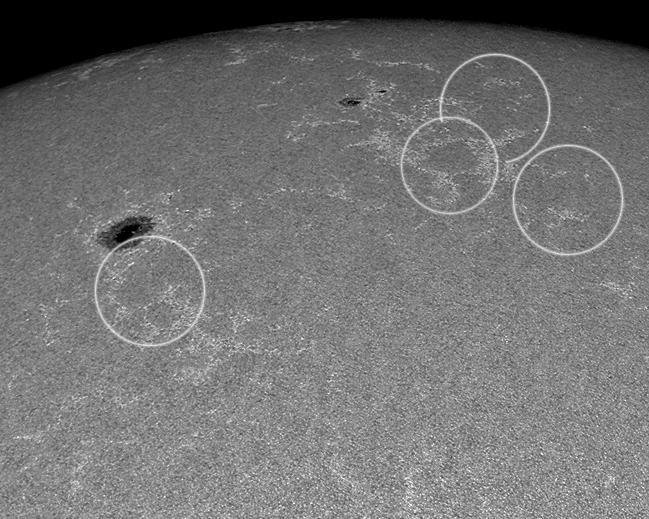
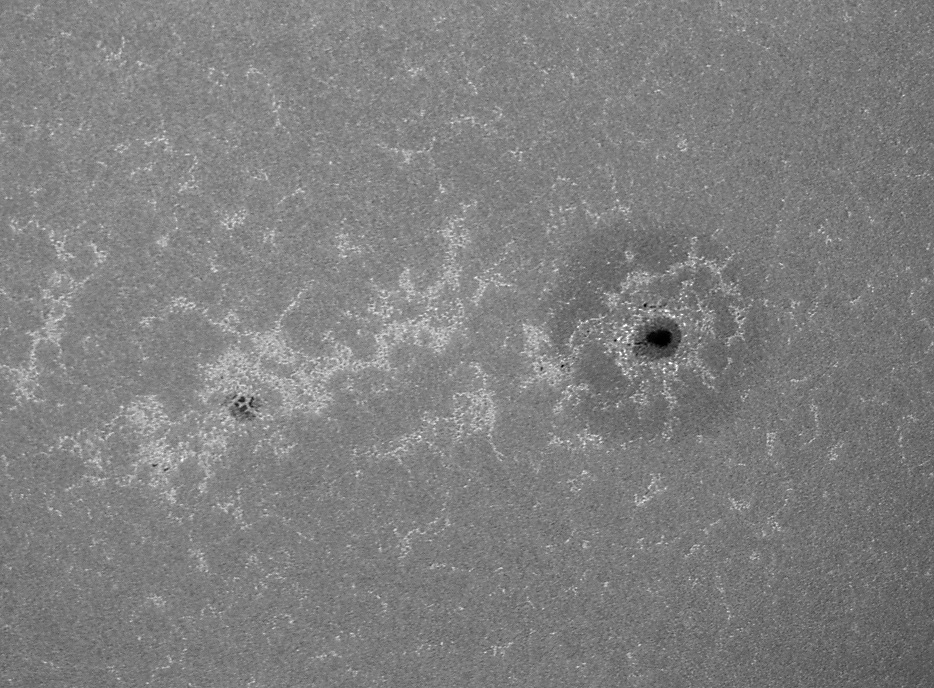
- Supergranulation Cells (Chromospheric Network Structure)
- Ellerman Bombs
- Flares, Filaments and Prominences
- Animations
Sunspots
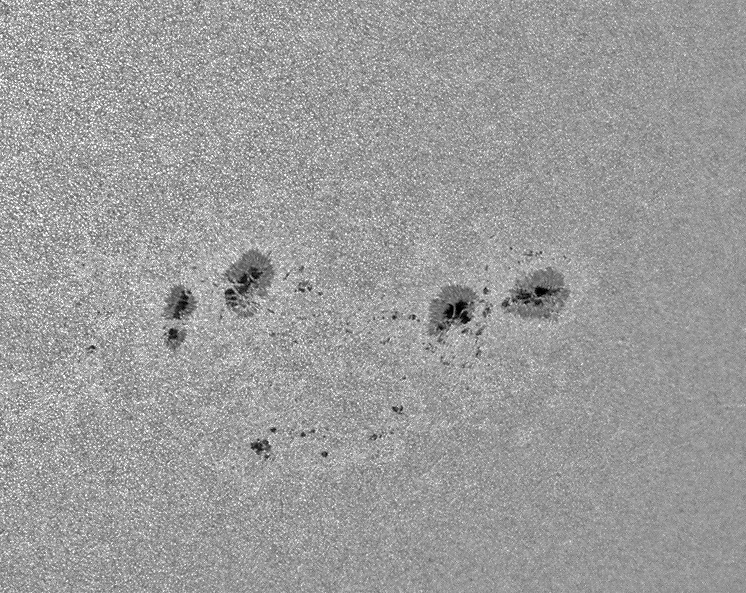
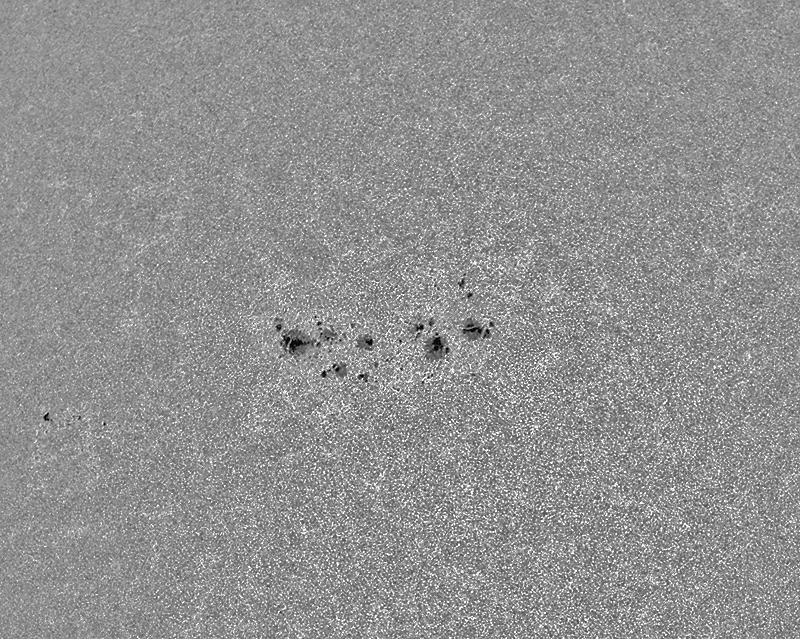
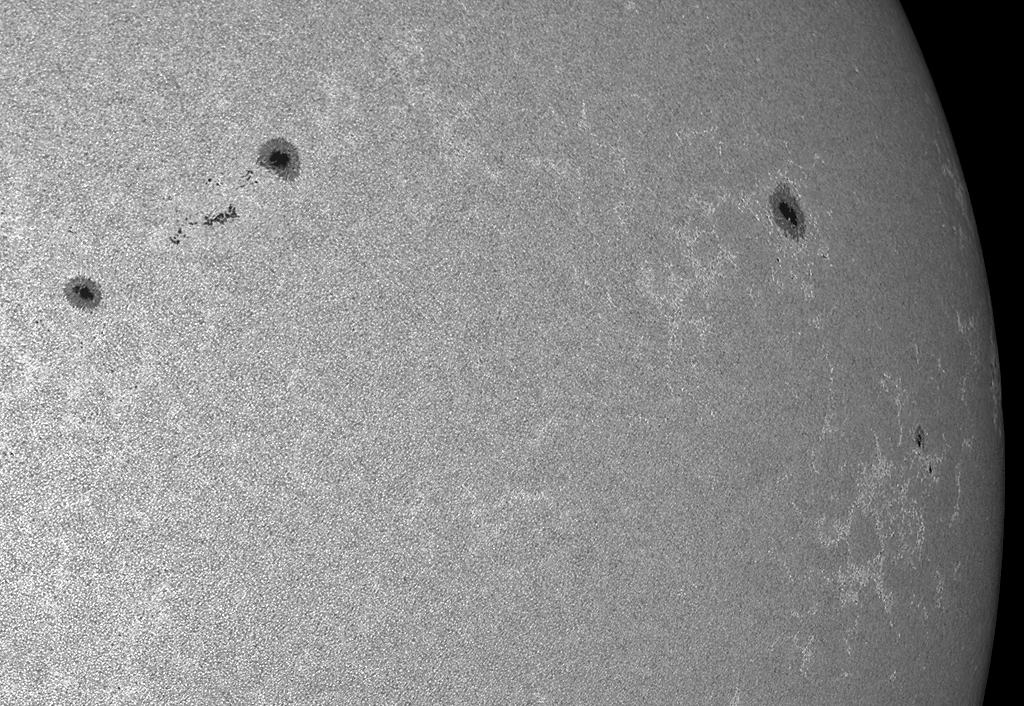
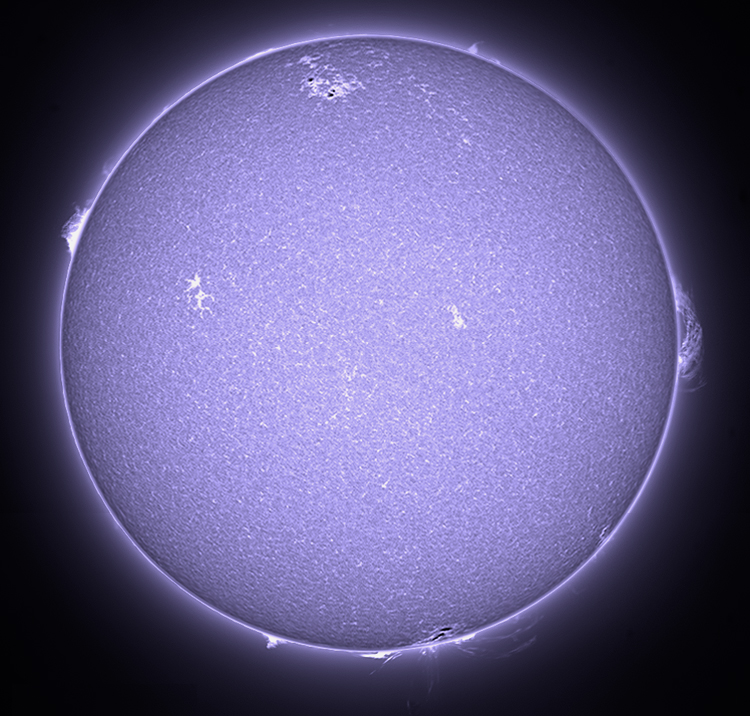
The image on the right shows the Sun on 24 April 2015, captured using the Baader K-Line Filter, current version: Calcium GEN-II Filter 1¼" (incl. AstroSolar Photo Film OD 3.8, A4) (#2961590 , € 285,- ) , and a 4-inch refractor. Prefiltering was provided by AstroSolar Photo Film OD 3.8 (various versions available) .
Chromospheric Faculae
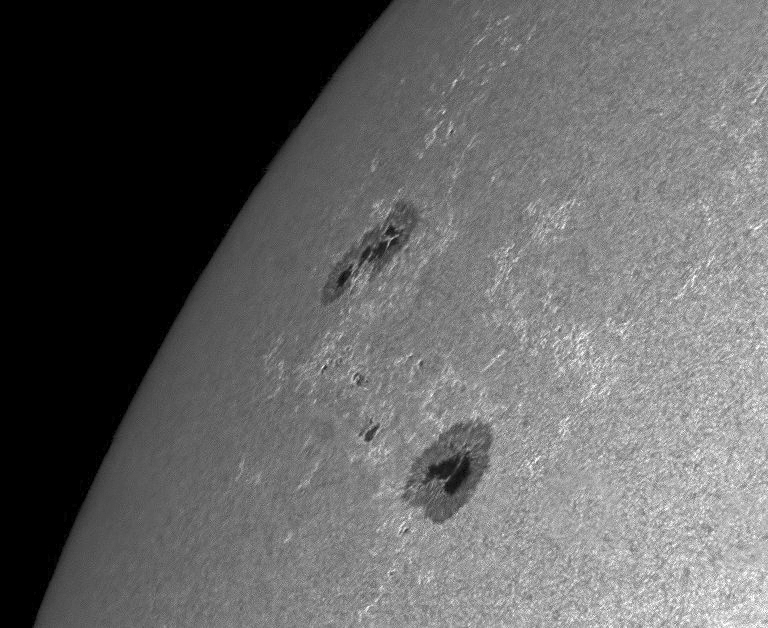
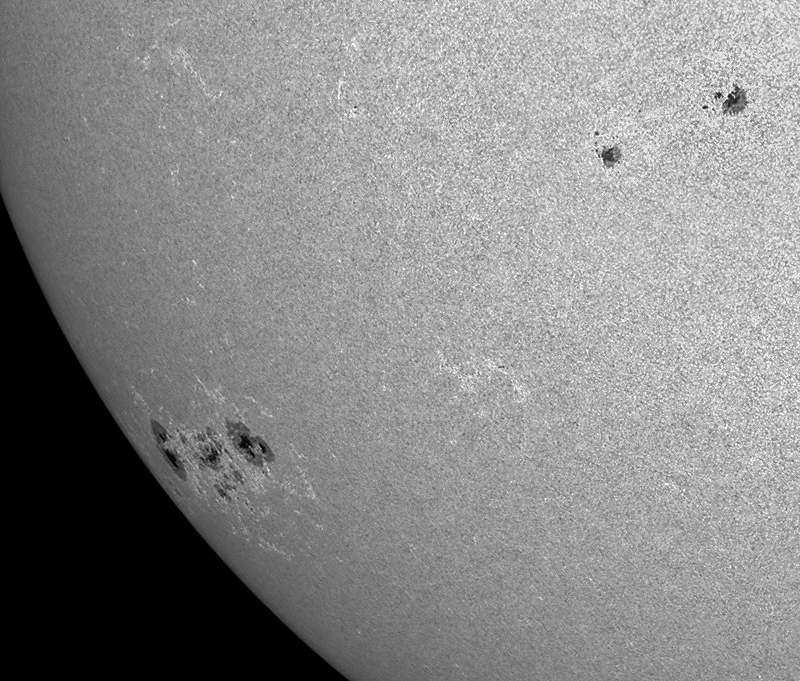
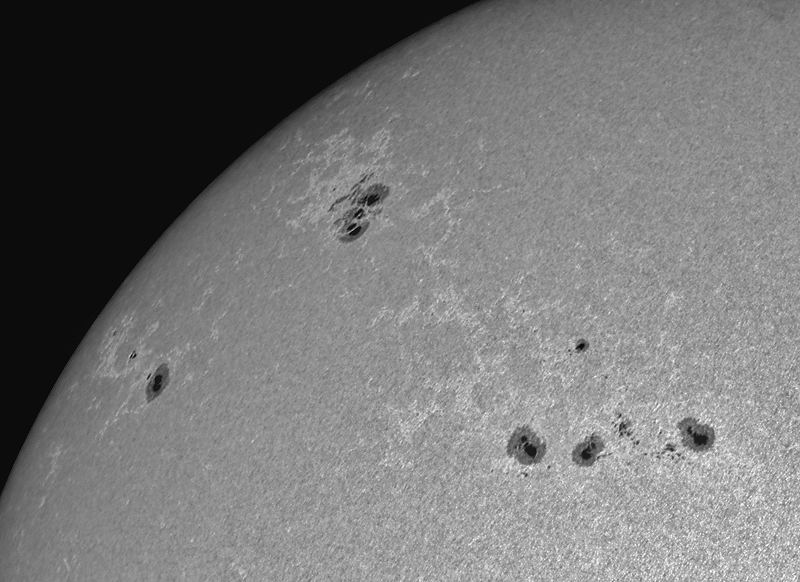
The image on the left shows sunspot group NOAA 12192. In October 2014, it was the largest sunspot group of Solar Cycle 24.
Supergranulation Cells (Chromospheric Network Structure)
Ellerman Bombs
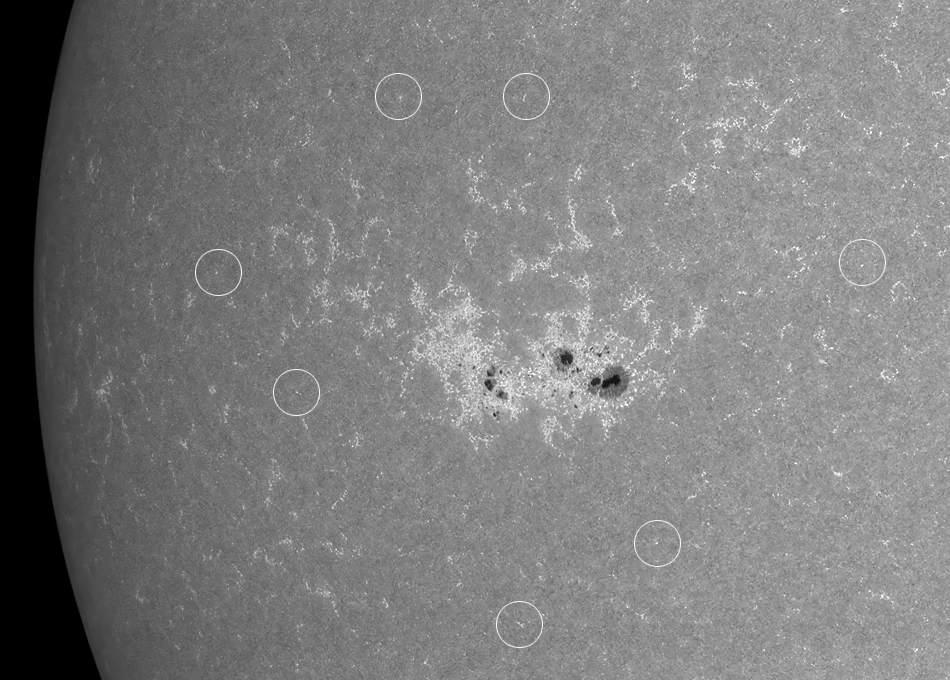
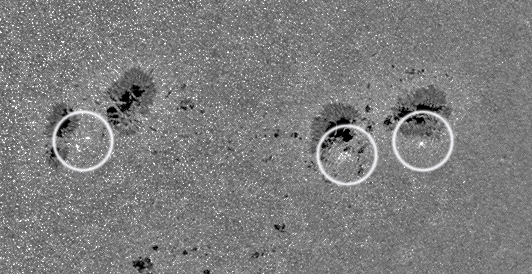
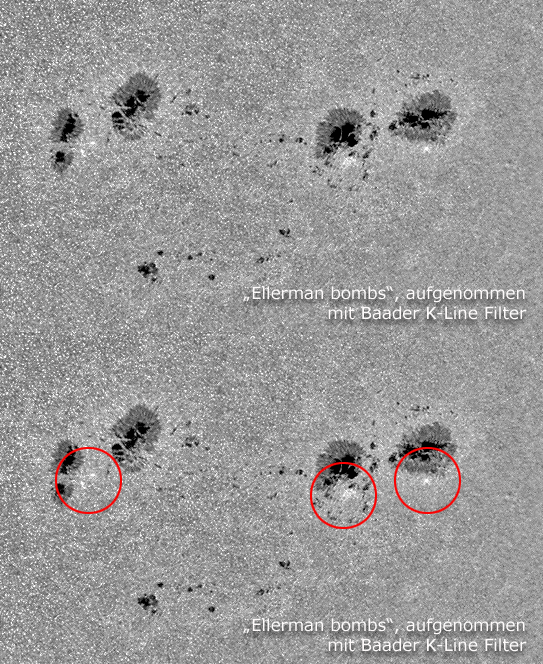
The image shows Ellerman bombs in sunspot groups AR 2339 and AR 2345 on 15 May 2015.
Captured using a 6-inch refractor with the Baader K-Line Filter, current version: Calcium GEN-II Filter 1¼" (incl. AstroSolar Photo Film OD 3.8, A4) (#2961590 , € 285,- ) , and AstroSolar Photo Film OD 3.8 (various versions available) for prefiltering.
Flares, Filaments and Prominences
The Baader K-Line Filter, current version: Calcium GEN-II Filter 1¼" (incl. AstroSolar Photo Film OD 3.8, A4) (#2961590 , € 285,- ) , is far too broadband for observing prominences. To make them visible, a filter must have a full width at half maximum significantly narrower than 3 Ångströms. Filaments on the solar surface require even narrower filters with a full width at half maximum of less than 1 Ångström. Both structures are best observed in the K3 line.
To observe prominences, it is necessary to use the previously mentioned calcium filters manufactured by SolarSpectrum. These filters are produced only to order with the required full width at half maximum and are correspondingly expensive. Their prices are comparable to those of a good used car, which means that they are likely to be suitable for only a small number of amateur solar observers. Nevertheless, we would like to show an example image.
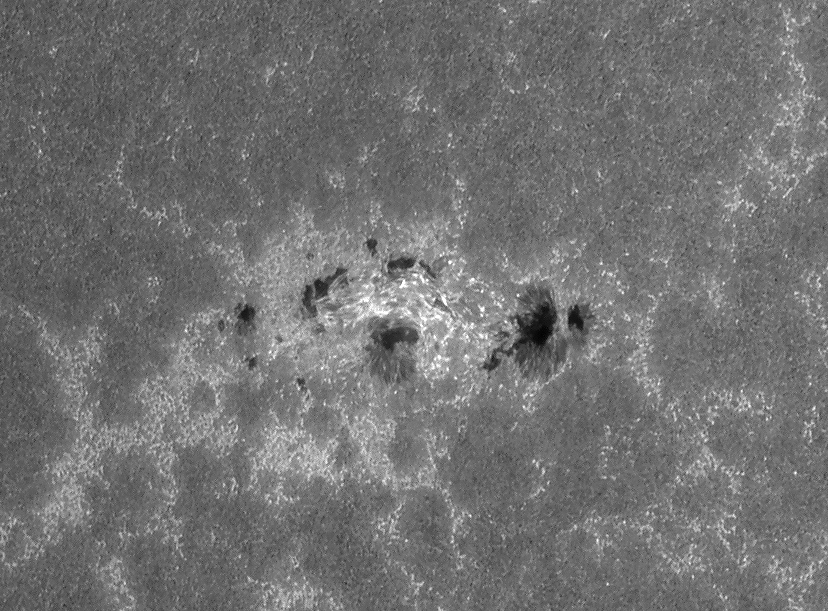
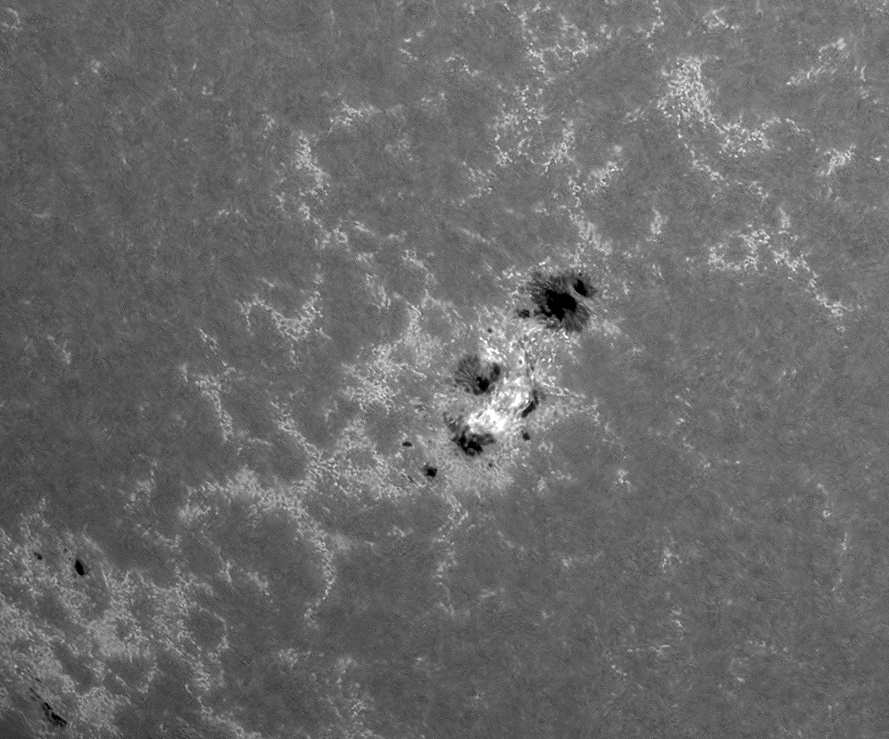
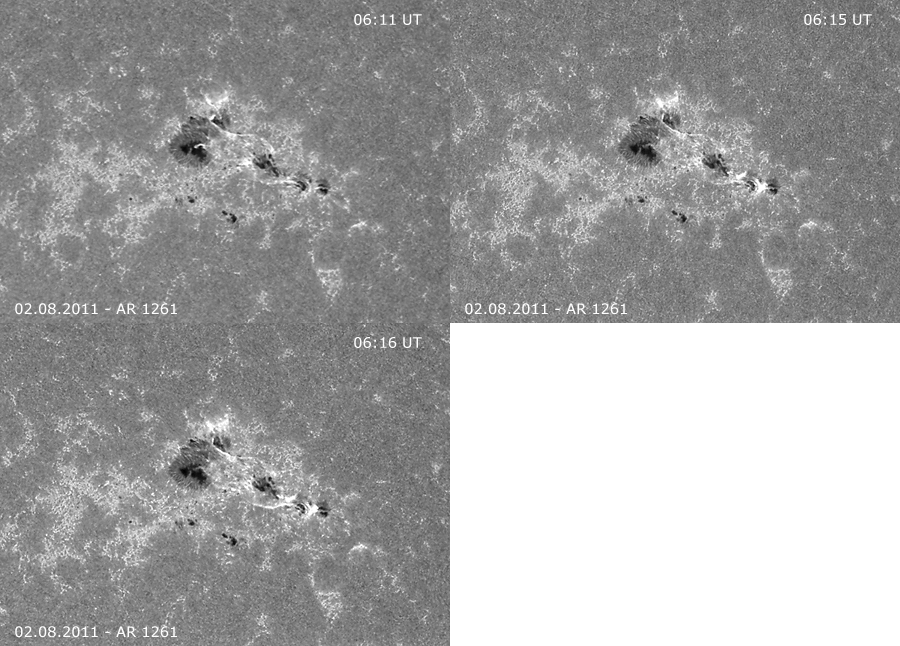
Flares in calcium light within complex sunspot groups. On the far right is an animation showing flare activity in calcium light.
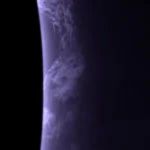
On the right are two examples of prominences captured in calcium light using a narrowband filter. Both images were subsequently colourised in Photoshop.
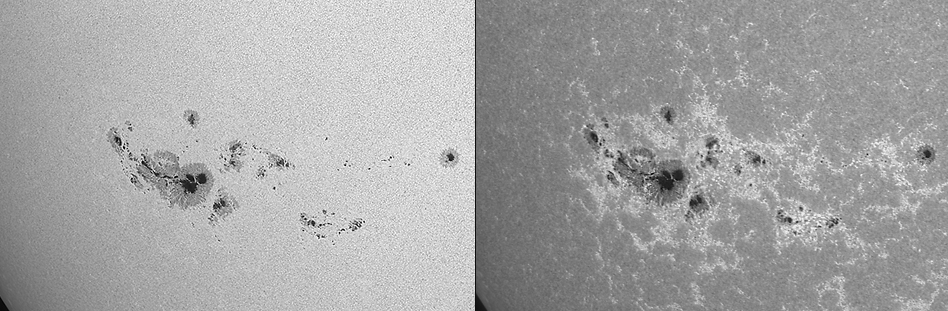
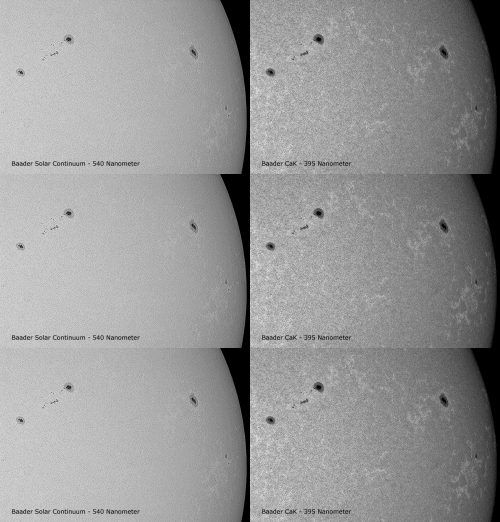
Finally, here is a direct comparison of sunspots captured in continuum light on the left and in the K line on the right. Imaging data: 6-inch refractor at f = 1,100 mm; left: AstroSolar Photo Film OD 3.8 (various versions available) and Solar Continuum 7,5nm 1¼" Filter (540nm) (#2961580 , € 118,- ) . Right: Baader Mark I Herschel Prism and Baader K-Line Filter, current version: Calcium GEN-II Filter 1¼" (incl. AstroSolar Photo Film OD 3.8, A4) (#2961590 , € 285,- ) . Date of capture: 9 July 2012; left at 14:21 UT and right at 14:24 UT.
Animations
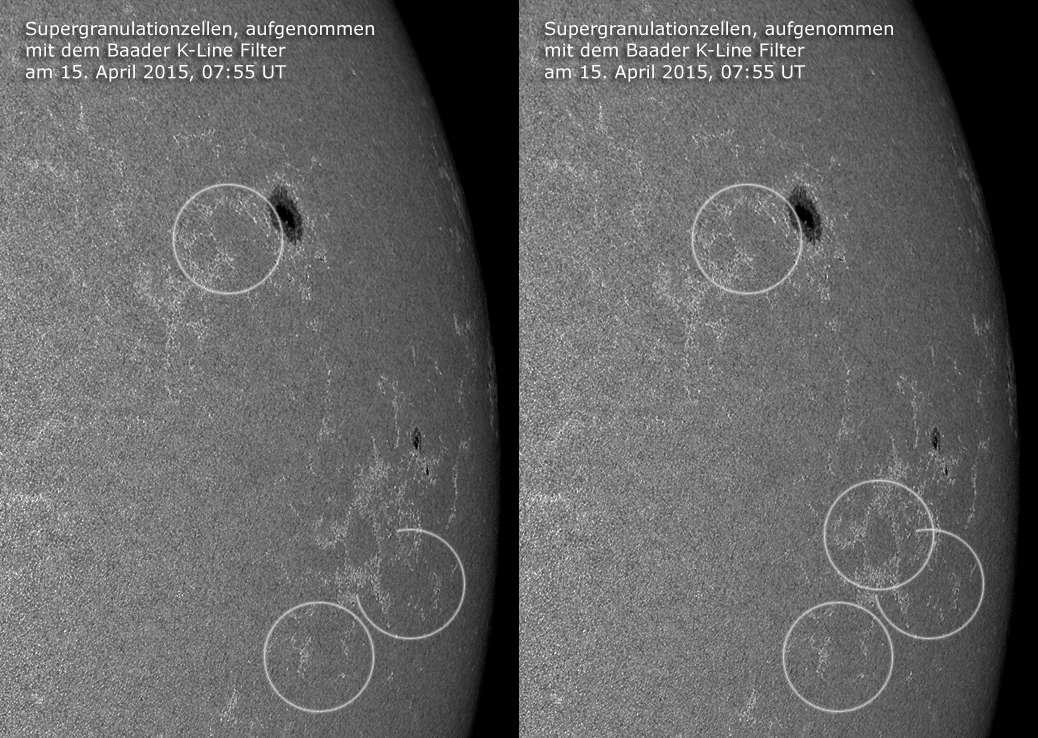
From left to right: supergranulation cells; a comparison of facular regions in continuum and calcium light; and, on the far right, Ellerman bombs.
Baader Offers Two Different Filters for Calcium Solar Observation
The more affordable option is the Baader K-Line Filter, current version: Calcium GEN-II Filter 1¼" (incl. AstroSolar Photo Film OD 3.8, A4) (#2961590 , € 285,- ) . With a full width at half maximum of approximately 8 nm (80 Å), it is a very broadband filter. It covers both Ca lines, K and H. The filter is supplied in a 1¼-inch filter cell. It MUST NOT be used WITHOUT prefiltering using AstroSolar Film or a Herschel prism.
The image on the right shows an observing configuration for calcium photography. It consists of the photographic version of the Baader Mark I Herschel Prism. The Baader K-Line Filter, current version: Calcium GEN-II Filter 1¼" (incl. AstroSolar Photo Film OD 3.8, A4) (#2961590 , € 285,- ) , is screwed directly into the 1¼-inch nosepiece of the Celestron Skyris camera.
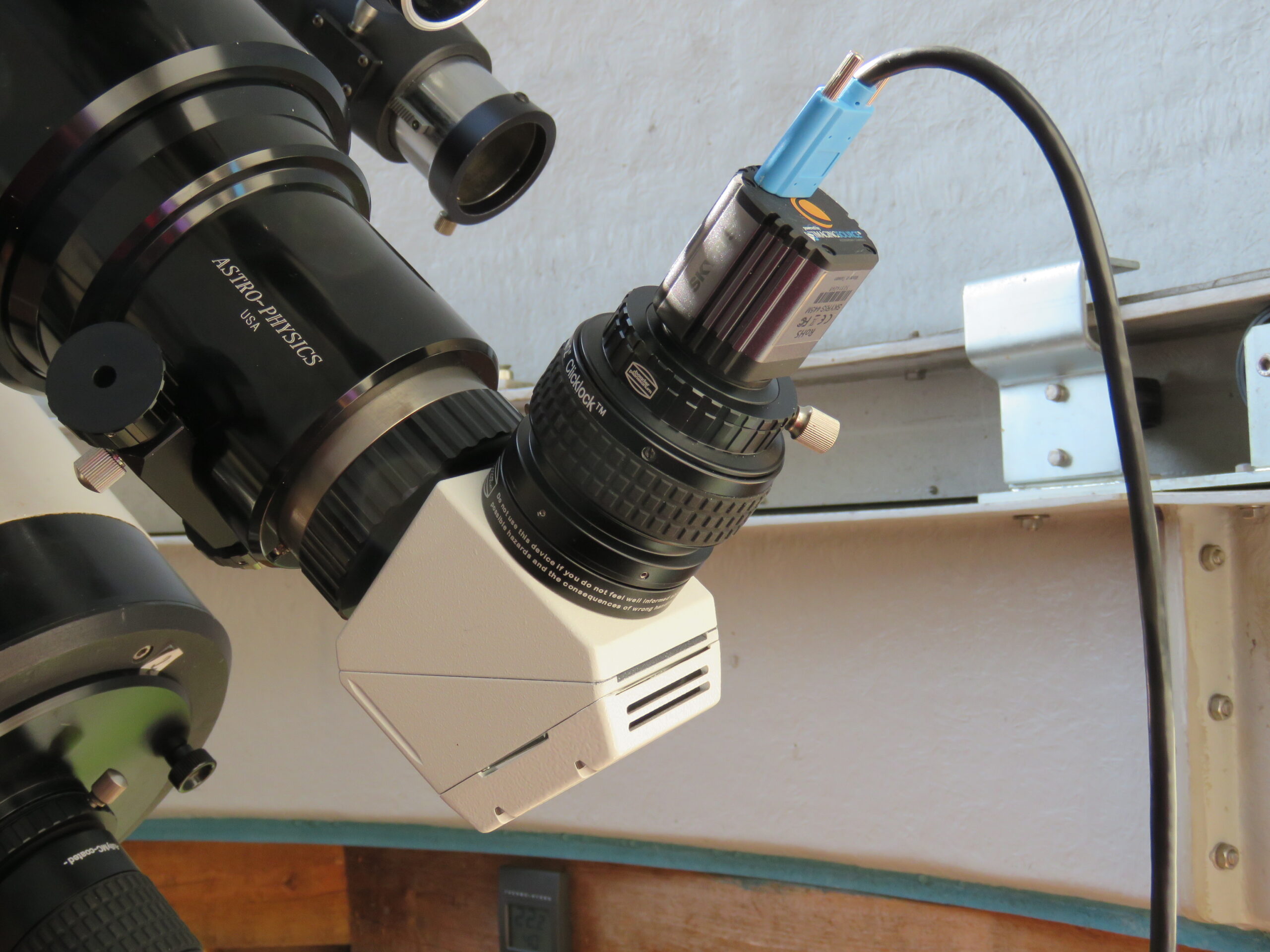
As the photographic version of the Mark I Herschel Prism contains a narrowband Solar Continuum Filter at 540 nm within the prism housing, this filter must, of course, be removed for photography at wavelengths below 400 nm.
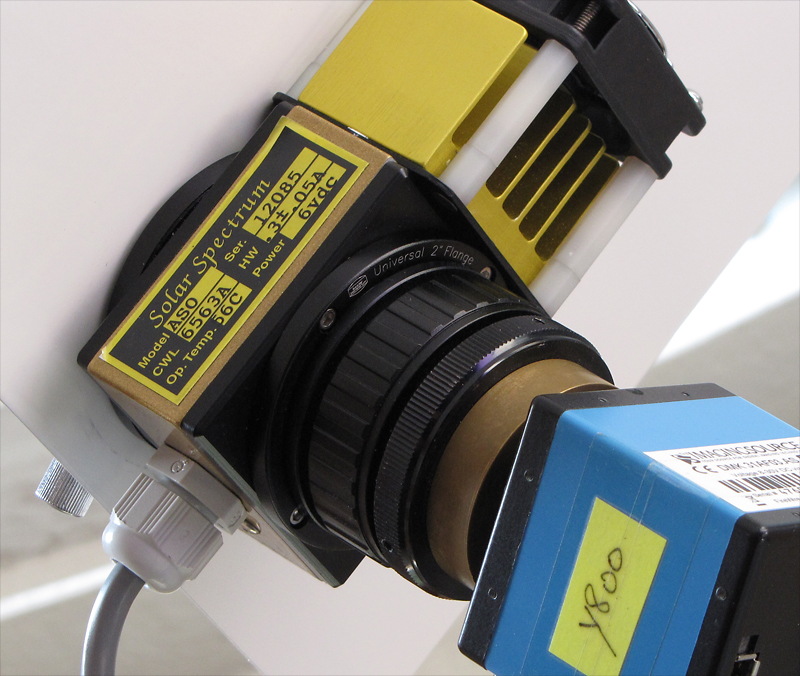
The second option consists of Ca-K filters manufactured by SolarSpectrum. With full widths at half maximum of less than 2 Å, they are extremely narrowband and therefore exceptionally expensive. They are mentioned here only briefly at the end. Filters of this type are also referred to as bandpass filters.
This website presents high-resolution solar images accompanying our short publication, “Which Solar Structures Can Be Observed Using BAADER Accessories for Solar Observation?”, which you can download here as a german PDF file.
© All images by Wolfgang Paech unless otherwise indicated.