This website presents high-resolution solar images accompanying our short publication, “Which Solar Structures Can Be Observed Using BAADER Accessories for Solar Observation?”, which you can download here as a german PDF file.
© All images by Wolfgang Paech unless otherwise indicated.


Solar Structures Observable in Continuum Light
ALL images were captured using accessories manufactured by Baader Planetarium GmbH. The telescope used for imaging was a 6-inch Astro-Physics refractor with a focal length of 1,100 millimetres, which was extended to a maximum of 2,200 mm in some cases using a Barlow Lens Q-Barlow (1.3x / 2.25x) (#2956185 , € 55,- ) . Either AstroSolar Photo Film OD 3.8 (various versions available) or the Baader Mark I Herschel Prism was used to attenuate the light. A Baader 7.5nm Solar Continuum Filter (540nm) (various versions available) was additionally used for all images to enhance contrast. The images were captured using the “lucky imaging” technique. The video cameras used were a TIS DMK 31 and a Celestron Skyris 445 Mono.
We present the following structures:
- Photospheric Facular Regions
- Sunspots
- Light Bridges
- Penumbra Filaments
- Umbral Dots and Bright Points
- Wilson Effect
- Solar Granulation
- Animations
Photospheric Facular Regions
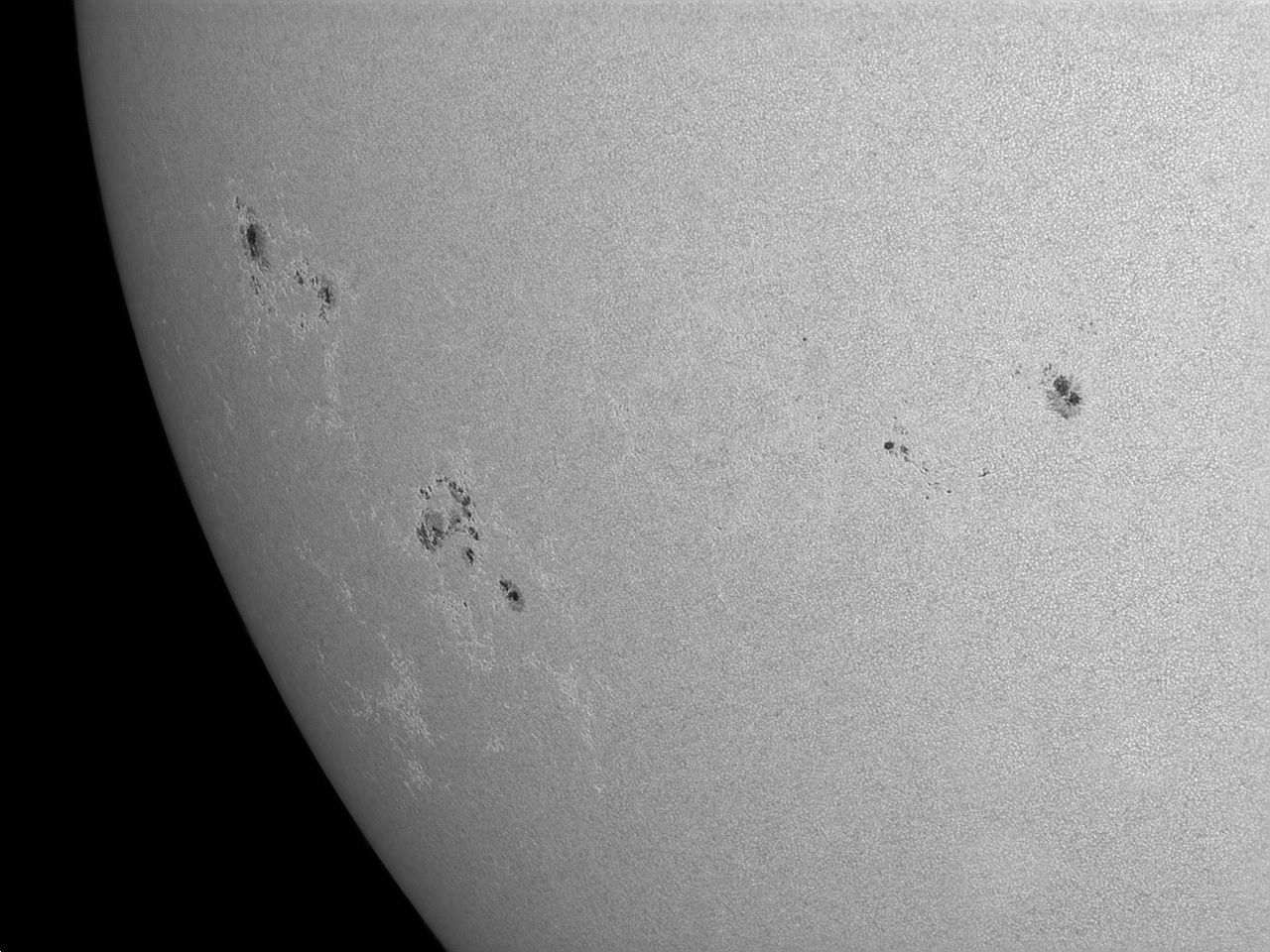
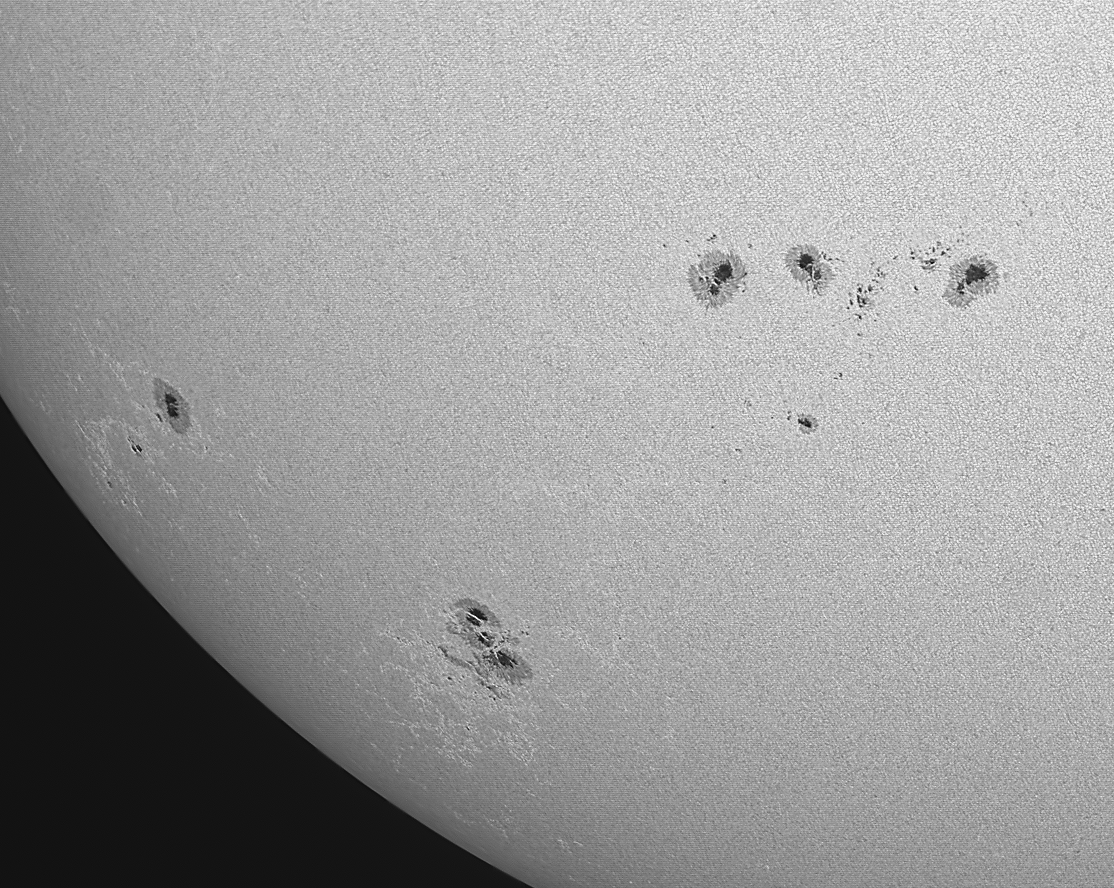
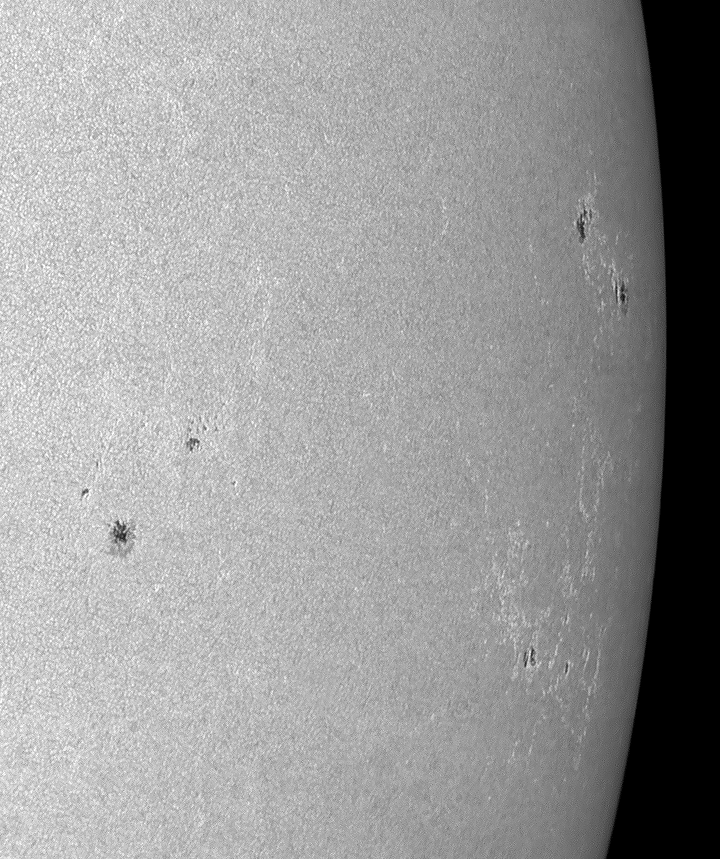
Two large sunspot groups in June 2015, surrounded by photospheric facular regions. It is clearly visible that these regions can only be seen near the solar limb and not towards the centre of the Sun. Captured using a 5″ refractor, a Baader Mark I Herschel Prism and a Baader 7.5nm Solar Continuum Filter (540nm) (various versions available) .
Sunspots
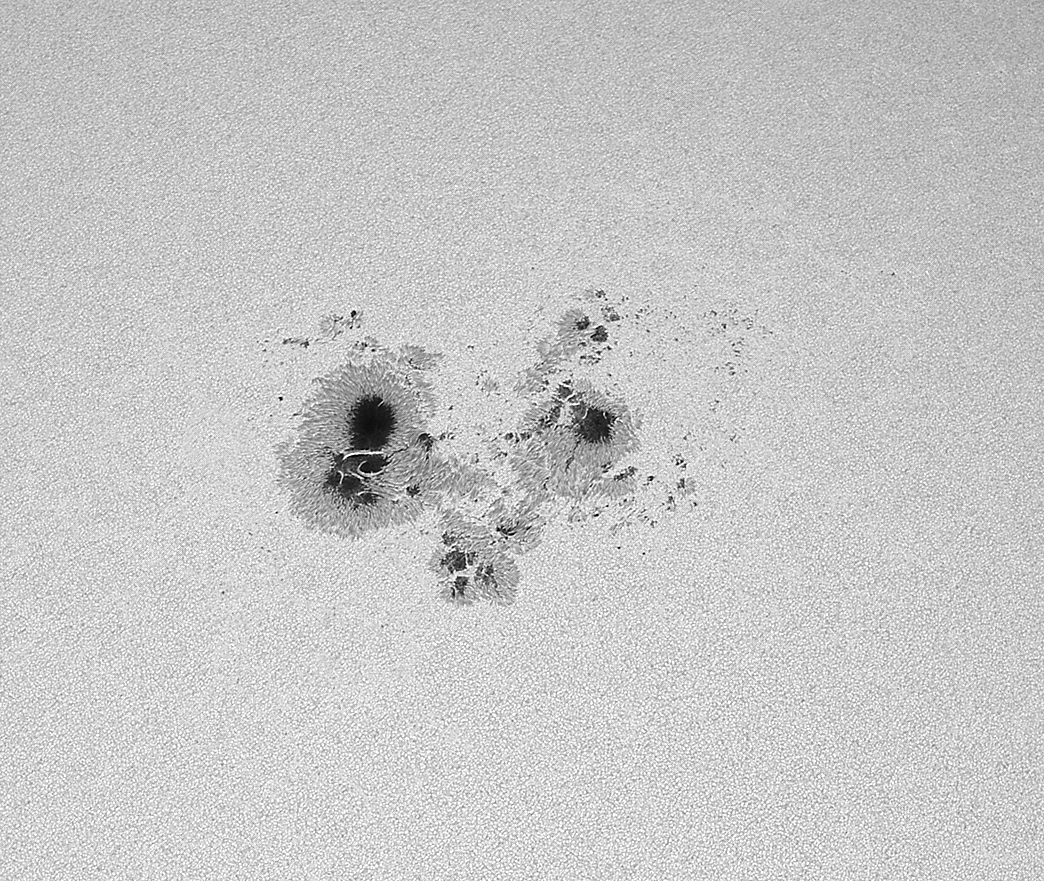
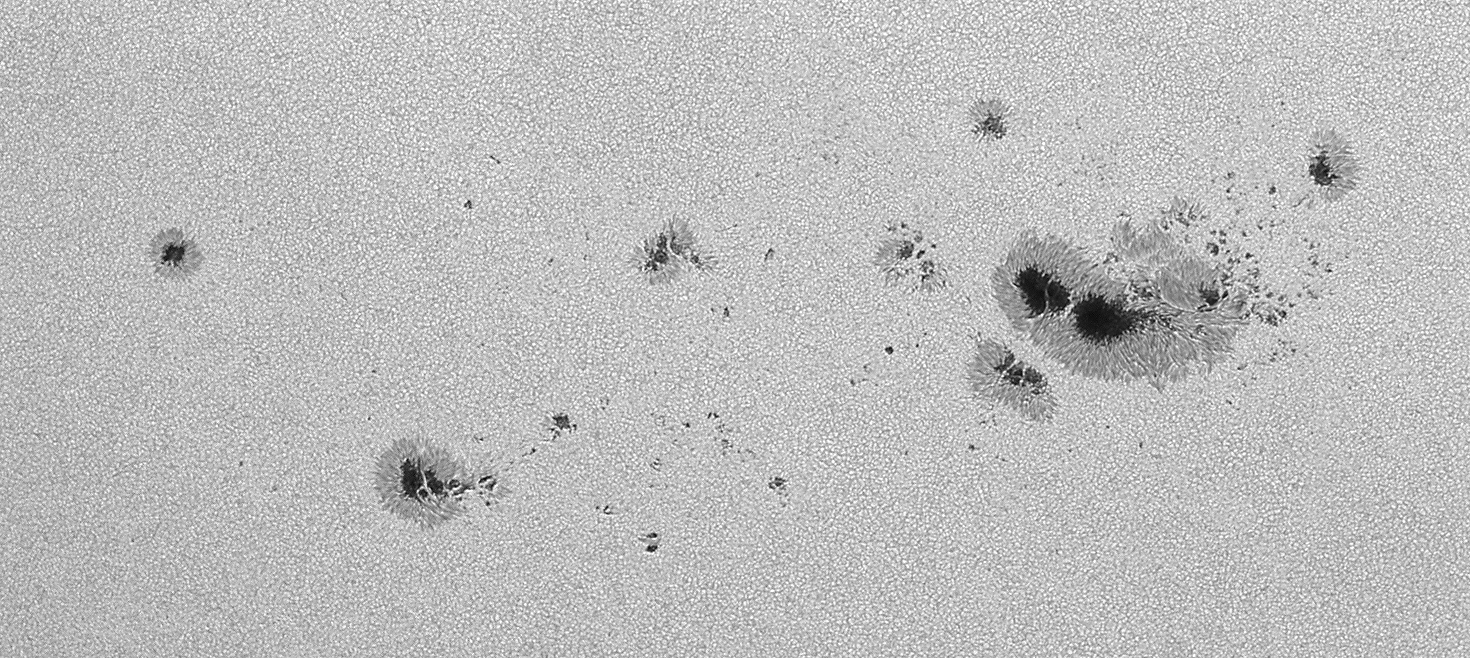
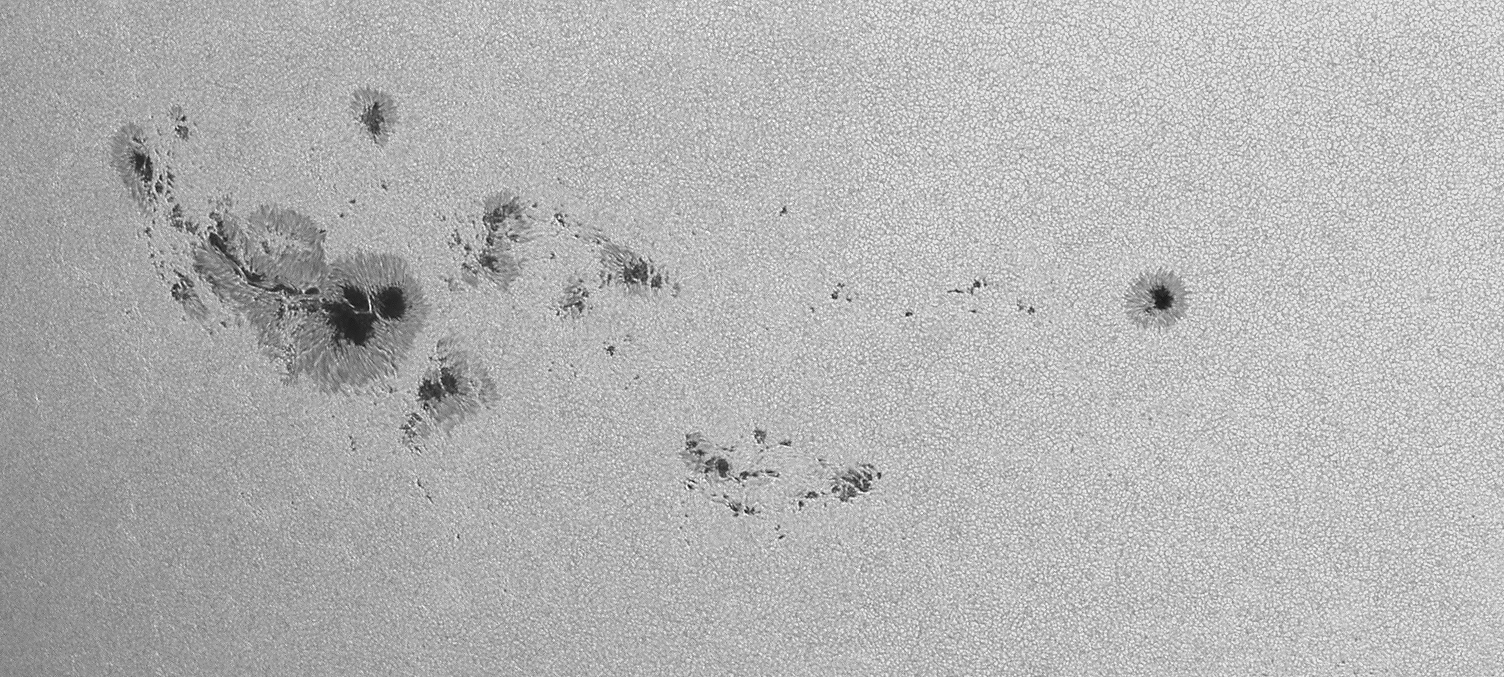
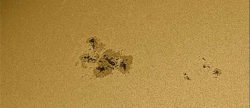
The image on the left shows sunspot group NOAA 12192. In October 2014, it was the largest sunspot group of Solar Cycle 24.
Light Bridges
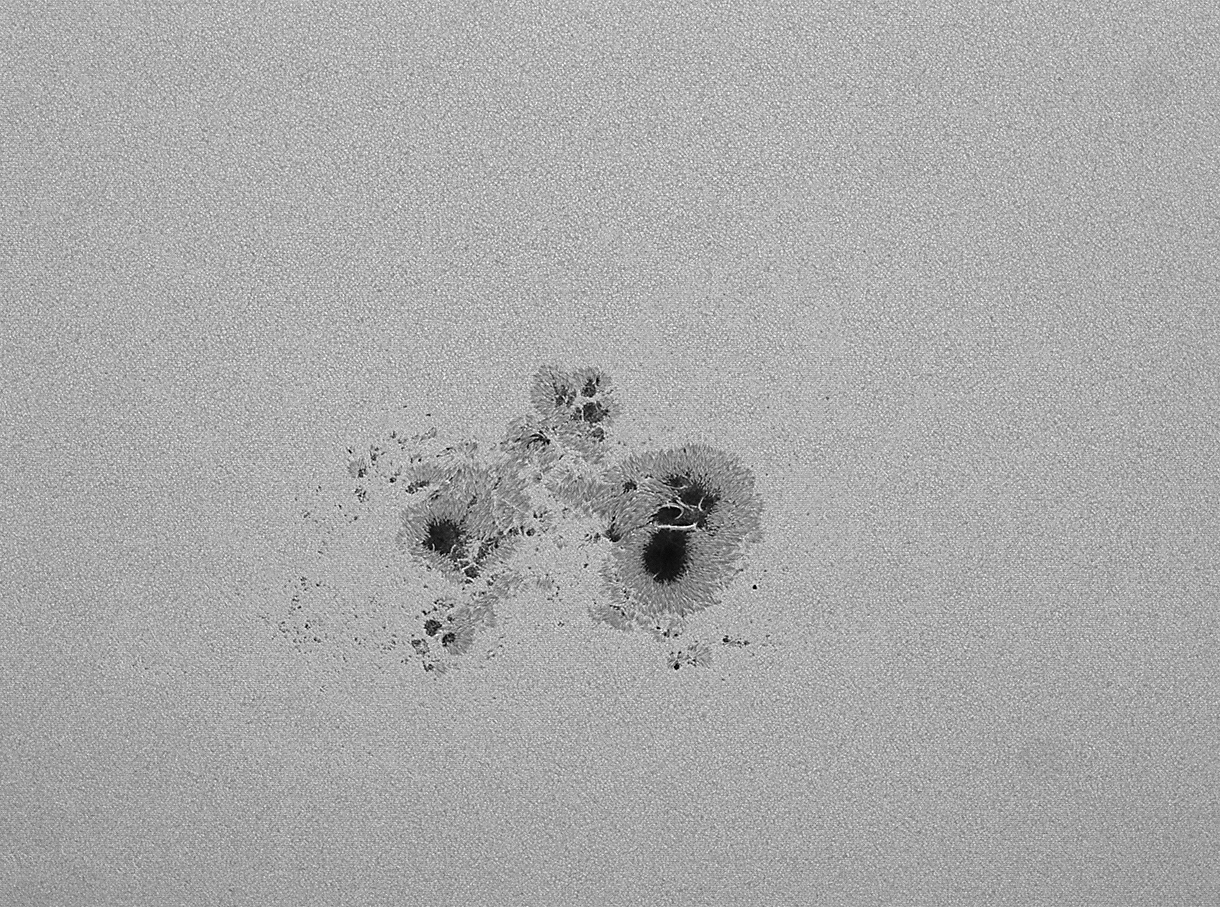
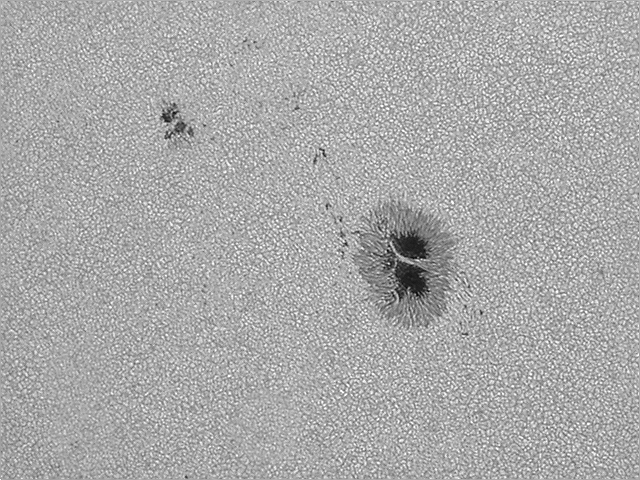
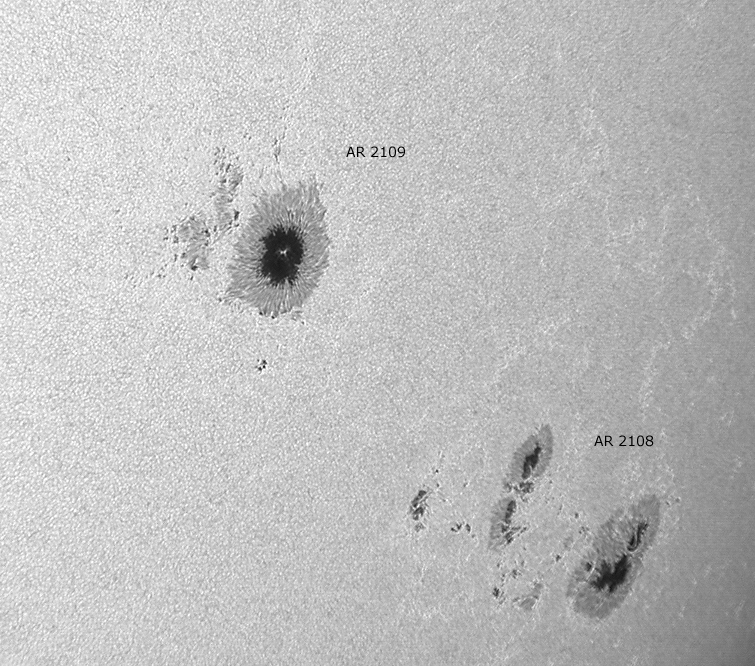
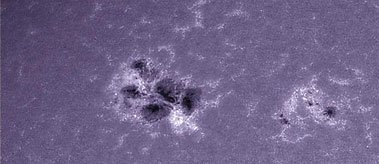
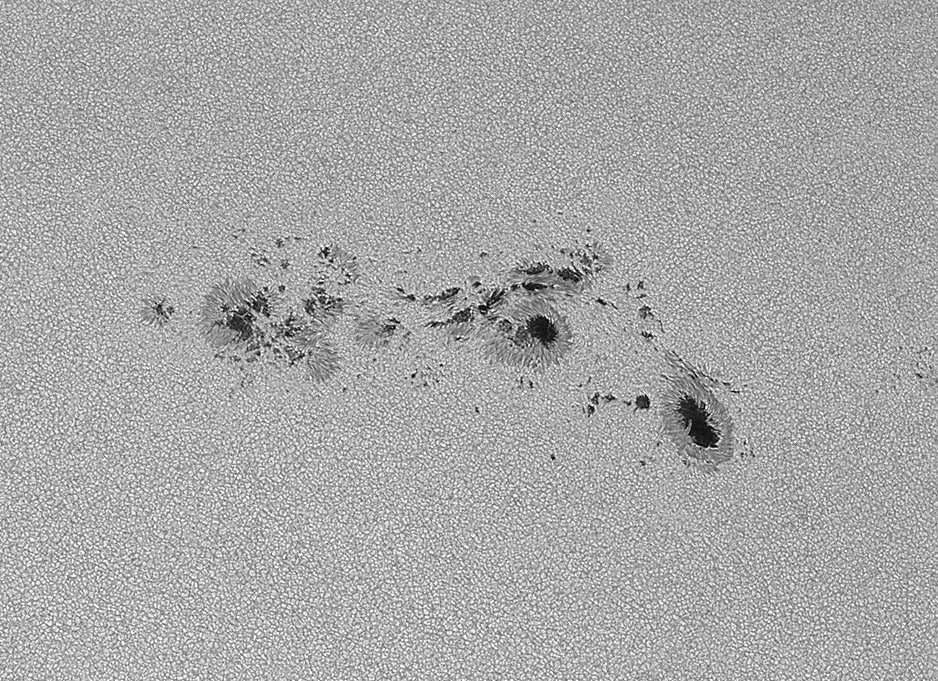
From left to right: various umbral and penumbral light bridges within a complex sunspot group; light bridges within an isolated sunspot; and a rare example of a developing light bridge in the middle of the sunspot’s central umbra.
Penumbra Filaments
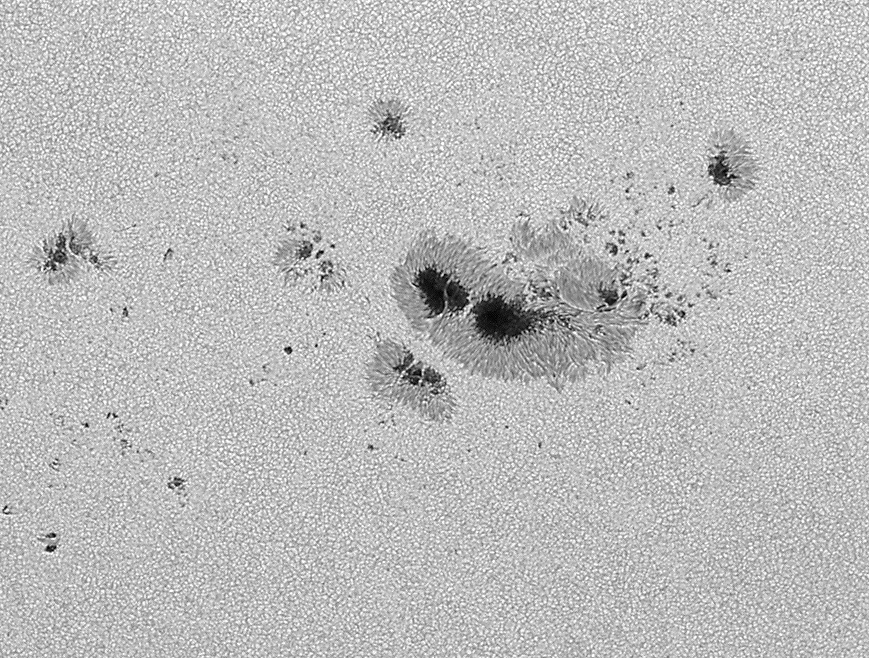
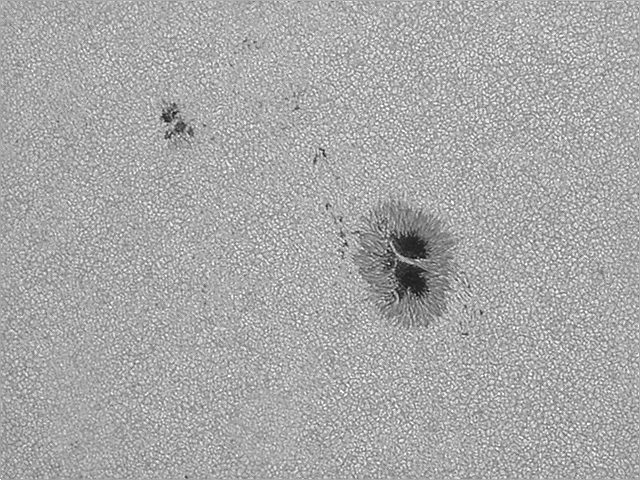
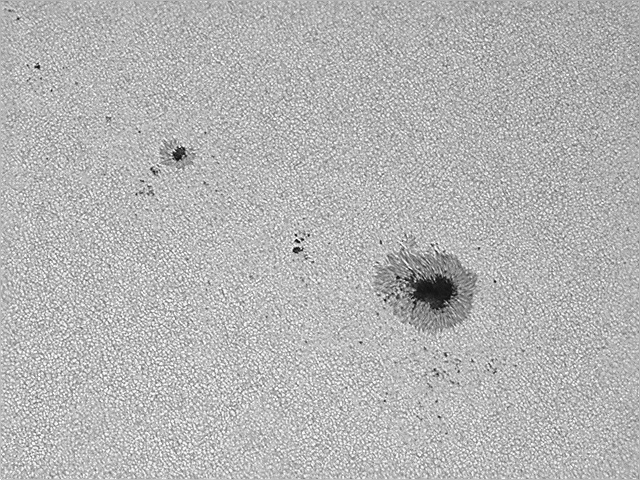
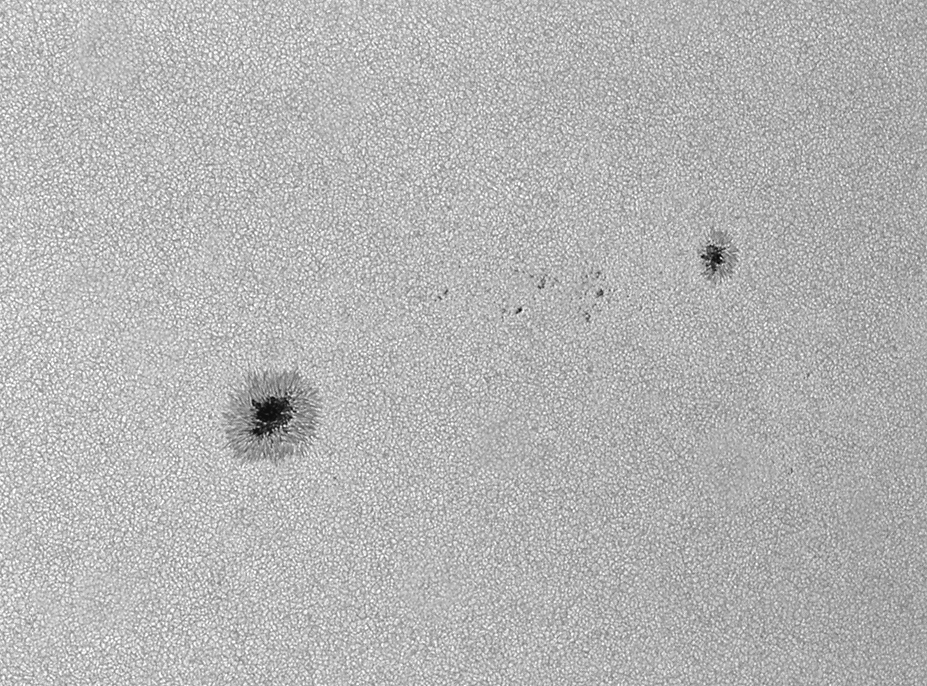
Umbral Dots and Bright Points
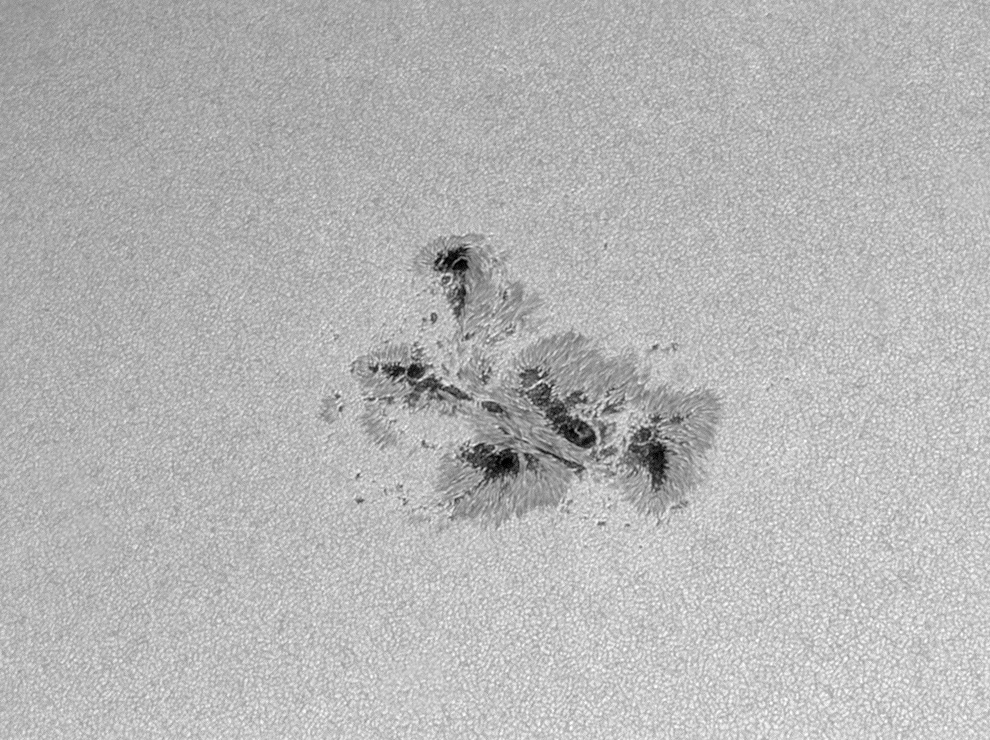
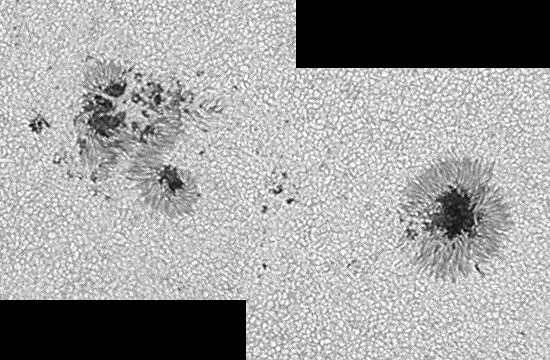
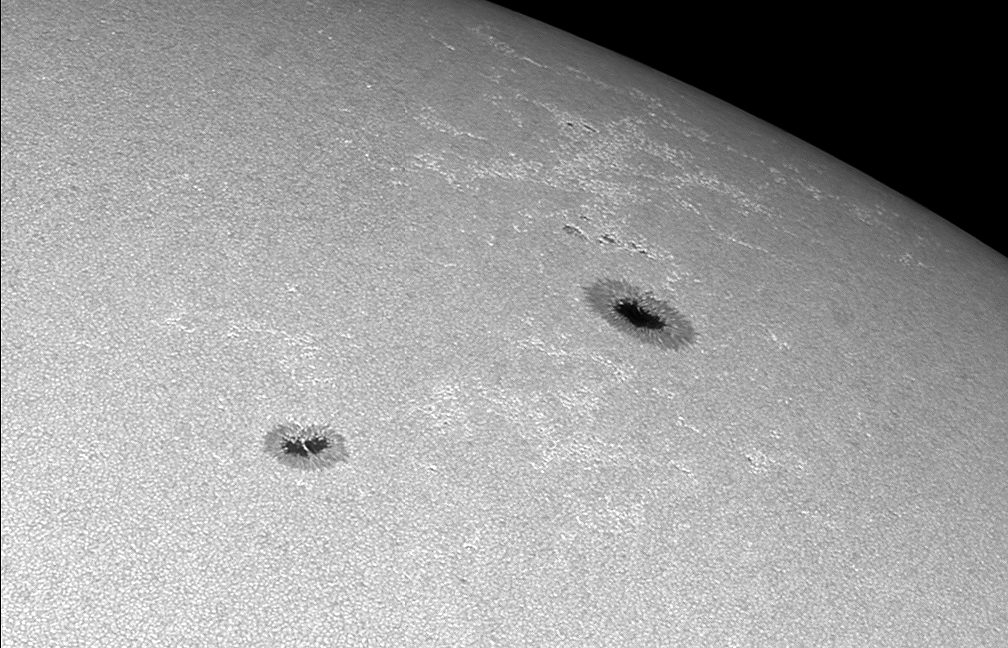
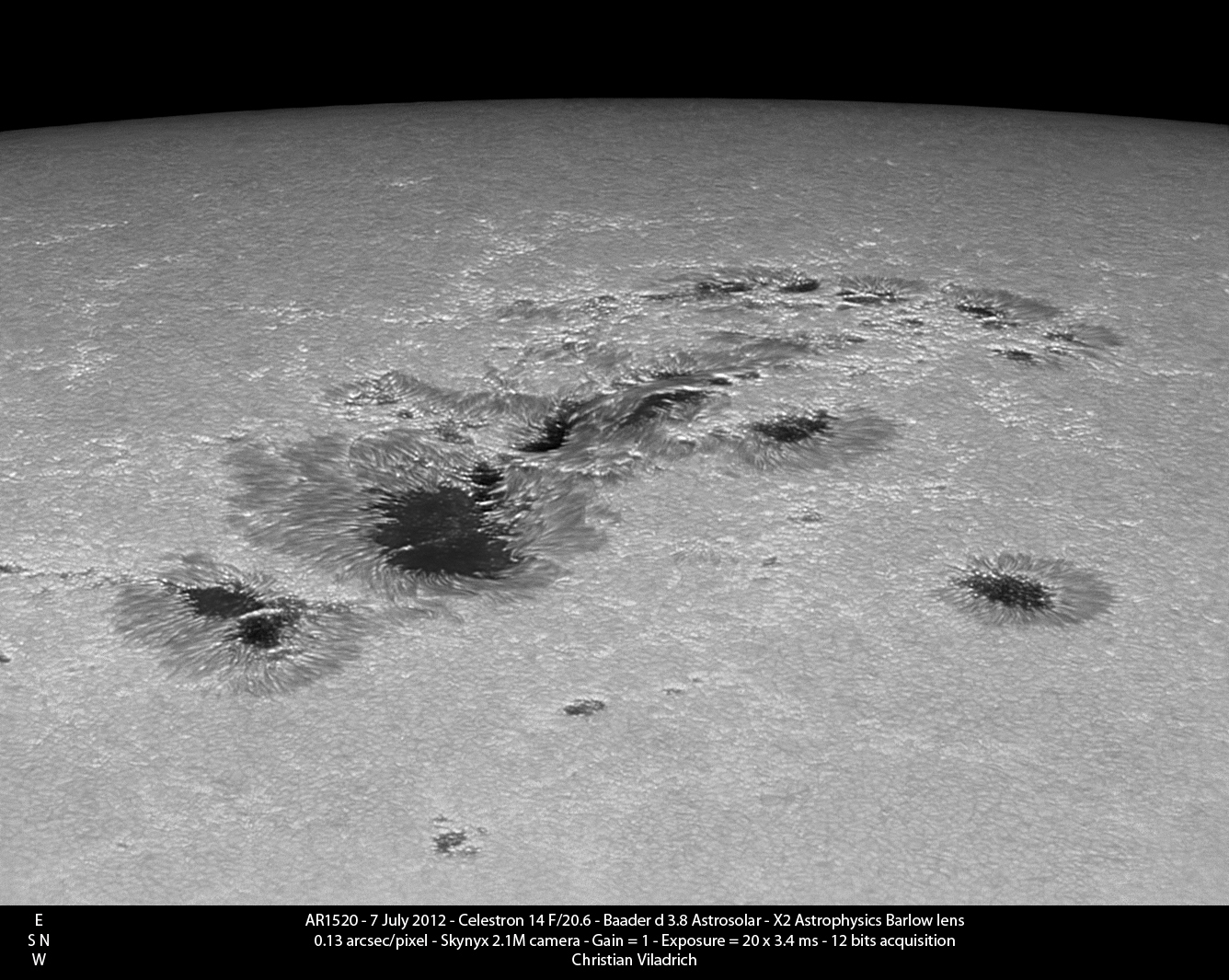
Wilson Effect
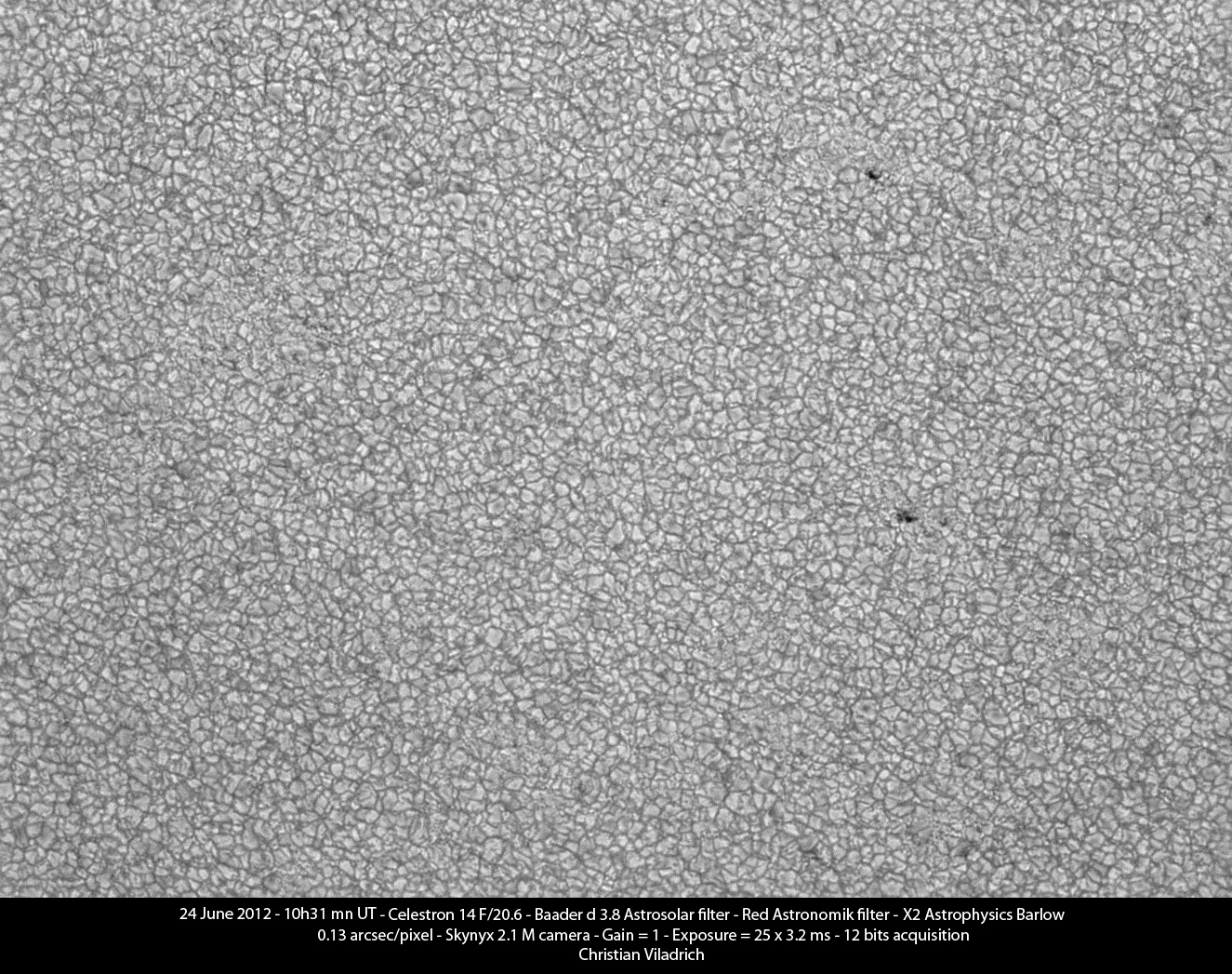
Solar Granulation
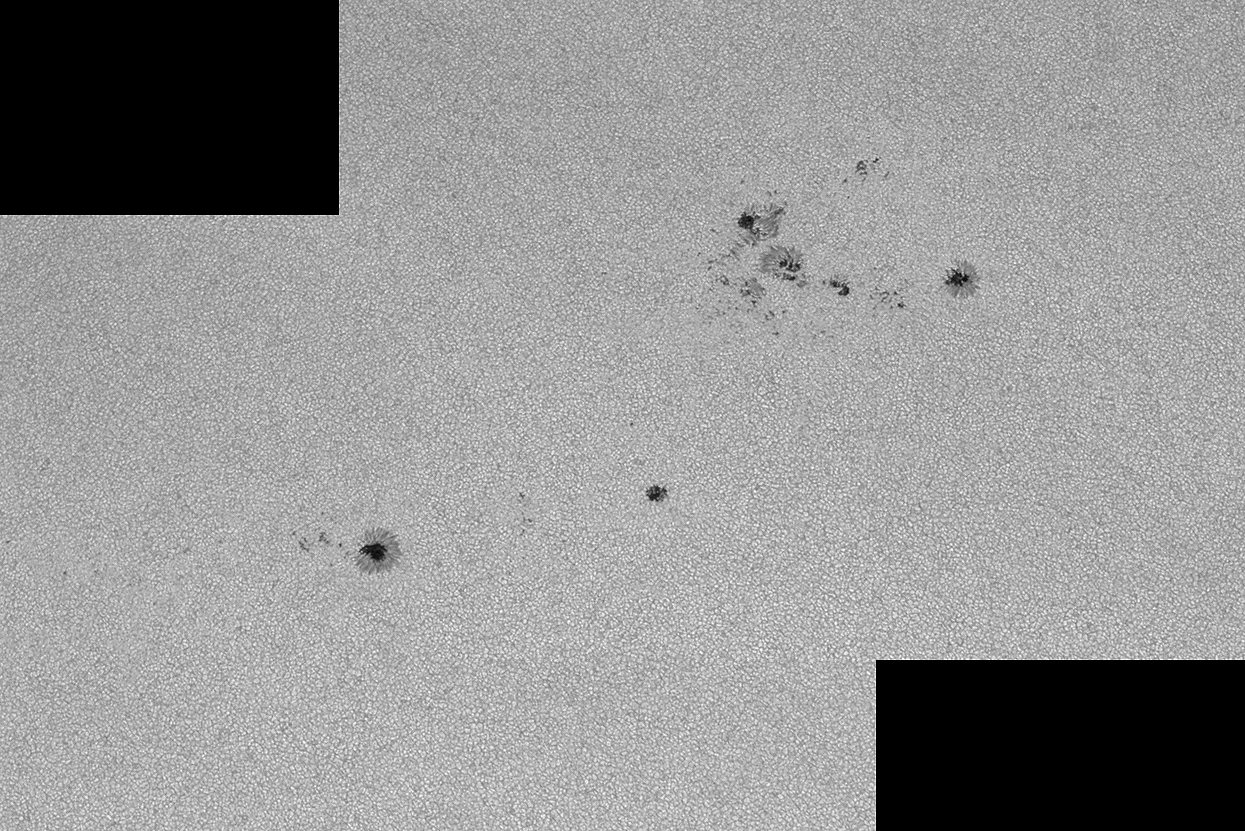
In the image on the right, the disturbed granulation surrounding the groups is clearly visible, particularly around the large sunspot group in the upper-right area.
Animations
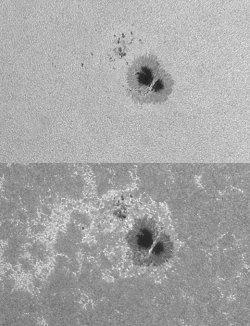
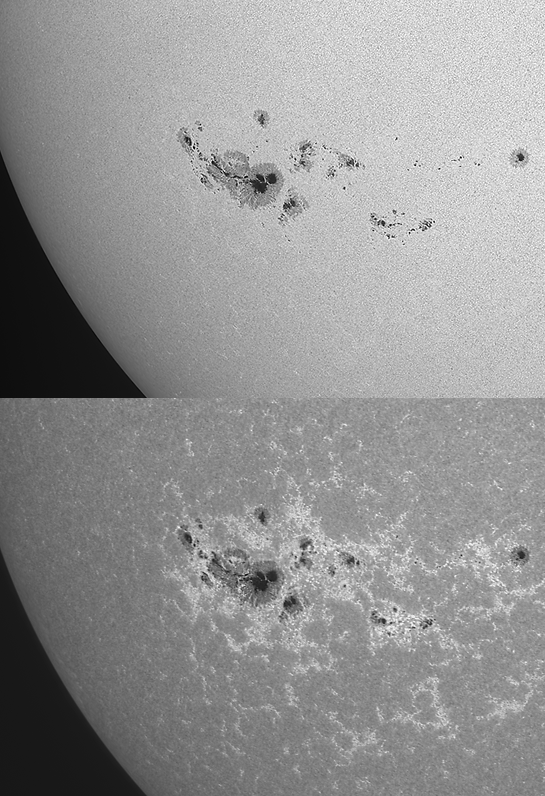
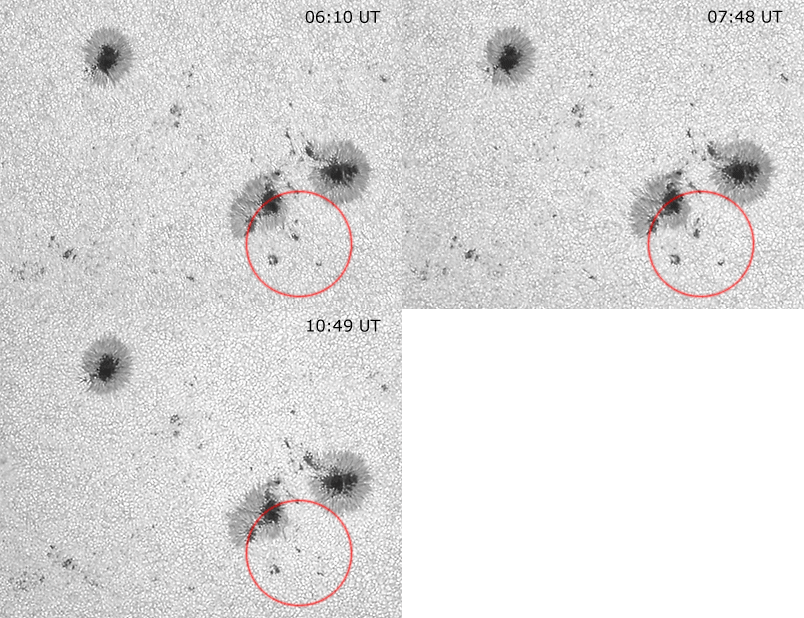
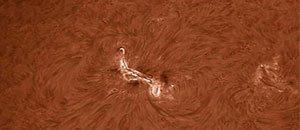
The animations on the left and in the centre show the difference between the solar surface in continuum light and in calcium light (Ca II). The animation on the far right shows changes within a sunspot group over a period of approximately 4.5 hours.
Baader Accessories for Visual and Photographic Solar Observation in Continuum Light
Baader Planetarium GmbH offers a range of high-quality accessories for observing the Sun in white light. The main challenge when observing the Sun in broadband light is attenuating its enormous intensity and managing the resulting high thermal load on optical accessories positioned near the focal plane.
There are essentially two methods of attenuating the light and heat. The first is to reduce the intensity of the sunlight in front of the telescope aperture, before it enters the optical tube, using an appropriate filter. This method has the advantage that no problems arise for additional optical accessories near the focal plane. The filtered sunlight is effectively cold.
The disadvantage is that the filter must have a higher optical quality than the telescope optics themselves, as any imperfections in the filter would otherwise degrade the quality of the solar image. In the past, plane-parallel glass plates coated with light-attenuating layers were used. Their disadvantage was that the extremely high optical-quality requirements made such filters exceptionally expensive.
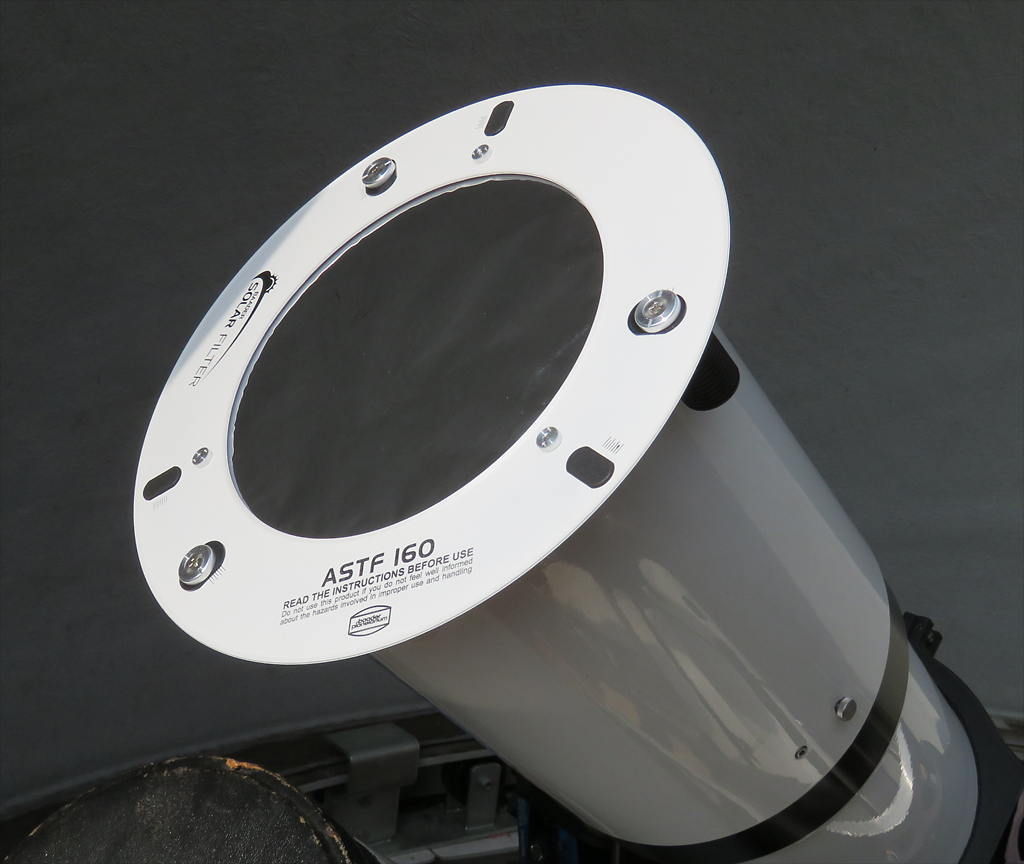
For this first method, Baader developed an extremely thin film many years ago. Compared with a plane-parallel glass filter, it is very affordable and does not impair the optical performance of even high-quality Zeiss objectives. This AstroSolar® Film is aluminium-coated and is available in different optical densities for visual or photographic observation. The film intended for visual observation has an optical density of OD 5.0, meaning that only 0.001% of the incident sunlight can pass through the filter.
To keep exposure times very short during photographic observation—shorter than 1/1,000 of a second—in order to “freeze” the atmospheric seeing, the Barlow Lens Q-Barlow (1.3x / 2.25x) (#2956185 , € 55,- ) has an optical density of OD 3.8.
We supply both types of film in special filter holders suitable for almost all commercially manufactured telescopes with apertures of up to 280 millimetres (see illustrations on the left). For larger telescope apertures and/or custom-built telescopes, we also supply the film in larger sizes.
The current AstroSolar® ClearWhite films have an optical density of 5.1.
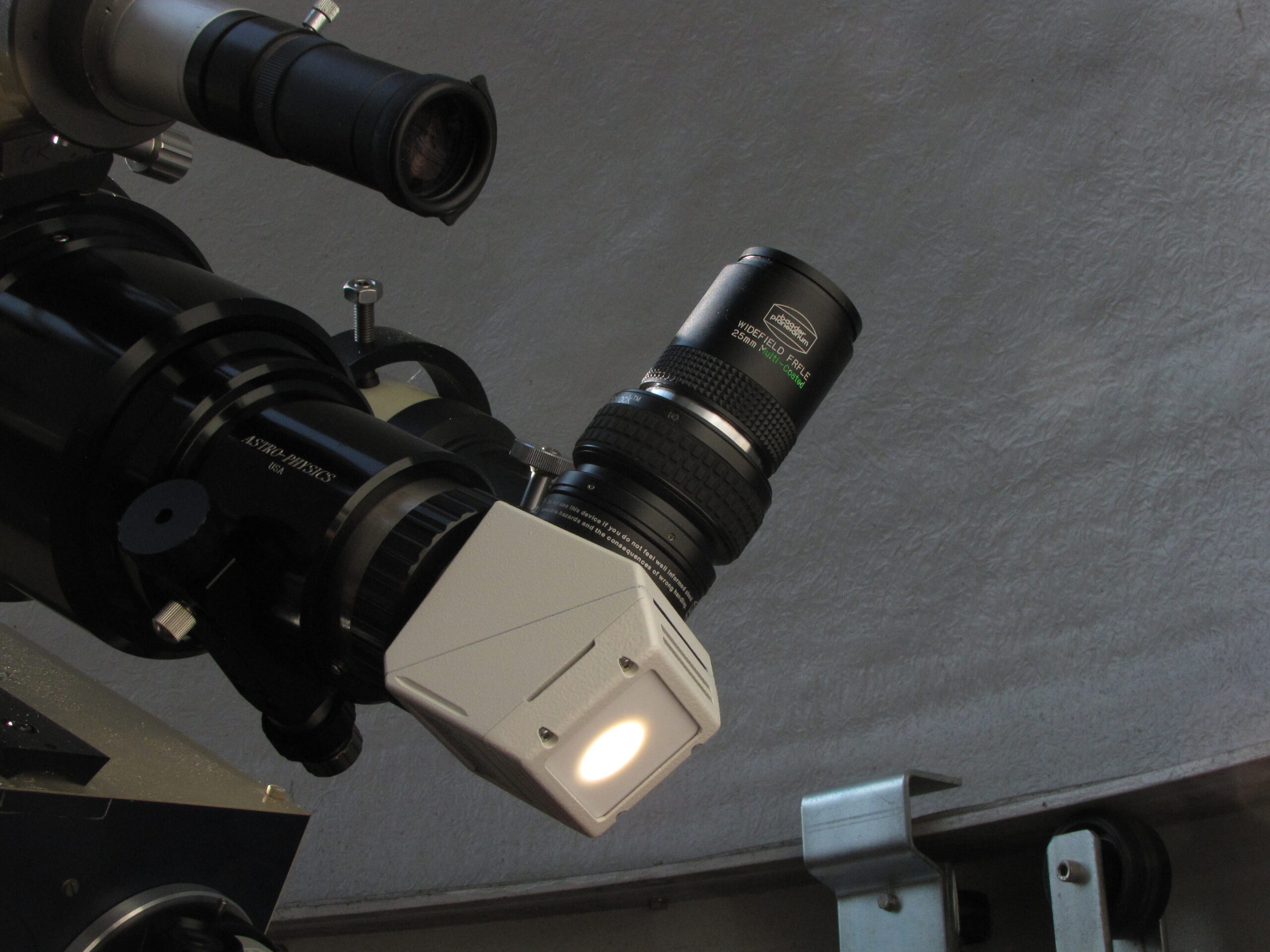
The second method of attenuating light and heat involves the use of so-called Herschel prisms, which are inserted into the telescope’s optical path shortly before the focal plane. This means that the unfiltered solar radiation enters the telescope tube and is only attenuated to a level suitable for observation after passing through the prism. Baader “Cool-Ceramic Safety Herschel Prisms” are also available in both visual and photographic versions.
Without the additional filters installed in both versions behind the prism, the prisms transmit 4.6% of the incident sunlight, corresponding to an optical density of just under 1.35. This produces a significantly brighter solar image than filtration using AstroSolar® Film. In this case, the additional light also means that considerably longer focal lengths can be used, particularly for photography.
Compared with filtration using Baader AstroSolar® Film, the advantage is that additional narrowband filters can be inserted into the optical path for both visual and photographic use. Examples include the Baader 7.5nm Solar Continuum Filter (540nm) (various versions available) for visual and photographic observation and the Calcium GEN-II Filter 1¼" (incl. AstroSolar Photo Film OD 3.8, A4) (#2961590 , € 285,- ) for photographic use.
The Herschel prism is now available in an improved version: Baader 2" Cool-Ceramic Safety Herschel Prism Mark II – (Visual / Photo) (various versions available)
This website presents high-resolution solar images accompanying our short publication, “Which Solar Structures Can Be Observed Using BAADER Accessories for Solar Observation?”, which you can download here as a german PDF file.
© All images by Wolfgang Paech unless otherwise indicated.