Content:
- Turn-key observatories – with exciting new technology
- How to finance a new observatory or a modernization
- What can be modernized?
With new technology that inspires
Anyone who has ever visited a club or school observatory looks back fondly on this experience. For many young people a direct view into Space sparks an interest, a hobby or even a career that lasts for a lifetime.
But how do you catch the attention of today’s generation — whose everyday life is defined by smartphones, video-streaming and social media — about an “old” science? Certainly not with historical instruments such as those found in many publicly accessible observatories across the EU. They may be beautiful to look at, but their usability is very limited.
Once computers with advanced AI-supported software and state-of-the-art instruments are introduced, enabling stunning photos of celestial objects and genuine scientific work, Astronomy can captivate every age group! The linked report below shows the enthusiasm and success with which students operate a modern school observatory near Berlin.
 National Victory at “Jugend forscht” with Astronomy Project! June 06, 2024 - Congratulations to Anna Maria Weiß from Einstein-Gymnasium Neuenhagen on winning the national "Jugend forscht" competition with her study on the exoplanet TOI1147b with our installed observatory. Read more
The observatory from which this exoplanet was discovered was built by us in Neuenhagen in 2017. It was the prototype of an all-new class of fully integrated, completely remotely controllable observatories from our company. Even after seven years the observatory is in operation day and night and remains technically as state-of-the-art. The results speak for themselves. Since 2017 we have been building several observatories of this type World-wide every year, giving our customers access to the Universe in the most modern way.
 Einstein Gymnasium Neuenhagen
 Turn-key observatory - Our 3.2m observatory dome shines brightly, visible above the treetops… » Discover the observatory
How do you finance a new observatory or modernization?
Building a new facility or completely modernizing an existing one is financially challenging for most observatory operators. For large projects, but also for small improvements, there are various ways to obtain support and funding. Here are a few tips — there are certainly many more possibilities:
- EU funding: One example is LEADER funding for structurally weak regions.
Info: https://kulturfoerdervereine.eu/app/uploads/2023/08/LEADER-WEGWEISER.pdf - Foundations: There are foundations that operate locally and others that support projects nationwide. We know for example, that the following foundations have funded our customers’ projects
- Wilhelm and Else Heraeus Foundation: exemplary individual projects
- Klaus Tschira Foundation
- Vector-Stiftung
- Berlin LOTTO Foundation (lotto-stiftung-berlin.de)
(representative of the LOTTO foundations in every federal state)
- Local sponsors: Local companies and institutes are keen to make their region attractive in order to draw skilled employees. For example, a telescope can bear the sponsor’s name and be promoted in newspaper and magazine articles. Banks and savings banks are also happy to support school, cultural and leisure projects. It never hurts to ask!
- School, booster and parent associations are often very creative in raising the funds needed to improve and expand leisure activities for students.
- Accessibility: Higher levels of funding are often possible if the observatory is made accessible — for example with step-free access and a height-adjustable periscope eyepiece, which we have already implemented. Larger domes from our company also allow wheelchair-accessible observatories.
- Crowdfunding via donation platforms: With a description of the planned project at the observatory and a donation goal, any private individual as well as companies can donate via the platform. Often the donation goals are reached and even exceeded!
An example of such a website is: https://www.betterplace.org/de (In 18 years and in over 71,000 projects, more than 350 million euros have already been donated here).
With the support of funding programs, foundations and local sponsors it is often possible — despite tight municipal and club budgets — to breathe new life into old observatories and make them attractive to young people again.
What can be modernized?
Especially in the last 20 years there has been enormous technological progress in equipment for exploring the sky:
Domes:
Unfortunately, old wooden domes — and even metal ones — often become leaky over time. Decay begins: Rust and mold spread, destroying the instruments. Even if an old dome is still watertight and functional, it is usually hard to move. Opening it requires great physical effort and closing it as well, so it is used less and less, because of fear it might not shut again. There is also no way to connect it to a computer so that it automatically tracks the telescope. With old domes, modern data acquisition, long-exposure imaging of faint objects, remote operation or automated workflows are virtually impossible. These constructions can not be upgraded with modern technology, so many beautiful old observatories fall into a long Sleeping Beauty slumber, before they are ultimately demolished.
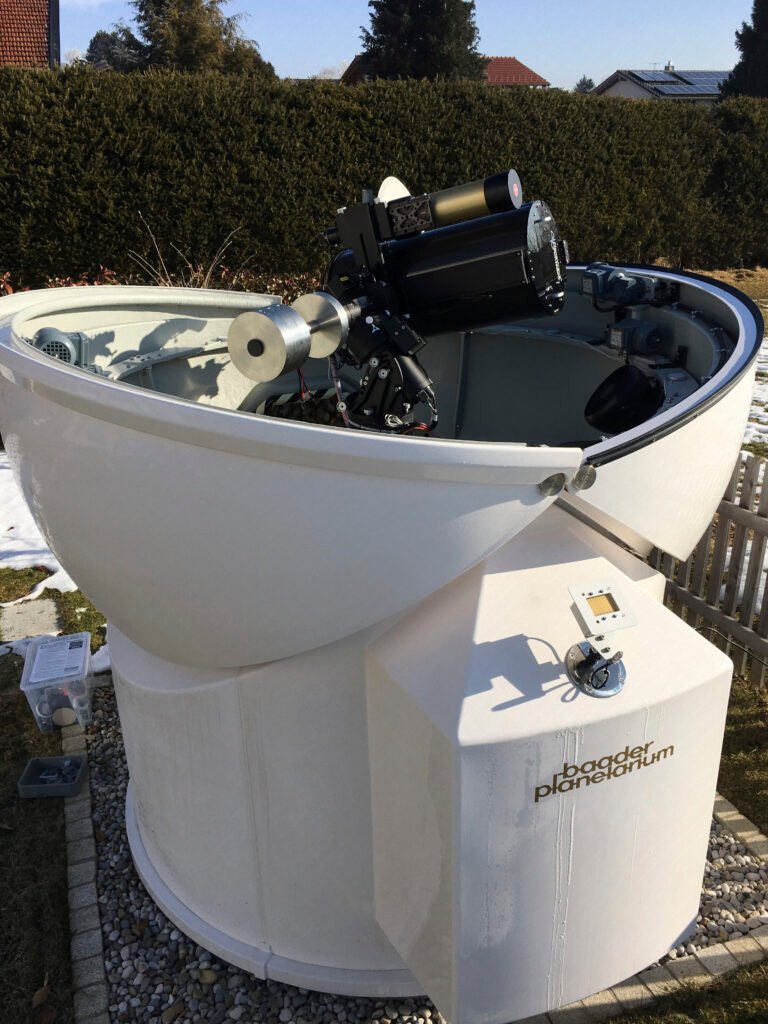
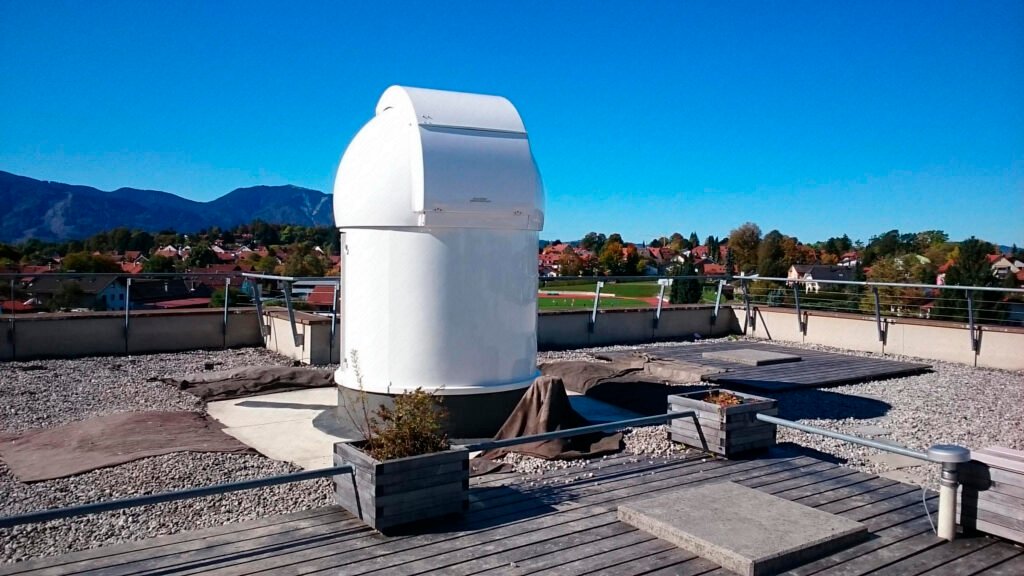
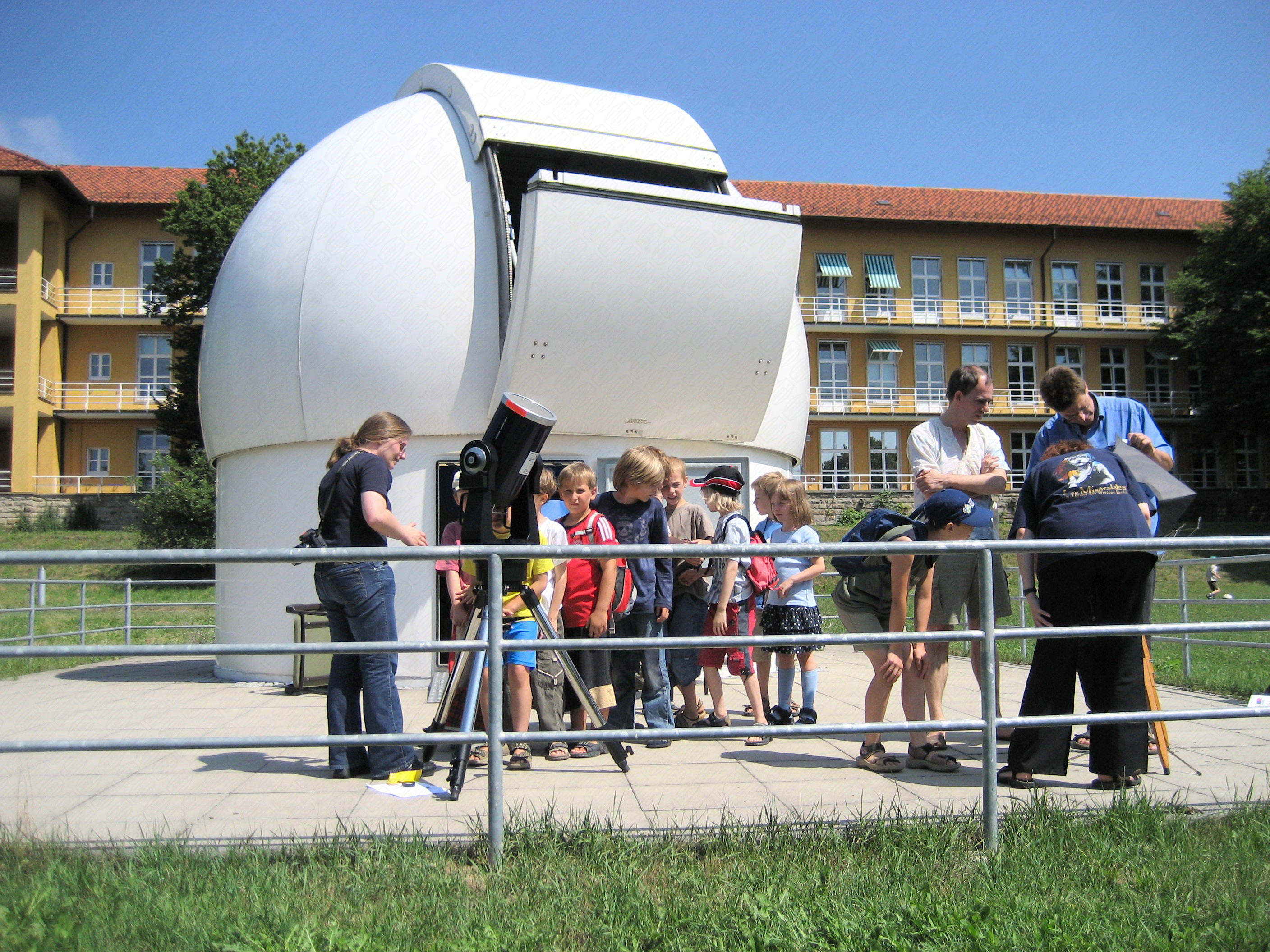
Our modern, insulated GRP domes feature powerful motors and state-of-the-art control electronics that allow fully automatic, remote operation. Designed to meet public building safety requirements, the domes close automatically when the wind becomes too strong or when it rains. Compared to old constructions they are lightweight, yet practically indestructible —whatever the location is. A Baader dome is an investment in the future. Our goal is that our constructions operate completely maintenance-free for at least ten years — often much longer. Some of our oldest domes have been running smoothly for over 40 years.




Baader Observatory World Map
The observatory world map shows many examples. It very often happens that after one or two decades the instruments of an observatory are replaced, but the dome can still be used due to its durable construction.
Mounts:
The “heart” of an observatory is surely the telescope, but the “brain” is the mount. It carries the telescopes, slews to objects and tracks them. New lightweight aluminium alloys, improved motors and high-resolution absolute encoders now allow mounts that are faster, more precise and more convenient than anything before. Observatories that operate during nearly every clear night also demand extremely high mechanical quality and wear-resistance. At an observatory in Norway, a 10Micron GM 2000 QCI mount has been carrying a load at its limit every clear night since 2007, even at extremely low winter temperatures. The mechanics handle it with ease; apart from the hand controller and one circuit board, nothing has needed any repair.
 Hamar Cathedral School Discover this observatory on our world map - We are very satisfied with the mount and the data… » Discover the observatory
In observatories that offer public viewing events, classic Equatorial mounts are increasingly being replaced by Alt-Az mounts because they offer the following advantages:
- Alignment in mobile use is quick and simple; there is no mechanical polar alignment.
- The mount is in balance, because no axis is tilted toward the pole.
- Instead of counterweights, one or more additional telescopes can be attached and used simultaneously.
- Because the mount stands upright, its swing range is smaller. That leaves more space for visitors inside the observatory and allows larger instruments — or the building can be smaller.
The unavoidable field rotation of Alt-Az mounts nowadays can be eliminated easily by field derotators. What once used to be professional technology is now accessible to everyone. A 10Micron Alt-Az mount, available in five sizes, can hugely upgrade any observatory. Examples:


Of course there are other mounting options, such as the proven Equatorial mounts from 10Micron and the very modern L- and T-mounts from PlaneWave Instruments which, however, are aimed more at industrial applications, such as satellite tracking. The trick lies in finding the right instrument for every budget and every application — our staff have decades of experience.
Optics:
Just 20 years ago, a 50 cm class telescope was a monster: A full-metal tube and thick mirrors meant a high instrument weight, requiring massive mounts and a robust pier. The price of an observatory with such an instrument was accordingly high, so acquisition made sense only for professional observatories. That has changed: New materials, such as carbon struts and lightweight metals for tubes, as well as lightweight honeycomb mirrors made of special glass, have revolutionized telescope construction. The CDK telescopes from PlaneWave Instruments are the best example. They also offer excellent user-friendliness and longevity. Telescopes delivered by us more than ten years ago are still in daily use without any need to be updated/serviced. None of these observatories, for example, has yet needed its mirror recoated. Thanks to series production, and thus much lower prices, these modern optics have now become common among many amateurs and in club and school observatories.

Optical accessories:
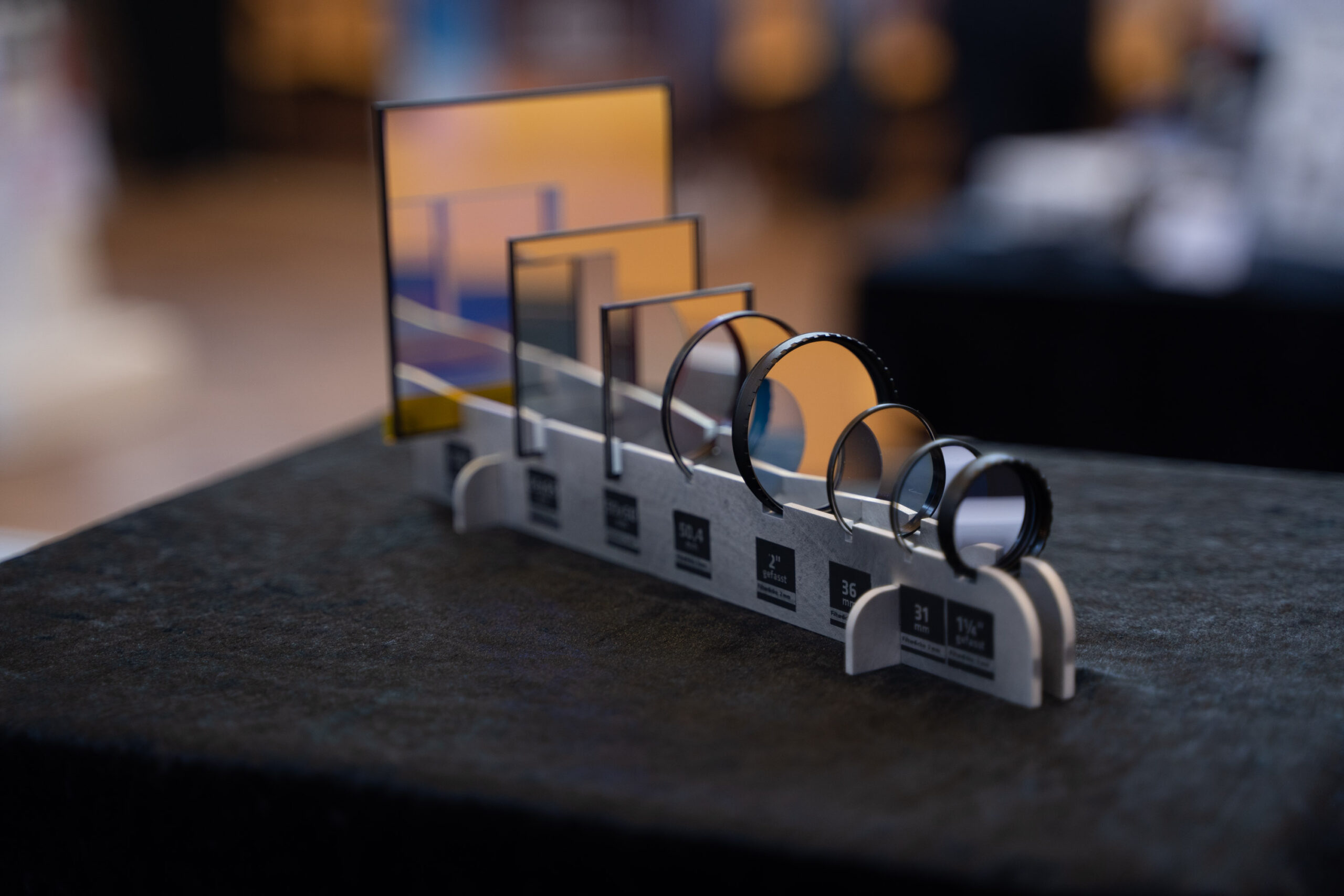
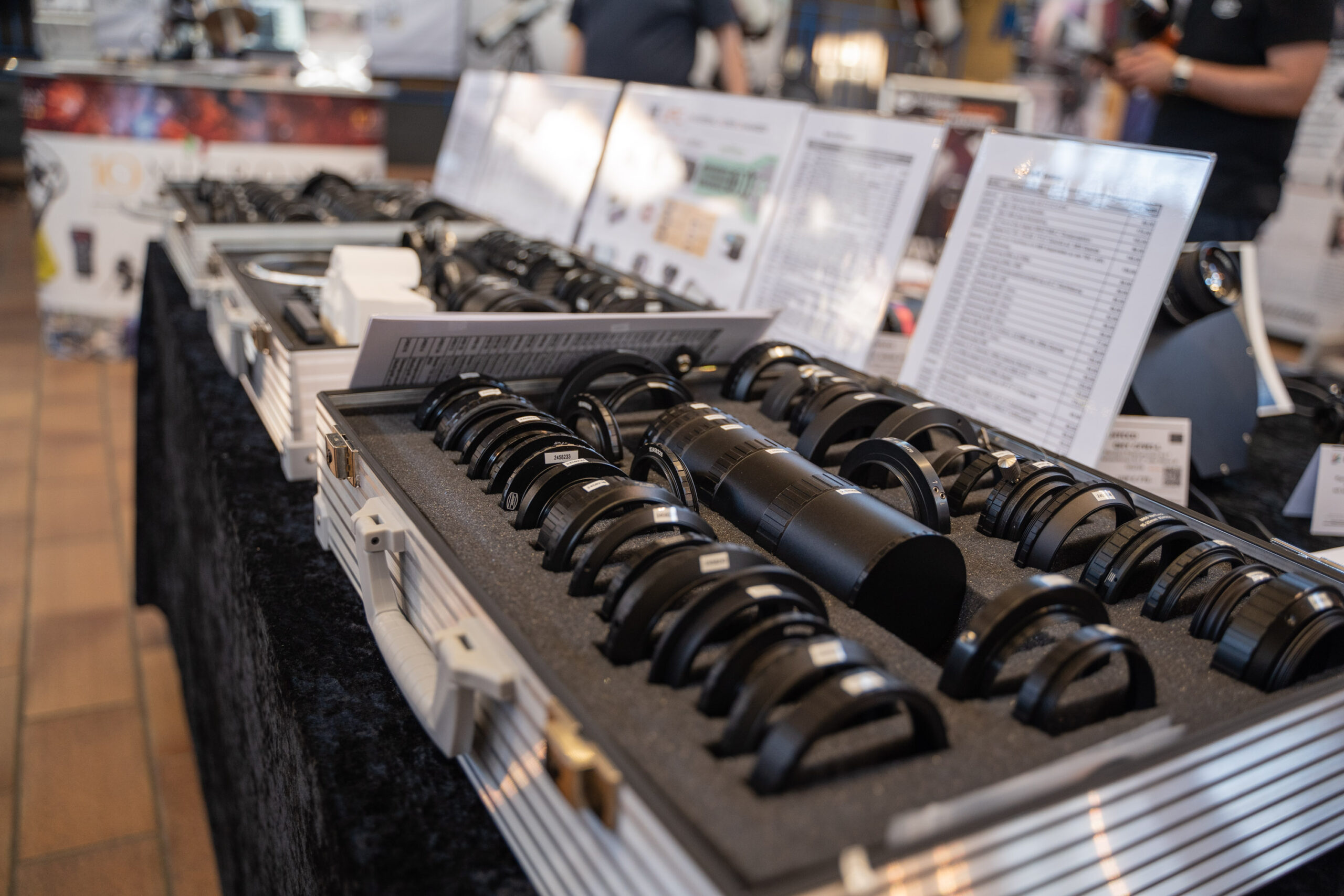
A chain is only as strong as its weakest link — and this applies to optical systems, too. There is no sense in buying a new telescope, but working with outdated eyepieces and filters. State-of-the-art optical manufacturing allows the improved performance of modern telescopes to reach the eye or camera via optimized accessories. Newly developed silver-coated star diagonals and prisms, dielectric-coated filters, special-glass eyepieces, Reducers and Barlows together produce images of the Universe with detail, once thought to be impossible! Yet all these new optics must be connected precisely: The image must not be impaired by tilt or reflections. You need adapters, extensions, tilters and other mechanical components in the beam path in oder to achieve this, all manufactured on modern CNC machines to a hundredth-millimeter accuracy. Everything must fit together perfectly in order to present the perfect image.


Cameras:
After the long era of photographic film, CCD cameras gradually became an issue in Astronomy from 1989 onwards. Back then they had tiny sensors which matched the computers of these days, however. Since the first amateur CCD camera—the SBIG ST-4 (192 × 165 pixels, chip size 2.6 × 2.6 mm) — Baader Planetarium has driven this development in Germany.
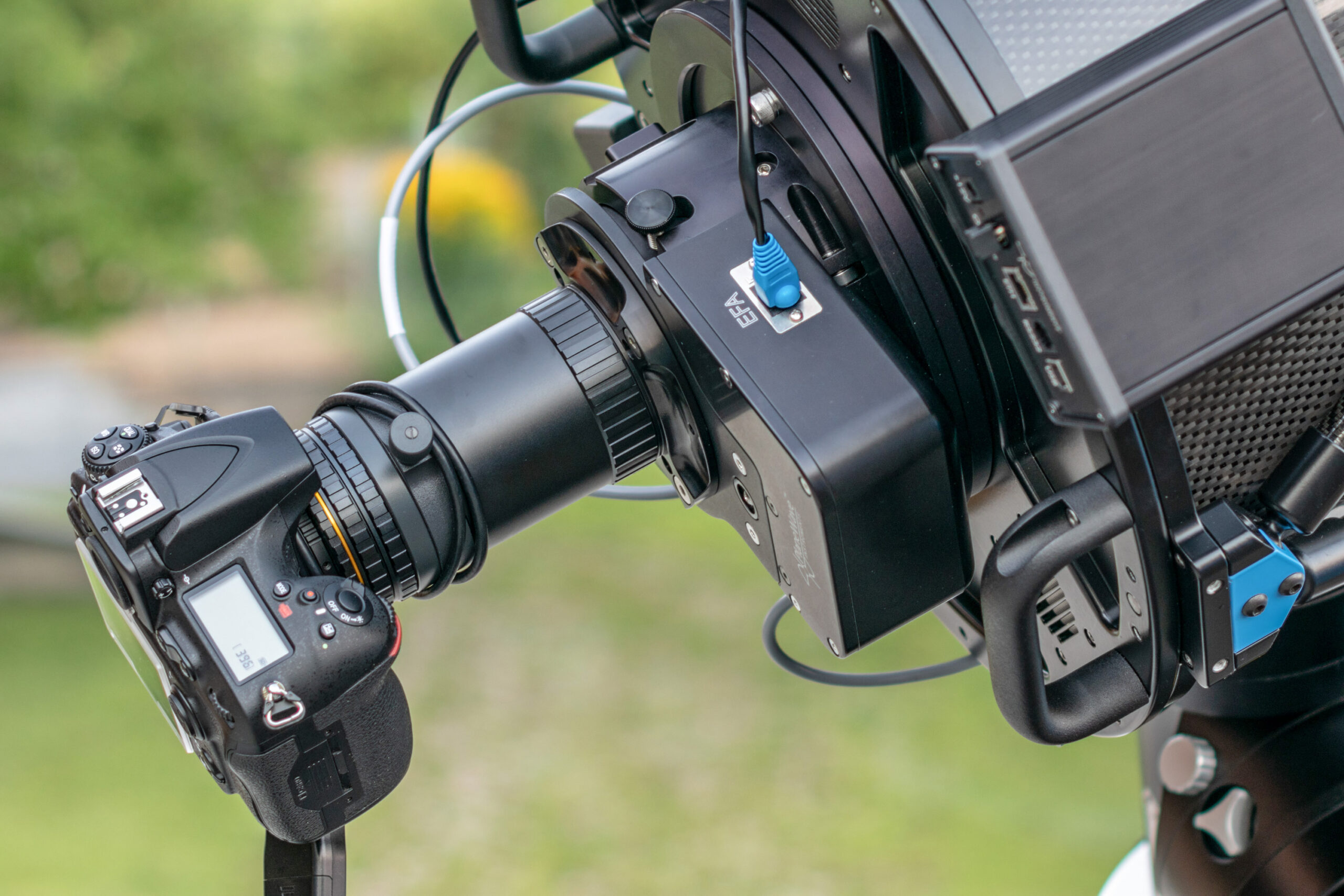
Advances in manufacturing have greatly enlarged sensor sizes; full-frame 24 × 36 mm sensors with many megapixels are now standard. CMOS technology and back-illuminated sensors have dramatically increased sensitivity: Individual photons can be detected. This not only yields stunning images, but also precise photometric and spectroscopic results. Electronics and computing power now permit scientific results in fields, such as exoplanet research, that were once reserved for professionals.


Live image on a screen:
The everlasting problem in public observatories — only one person can look through the telescope while many wait — can now be solved technically. A small wide-angle telescope with a camera, mounted parallel to the main instrument, projects a live image of the object onto a monitor in the observatory thanks to live-stacking software. This increases anticipation of one’s own look through the telescope!
Alternatively we can install optical switches at the main telescopes that direct the light either to a sensor or to an eyepiece, so nothing needs to be rebuilt during observatory operation.
Such folding mirrors are available in the form of the FlipMirror II (BFM II) Star Diagonal (#2458055 , € 228,- ) , which allows you to switch between eyepiece and camera in the blink of an eye, through to the professional, PC-controlled Multi Port instrument, to which three heavy devices can be connected.

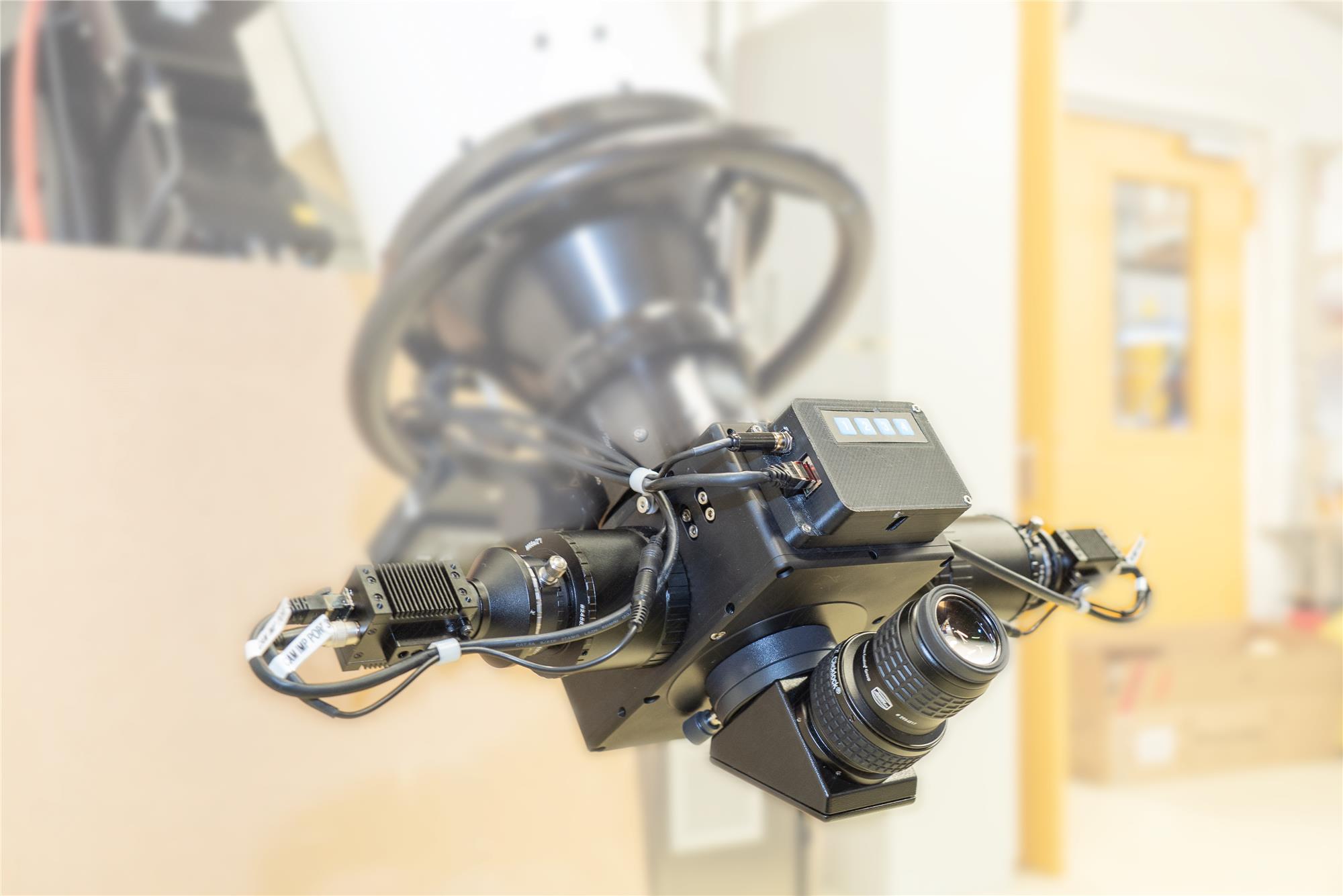
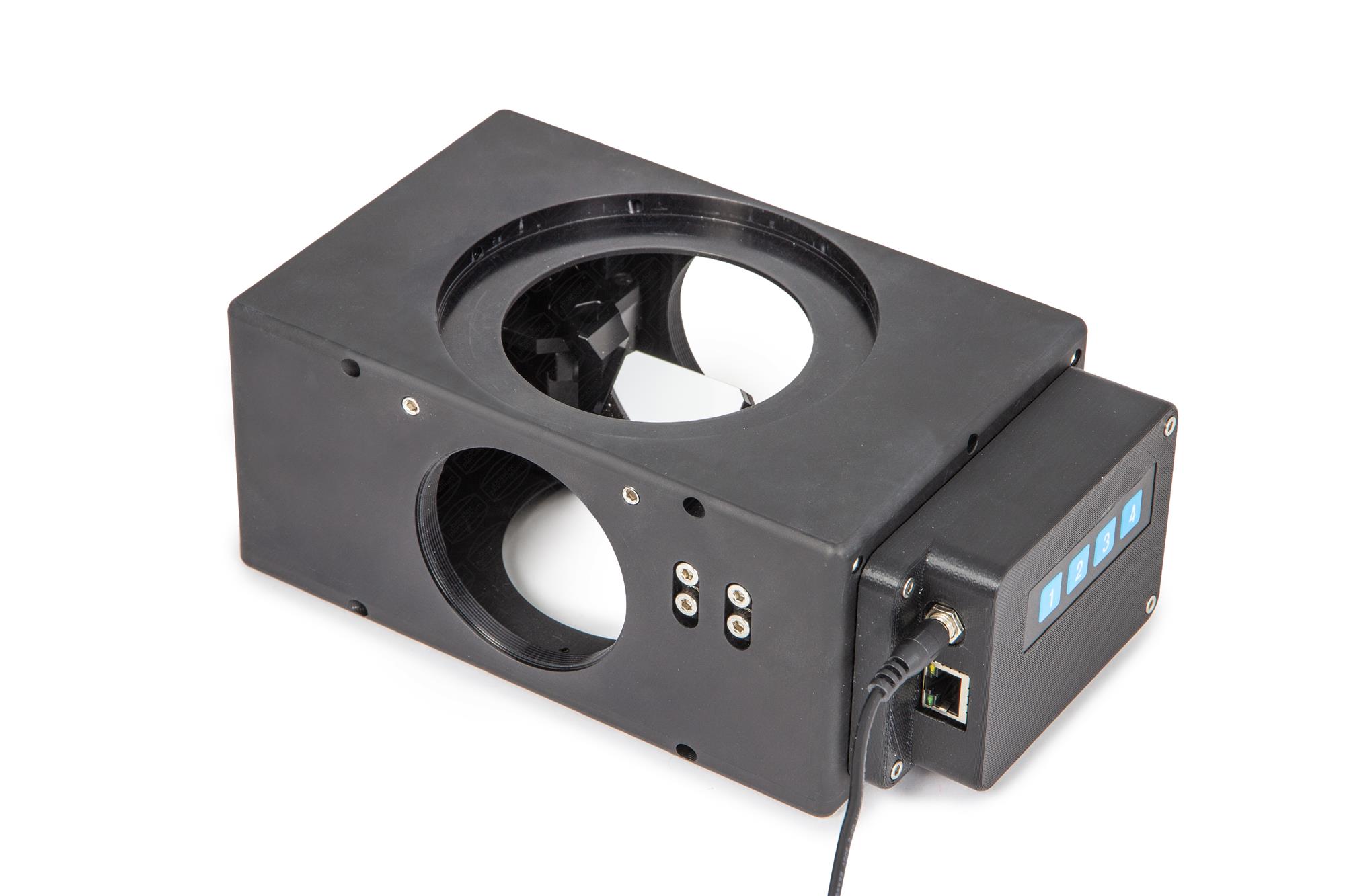
IMP85 – Instrument Multi Port
(#2451300 ,
€
7950,-
)
The IMP85 supports up to three instruments at the telescope focus and can be remotely controlled via keypad or web interface. The ability to draw multiple uses from one telescope opens up completely new possibilities for remote observatories, amateur astronomers and regular observatories alike.
Further possibilities:
Beyond classical visual observing, modern observatories can now be used for Spectroscopy, Photometry, satellite tracking and even laser communication with satellites. Telescopes can handle all of these tasks with additional optics or equipment that has become much cheaper, technically sophisticated and user-friendly in recent years. This greatly expands and intensifies the possibilities of all observatories, enabling contributions to current scientific research.
Thanks to the technical evolution of observatory instruments, a new era has begun for observing Earth's orbit and exploring the Heavens with small and medium-sized observatories. Future generations of young researchers are eager to satisfy their curiosity. Every old observatory upgraded with modern instruments can inspire enthusiasm for research, technology and, above all, scientific thinking. At a time when computers increasingly do the thinking for us, this seems more important than ever.