In recent days, some customers have received warning messages from Amazon regarding the safety of solar filters—both the Baader Planetarium AstroSolar® Safety Film OD 5.0 (ECO-size, 20x29) (various versions available) and Celestron EclipSmart® products. As the manufacturer of AstroSolar® Films and the European general distributor for Celestron products, we take these notices very seriously. This blog post is intended to shed light on the situation, explain the background, and reassure you that both products are absolutely safe when used properly.
1. Background and Reason for the Warnings
Recent Notifications
Amazon has sent out warning notices urging customers not to use the affected products—both Baader AstroSolar® Films and Celestron EclipSmart® products—for observing solar eclipses anymore, and to dispose of them. We have meanwhile learned that similar notices have also been sent to customers of solar observation products from other manufacturers. We would like to clarify that we ourselves do not offer any products on Amazon.
Customer Uncertainty:
The warnings apparently stem from misinterpretations of product-specific standards. Amazon issued these statements on its own and without consulting us. There was no official inquiry from Amazon to Baader Planetarium GmbH or Celestron—we would have gladly provided a statement early on to avoid misunderstandings.
Discussion in the Community:
The warnings have sparked lively discussion on german platforms such as Astronomie.de, where possible misinterpretations of product safety standards and product liability issues have been pointed out. As early as the “Great American Eclipse” of 2017, there were similar discussions surrounding eclipse glasses. Then as now, extensive tests and practical experience have shown that, when used correctly, there is no risk involved.

2. Baader AstroSolar® Safety Films
Safety Status of the Film
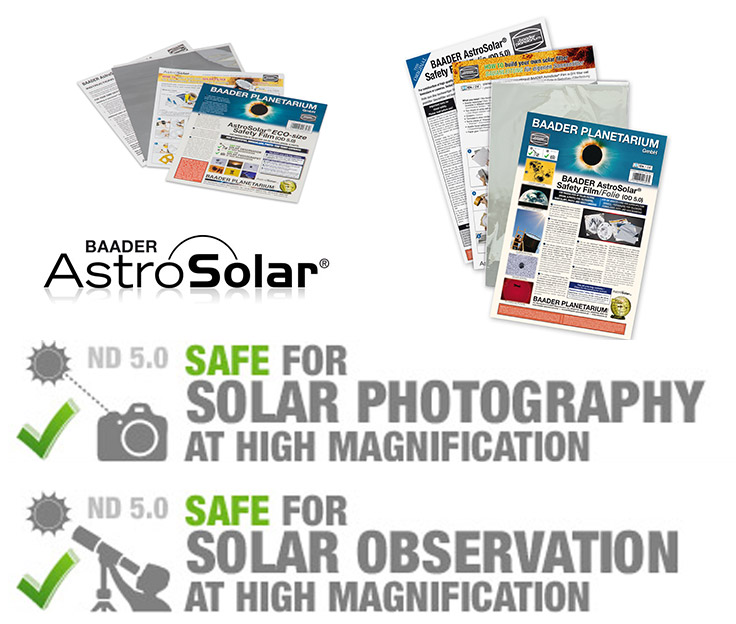
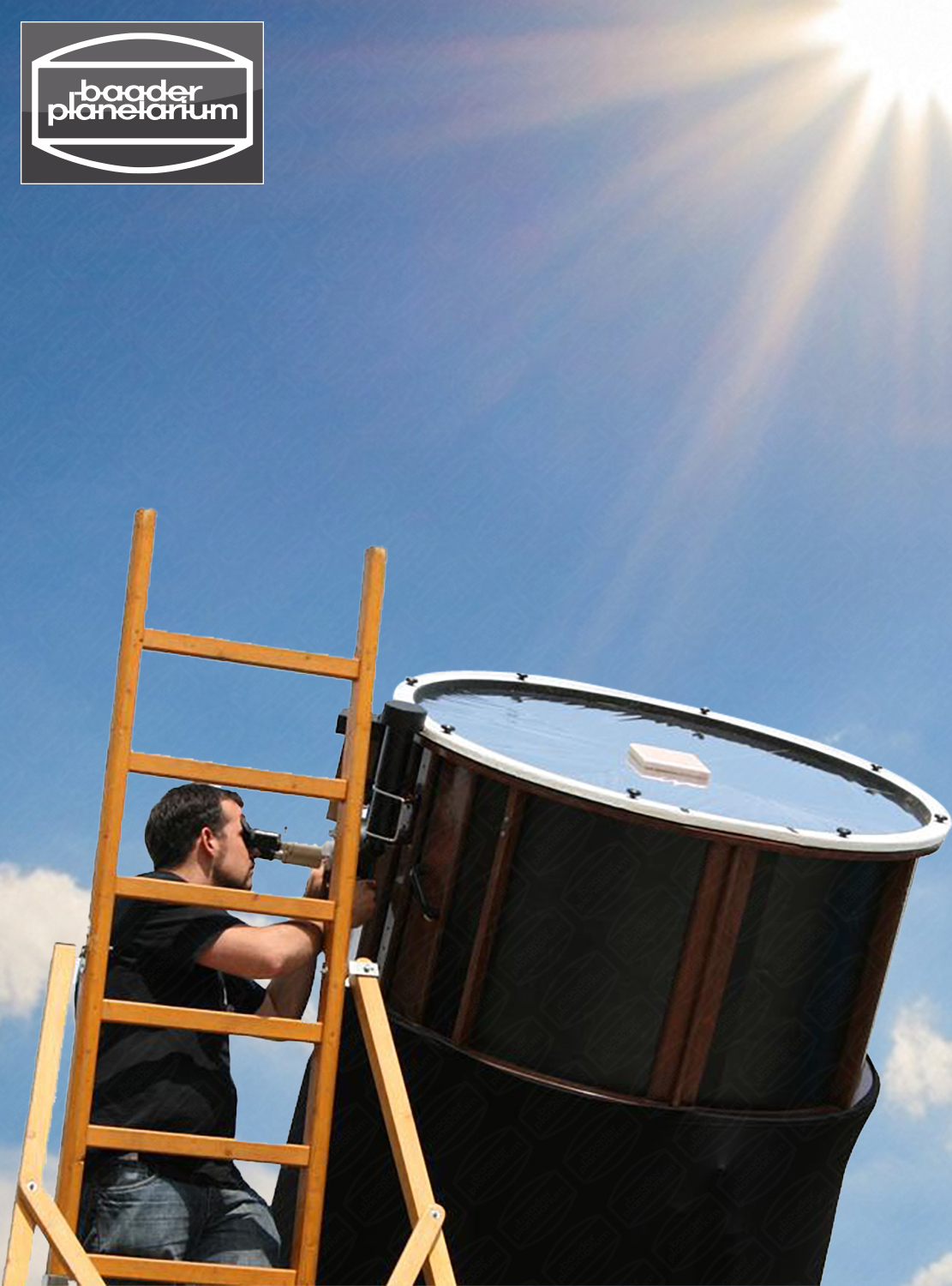
- The AstroSolar® Safety Film OD 5.0 is designed for use in front of optical devices (telescopes, binoculars, spotting scopes, and cameras).
- It has been used successfully and safely for over 30 years—not a single case of eye irritation or eye damage has ever been reported to us.
- It is not approved for direct viewing of the sun without additional optics. This notice is prominently displayed on every film.
Standards and Regulations
- For use as a telescope objective filter, no specific standard or regulation exists, because EN ISO 12312-2:2015 applies exclusively to eclipse glasses and other aids for the direct view of the sun.
- When used correctly, there is no safety concern.
- Please also note our official safety guidelines.
3. Celestron EclipSmart® Products
Safety Status of the EclipSmart® Line
- Under the name EclipSmart®, Celestron offers both objective filters for telescopes and solar binoculars and other products.
- According to Celestron, EclipSmart® filter materials and products meet the ISO standard EN ISO 12312-2, i.e., they do not exceed any limits for direct solar viewing (for example, with solar binoculars).
- For telescope objective filters only, the same special situation mentioned above applies: There is no separate standard.
- When handled correctly, there is no safety risk.
Standards and Regulations
- The official ISO standard EN ISO 12312-2:2015 focuses on products for the direct observation of the sun with the naked eye.
- EclipSmart® objective filters and binoculars undergo quality and safety tests to meet international requirements.
4. AAS Confirmation (American Astronomical Society)
The American Astronomical Society (AAS) maintains an official list on its website
https://eclipse.aas.org/eye-safety/viewers-filters
of recognized manufacturers and suppliers of solar filters for telescopes, binoculars, and camera lenses. Both Baader Planetarium and Celestron are listed there as trusted providers.
In this context, the AAS points out (in paraphrase):
“Solar filters for cameras, binoculars, or telescopes are not covered by ISO 12312-2 because there is currently no international standard for such filters. However, any filter film that meets the relevant optical requirements (transmission, uniformity, and quality) can be safe for use on optics, provided users follow the manufacturer’s instructions.”
In other words, the lack of an ISO standard does not mean that objective filters are unsafe—it merely indicates that this area of application is not covered by the existing standard. The AAS explicitly states that it has had years of experience with the products of the manufacturers listed there, without any reports of eye or other health damage.
5. Summary and Outlook
Conclusion
- When used correctly—i.e., in front of optical instruments or as specified by the manufacturer (e.g., EclipSmart® solar binoculars)—both Baader AstroSolar® and Celestron EclipSmart® products are safe and meet the high quality standards you expect from us.
- Disposal is not necessary.
Transparency and Further Information
- If you have any questions or concerns, our support team is happy to help.
- Please also refer to our other blog posts as well as the safety instructions.
Final Note
We understand that warnings issued without direct information from the manufacturer can cause uncertainty. However, based on our decades of experience and regular testing, we can confirm that no safety risk exists when either product line is used correctly. We will continue to keep you informed in a transparent manner and are happy to answer any questions.
Kind regards,
Your Baader Planetarium and Celestron Germany Team