Finally, the Comet C/2023 A3 Tsuchinshan Atlas is visible again from Earth, and it seems to be still fully intact. Just a few weeks ago, some observers thought they saw signs that it was breaking up – similar to Comet ISON ten years ago. These fears do not seem to have been confirmed. This increases the chance of a beautiful comet that can be seen in the sky with the naked eye!
Current Visibility and Brightness
For two days now, the comet has been easily visible to everyone in Germany, and with newer smartphones with a good camera it is also easy to photograph. Even from a city, provided the sky is clear!
- When: in the evening, approx. 1 hour after sunset, i.e. approx. 7.40 pm
- Where: exactly in the west (if necessary, find it with the compass app on your smartphone)

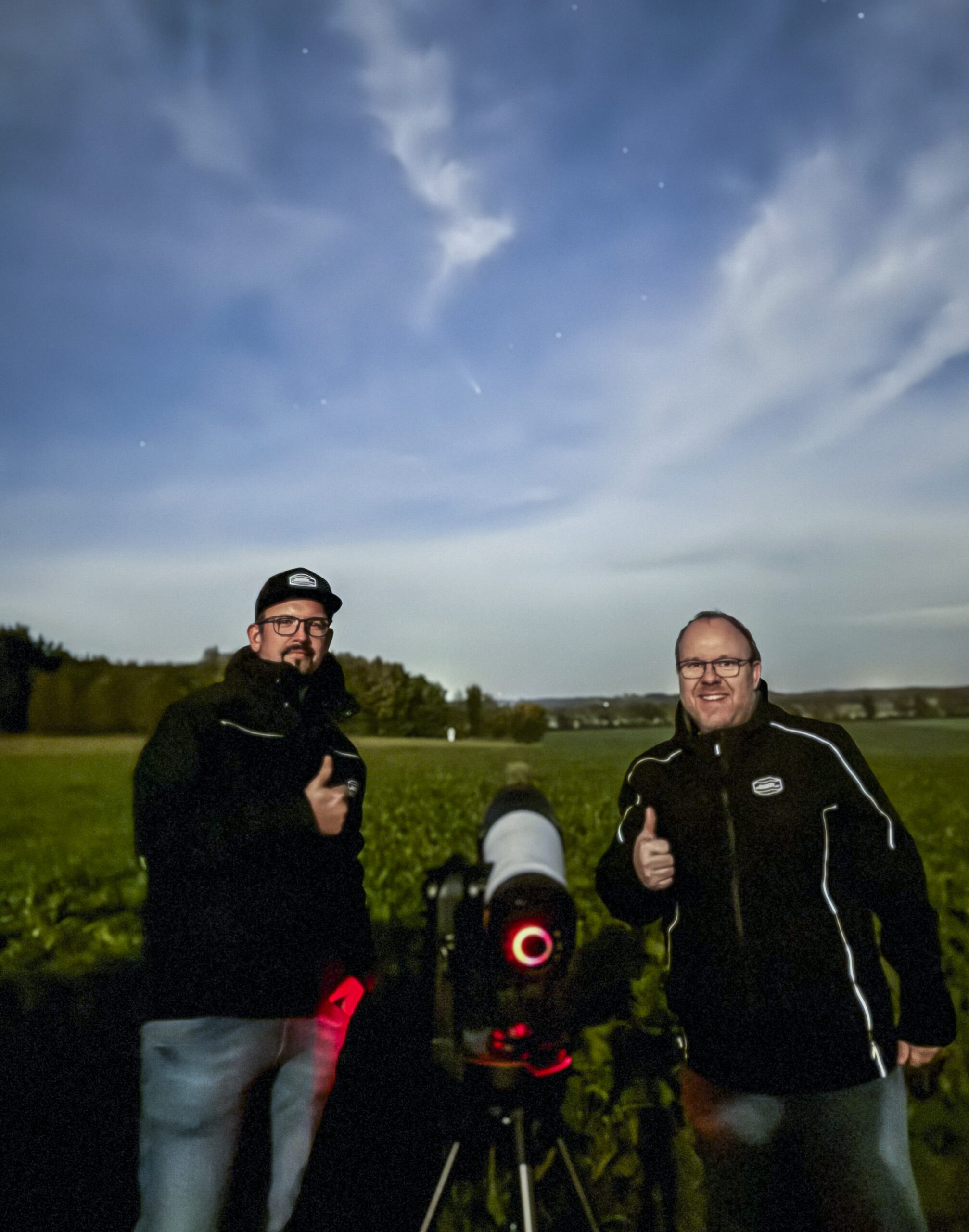
Some pimages of our team from the evening of October 14th, all taken with a smartphone. The comet should remain visible to the naked eye until the weekend of October 19th/20th, after which it will still be a very interesting object for binoculars and telescopes.
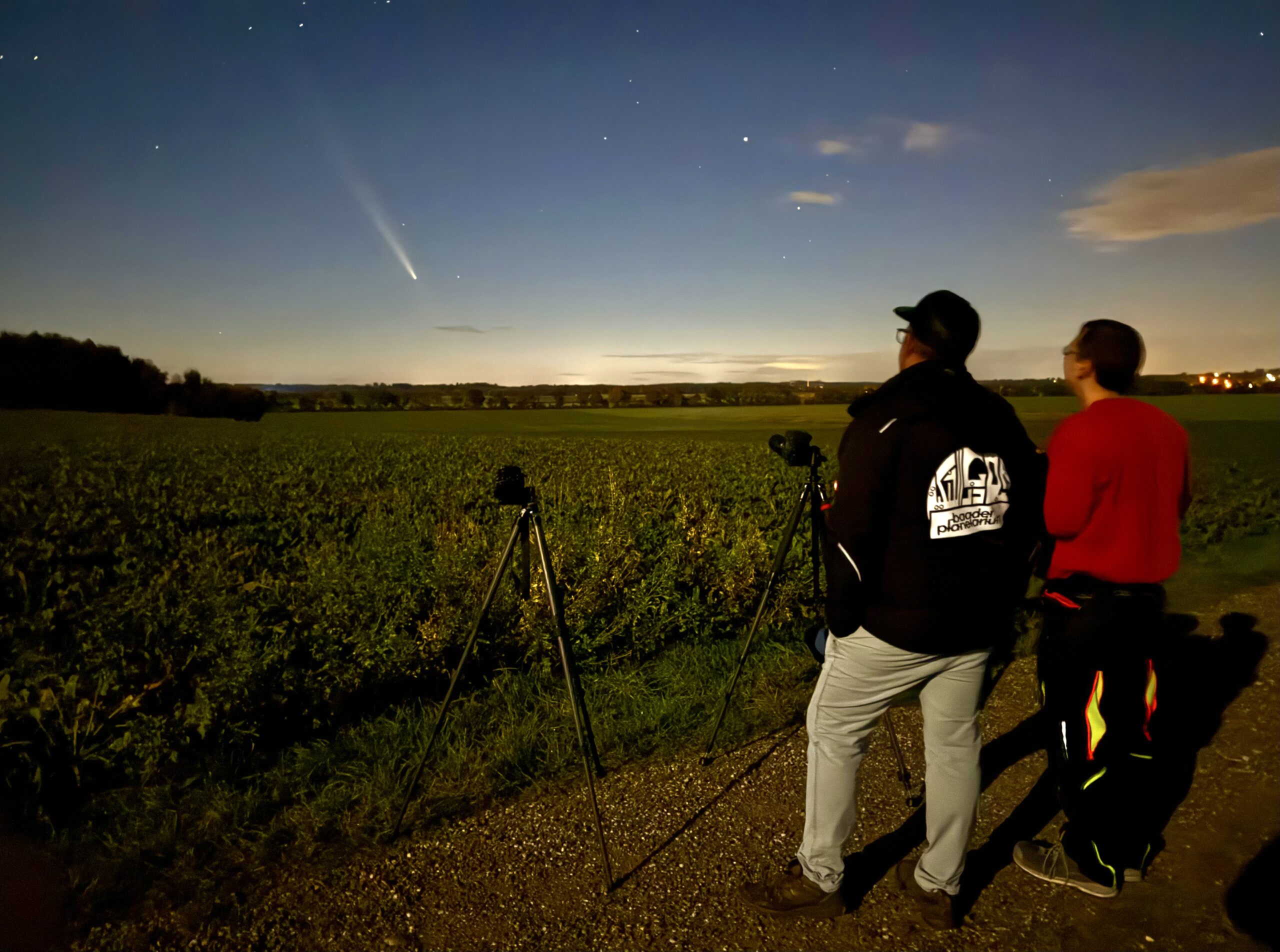
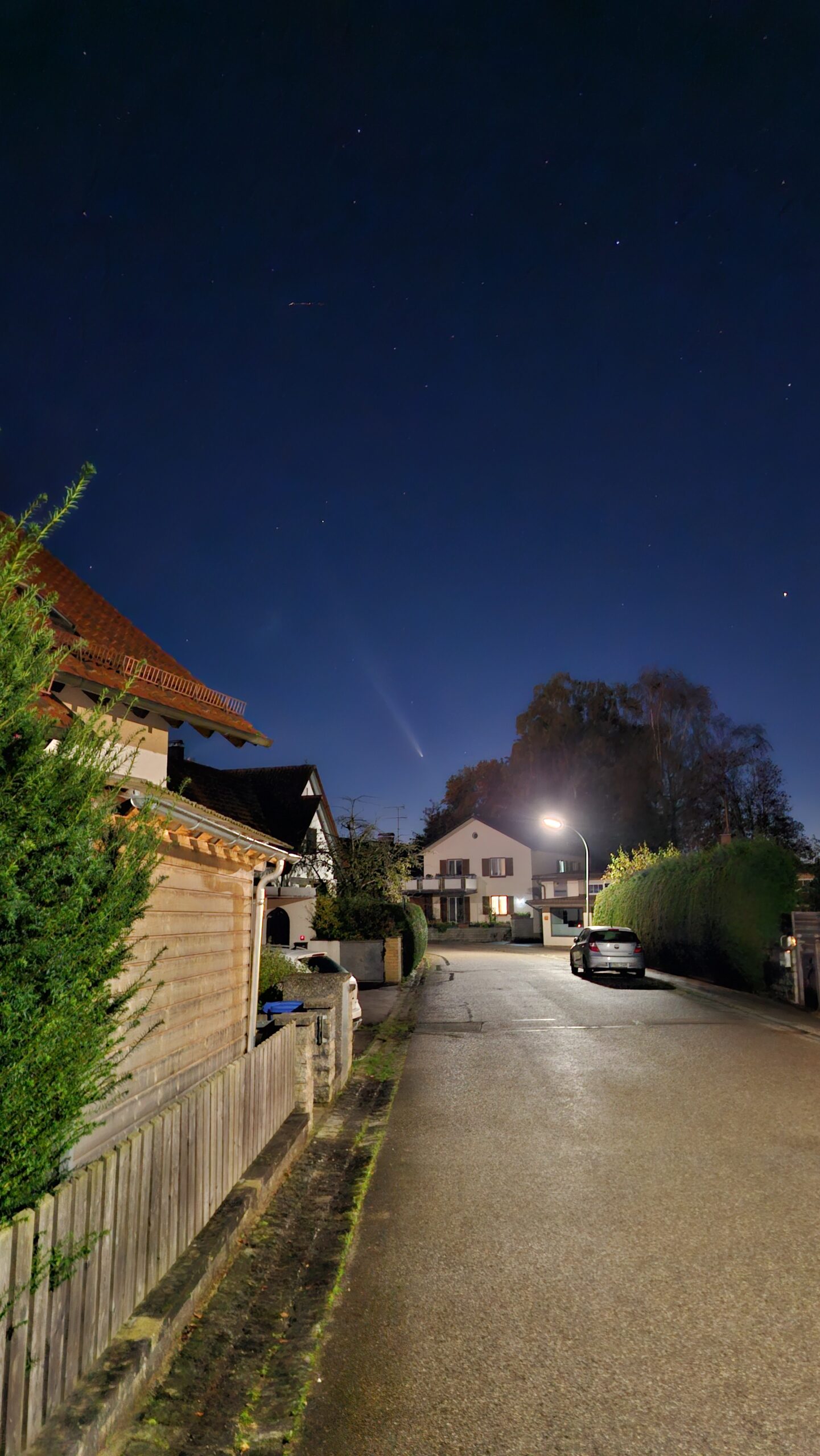
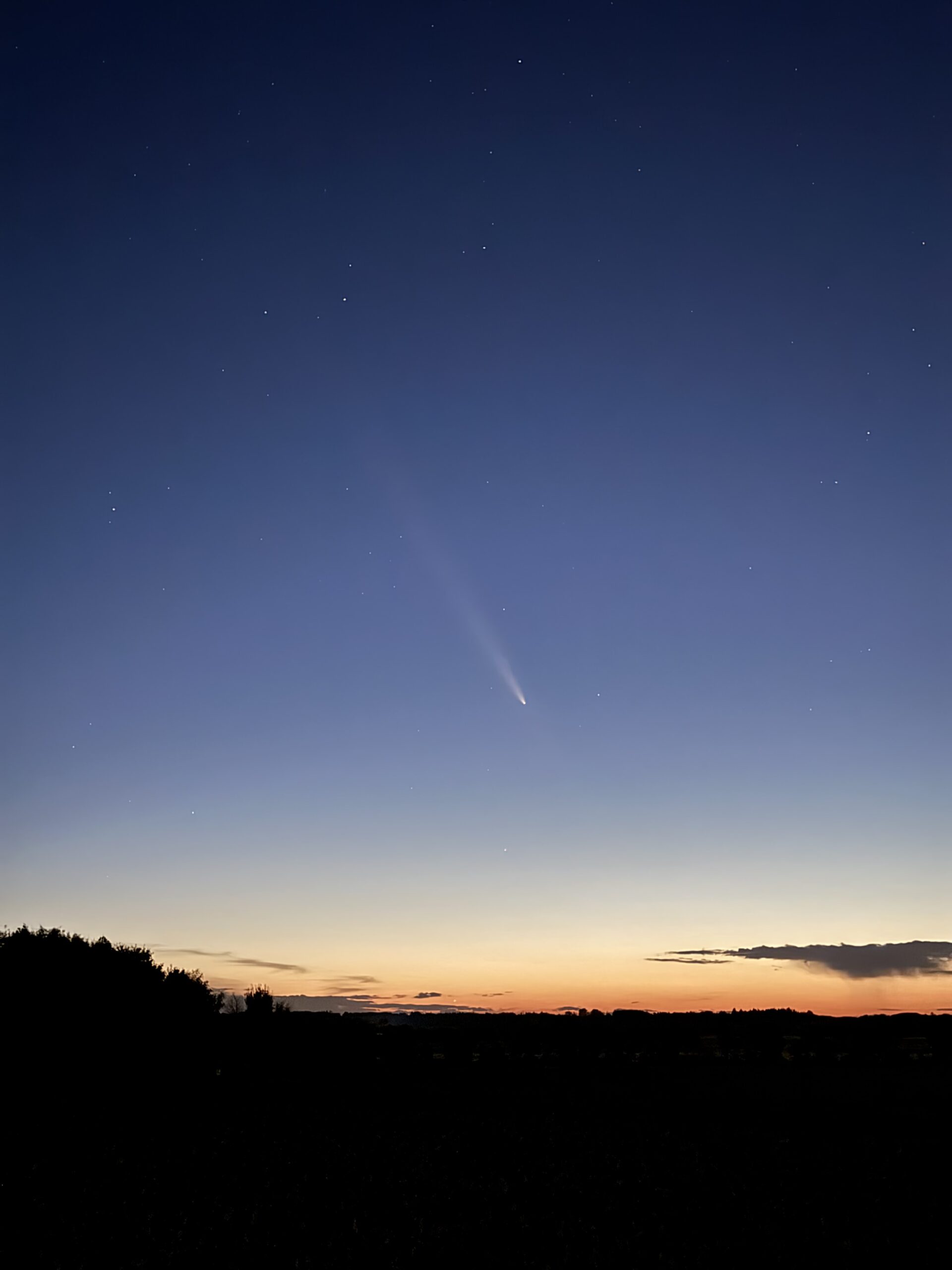
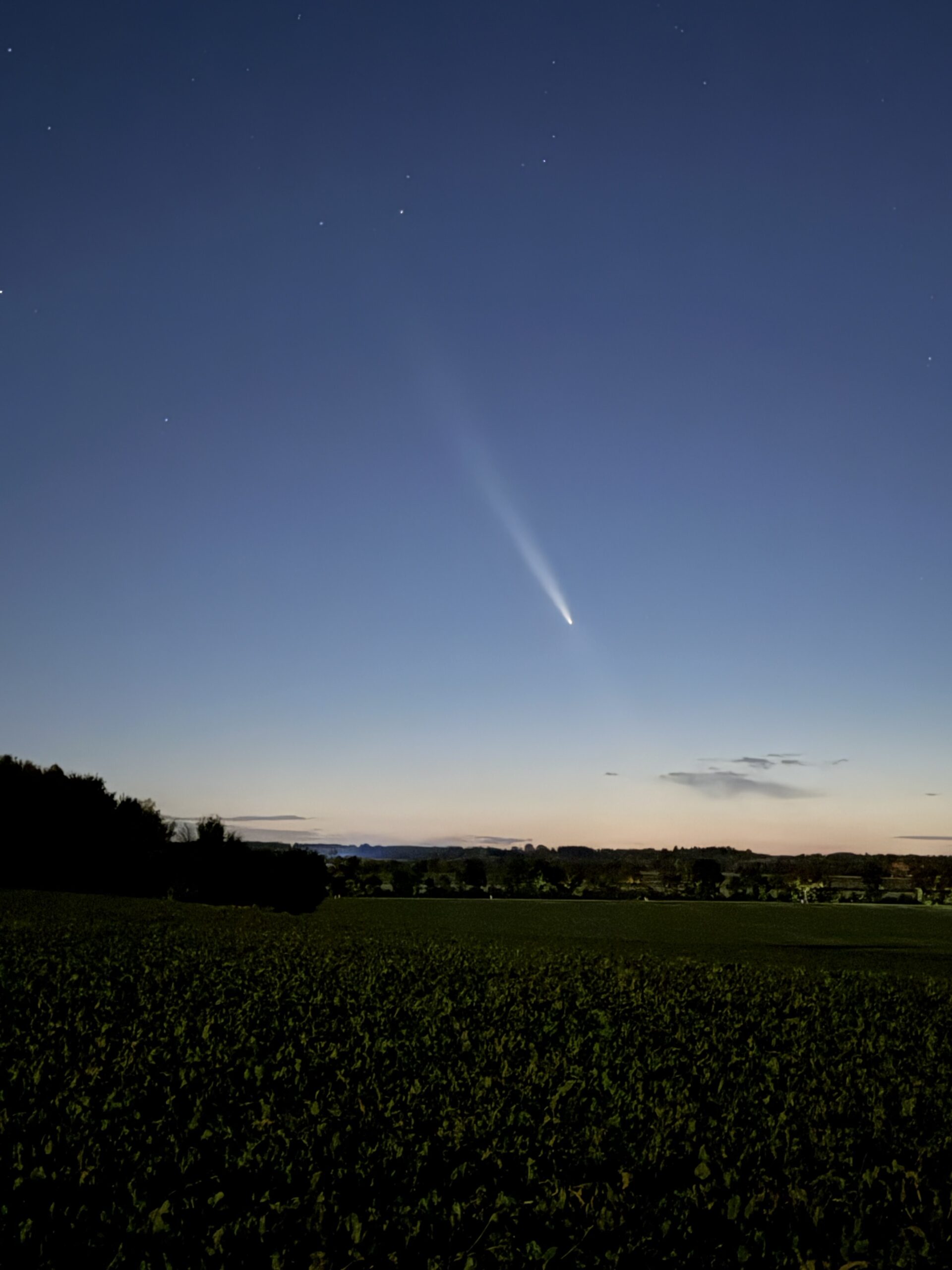

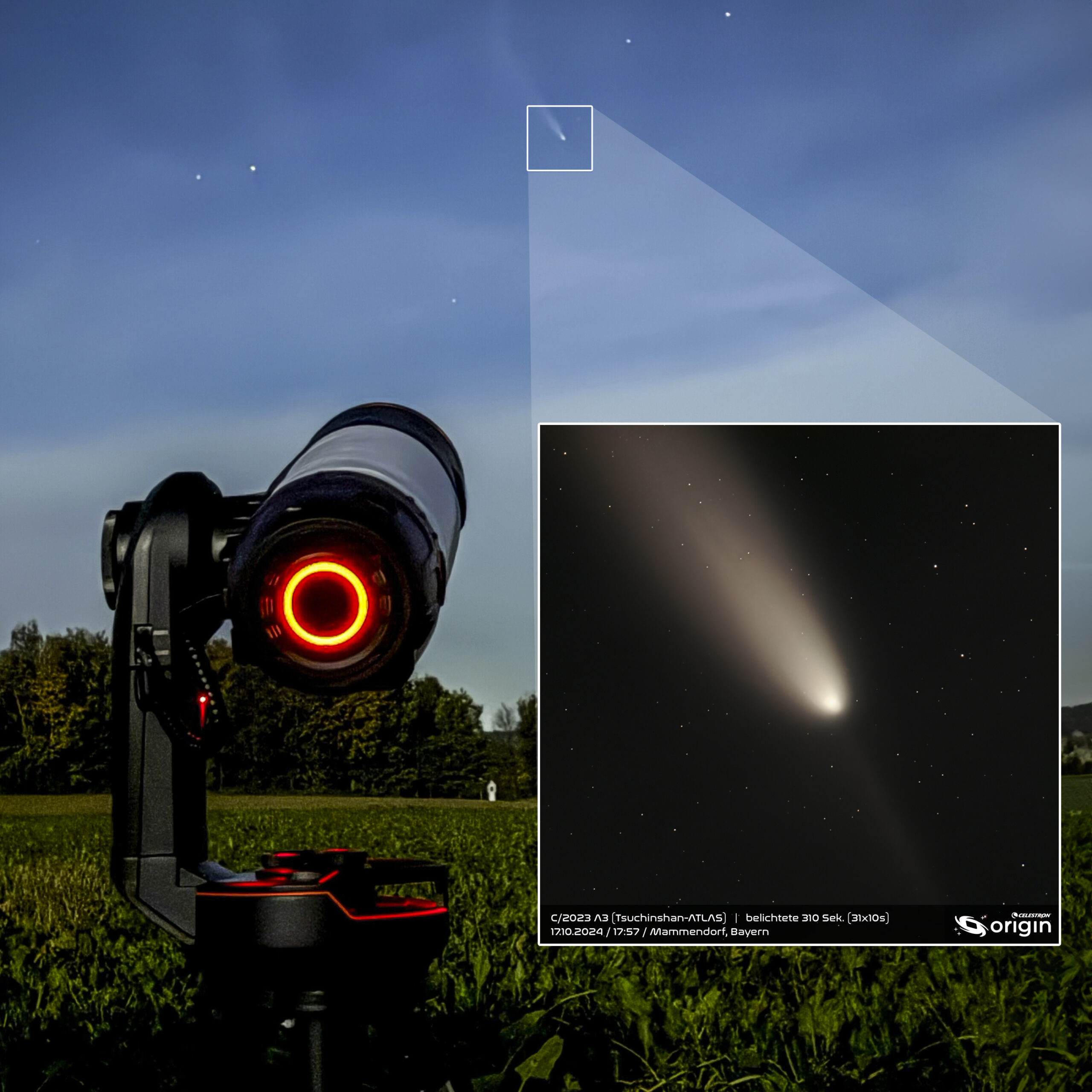
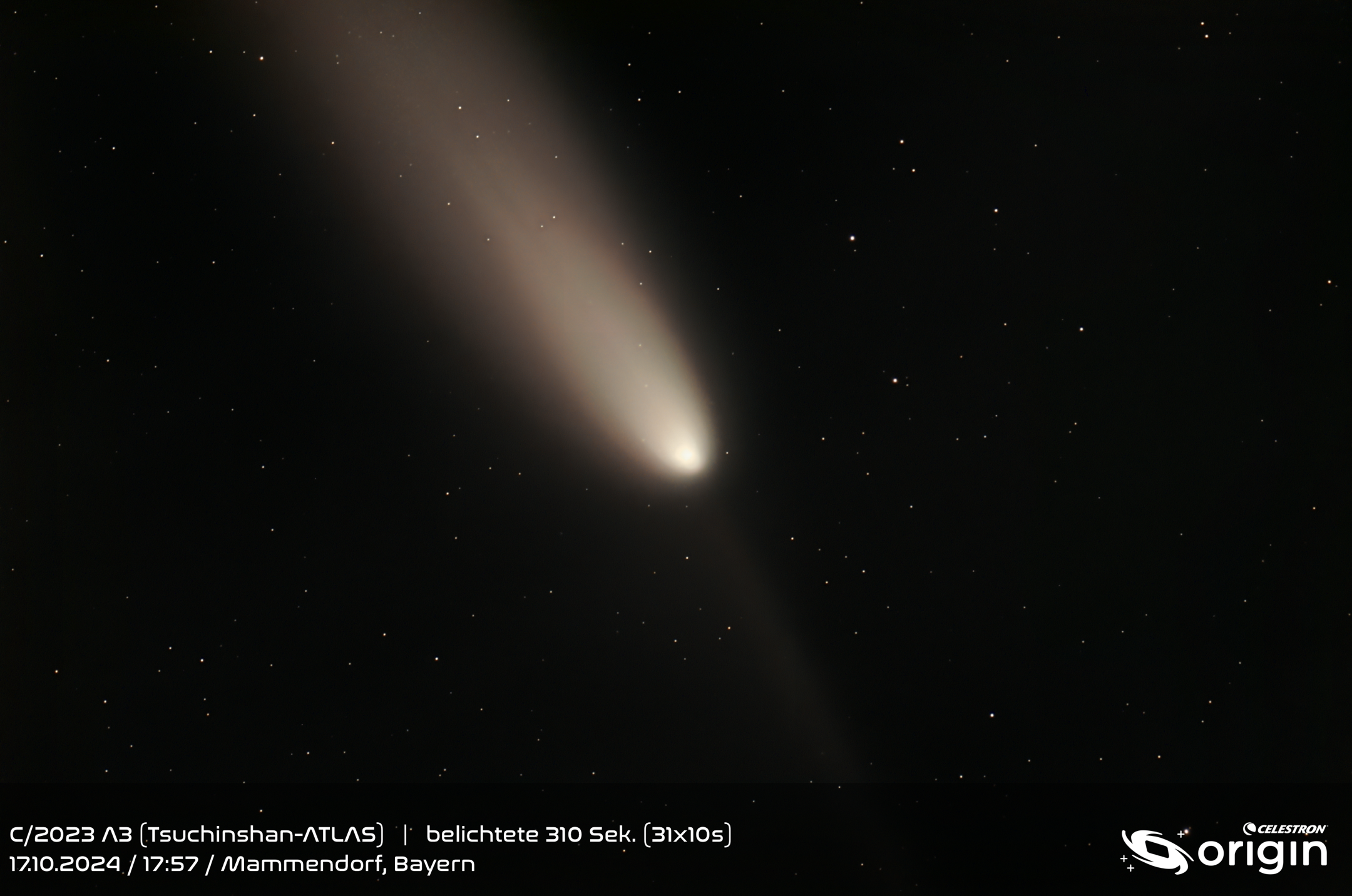
Our team went out yesterday to capture more images of the comet C/2023 A3 Tsuchinshan using smartphones and also brought along the brandnew Celestron Origin. The result: an incredible image of the comet, even showing the antitail – without any post-processing(!)
Truly impressive what this smart telescope can do!
Check out the Celestron Origin here: www.celestron.de/origin
Special Features of the Comet
The interesting thing about its development is that it apparently produces a lot of dust. Its dust tail is much more pronounced than the plasma tail; with most other comets, it's exactly the opposite – the plasma tail dominates the appearance. For observers on Earth, this is good news because the dust tail is much better to observe visually – with binoculars, telescopes, and the naked eye.
Furthermore, this increases the chance that the comet will experience a brightness jump of several magnitudes in the second week of October due to forward scattering of sunlight by the dust. With a lot of luck, it might even be observable during the day, although this is very rare.
The comet will reach its perihelion, the point in its orbit closest to the sun, on September 27, 2024. At that time, it will be within Mercury's orbit and come very close to the sun, which could further increase its brightness.
Note: Optimal Observation with Baader Comet Filters
To observe this rare celestial event in the best possible way, special filters can help make the comet more clearly visible and highlight details. Learn more about suitable Baader comet filters and how they can enhance your observation in the following article:
 Comet Filters September 04, 2024 - Kometen-Filter erhöhen den Kontrast von Kometenschweifen. Der Artikel erläutert verschiedene Filtertypen, darunter Breitband- und Linienfilter, die je nach Komet und Beobachtungsbedingungen unterschiedlich eingesetzt werden können. Read more
Comparison with Comet McNaught
The last daylight comet was McNaught in 2007, which we were able to observe here in Bavaria without binoculars or telescope around midday with the naked eye in the blue daytime sky.
A few days later, it was seen in the red sunset sky, with decreasing brightness.


Observation Tips and Schedule
Exciting days lie ahead, because no one can predict exactly what will happen; whether the comet remains an object for binoculars, or whether it develops a very great brightness and perhaps even an impressive tail visible to the naked eye. A rough schedule:
- Early October: The comet can be found in the east just above the horizon before sunrise around 6 a.m. This visibility lasts only a few days before it dips below the horizon.
- Between October 5 and October 9: The comet is near the sun in the daytime sky. During this time, it could become a daylight comet.
WARNING: Do not look at the sun, either with the naked eye or—especially—not with a telescope or binoculars! You could lose your eyesight! It is recommended to completely cover the sun, e.g., with a roof or a building edge, and only then search for the comet with the naked eye. - Around October 10: The comet could then be visible in the evening glow. On October 13, C/2023 A3 is closest to Earth (somewhat farther away than Mars) and thus largest in the earthly sky. Tsuchinshan-ATLAS is easy to find in the middle of two brighter objects, with the planet Venus on the left. To the right, slightly higher than Venus, is the bright star Arcturus, with the comet rising a little higher each day in between. Unfortunately, the angle of view of the tail and the brightness also decreases, making it a little more difficult to observe with each passing day. The ever brighter light of the waxing moon is also somewhat disturbing, but also illuminates the landscape and makes for beautiful photo opportunities.

© M. Risch
However, note that the brightness development of comets is unpredictable. It can also happen that the comet breaks up or does not increase in brightness as expected. Therefore, all predictions should be viewed with caution.
You can find the current position of the comet at any time on theskylive.com.
Good luck with your observations!