Following the successful Factory Acceptance Test in September 2025, the next important milestone in the Bundeswehr space surveillance project has now also been completed: the two 1 m telescopes have successfully passed the Site Acceptance Test, or SAT, at the installation site.
Both systems had already demonstrated their performance in factory-complete condition during the Factory Acceptance Test, which took place on 23 and 24 September 2025 in our production and integration facilities in Mammendorf. This was followed by disassembly, transport, installation and integration of the telescopes at the deployment site in Meßstetten.
The successfully completed SAT has now confirmed that the installed systems also meet the requirements on site and are ready for operation in interaction with the involved components.
Successful acceptance under real operating conditions
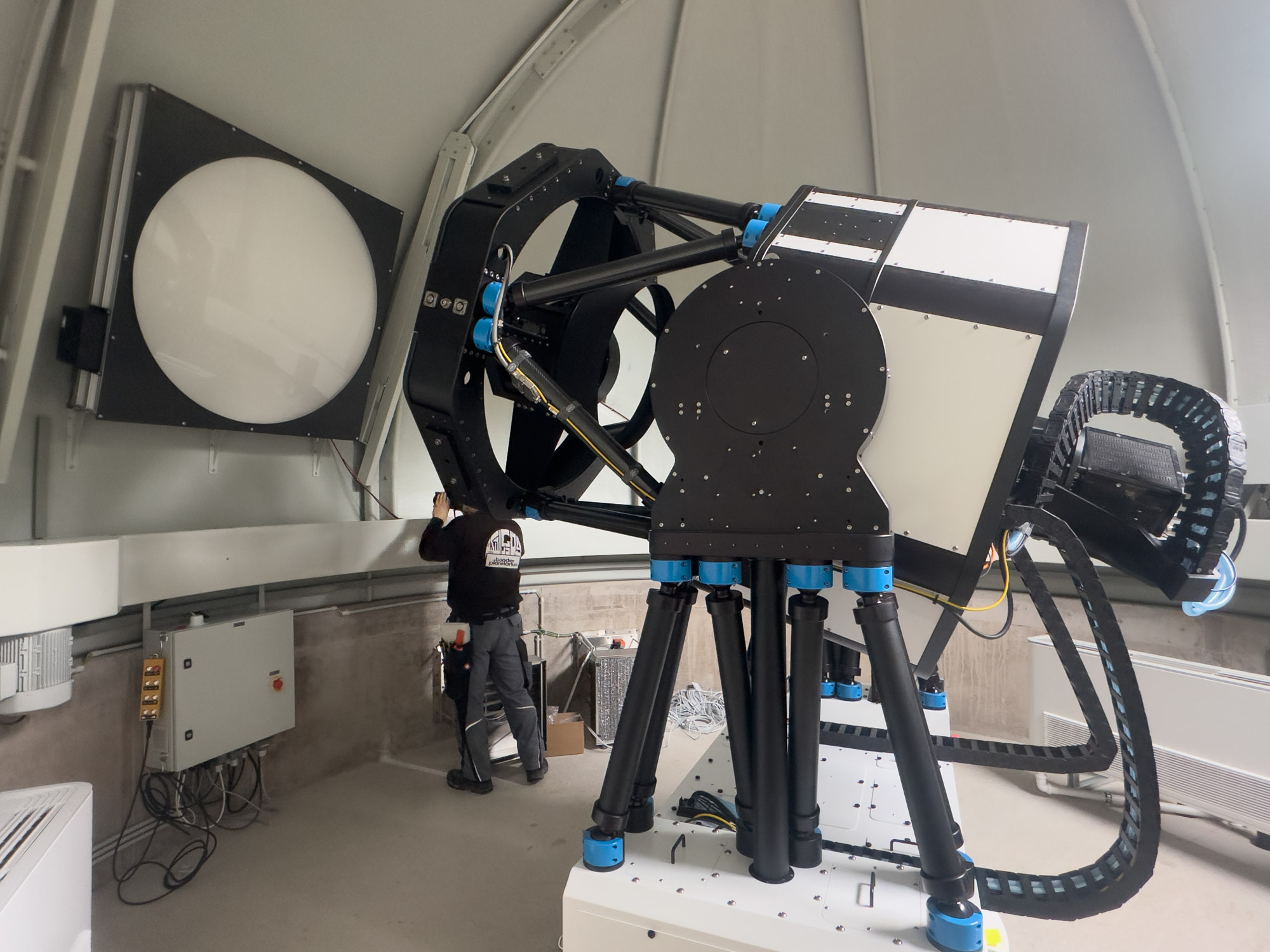
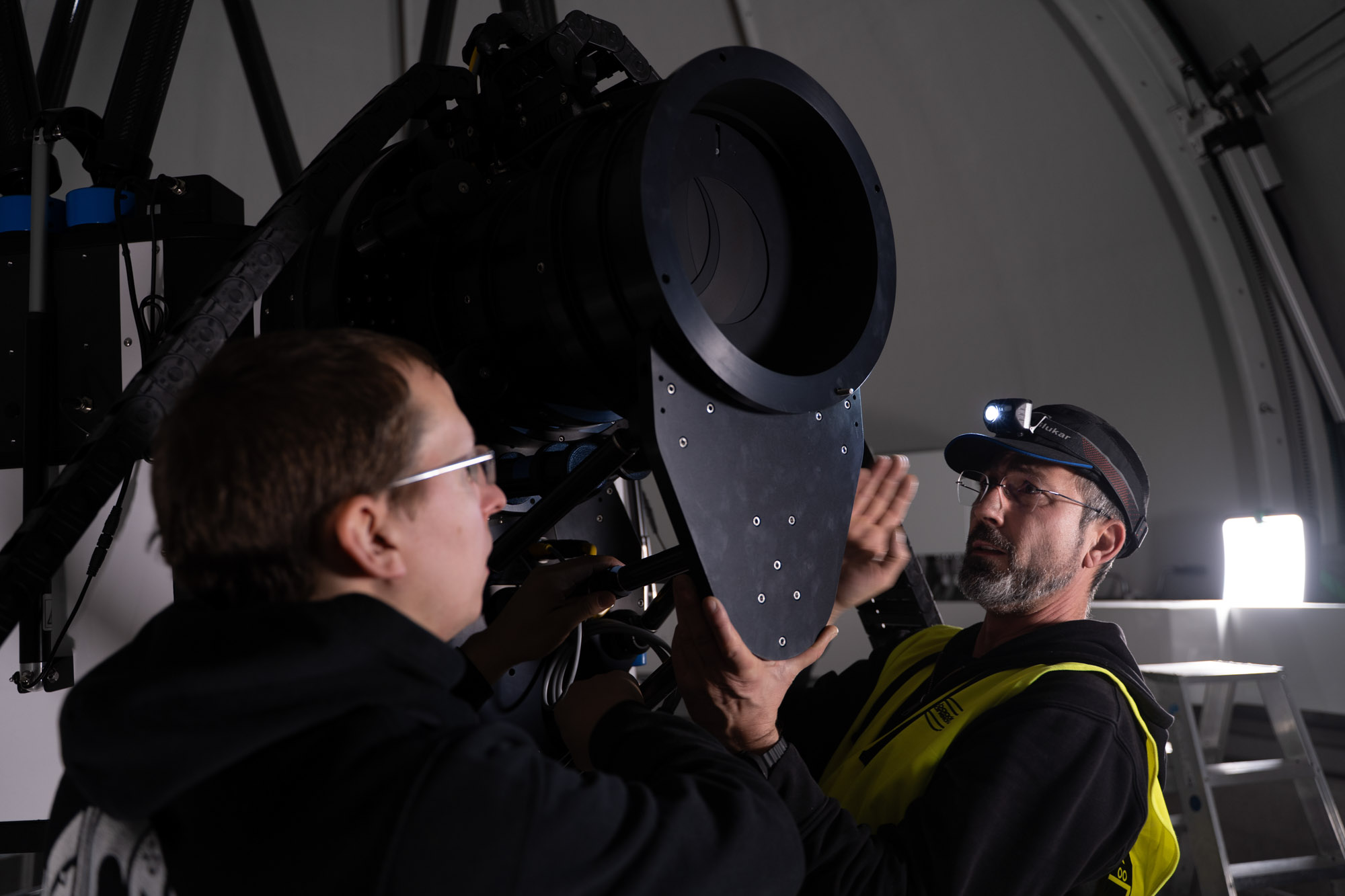
During the Site Acceptance Test, the complete system was tested at the site. In addition to mechanical and electrical integration, the focus was particularly on functional testing of the telescopes, the connection of the control and automation components, and the final tests involving the interaction of hardware, software and observation workflows.
The acceptance procedure was completed successfully. This marks another central step toward the full commissioning of the overall system.
Weather-related postponement of the observation test
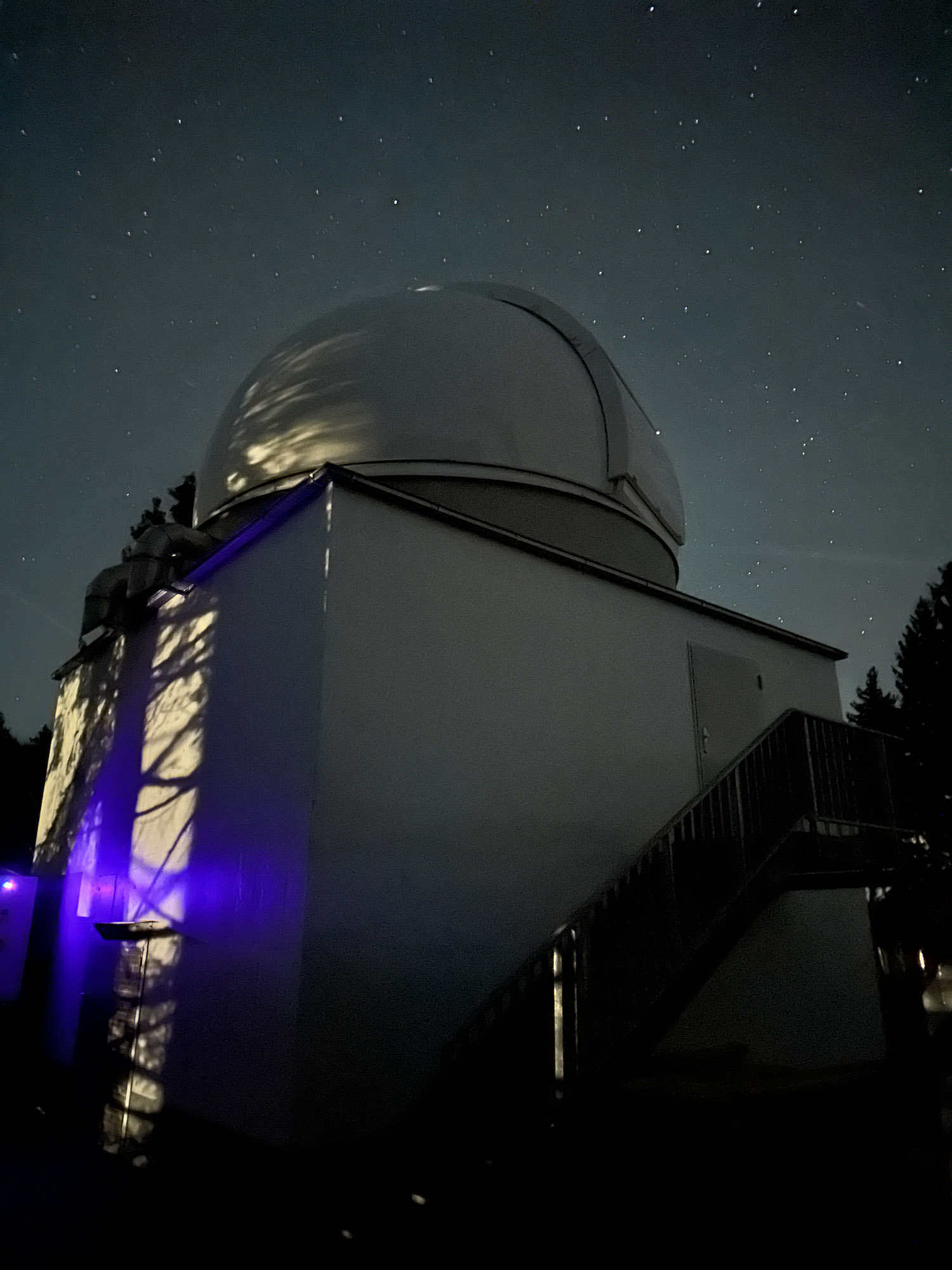
The SAT had originally been scheduled for an earlier date. However, due to persistently poor weather conditions, the practical test under the night sky had to be postponed. Especially for high-precision astronomical systems, suitable weather conditions are essential in order to reliably test observation, tracking and calibration workflows under real conditions.
After the weather-related delay, the required observation window could finally be used and the outstanding part of the acceptance test was successfully completed.
Handover to the customer
With the successful Site Acceptance Test, the system has now been handed over to the customer. This marks the beginning of the next project phase: the Bundeswehr will comprehensively test the complete system in trial operation and put it through its paces in practical use.
During this phase, the main focus will be on operation under real deployment conditions, the long-term stability of the systems, and the workflows involving the interaction of telescopes, domes, control systems, automation and evaluation processes.
The Final Acceptance, or FA, will follow as the concluding step. With this final acceptance, the project at the Meßstetten site will be officially completed.
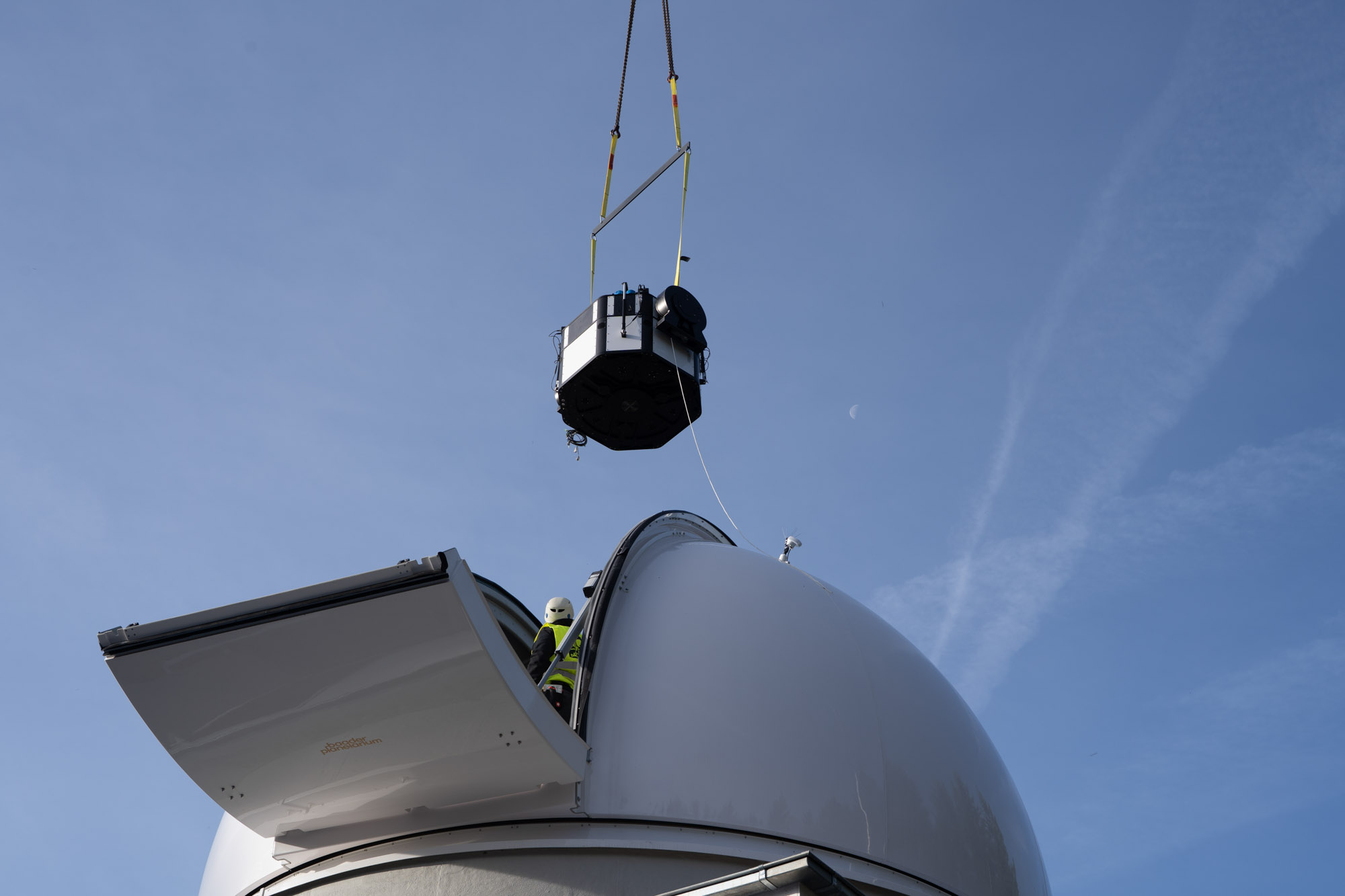
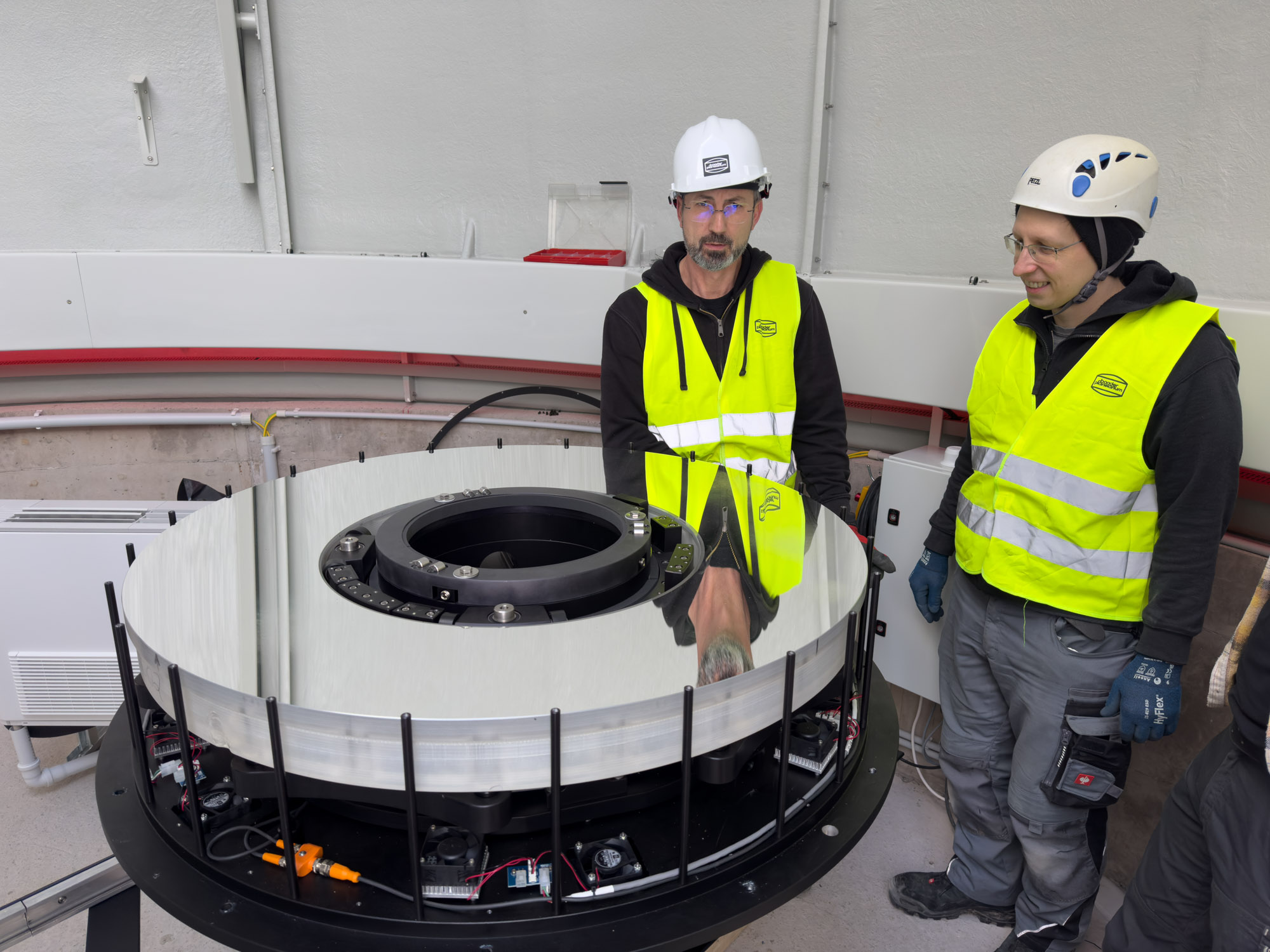
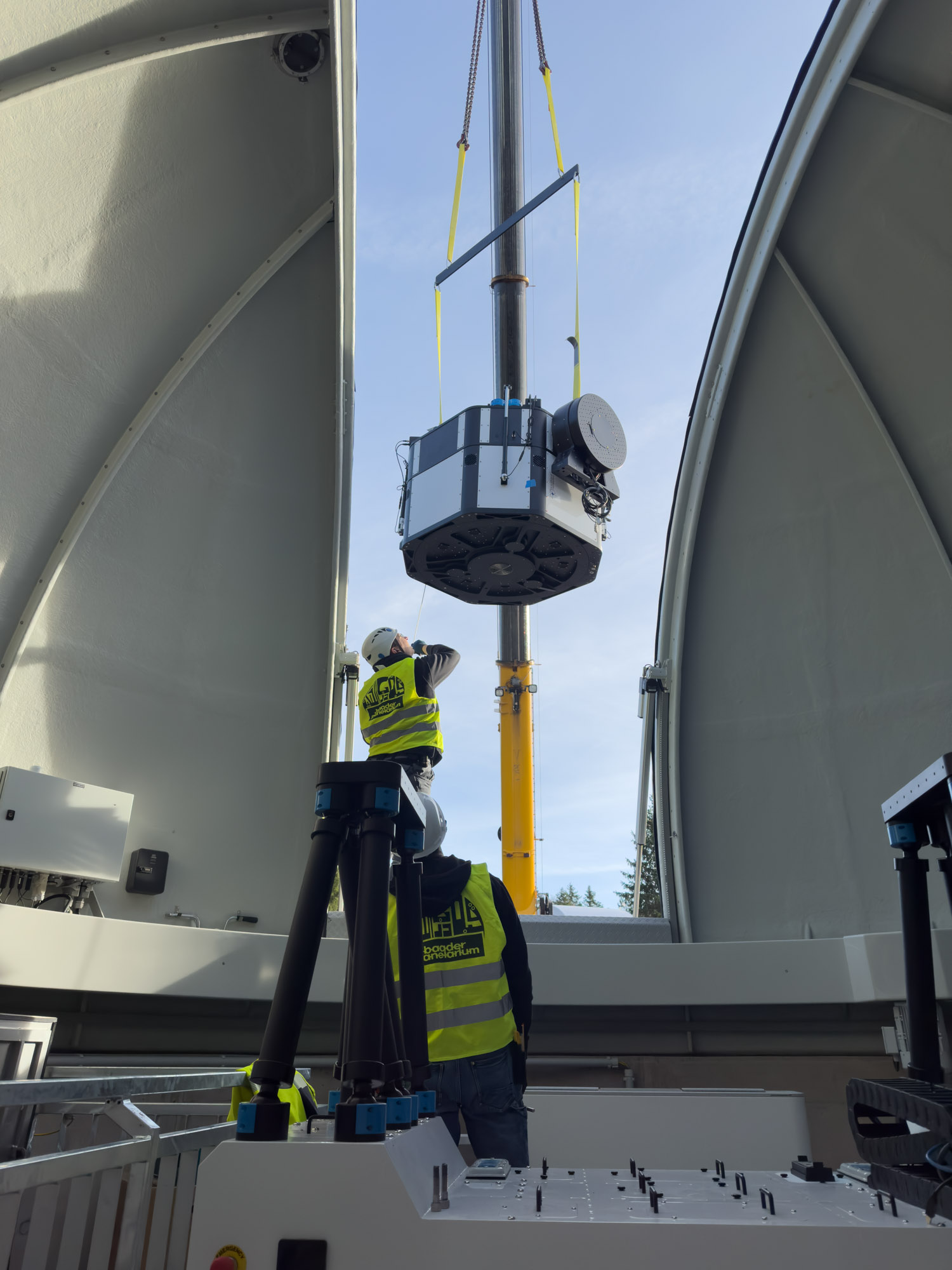
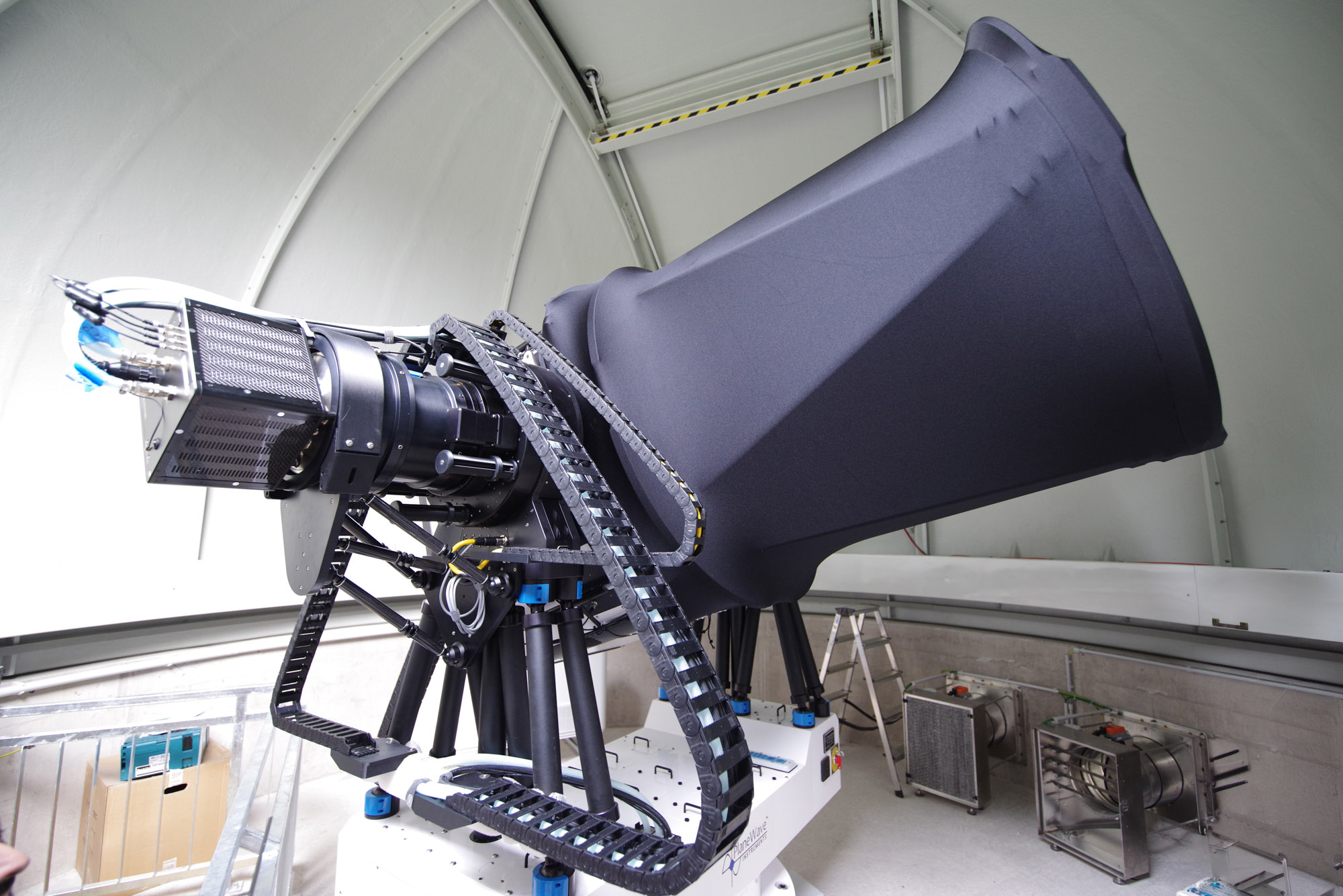
Two 1 m telescopes for space surveillance
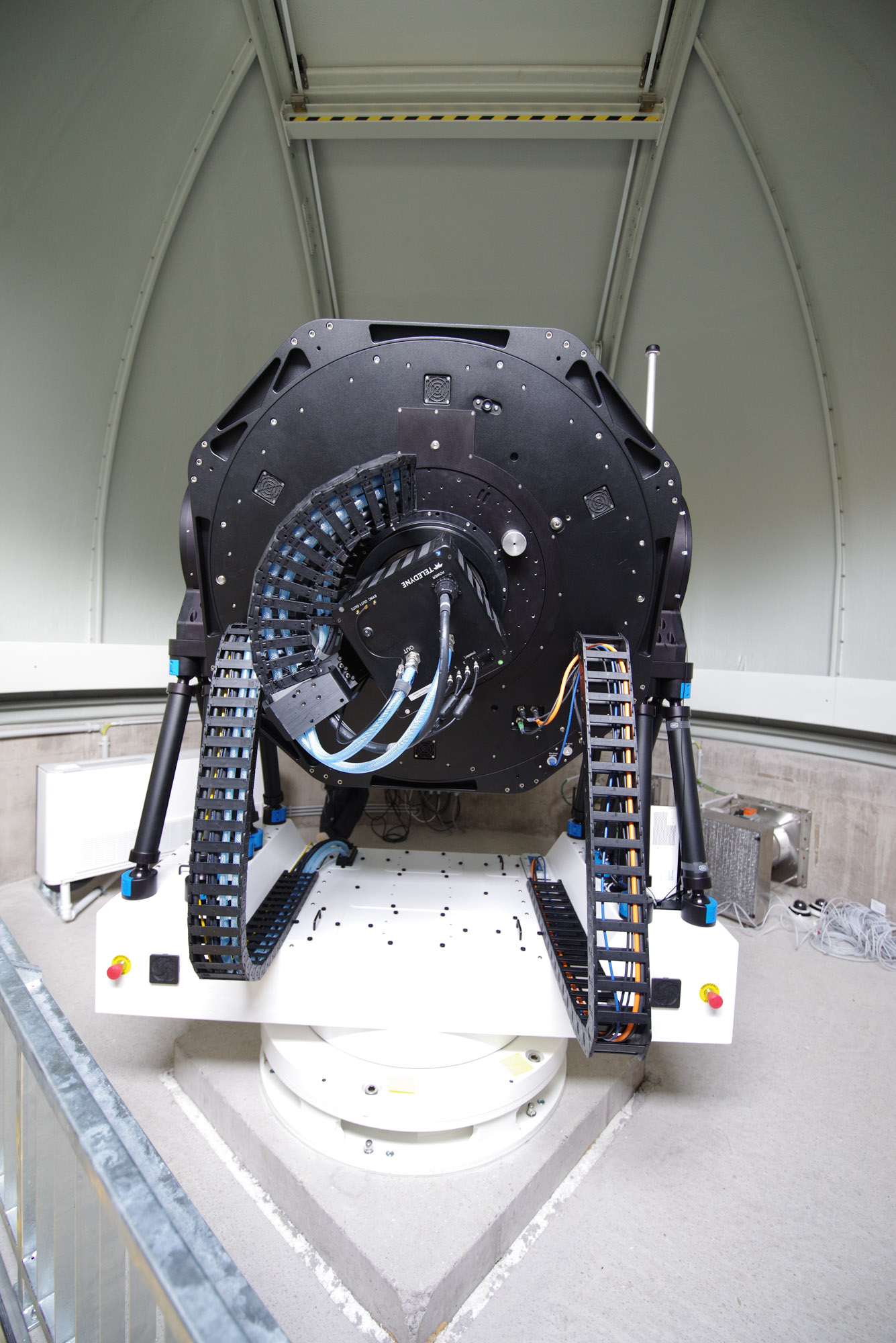
The project includes two 1 m telescope systems from Observable Space (PlaneWave): a PW1000 Nasmyth Astrograph f/6 and a PF1000 Folded Prime Focus f/2.25. Both systems were designed for demanding observation tasks in the field of space surveillance and are part of the Bundeswehr’s new observation infrastructure.
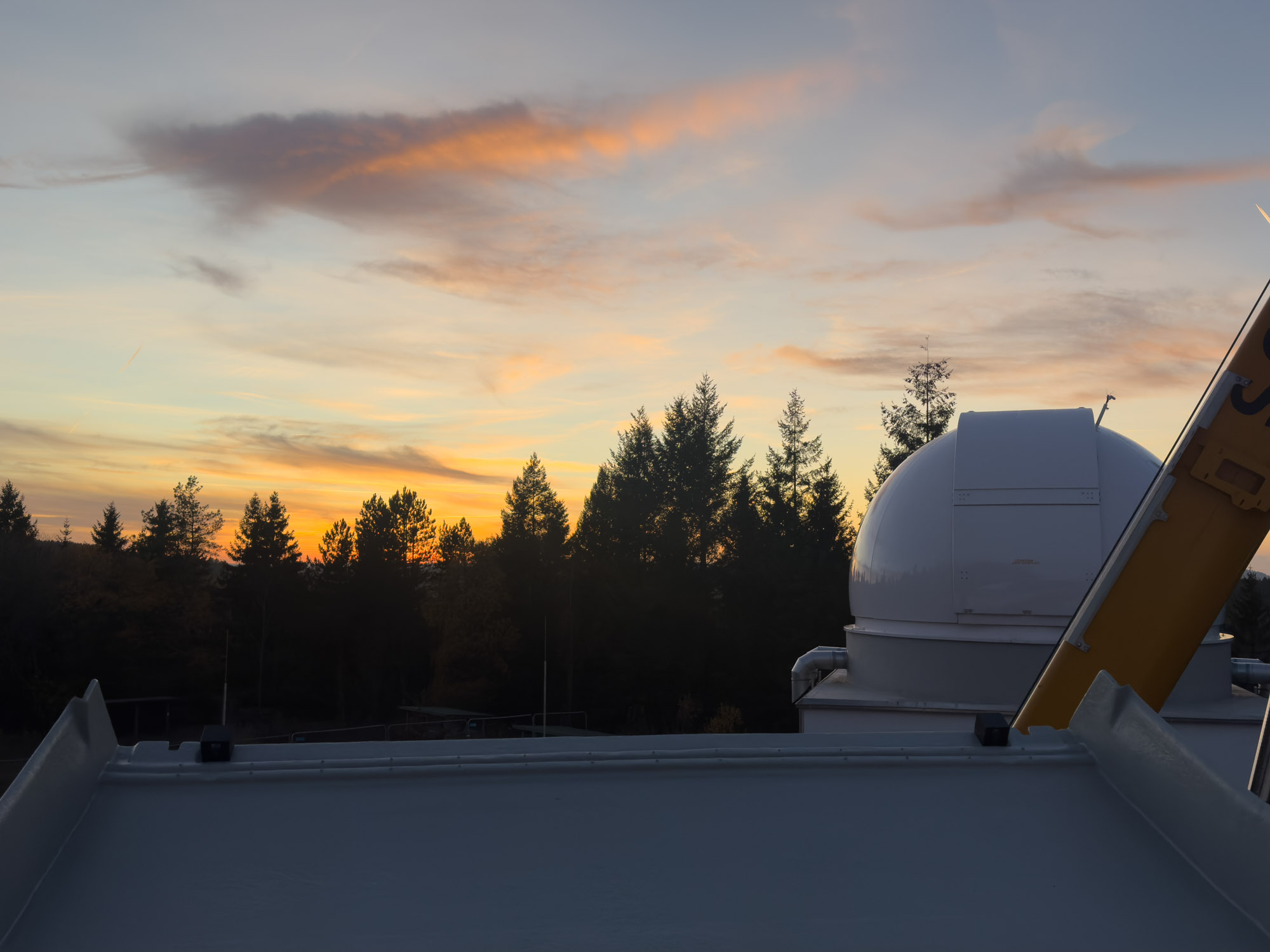
The telescopes are integrated into two 6.15 m Baader slit domes, which had already been installed at the Meßstetten site in summer 2025. Together, the domes, telescopes, control software and system integration form the basis for the future operation of the facility.
Partnership as the key to project success
A project of this scale can only be realized through close cooperation between specialized partners. In addition to the Bundeswehr as the customer and user, steep GmbH, sciencentric AG and Baader Planetarium GmbH in particular played a decisive role in the successful implementation.
steep GmbH contributed its extensive experience in carrying out complex projects with the Bundeswehr. Especially in demanding projects in security-relevant environments, clear project structures, reliable communication channels, experience in dealing with public-sector clients, and a deep understanding of processes, requirements and verification procedures are essential. This experience was a key factor in ensuring that the various technical, organizational and administrative project elements could be brought together in a targeted manner.
sciencentric AG made a decisive contribution to the software-side integration of the system with its Webservatory® platform. Webservatory® combines sensor control, automation of observation workflows and downstream analysis functions into a holistic solution. Only this close integration of telescope technology, automated control, satellite tracking, detection and evaluation turns powerful optical hardware into a usable overall system for modern Space Situational Awareness.
Baader Planetarium was responsible for the delivery, configuration, installation and calibration of the two 1 m telescope systems, as well as the integration of the telescopes into the Baader slit domes on site. Our task was not limited to providing high-precision optical and mechanical systems, but also included their project-specific adaptation, integration and commissioning. This combination of competencies was particularly decisive for the success of the project: the experience of steep in complex Bundeswehr projects, the expertise of sciencentric in Webservatory®, automation and SSA software, and Baader Planetarium’s telescope and dome expertise complemented each other to create an overall system that meets high requirements for precision, reliability, safety and ease of operation.
An important step for national space situational awareness capabilities
The system in Meßstetten represents an important building block in expanding Germany’s capabilities in the field of Space Situational Awareness. The observation and assessment of objects in Earth orbit is becoming increasingly important – both for protecting space-based infrastructure and for independently detecting and assessing satellites and space debris.
The newly accepted facility provides a powerful foundation for this purpose. It combines professional optical sensor technology with modern software integration and automated operating workflows.
Next step: Final Acceptance
Following the successful Site Acceptance and handover to the customer, trial operation by the Bundeswehr will now begin. During this phase, the system will be further tested, evaluated and optimized in practical use. The concluding step will then be the Final Acceptance. With this final acceptance, the project at the Meßstetten site will be officially completed.
We would like to thank the Bundeswehr, steep GmbH, sciencentric AG and all teams involved for their close, professional and trust-based cooperation. The successfully completed SAT demonstrates how specialized hardware, modern software and collaborative project work can be combined to create a powerful overall system for space surveillance.