
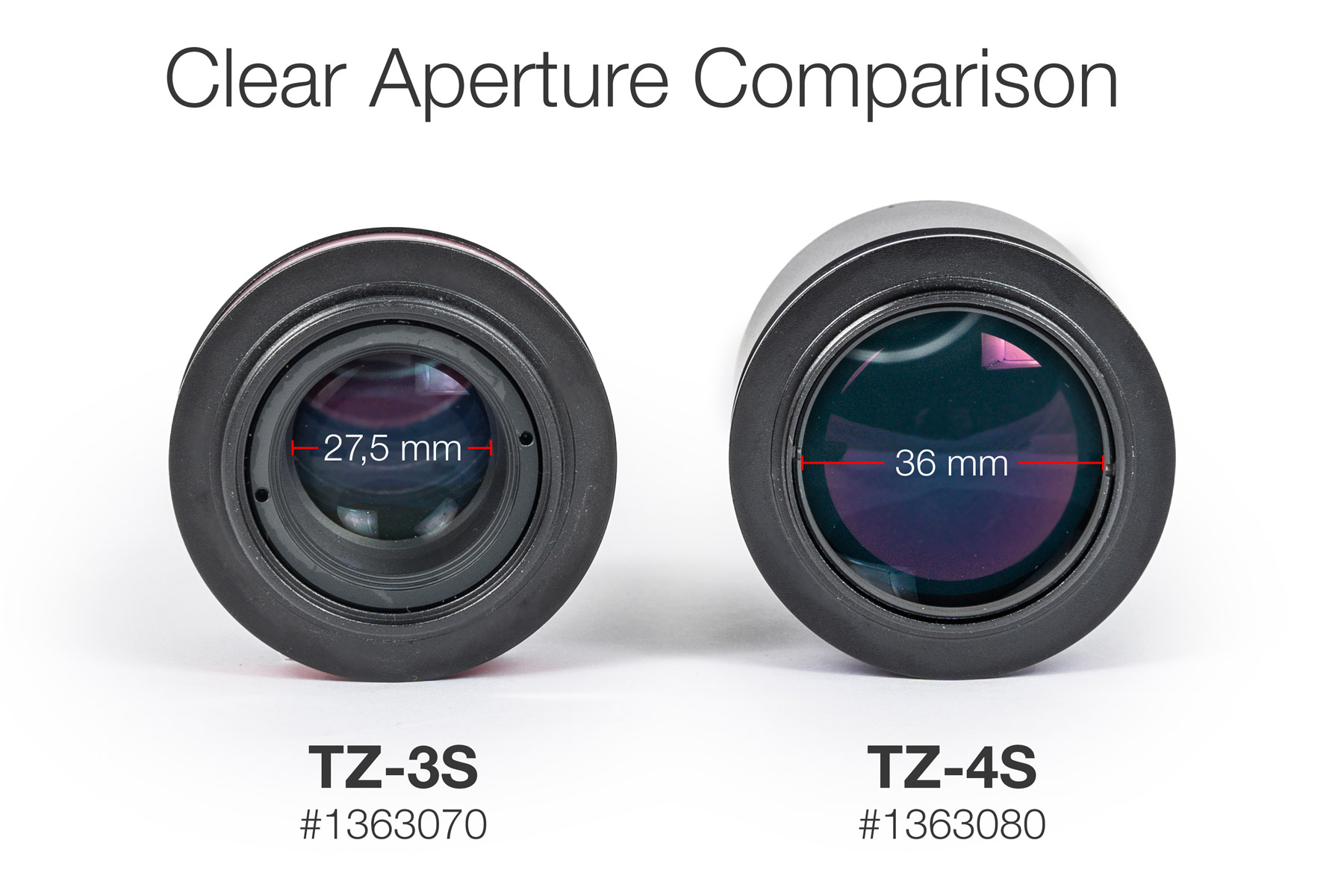
We are delighted to announce the remarkable achievements of renowned solar astronomer Christian Viladrich, who has been pushing the boundaries of Calcium K-line (CaK) solar imaging using our Telecentric Systems TZ-3S Telecentric System T-2 for SunDancer II and more (#1363070 , € 365,- ) and TZ-4S Telecentric System T-2 for SunDancer II and more (#1363080 , € 385,- ) .
A Decade in the Making: Advancements in CaK Solar Observation
Over the past ten years, Christian has been dedicated to exploring high-resolution solar imaging, first in G-band (430 nm), then in the near-ultraviolet spectrum, particularly at the 393 nm CaK wavelength. Utilizing his custom-built 300 mm solar Newtonian telescope, he aimed to capture images of intergranular bright points and other chromospheric features, previously the domain of professional observatories.
Innovative Soleye CaK50 Mirror Coating
To achieve his ambitious goals, Christian collaborated with Lazslo Francsics, the developer of a specialized 300mm Newton Telescope called Soleye 300, to create a unique mirror coating further referenced as Soleye CaK50. This coating reflects approximately 50% of CaK light, acting as an Energy Rejection Filter (ERF). The innovative coating reduces thermal load and allows significantly shorter exposure times, which are crucial for high-resolution imaging.
- Technical Highlights:
- The Soleye CaK50 coating is highly accurate and uniform, even on large diameter optics. It reflects approximately 50% of CaK light at 393 nm, significantly increasing efficiency at this wavelength.
- Its integrated reflection coefficient over the entire solar spectrum is about 8.3%, doubling the reflection compared to an uncoated fused silica mirror.
- Achieved exposure times as short as 1 ms with zero gain using an Alluxa 0.37 nm CaK filter.

The following remarkable images were captured during a two-week mission at St Véran (on the site of Astroqueyras Observatory) in the French Alps, situated at an altitude of 2,930 meters. The exceptional atmospheric conditions at this high-altitude site significantly contributed to the quality of the observations.
Exceptional Performance of the TZ-4S Telecentric System in CaK Imaging
Christian reported outstanding results using the TZ-4S Telecentric System in his CaK observations. The telecentric design, being different from a normal Barlow lens, helps eliminate reflections and ghost images, even when using complex filter stacks.
He noted that the TZ-4S provides an extremely uniform field coverage, with no loss of quality at the edges, even when using a small-sized sensor on his 300 mm f/5.5 telescope at 393 nm. Notably, there were no traces of ghost images, which had been a problem with other Barlows.
Our CEO, Johannes Baader, remarked:
"It was our design goal for optics and coatings of our TZ-systems to be able to work at CaK, and it was designed for this especial case to be versatile for both H-alpha and CaK. But seeing it in real life makes a difference. The nature of the TZ being a telecentric rather than a normal Barlow helps with the reflections (ghosts) for sure."
A significant milestone in Christian's work was also the successful use of a double-stack configuration with two 0.14 nm CaK filters. This technique allowed him to image chromospheric layers with unprecedented detail. Below you find first an image with single CaK filter, then the same object in the middle with double-stacked CaK filter.
Stunning CaK Solar Images:
High-Resolution Sunspot in Single-Stack CaK

Enhanced Detail with Double-Stack CaK Filters

Solar Limb with Chromospheric Ejections and Prominences

Versatility of the TZ-3S Telecentric System
On days with average seeing conditions, Christian utilized the TZ-3S Telecentric System to take advantage of its wider field of view and reduced sensitivity to atmospheric disturbances. This allowed him to capture broader solar regions with impressive detail.
Wide-Field CaK Imaging: Flare Evolution:
Christian documented the development of a solar flare over approximately 90 minutes using the TZ-3S and double-stacked CaK filters.


Unique Chromospheric Features in Crowded Fields

High-Resolution Imaging Near the Solar Limb

A Solitary Sunspot Surrounded by Quiet Sun

Observing Spectacular Coronal Loops with the TZ-3S:
On the last day of his mission in St Véran, Christian managed to capture impressive images of coronal loops at the western limb of the Sun. These images underscore the capability of our telecentric systems to capture dynamic solar phenomena with extraordinary detail.
Rising Coronal Loops at the Western Limb


Increasing Height of the Coronal Loops

Best Seeing Near the Meridian

Advancing CaK Solar Imaging
Christian's pioneering efforts have significantly advanced the field of CaK solar imaging. His work demonstrates the effectiveness of Baader Planetarium's telecentric systems in capturing high-resolution images at the CaK wavelength, opening new possibilities for both amateur and professional astronomers.
He also highlighted the advantages of using a hard-coated Ca K 0.1 nm filter, which represents a significant advancement over traditional Lunt CaK 2.4 Å filters. He discovered that a simple thermal regulation could be employed to precisely tune the filter to the CaK line, significantly enhancing image quality. This is particularly beneficial when the ambient temperature is below the filter's reference temperature.
Expert Endorsements
Christian expressed his satisfaction with the performance of our telecentric systems:
"The TZ-4S performs exceptionally well at 393 nm. It works nicely even at f/5.5, and I could see no spurious reflections or ghost images even using a stack of two filters, which is excellent! The TZ-3S is excellent in the near UV. It complements the TZ-4S with its wider field and reduced sensitivity to average seeing conditions."
Christian's pioneering efforts have not only showcased the exceptional capabilities of our telecentric systems but have also inspired the solar astronomy community by demonstrating that professional-level observations are attainable with dedicated amateur equipment.

About Baader Planetarium's Telecentric Systems
Our TZ-S Telecentric Systems are meticulously engineered for high-resolution solar observations in both H-alpha and CaK wavelengths. The telecentric design ensures a highly corrected and uniform field, minimizing reflections and ghost images, even with complex filter setups.
Join the CaK Imaging Community
We extend our sincere gratitude to Christian Viladrich for granting permission to feature his exceptional images in this article. If you want to dive in deeper into solar imaging, make sure to check out the Book Solar Astronomy – Observing, imaging and studying the Sun, which was published by Christian Viladrich, amongst others: https://solar-astronomy-book.com/
We invite astronomers and astrophotographers to explore the capabilities of our telecentric systems for Ca K imaging. Whether you're delving into the chromosphere or capturing the intricate details of solar activity, Baader Planetarium provides the tools to elevate your observations. Share your results with us and become part of our growing community pushing the boundaries of solar astronomy.
For more information on our products and how they can enhance your solar imaging endeavors, please visit our solar products or solar blogpost, or contact our team of experts.

For your own Safety
Warning: Calcium light is harmful to the human eye. Therefore, calcium light must generally not be observed visually. The images and results presented here demonstrate the optical performance of the Baader telecentric systems TZ-3S / TZ-4S and were produced by an experienced solar photographer. For permanent and safe use in the field of calcium photography, we recommend our Calcium GEN-II Filter 1¼" (incl. AstroSolar Photo Film OD 3.8, A4) (#2961590 , € 285,- ) , which must only be used in conjunction with the included AstroSolar® Photo Film OD 3.8, 20x29 cm - not for visual observation (#2459278 , € 34,- ) , or with a separately available Cool-Ceramic Safety Herschel Prism 2" Mark II – Photographic (#2956510P , € 645,- ) .