In this article we will take a brief look at some astronomical events that will take place during 2026
Equinoxes and Solstices
Equinoxes and solstices are events linked to our Earth’s orbit around the Sun and which mark changes of the seasons with each occurring twice every year. The winter solstice occurs when the Sun is lowest in the sky northern hemisphere in December, which is the shortest day and the other, the summer solstice, when its highest in June and is the longest day. In March and September, there are two equinoxes where the lengths of day and night are similar. The dates of the equinoxes and solstices for 2026 are:
- March 20 – Spring Equinox: Takes place at 15:46 CET and marks the first day of spring in the Northern Hemisphere.
- June 21 – Summer Solstice: Takes place at 10:24 CEST and marks the first day of summer in the Northern Hemisphere.
- September 23 – Autumn Equinox at 02:05 CEST: Marks the first day of autumn in the northern hemisphere.
- December 21 – Winter Solstice: Takes place at 21:50 CET. For us in the northern hemisphere, it marks the beginning of winter.
Meteor Showers and Other Wide-Field Phenomena
Meteors, or shooting stars, are bright streaks of light you see in the sky when a space rock (meteoroid) enters our Earth’s atmosphere and burns up. Meteor showers occur when Earth passes through streams of debris left behind by comets and asteroids. The peak of a meteor shower is when we see the highest rate of meteors which happens as we pass through the densest part of the debris stream. Observing meteors or meteor showers requires nothing more than your eyes, maybe a comfortable chair or lounger and a warm blanket or hot water bottle for those long periods out under the stars waiting for a meteor to appear. Further information on meteor showers can be found here: VdS Meteor Working Group.
Below we list a selection of meteor showers that can be seen during 2026.
| Meteor Shower | Activity Dates | Maximum Date | Hourly rate(approx) | Moon phase |
| Quadrantids | 28 Dec-12 Jan | 3/4 January | 120 | Full moon |
| Lyrids | 14-30 April | 22/23 April | 18 | ~30% full waxing crescent |
| Eta Aquariids | 19 Apr - 28 May | 6 May | 40 | ~84% full waning gibbous |
| Perseids | 17 July-24 Aug | 13 August | 100 | New moon |
| Draconids | 6-10 October | 9 October | 10 | ~2% illuminated waning crescent |
| Orionids | 2 Oct-7 Nov | 21 October | 20 | ~80% full waxing gibbous |
| Leonids | 6-30 November | 18 November | 15 | ~45% full |
| Geminds | 4-20 December | 14 December | 120 | 21% full waxing crescent |
Apart from meteors other wide-field phenomena are the aurora and the glowing noctilucent clouds (NLC) that can be seen at northerly latitudes from late spring to late summer. There are many websites such as SpaceWeather.com and social media groups who regularly report latest events and sightings.
The Sun and Solar Eclipses
Our Sun
Our nearest star continued to be active in 2025 with many sunspots and sunspot groups as well as auroral displays being observed the photographed. Although the Sun has moved through the peak of its solar cycle, it should still produce frequent sunspots and sunspot groups, heightened solar activity, and dazzling auroras during the coming year. So 2026 is still a great time to study our dynamic and active Sun.
Never forget that extreme caution and the use of suitable, safe solar filters are imperative when observing or photographing the sun. When it comes to the sun, safety must ALWAYS come first: NEVER look at the sun without a suitable solar filter! Solar observation is dangerous and can permanently damage eyes or cameras. Always use a suitable sun filter!
To safely study the Sun visually or photographically (and to view the August solar eclipse), Baader Planetarium offers a range of safe solar accessories.
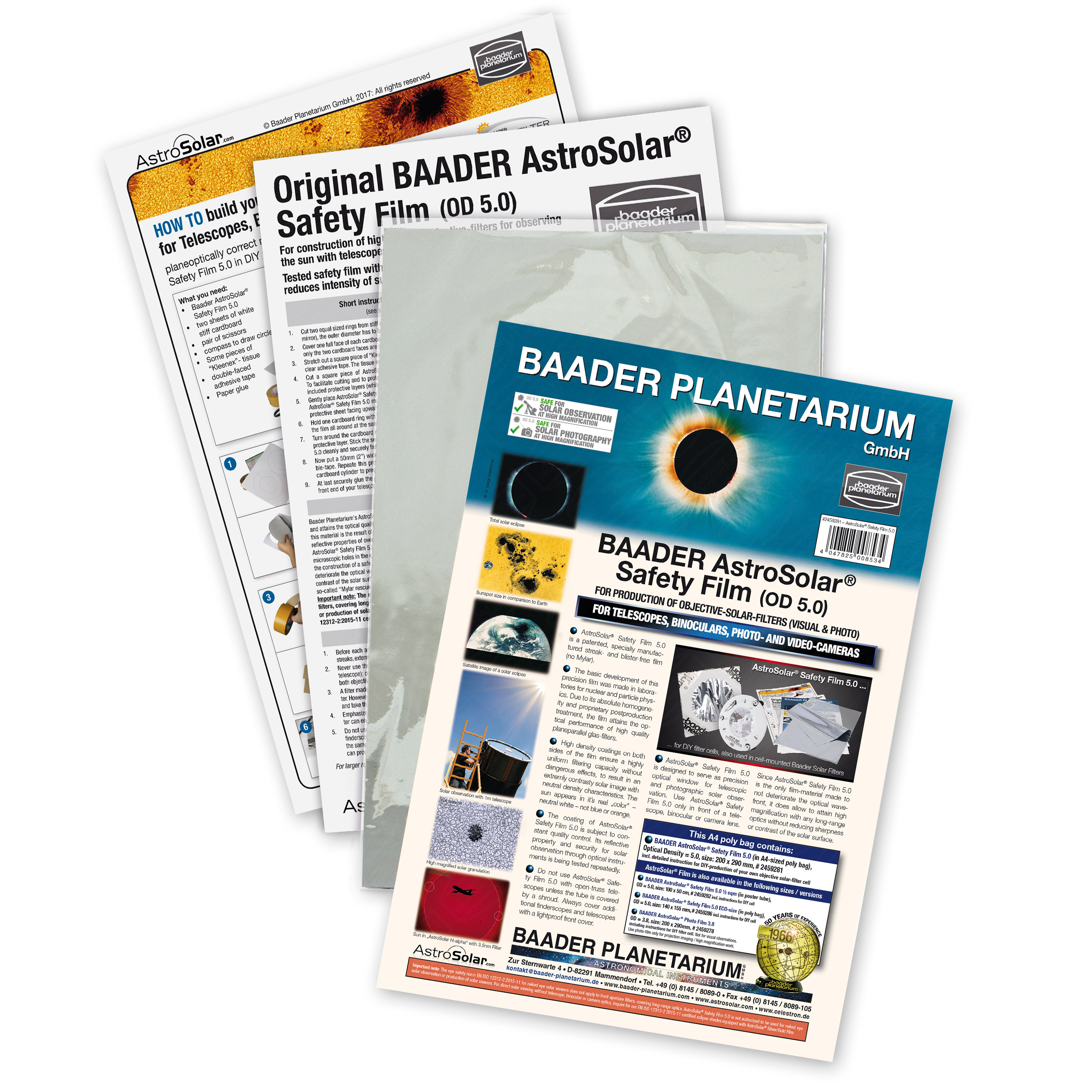

Their extremely popular visual and photographic AstroSolar film available in different sizes allows you to build your own filter holder to suit your equipment.
They also offer a range of different sized ready-made filters that use their AstroSolar film to fit camera lenses, binoculars, spotting scopes to large telescopes. You can find out more about their solar accessory range here: https://www.baader-planetarium.com/en/solar.html
Another way to safely observe or image the Sun safely is with the MK II Baader 2" Cool-Ceramic Safety Herschel Prism which you attach to your refracting telescope and which is available in visual and photographic variants. The Baader Herschel wedge allows you to use high magnifications for detailed up-close views of sunspots, sunspot groups and solar granulation. It is a versatile unit allowing a range of different telescope- and eyepiece-side adaptations.
Before you set up your solar equipment for viewing the Sun a good online resource where you can check the Solar activity is the GONG website, which uses real-time data from a range of solar observatories around the world which show the Sun in different wavelengths.

Solar Eclipse - 12th August 2026
The astronomical highlight of 2026 for many amateur astronomers is likely to be the solar eclipse that takes place on the evening of Wednesday 12th August. From Germany the solar eclipse will be a partial event. For those who want to see this as a total solar eclipse you will have to travel as the path of totality which runs from western Iceland down the Atlantic ocean to the west of the Ireland. The total eclipse path will then cross the northern coastline of Spain from the west of Bilbao and down the central region of Span to the south east coast including Valencia and then towards the island of Palma.

For those who will stay in Germany for this event, the maximum obscuration of the Sun by the Moon for some locations across Germany is given below.
- Hamburg/Berlin ~85%
- Dusseldorf/Frankfurt/Munich ~88%
- Stuttgart ~89%

From Munich the eclipse will begin around 1823 CEST. At this time our Sun will be around 10 degrees above the western horizon. Maximum eclipse is at 1915 CEST and the Sun will be just under 2 degrees above the horizon at this time with sunset occurring around 15 minutes later. To see or image the eclipse you will have to find a location with a low and flat horizon. However the low altitude at time of maximum eclipse may make for a fantastic landscape or city-scape photograph!
You can see how much of the Sun will be covered and the times of the start and end of the eclipse for your location using the interactive eclipse map: http://xjubier.free.fr/en/site_pages/solar_eclipses/TSE_2026_GoogleMapFull.html.
You can also read our article of this and other upcoming eclipses for the next few years visible from Europe here.
 Solar Eclipses in Spain – 2026, 2027 and 2028 18. June 2025 - For years now our colleagues have been hunting for the next Solar eclipse in the most remote places of the World. Please review our previous blog posts on AstroSolar.com, for example: 2015: Solar Eclipse Adventrue… Weiter lesen
When observing or imaging a partial solar eclipse (or partial phase of a total solar eclipse), extreme caution must be exercised and always use a suitable, safe solar filter. When it comes to the sun, safety must ALWAYS come first: NEVER look at the sun without a suitable solar filter! Solar observation is dangerous and can permanently damage eyes or cameras. Always use a suitable solar filter!
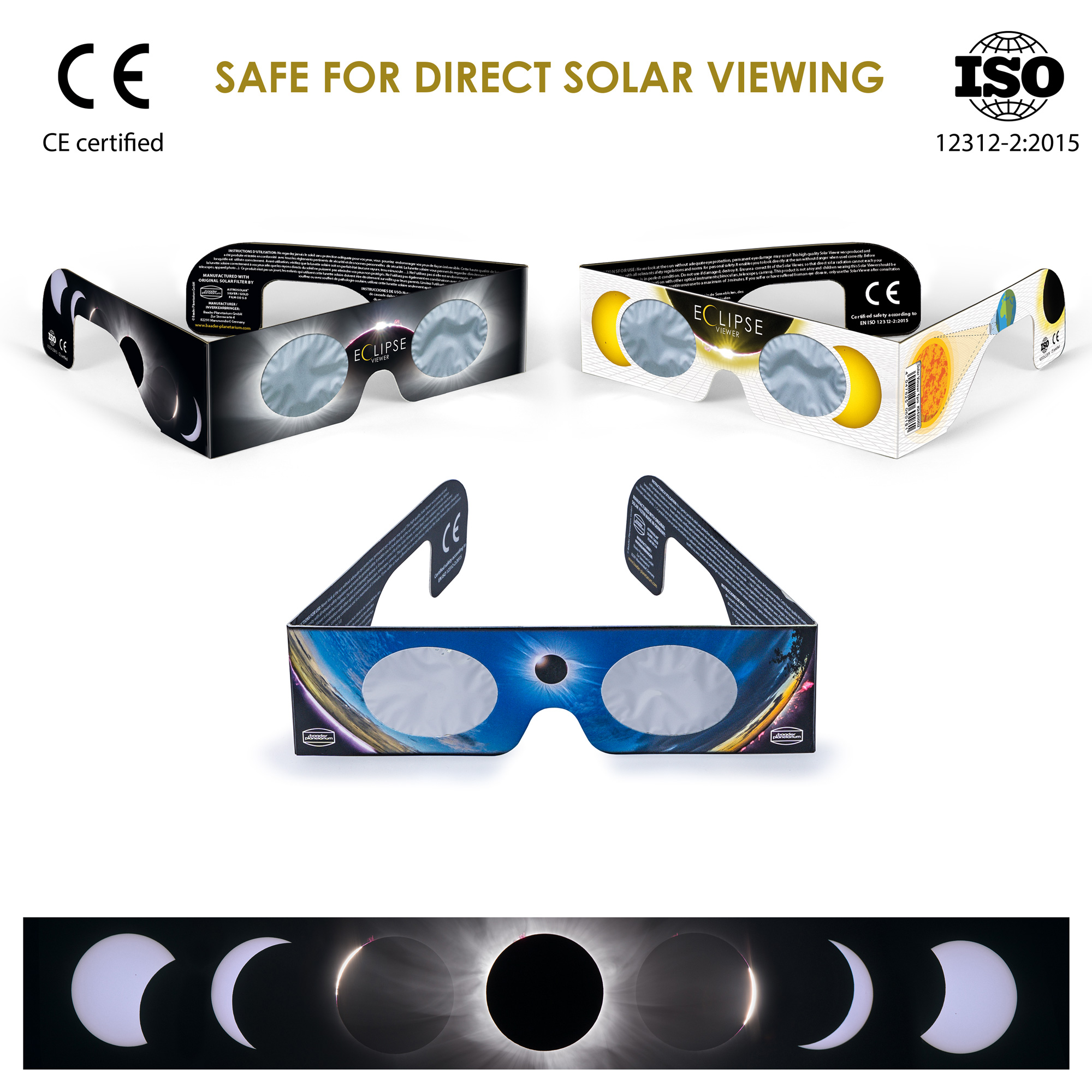
To observe this partial solar eclipse (or partial eclipse phases of the total solar eclipse) safely, Baader Planetarium offer their CE/ISO certified silver/gold solar eclipse viewer glasses that you wear like glasses. These wearable solar viewers block 99.999% of the sun and offer 100% UV- and IR- protection. These are now available in 3 different cardboard-frame designs.

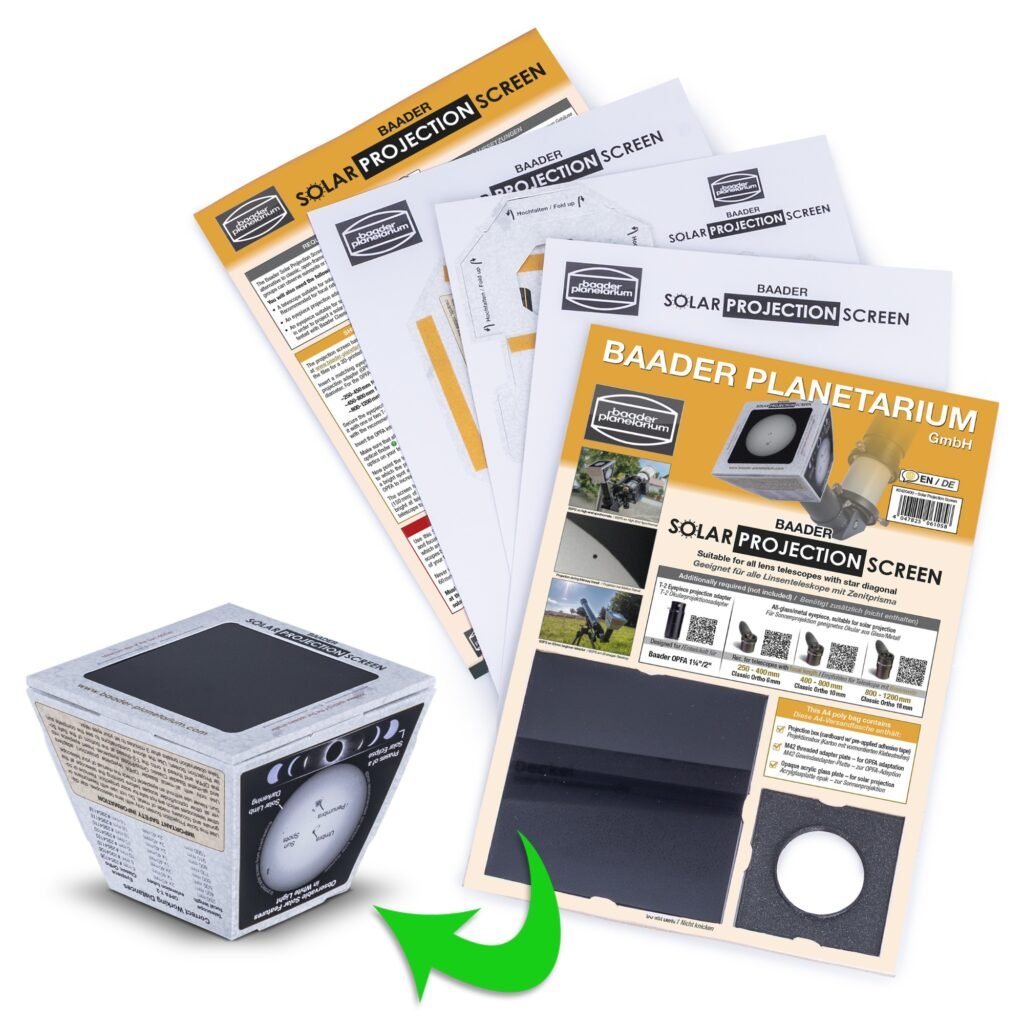
The new Baader Solar Projection Screen (BSPS) (#2420400 , € 39,- ) offers a safe and convenient way to observe the Sun and is perfect for viewing the eclipse in small groups. It can be attached to a telescope suitable for solar and eyepiece projection and provides clear white‑light views of sunspots and solar eclipses through its closed rear‑projection design, which eliminates the risk of anyone accidentally looking into the eyepiece or touching the solar light beam. Supplied in kit-form, it is quickly and easy assembled with full instructions supplied and a video showing its construction can be view on the product page.


If you are uncertain about any aspects for viewing or imaging the Sun or the eclipse safely and want to ask any questions or need more advice please contact one of our helpful authorized Baader Planetarium dealers who will be happy to help.
The Moon and Lunar Eclipses
Our Moon
Our moon is a regular feature in our sky as it presents us with its different phases as it orbits the Earth. Its brightness and apparent size makes it easy to find which helps make it a popular target for observation and photography for amateur astronomers of all ages and abilities. It often can get close to other objects in the sky such as planets and some deep sky objects which can be nice to view through binoculars or telescopes and make nice photo opportunities too (check out our regular monthly sky highlight articles for such events).
With the unaided eye you can see the Moon’s phases as it completes a full cycle every ~29.5 days and the light bright areas and dark (Maria) regions on the lunar disc. If your lunar curiosity goes beyond naked-eye viewing and you want to see more detail, binoculars or a telescope is required. The moon is an impressive sight, regardless of its phase, even through a small beginner telescope where you will get up-close detailed views of its craters and other surface features.


If observing the Moon is of interest, a really useful accessory to have is the Baader Double Polarizing Filter available in 1.25" and 2". This filter, which screws into the barrel of an eyepiece or telescope diagonal can reduce the Moon's glare by varying the amount of light entering the eyepiece by simply rotating one of the filter cells. This filter can make lunar observing a far more comfortable experience especially near times around full moon when it is very bright.
Here are our top 5 selections of Craters, Mares and other features you can find and see on the Moon
- Craters: Tycho, Copernicus, Aristarchus, Clavius, Grimaldi
- Mares (dark “seas”): Mare Imbrium, Mare Serenitatis, Mare Tranquillitatis, Mare Crisium, Mare Frigoris
- Other Lunar features: Hadley Rille, Vallis Alpes, Rupes Recta, Lunar Appennies, Vallis Alpes
Lunar Eclipse - August 28th 2026
A partial Lunar eclipse visible across Germany where ~94% of the Moon will be in the Earths umbral shadow. It is an early morning event starting at 0323 CEST with maximum eclipse occurring around 0612 CEST. The eclipse ends at 0901 CEST.
However the Moon sets around 0632 CEST so the maximum eclipse phase of the eclipse will only be visible for around 20 minutes low near the western horizon in the morning twilight sky. However this may make a very nice photogenic landscape or cityscape opportunity!

Overview of the Planets
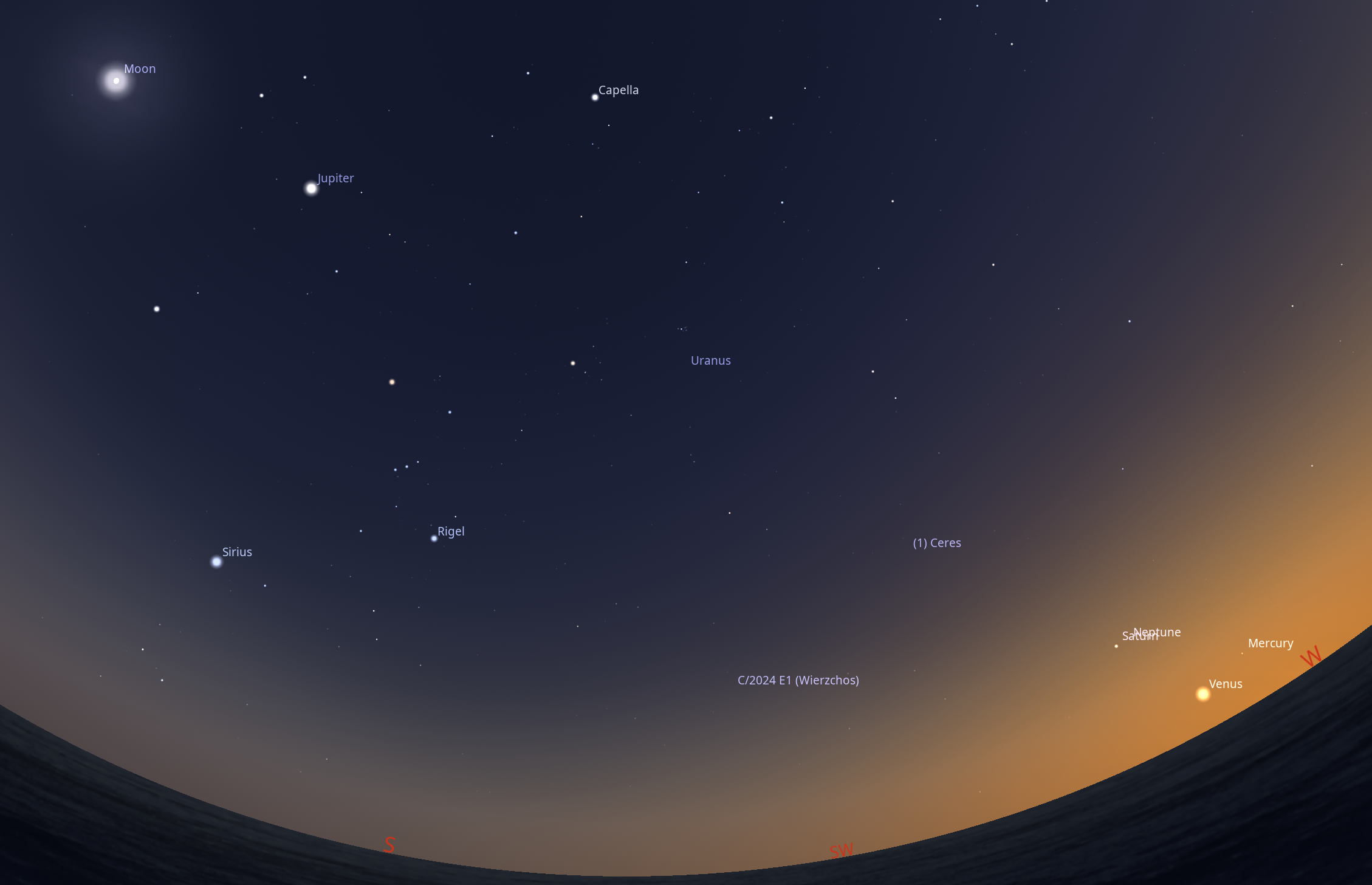
A brief summary of our solar system planet visibility during 2026 is given below. We will take a closer look at the planets throughout the year in our regular monthly sky guides.
Mercury: Mercury can be difficult to observe due to its proximity to our Sun. The best times to see or image the planet being around the times of western (morning) or eastern (evening) elongations when the planet has its largest angular separation from the Sun. Below is a list of Mercury’s maximum elongation (separation):
- Greatest Western Elongations for morning views: 3 Apr / 2 Aug / 21 Nov
- Greatest Eastern Elongations for evening views: 19 Feb / 16 Jun / 12 Oct
Venus: This near Earth sized but hot and hellish climate world is visible as an evening object from the months of February until September. It is at greatest eastern elongation on 14 August and is at its brightest at magnitude -4.6 on 22 September. It then becomes a morning object from early November and it is at its brightest on 27 November at its morning apparition. It remains a morning object for the rest of the year.
Mars: The red planet is not visible until early June in the low in the eastern morning sky. It will be at opposition in February 2027. At the end of the year it rises shortly before midnight.
Jupiter: This gas giant, the largest planet in our solar system, was at opposition on 10th January. It will remain visible in the evening sky until late June when it become lost in the evening twlight. From mid-August it will become visible low in the north east in the morning before the sky brightens.
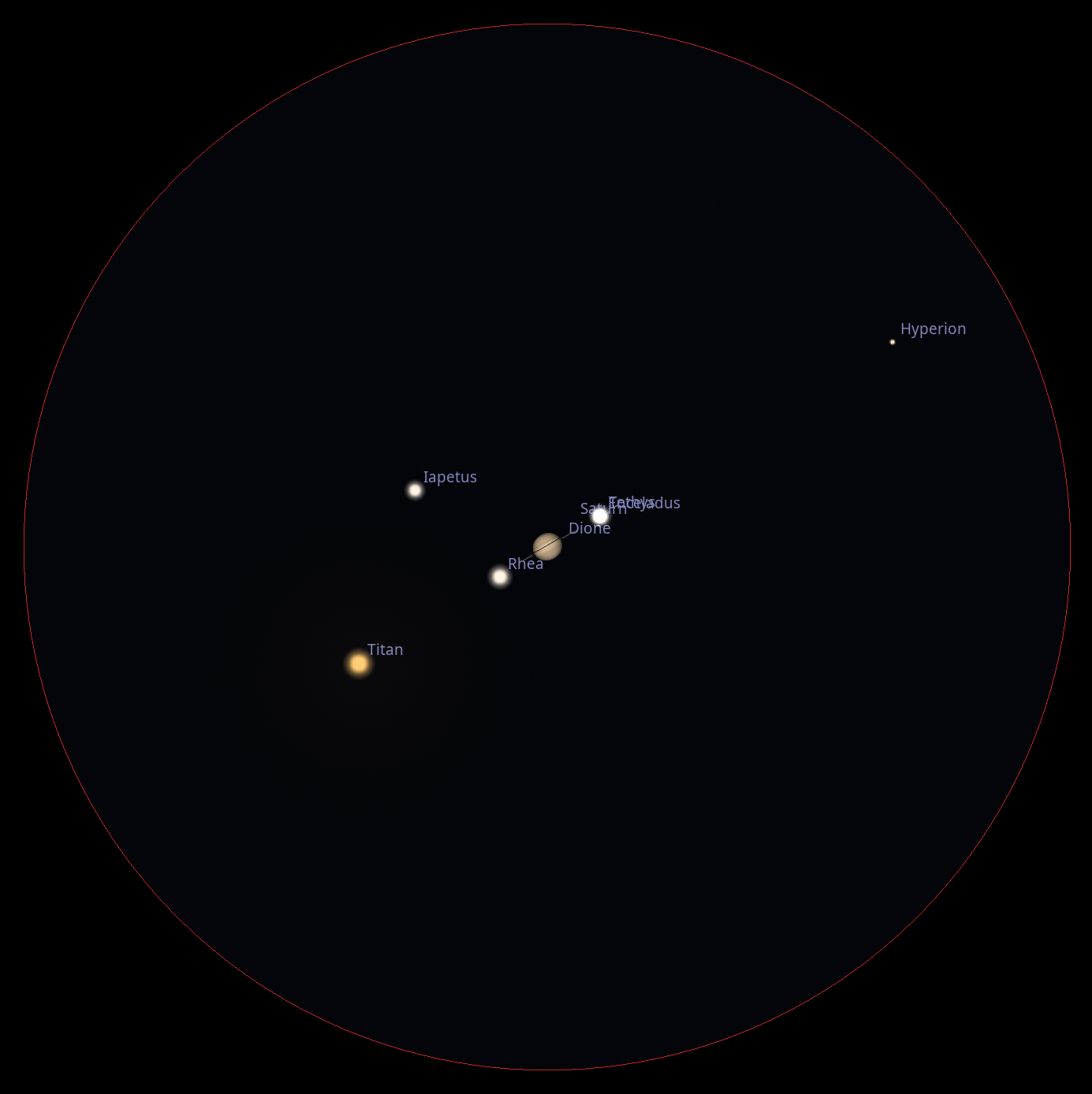
Saturn: Often considered by many to be the most beautiful planet to observe and image, the ringed planet wil be visible until early March. It will then be a morning object in May. It is at opposition on 4 October.
Uranus: Is and will remain in Taurus near the open cluster Messier 45 (the Pleiades) during 2026. It will be visible until early May and then becomes a morning object in July. It will be at opposition on 25 November.
Neptune: This outer planet will be visible until March in the evening sky and then in the morning from June onwards. Neptune will be at opposition on 25 September.

Celestron’s Schmidt-Cassegrain (SCT) and EdgeHD telescopes are very well-regarded for observing the Planets (and our Moon) because their optical design provides a long focal length and high magnification which is required for detailed planetary and lunar viewing and imaging, in a very compact and portable package. Celestron offer SCTs from 6” up to 14” (EdgeHD from 8” to 14”) available as optical tube assemblies and on a range of mounts from manual and computerized alt-azimuth to computerized GoTo equatorial mounts.
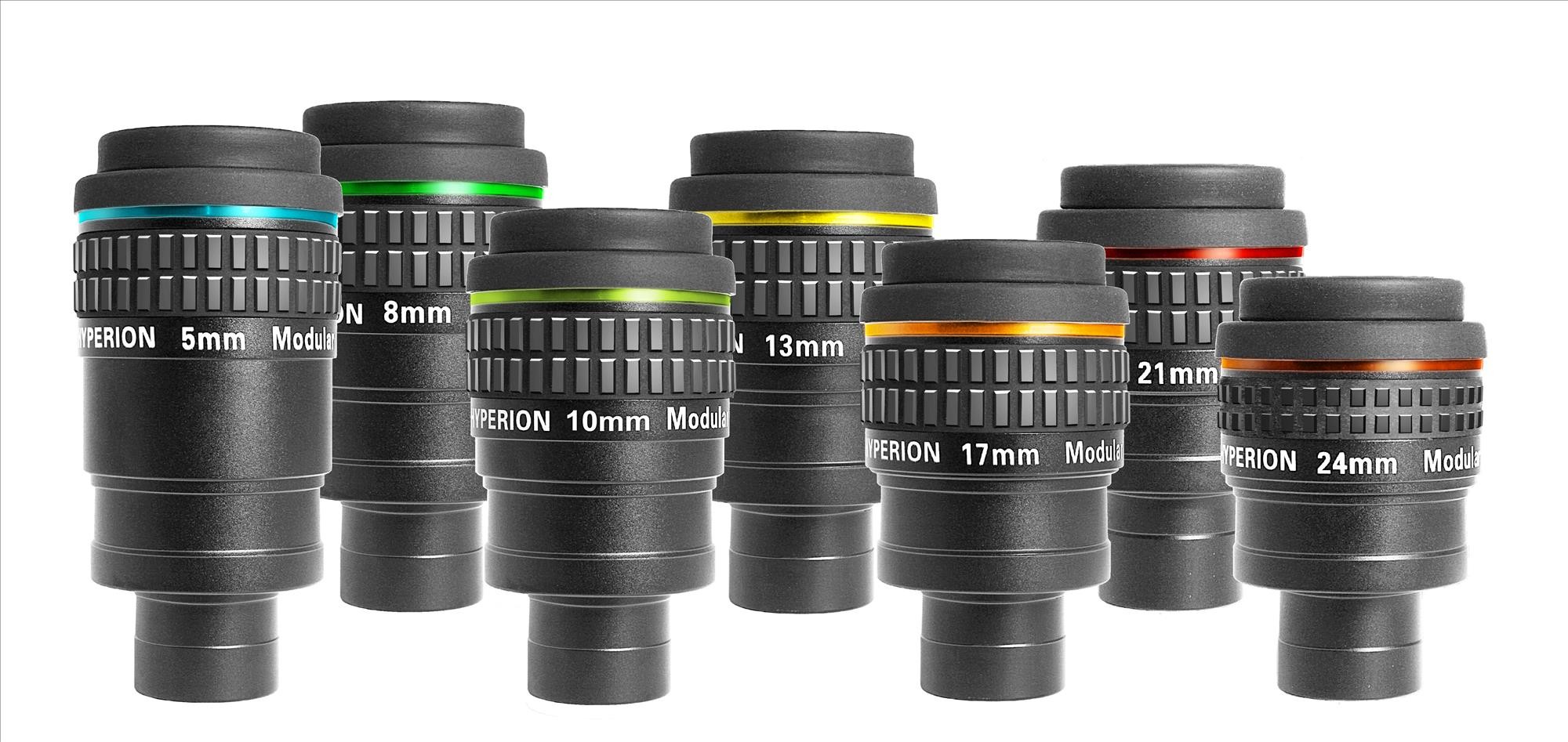
To view the planets (and our Moon) the versatile Baader Hyperion range of 68-degree apparent field of view eyepieces are popular. They are available in fixed focal lengths from 5 mm (high magnification) to 36mm for lower (low magnification). These affordable eyepieces are popular among amateur astronomers because they have a balance between visual observing comfort and practical imaging capabilities. Their 68° apparent field of view, combined with long eye relief and excellent Phantom Group multi-coatings, give bright, high‑contrast views that work well on everything from planetary and lunar detail to deep‑sky objects too. Their modular design allows them to be easily adapted for afocal or prime‑focus projection imaging. This versatility makes the Hyperion's a strong choice for observers and imagers.
In addition to the fixed focal length models, there is a Hyperion® Universal Zoom Mark IV, 8-24mm eyepiece (1¼" / 2") (#2454826 , € 275,- ) that gives you five clearly defined click‑stop magnifications making it a favourite for observers who want flexibility without swapping individual eyepieces. As with the fixed eyepieces, the Zoom can also be easily adapted for imaging.
Comets
Once they spread fear and terror, today they are welcome visitors in our skies: Comets are rare guests in the inner solar system and usually appear in our skies without much warning. They are "dirty snowballs" of ice and rock from the edge of the solar system that often take many centuries to orbit the sun. Only a few are therefore regularly visible in our skies; many are only discovered a few months before they come close enough and become bright enough to be seen with binoculars or even the naked eye.
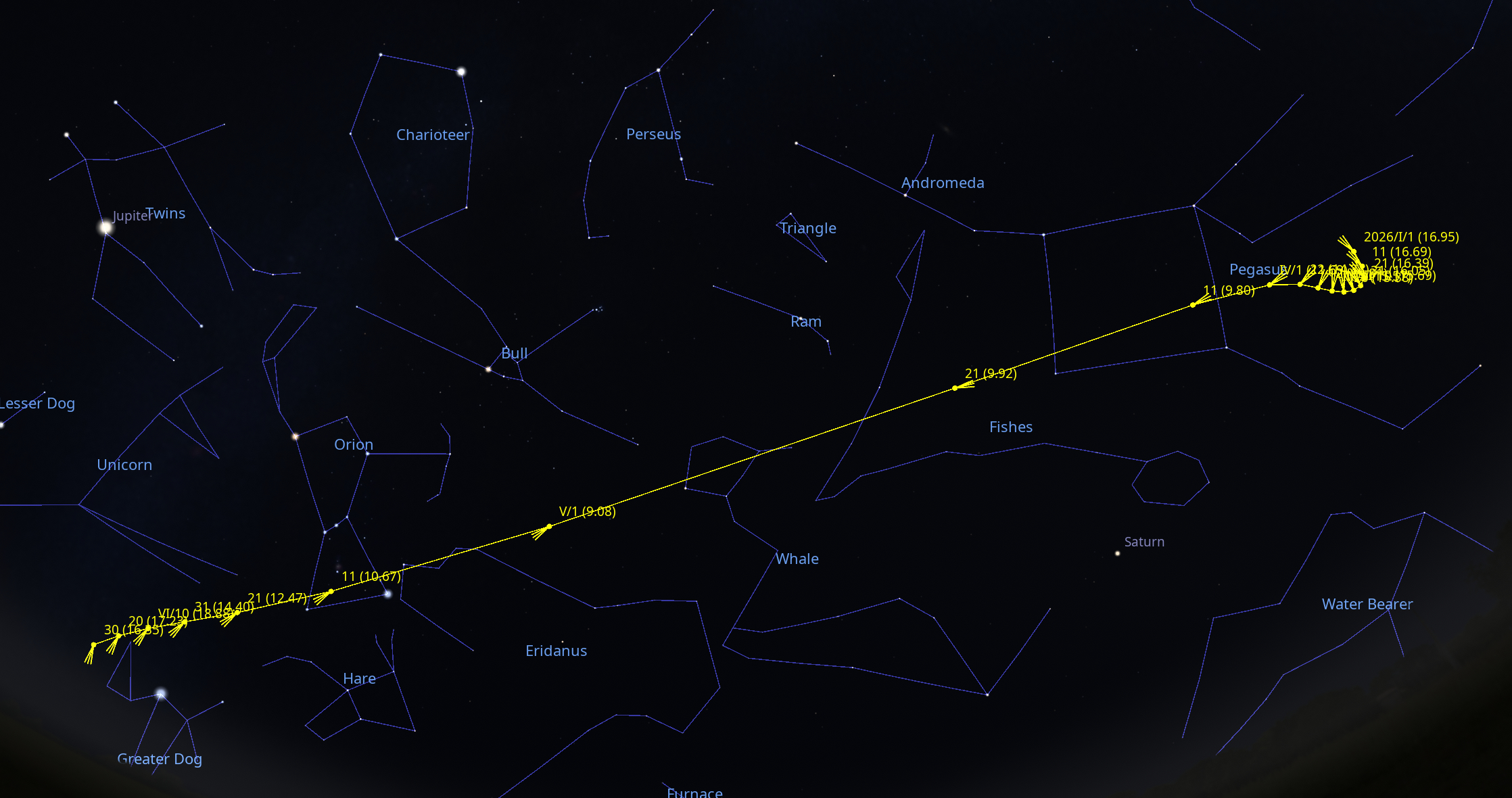
Comet C/2025 R3 (PanSTARRS) was only discovered in September 2025. On April 19, 2026, it will be at its closest point to the sun, and on April 26/27, it will be closest to Earth. When it passes between the orbits of Mercury and Venus at the end of April, it will be visible in the morning sky. In April, it will rapidly traverse the constellations Pegasus, Pisces, Cetus, and Taurus. It will likely remain a target for binoculars at magnitude 8. Depending on the development of the gas and dust cloud it sheds as it approaches the sun, and whether it brightens due to forward scattering of sunlight, it could even reach magnitude 3 and then be easily visible to the naked eye. Around May 1st, the bright full moon will interfere, so the last two weeks of April will be the best time to observe it.
How bright it will ultimately be is currently pure speculation, but it's definitely worth keeping an eye on. And who knows what other surprises await us this year?
To find out more about how this comet will develop and other comets and their visibility check out: Visual comets | astro.vanbuitenen.nl
Deep Sky Objects
The term “deep sky objects” (or DSO’s) refers to celestial objects such as galaxies, nebulae and star clusters. Depending on the time of year you can see a range of these in the night sky. For example there are a lot of nebulae and star clusters to view at the moment in the winter sky. In a few months time in the Spring our night sky is mainly dominated by galaxies and we refer this period to “galaxy season”.
Here is a small selection of three popular deep sky objects to observe for each of the four seasons for beginners. They are also great targets for deep sky imaging too!
Winter
- Orion Nebula (M42)
- Pleiades Star Cluster (M45)
- Crab Nebula (M1)
Spring
- Leo Triplet (M65, M66, and NGC 3628)
- Whirlpool Galaxy (M51)
- Bode's Galaxy (M81) and Cigar Galaxy (M82)
Summer
- Hercules Cluster (M13)
- Ring Nebula (M57)
- Lagoon Nebula (M8)
Autumn
- Andromeda Galaxy (M31)
- Perseus Double Cluster (NGC 869 and NGC 884)
- Great Globular Cluster in Pegasus (M15)
Each month we focus on a particular constellation and their celestial objects that are well placed for observing or imaging at that time so keep an eye out for these each month.
There are many deep sky objects that can be seen in binoculars but a telescope can help you see more detail and observe more numerous fainter targets too. Newtonian telescopes are well-suited for deep sky observing because their simple mirror-based design allows them to be manufactured at relatively low cost. You can therefore obtain large aperture telescopes which collect more light at an affordable price.
For those interested in photographing deep sky objects the Celestron SCT/EdgeHD scopes, both optical tubes as well as complete telescope+mount packages such as the 8" EdgeHD telescope on the heavy duty stable CGX German equatorial mount are often used by astrophotographers. For those wanting a wide-field of view for imaging larger objects such as the Orion nebula or clusters of galaxies, the fast f/2 Celestron RASA 8", 11" and 14" telescopes are popular. To go with these imaging telescopes, Baader Planetarium offer a range of high quality cooled CMOS cameras, filter wheels and accessories manufactured by Moravian Instruments suitable for deep sky imaging and lunar and planetary imaging applications. For more information see their product range page on our website.

Astrophotographers often use filters when imaging deep sky objects. Baader Planetarium produce one of the widest and most technically advanced ranges of astro‑imaging filters suitable for use with different f-ratio optics and covering everything from broadband LRGB to narrowband Ha/OIII/SII. They also offer specialist solar, planetary and comet filters. For those wanting to contribute to science projects they also offer Bessell and Sloan-SDSS photometric filters. You can find out more here.
In our regular monthly overviews of the night sky, we will report even more about the above and other astronomical events in our sky.
From all of us at Baader Planetarium we wish you a great 2026 and clear skies!
If you need help in choosing or using a Baader Planetarium product to observe or image the night sky, please contact one of our authorized Baader Planetarium dealers who will be happy to answer any questions you may have.