C1x26000 & C1x61000 CMOS Camera
C1× cameras feature the same sensor as the C3 series - Sony's latest generation of APS-C and Full-Frame (24 × 16 mm / 36 x 24 mm) CMOS sensors, which offer exceptional quantum efficiency thanks to their back-illuminated design and very low dark current. Despite the relatively small pixel size, the full-well capacity exceeds 50 ke-. Combined with full 16-bit digitization and a perfectly linear response to light, these cameras are suitable for both aesthetic astrophotography and astronomical research. At the same time, the C1× camera head has been designed to be symmetrical with the smallest possible front cross-section.
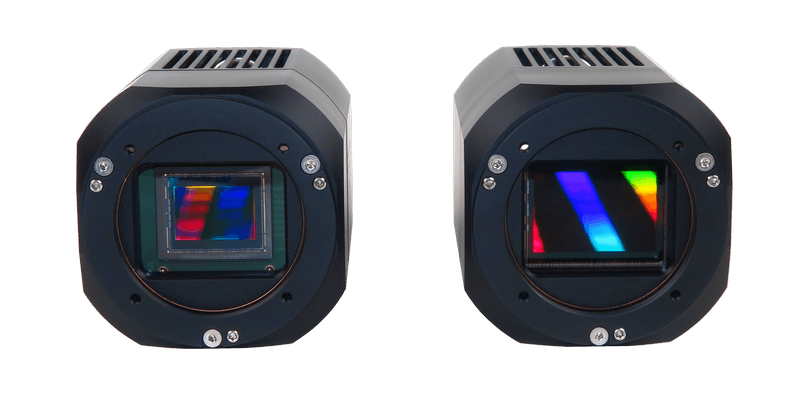
The C1× camera family combines large APS-C and Full-Frame sensors with the compact body of the C1+ cameras. Two models are available:
- C1x26000 with APS-C (24x16mm) Sony IMX571 sensor
- and C1x61000 with Full-Frame (36x24mm) Sony IMX455 sensor.
The front section of the C1× camera head is the same as that of the C1+, but the body is slightly longer to accommodate more complex electronics and more powerful cooling (hence the name of the entire series - C1 extended). Like the C1+, the C1× does not have a mechanical shutter.
C1× cameras are equipped with Sony IMX rolling shutter back-illuminated CMOS detectors with 3.76 × 3.76 μm square pixels. Despite the relatively small pixel size, the full-well capacity of over 50 ke- rivals the full-well capacity of competing CMOS sensors with much larger pixels and even exceeds the full-well capacity of CCD sensors with comparable pixel size.
The Sony sensors used are equipped with 16-bit analogue-to-digital converters (ADCs). 16-bit digitization provides enough resolution to fully exploit the sensor's exceptional dynamic range.
Both the IMX571 (used in C1×26000) and IMX455 (used in C1×61000) sensors are supplied in two variants:
-
With Consumer grade sensors. The sensor manufacturer (Sony Semiconductor Solutions Corporation) limits its use to consumer cameras with a maximum operating time of 300 hours per year.
-
With Industrial grade sensors, intended for devices operating 24/7. (C1×26000 PRO and C1×61000 PRO versions
All sensor characteristics (resolution, dynamic range, ...) are equal, the sensors differ only in the target applications and the time of use. Cameras used for causal imaging (weather permitting) rarely exceed 300 hours per year. Cameras permanently installed at observatories, using every clear night, and possibly located at mountain sites with many clear nights, exceed the 300 hours/year within a few months. For this reason, the C1× cameras are offered in two versions
C1× camera models includes:
Model
CMOS sensor
Sensor grade
Color mask
Resolution
Pixel size
Sensor size
C1×26000M
IMX571
Consumer or Industrial
None
6252 × 4176
3.76 × 3.76 μm
23.51 × 15.70 mm
C1×61000M
IMX455
Consumer or Industrial
None
9576 × 6388
3.76 × 3.76 μm
36.01 × 24.02 mm
C1×26000C
IMX571
Consumer or Industrial
Bayer RGBG
6252 × 4176
3.76 × 3.76 μm
23.51 × 15.70 mm
C1×61000C
IMX455
Consumer or Industrial
Bayer RGBG
9576 × 6388
3.76 × 3.76 μm
36.01 × 24.02 mm
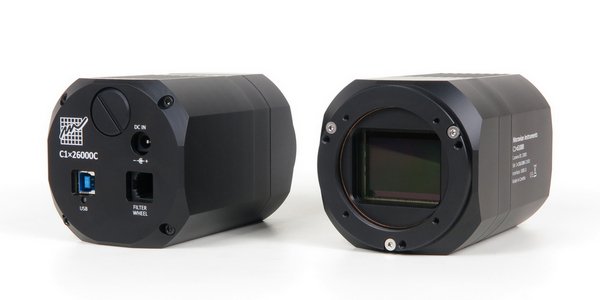
C1× cameras are equipped with a tilting telescope interface and tripod mounting threads.
The C1× adapters are supplied with a M56 × 1 thread. The front plate of the M56 × 1 adapter also has four threaded holes, making it compatible with the C3 camera body, allowing the C1× to use the same external filter wheels and other accessories as the C3 line.
A wide range of software and driver support allows the C1× camera to be used without the need to invest in a third party software package, thanks to the free SIPS software package supplied. However, ASCOM (for Windows) and INDI (for Linux) drivers and Linux driver libraries are shipped with the camera, providing the ability to integrate the C1× camera with a wide variety of camera control programs.
The C1× cameras are designed to work in conjunction with a host personal computer (PC). Unlike digital still cameras, which can be operated independently of a computer, scientific cameras usually require a computer for operation control, image download, processing and storage, etc.
C1× cameras are designed to connect to the host PC via a very fast USB 3.0 port. While C1× cameras remain compatible with the older (and slower) USB 2.0 interface, image download times are significantly longer.
Alternatively, it is possible to use the Moravian Camera Ethernet Adapter device. This device can connect up to four Cx (and CCD-based Gx) cameras of any type (not only C1×, but also C1, C2, C3 and C4) and provides a 1 Gbps and 10/100 Mbps Ethernet interface for direct connection to the host PC. As the PC then uses the TCP/IP protocol to communicate with the cameras, it is possible to insert a WiFi adapter or other network devices into the communication path.
C1× cameras require an external power supply to operate. It is not possible to run the camera from the power lines provided by the USB cable, as is common with simple imagers. C1× cameras integrate highly efficient CMOS sensor cooling, shutter and possibly filter wheel, so their power requirements significantly exceed the capabilities of the USB cable. On the other hand, having a separate power source eliminates the problems of voltage drops on long USB cables, or draining laptop batteries, etc.
Please visit the manufacturer's official website for more detailed information about the C1x CMOS camera series from Moravian
Moravian C1x CMOS Cameras
- Technical data not yet specifiedPlease choose product variant from dropdown above to see technical data of your chosen product