First Class H-alpha Solar Filters by SolarSpectrum
A SolarSpectrum filter transforms almost any telescope into a high-end H-α telescope with appropriate accessories. The filter design is optimized for observatories and amateurs who want to use the full aperture and resolution of large telescopes for solar observation and plan more than just an occasional view at H-alpha.
The filters have no central obstruction and are actively heated. This means that the filter does not need to be readjusted during the course of the day - ideal for long-term observations, time-lapse photography or public relations work.
Further information can be found on our detailed Blogpost:
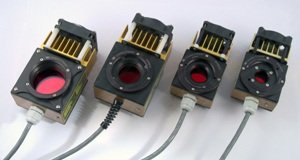
Solar Spectrum Advanced Observer - 0.50Å
Product Details
- SKU2459226
- EAN Code4047825008886
- ManufacturerSolar Spectrum
- Net weight (kg)3.20
Optical Specifications
- HBW (Halfbandwidth)0.50 + 0.05/- 0.10 Angström
- Solar WavelengthH-alpha
Mechanical Specifications
- Inner Diameter / Clear Aperture (mm)32
- Solar Filter with mount/thread?Yes
Usage & Features
- UsageVisual solar observation and imaging. Requires additional D-ERF Filter
Customer Reviews
5.0
0%of customers recommend this product
Tell us what you think about this item!
Top customer reviews
Bernd Höfner
Rating
Was this review helpful?40
In jungen Jahren, ich war noch in der Ausbildung in einem feinmechanisch / optischen Betrieb, kam unser optischer Rechner zu mir und sagte: Ich habe einen Protuberanzansatz für einen Kunden gerechnet, hier sind die optischen Daten, bau das doch mal nach. So bin ich schon als Jugendlicher zu einem Protuberanzansatz gekommen.
Die Bilder waren für mich atemberaubend, leider scheiterten alle meine Anstrengungen die Protuberanzen auch fotografisch festzuhalten. Viel später hatte ich dann entdeckt, dass die meisten Negativfilme, gerade im Bereich 656nm, extrem unempfindlich waren. Nur durch Zufall hat es dann doch noch geklappt… Damals machte ich, als Versuch, Naturaufnahmen mit einem IR-Film und hatte noch ein paar Aufnahmen übrig, bevor der Film voll war. Da das Protuberanz-Fernrohr aufgebaut war beschloss ich, mit dem restlichen IR-Film die Protuberanzen (zum X-ten) Mal aufzunehmen. Nach der Filmentwicklung traute ich meinen Augen nicht- da waren sie, die Protuberanzen.
Jahrelang habe ich so die Sonne beobachtet, bis ich dann beruflich mit der Erforschung der Sonne zu tun bekam. Gerade die Oberfläche der Sonne hat sehr viel Interessantes zu bieten und so kam bei mir der Wunsch auf, ein geeignetes Ha-Instrument zu finden.
Es wurde ein 60mm Sonnenteleskop mit Double-Stack Filter und einem großen Blockfilter. Jahrelang war ich mit dem Teleskop sehr zufrieden, aber leider war ich damit auch sehr unflexibel.
Nach eingehender Recherche landete ich bei den SolarSpectrum Filtern, die für mich genau richtig schienen. Da ich die volle Sonne in Ha aufnehmen und auch die Oberfläche visuell beobachten wollte, kamen für mich nur die Solar Spectrum Filter in Frage. Damit kann ich nun sehr schnell jeden beliebigen Refraktor von mir, je nach Anwendungszweck, zum Ha-Teleskop umbauen: Die komplette Einheit, bestehend aus Ha-Filter und 4x telezentrischem System, wird in den 2“ Okularauszug gesteckt und der D-ERF (Dielectric Energy Reflection Filter) vor das Refraktor-Objektiv montiert – fertig.
Ich beobachte die Sonne visuell mit dem Baader Bino Mark V und den Eudiaskopischen 35mm Okularen. Zusammen mit den beiden 3“ F7,5 und 6“ F5,3 Refraktoren ist es mir möglich, die ganze Sonne zu betrachten. In Verwendung habe ich das Solar Spectrum Advanced Observer 0,3Å (32mm freie Öffnung).
Vor ein paar Jahren habe ich mich spezialisiert auf sich ablösende Protuberanzen. Um das Schwerefeld der Sonne zu verlassen müssen die Protuberanzen mindestens eine Fluchtgeschwindigkeit von v F ≥ 16,7 km / s haben. Einige Protuberanzen erreichen auch (wesentlich) höhere Geschwindigkeiten. Dann bleibt einem nicht viel Zeit, wenn man das Spektakel aufnehmen möchte. Zu diesem Zweck hatte ich mir das Baader TQC / TCR Schwerlast T-2 Schnellwechselsystem angeschafft. Damit bin ich in der Lage, von visuell auf Foto in ein paar Sekunden umzubauen.
Da es besonders im Sommer sehr anstrengend sein kann stundenlang die volle Sonne zu beobachten, um eine schnelle Protuberanz zu erwischen, habe ich etwas gerechnet und mir einen neuen Refraktor gebaut. Zusammen mit dem SolarSpectrum Research Grade H-Alpha 0.4x Telekompressor 2" ist es mir nun möglich, die volle Sonne auch fotografisch zu beobachten. Durch das voll Remote gesteuerte Teleskop geht das nun sehr bequem vom Schreibtisch aus.
Der SolarSpectrum Filter ist seit 2016 in meinem Besitz und ich habe den Kauf noch nicht einen Tag bereut.
Qualität, Verarbeitung
Is it possible to obtain the D-ERF energy protection filter for SolarSpectrum H-alpha filters more cheaply from other sources?
Johannes H. / April 10, 20241 Answer
- We must point out that purchasing the ERF from another source can lead to a repair becoming chargeable in the event of a defect during the warranty and guarantee period. A normal ERF is cheaper to buy. But it does not have the same specifications as our DERF: Simple ERF filters are made of solid-colored red glass (Schott RG 610 or RG 630). This glass is a long-pass filter; it allows all energy to pass through from approx. 570 nm, including the full thermal radiation (NIR) above 630 nm. The heat at the focal point is three times higher with this type of "protective glass" than with our dielectrically blocked D-ERF filter. As a result, the immersion oil in the stack of block glasses, polarizers and etalon in the H-alpha filter literally is getting boiled. An H-alpha filter that is permanently overheated in this way ages very quickly. We would not be able to maintain our 5-year warranty under any circumstances. Incidentally, the colored glass from which these simple ERFs are made is very "soft" and chemically unstable (= prone to weathering). The soft molten glass tends to form streaks. When we were still working with this glass, we had to double-pass test each piece on the optical bench and had a high reject rate. This means that simpler ERF filters age due to the oxygen in the air if they are not coated, the surface becomes "rough" after a few years and the image contrast collapses. The problem with the glass quality of the RG 610 remains even if a UV/IR-reducing coating is vapor-deposited. We have already done this many years ago as C-ERF filter (= Cool ERF), but after long-term experience we abandoned it again and the lesson learned was the development of the D-ERF (Dielectric ERF). Above all, the soft glass often warped during coating, which led to even more rejects. There are manufacturers who offer such ERF or C-ERF filters but do not test every lens as thoroughly as we did on the optical bench. This explains the cheap offers of C-ERF and ERF filters on the market - for which the customer ultimately pays much more than if he had purchased a high-quality DERF, with significantly reduced image quality and reduced service life of the Halpha filter. Our D-ERF filters are made of highly homogeneous, streak-free, finely polished BK-7 glass. They are painstakingly coated with a dielectric coating system that is resistant to ageing and precisely matched to the Solar Spectrum filters. The Solar Spectrum filter only shows its most important advantages (ageing resistance, sharpness and contrast) with our dielectric „D“-ERF coating system were we have full control over the coating process and can verify it´s effectivity. Only then can we guarantee for the 5 years of ageing resistance for the Solar Spectrum H-alpha etalon-stack. Especially with a research grade filter, usage of a "normal" ERF is tantamount to "degrading" the filter. Every chain is only as strong as its weakest link.Baader Web Team / January 23, 201790
6
0
Configuration Lunette astro physics 140 - télécentrique Baader TZ3- solar spectrum advenced 32 mm- Camera cmos ATIK horizon 17,64mm x 13,32mm pixels 3.8 x 3.8
Qu'elle est la distance entre l'arrière du filtre et le capteur cmos?
ARNAUD / May 16, 20211 Answer
- Le capteur doit se trouver à 250 mm derrière la lentille arrière du système télécentrique. Entre les deux, il doit y avoir le filtre Halpha. Plus de détails ici https://www.baader-planetarium.com/en/downloads/dl/file/id/129/product/3123/baader_telecentric_systems_tzs_for_h_solar_filters.pdfBaader Web Team / May 17, 202140
1
0
Can I use an UV/IR-Cut filter or the BBHS mirror in front of an H-Alpha or Calcium Solar Filter? Do you recommend the 2" BBHS or 2" Clicklock Mirror for solar observation?
Enrique V. / September 26, 20161 Answer
- If you want to observe the sun in H-Alpha, we recommend the standard dielectrical Clicklock mirror (# 2956100) in combination with a suitable filter combination, because the dielectrical filter reflects less radiation below 380nm and above 740nm. This way, the mirror can reduce the strain on the following filters at least a little bit.Please do also use an energy rejection filter in front of the telescope to reduce the strain on the filters as much as possible. We highly advise against visual calcium observations of the sun - the 397nm of Calcium are already ultraviolet radiation, and UV-radiation can cause phototoxic reactions which can harm your eyes. In addition, even young people can't see these wavelengths very good, and sensitivity decreases with the age. Because of this, the eye doesn't feel if the intensity is much too high. If you now try to increase the amount of radiation (e.g. with another mirror) to achieve a brighter image, you will increase the risk for eye damage. According to the newest norms for eye safety and to ophtalmologist conclusions, the sun must not be observed visualy at 397nm. We highly advise to only observe the sun in calcium photographically, then you also do not need a star diagonal. We can't understand why some manufacturers promote these calcium-filters for visual observations. We also advise against placing a filter so close to the focus - any energy rejection filter belongs in front of the front lens, even if this sets high demands to the quality of such a large filter. Placing the filter close to the focus will save money, because you can use a much smaller filter, be we absolutely can't recommend it - because of our own conscience as well as because of EU-regulations. The filter would receive all the energy collected by the front lens. We can only recommend putting the energy rejection in front of the front lens, which is the ethically and technically correct method.Baader Web Team / October 14, 2016121
7
1