
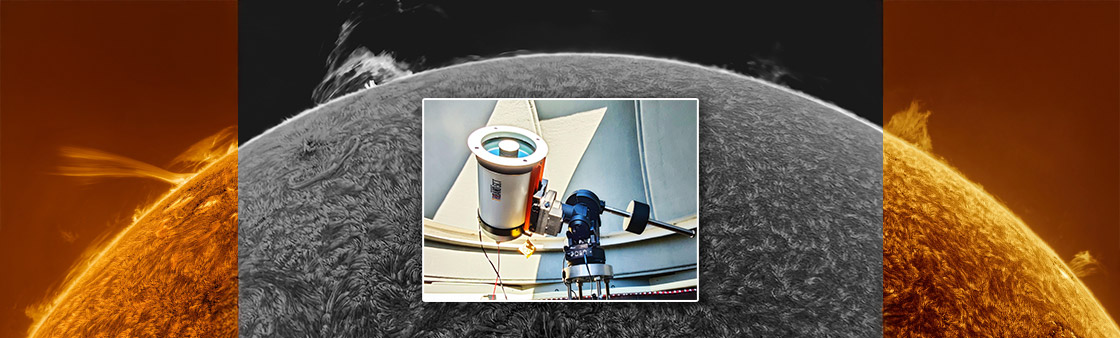
The following test report was kindly provided by Mehmet Ergün for publication.
Introduction
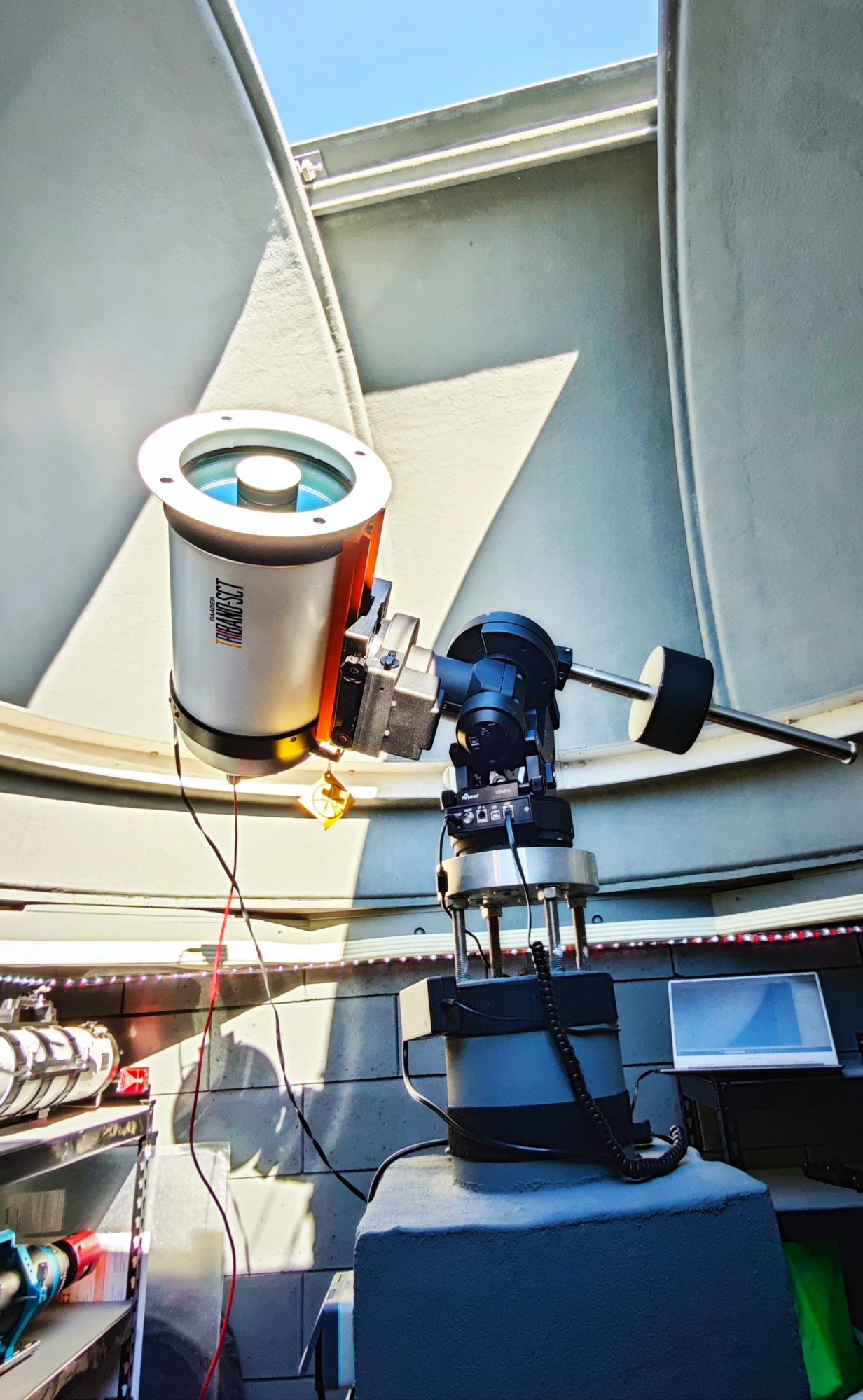
The Triband-SCT 8" – Multi-Purpose Solar Telescope on SC-Base (#2301002 , € 4195,- ) was provided to me on loan for this test by the renowned company Baader Planetarium. The scope of delivery includes the optics itself, a 3-inch prism rail, and a heat shield to prevent the tube from heating up. The Triband-SCT is a high-quality Schmidt-Cassegrain mirror telescope that stands out from conventional SC models due to its innovative design. It is equipped with a specially triband-coated Schmidt plate, replacing an additional ERF energy protection filter and enabling high-resolution solar observations.
The Schmidt plate offers transmission in the wavelength ranges of 380–400 nm, 480–515 nm, and 630–680 nm, making it particularly suitable for observing Calcium-K, H-beta, O III, H-alpha, and S II. For specialized observations such as white light, H-alpha, or Calcium-K solar observations as well as narrowband deep-sky imaging, additional filters are required.
Due to its outstanding features and versatile applications, this telescope is especially suited for advanced astrophotographers seeking detailed and demanding solar observation. Thanks to the triband-coated Schmidt plate and the integrated ERF filter, it allows for high-precision images, which require extensive knowledge and experience, making it less suitable for beginners.
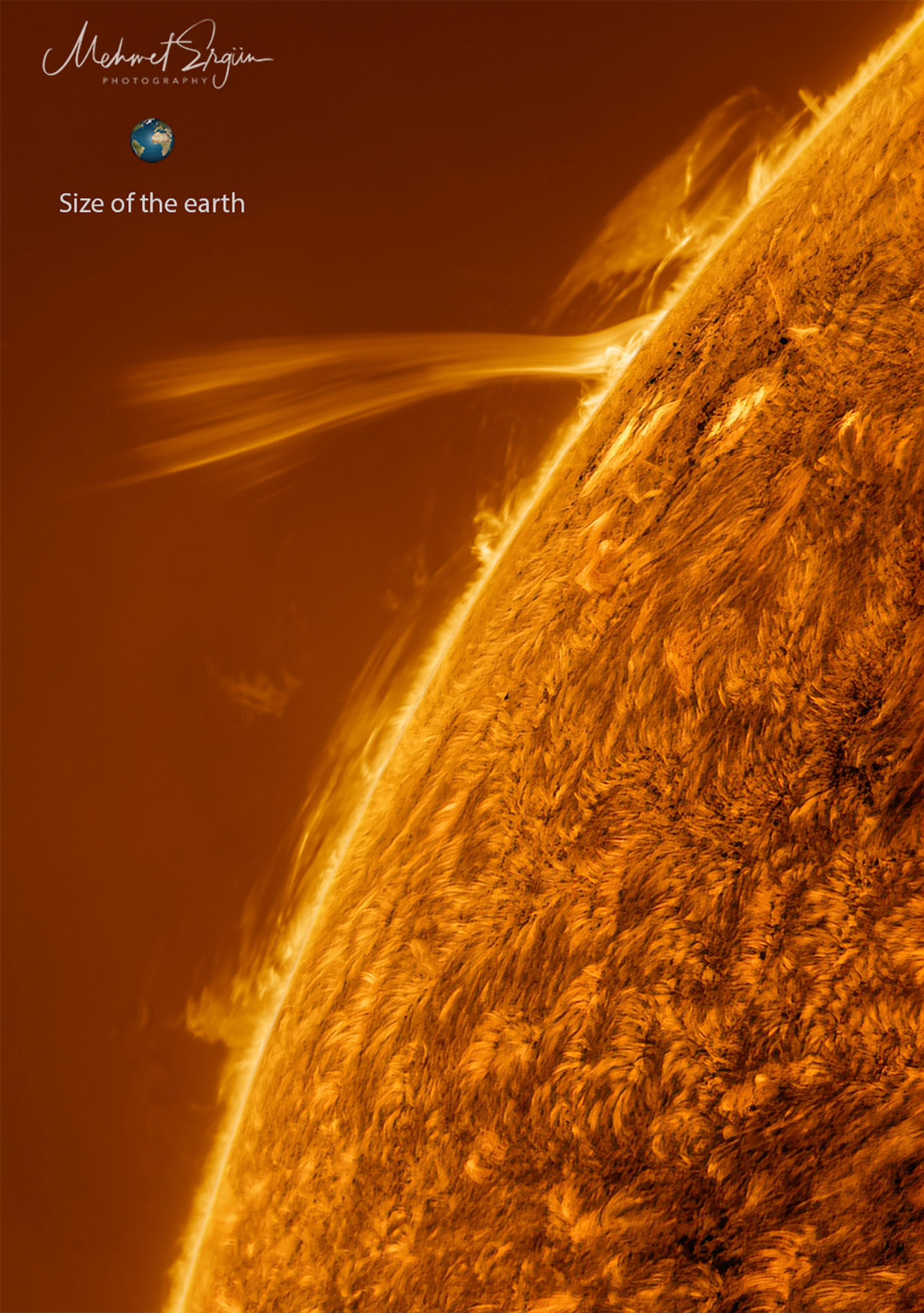
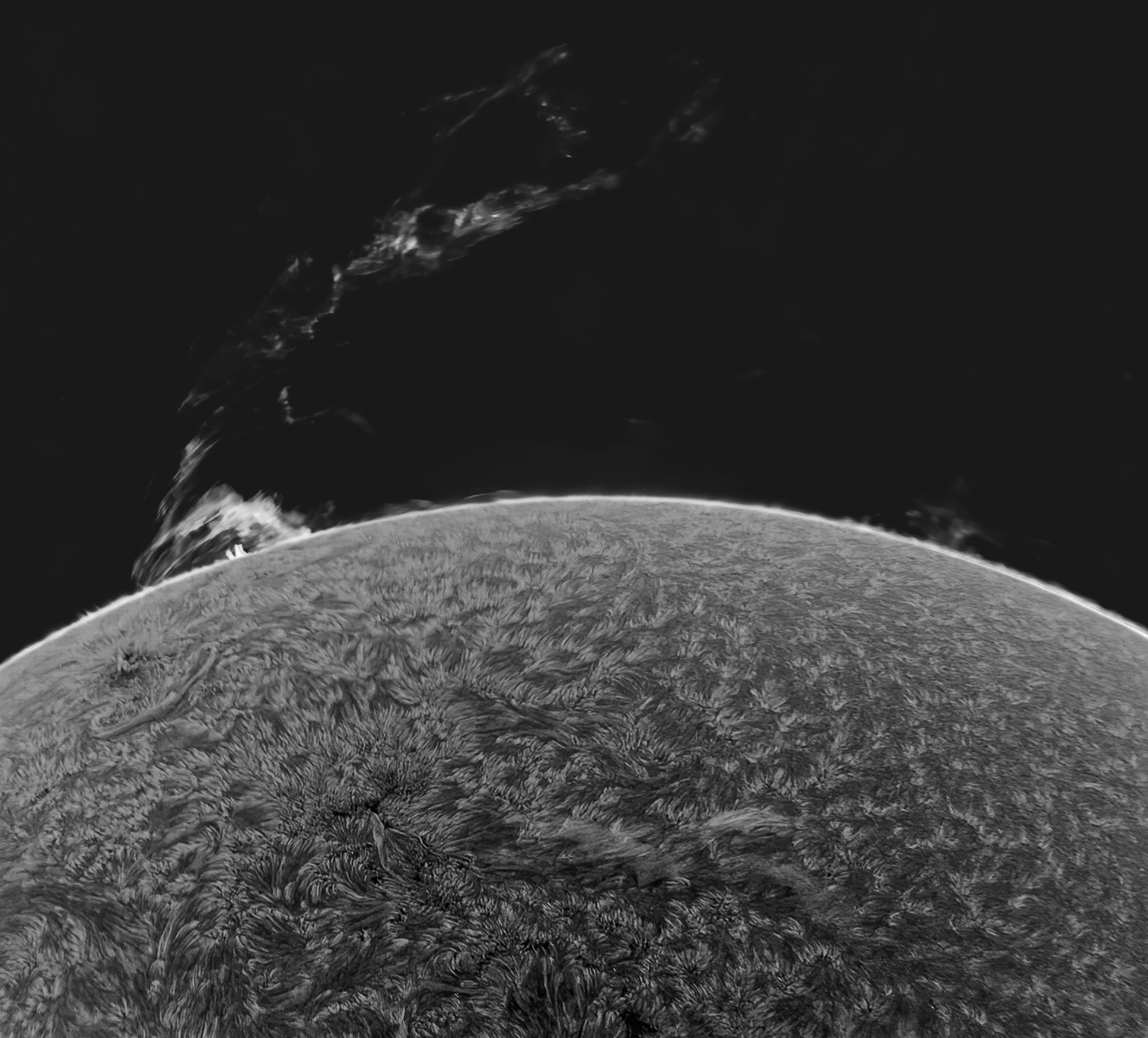
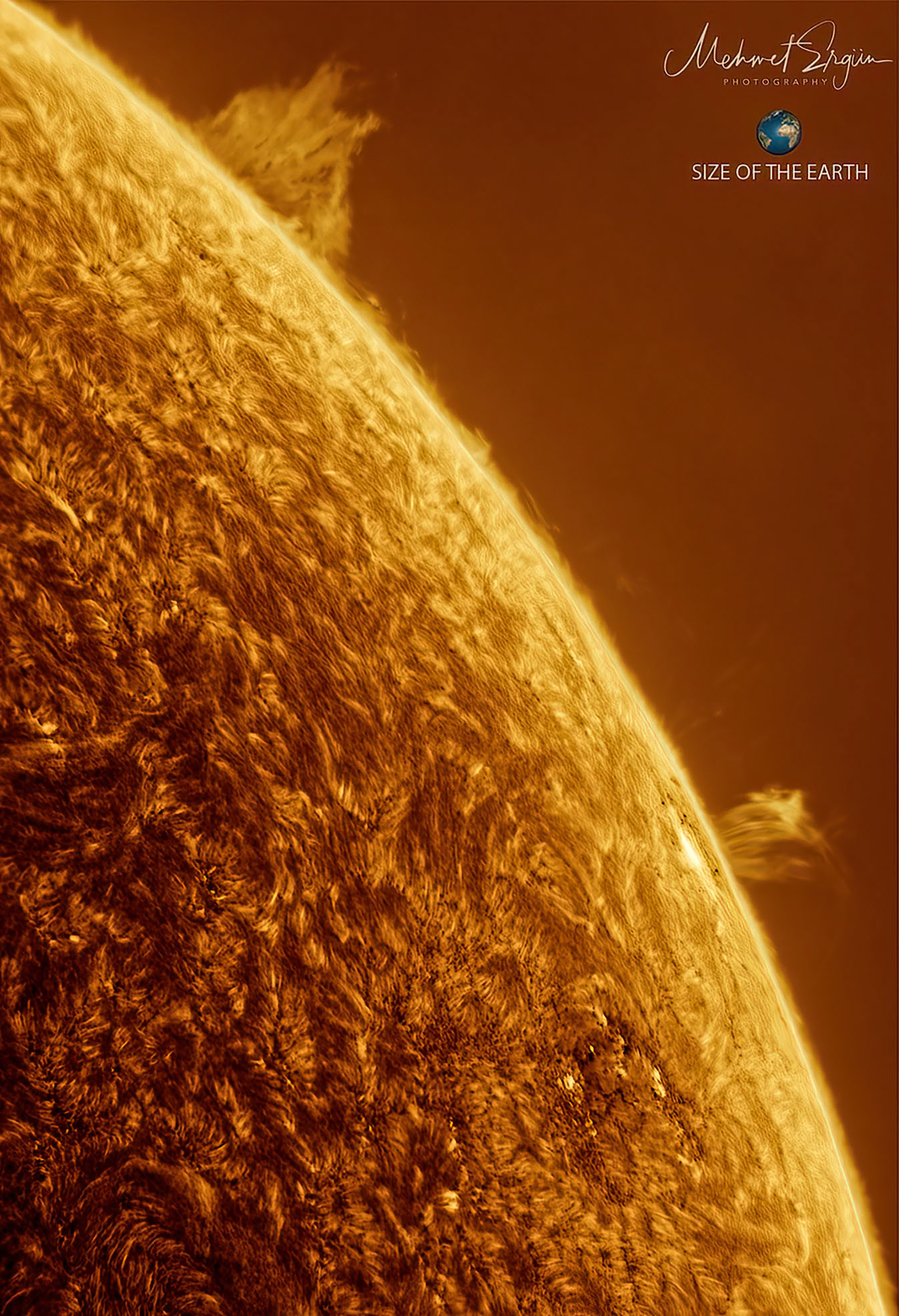
In my test, I used the telescope for H-alpha observation to photographically capture the solar surface and its structures. The H-alpha line provides deep insights into solar activity and enables images of prominences and filaments that, thanks to the powerful optics of the Baader 8" Triband-SCT, reveal impressive details.
Filters and Mounting
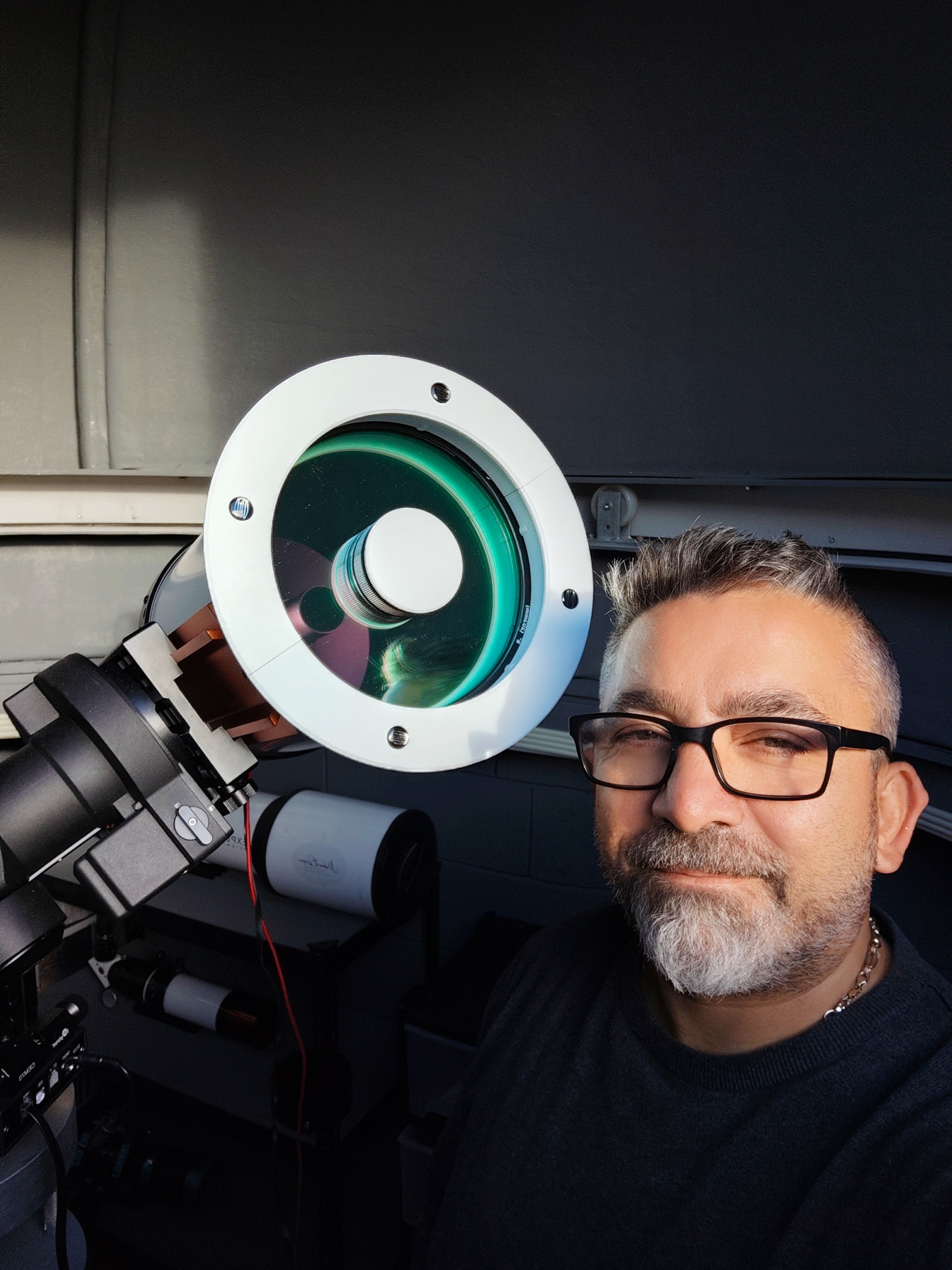
The Triband-SCT offers various filters and methods for capturing the sun in H-alpha, which in my opinion makes this telescope special. It is important to achieve the recommended aperture ratio of about f/30. For this, a telecentric Barlow lens and an H-alpha filter are required. There are many different H-alpha filter manufacturers and providers, with prices ranging in the thousands of euros.
In my test, I used my existing Daystar Gemini Quark filter. My Quark filter has its own telecentric Barlow lens, equivalent to a 4.2x Barlow lens. When I use the telescope with my 4.2x Barlow lens, I reach an aperture ratio of f/42, which is not optimal. The focal length is extremely high for the aperture, which significantly darkens the image and affects resolution. Thus, achieving a sharp image was hardly possible.
Subsequently, I tested it with a 0.5x reducer, resulting in an aperture ratio of f/21 (f/10 / 2 * 4.2), which was also not optimal. I lost focal length, and the image was too bright. The best solution I found was with the help of a Celestron reducer with 0.63x, which gave me almost the perfect aperture ratio of about f/27 (f/6.3 * 4.2).
An additional ERF filter is unnecessary in this case, which makes the Triband-SCT special as the ERF filter is already integrated. An ERF filter is particularly important as the optics would heat up without such a filter. Personally, I always use an ERF filter with an aperture of 80 mm or more.

Practical Test
I was able to test the Triband-SCT on the sun several times and found it to be an exceptional telescope. Observing the sun with a high focal length requires a large aperture. Achieving this with a lens is often complex and expensive. An 8, 9, or 11-inch refractor telescope requires a) a stronger mount, as the lens is usually heavier than a mirror, b) an above-average large ERF filter, c) higher vibrations, which often require a motor focuser, and d) acquiring such a setup will likely be challenging and costly.
The design of an SC telescope proves particularly advantageous in this context, as it is more compact and lighter than many refractors with comparable aperture. The reduced weight makes it easier to handle and transport, which is especially beneficial for mobile use and frequent location changes. Moreover, the compact design reduces mount requirements and minimizes vibrations, simplifying overall operation. Additionally, a motor focuser is not strictly necessary for focusing; with my 152 mm refractor, a motor focuser is required as the length of the telescope leads to significant vibrations, making precise focusing difficult.
What I immediately missed with the Triband, however, was a solar finder. I believe a solar finder would have been very helpful in the scope of delivery, as even the best mount can sometimes miss its target with such high focal lengths.
Seeing is crucial! The importance of seeing at high focal lengths is well known to many, but here it plays an especially central role. Air turbulence becomes very noticeable at focal lengths of 5000 mm or more. Therefore, a calm observation spot with minimal or no air turbulence is of utmost importance to fully utilize the telescope's potential. In my long-term tests with the "AiryLab Solar Scintillation Monitor," I found that I generally achieve the best seeing in the morning hours, even when the sun is relatively low.
Modifications and Fine Tuning
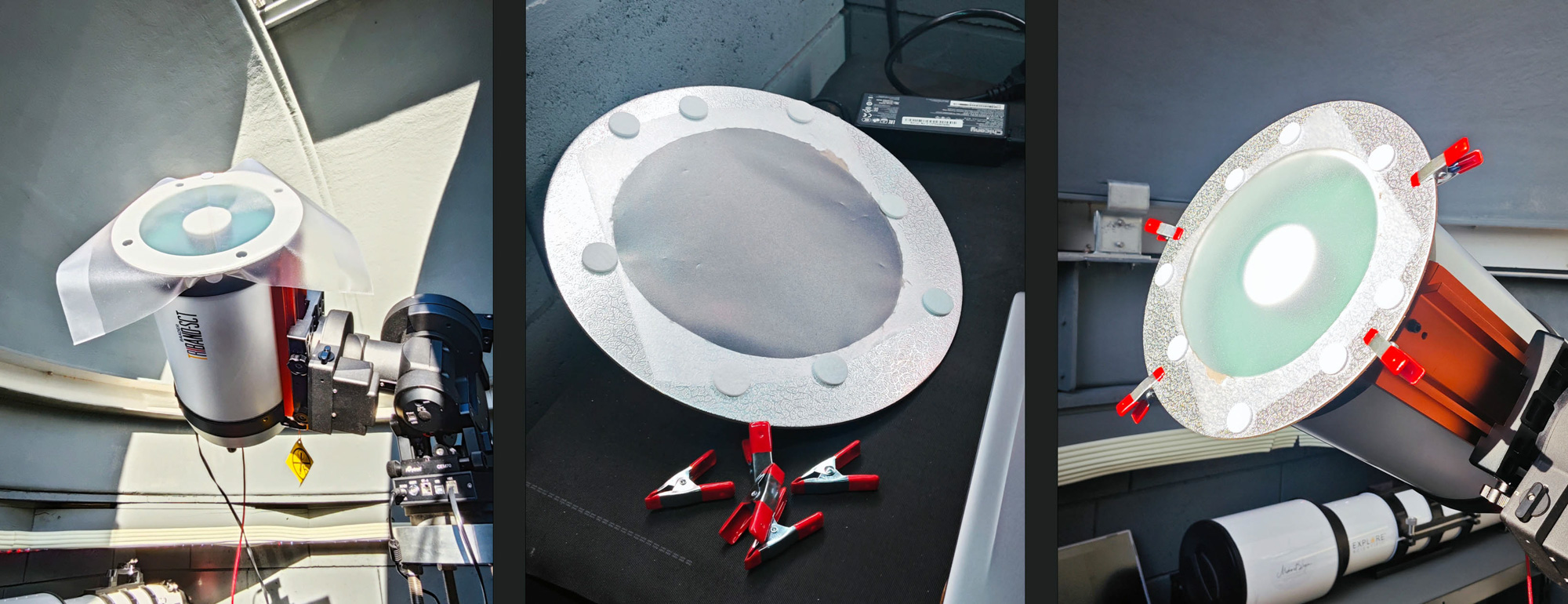
Flats are also very important to me; they are often not used or given enough attention in solar photography. I find nothing offers better value for money and higher added value. Images without flats often suffer from unwanted dust and can appear uneven, which could be corrected by a flat. Therefore, I would like to see a “flatcap” included or at least have a compatible option available for purchase. I made my own flatcap (€1.50 for a cake plate + €0.49 for sheet protectors) and achieved excellent results. The total cost for my "flatcap" was around €1.99, and the added value is priceless.
Another important aspect not to be overlooked is the choice of a suitable camera with large pixels. At high focal lengths, it is crucial that the pixel size ratio to focal length is harmonious to ensure optimal image quality. This requirement limits the selection of cameras, as not all models meet the specific demands for solar observation. In my case, I used the IMX432 sensor with 9 μm pixels, which proved to be particularly suitable due to its excellent sensitivity and image quality. The combination of a suitable camera and the Triband-SCT enables impressive images of the solar surface and its details.
Conclusion
The Baader 8" Triband-SCT is an outstanding choice for advanced astrophotographers seeking high-quality solar observations. With its specialized triband-coated Schmidt plate and integrated ERF filter, this telescope offers impressive detail and image quality, unmatched in its price range.
The versatility of the Triband-SCT, suitable for both daytime and nighttime observation, makes it particularly attractive. Its compact design facilitates transport and handling, while compatibility with a variety of filters provides additional flexibility.
However, the high acquisition cost for the telescope and required filters should be considered. Additionally, seeing is crucial at high focal lengths, which requires careful planning of observation conditions. The need for an additional camera for optimal use of the telescope should also be noted.
Overall, the Baader 8" Triband-SCT offers a powerful platform for solar observation and astrophotography. Its innovative technology, robust construction, and versatile applications make it a valuable investment for passionate astronomers and photographers.
Advantages and Disadvantages
- Versatile applications: Suitable for both daytime and nighttime observation.
- Integrated ERF filter: The integrated ERF filter reduces the need for additional components.
- Compact and handy design: The short design facilitates transport and handling.
- Compatibility with various filter manufacturers: Compatible with a variety of filters from different manufacturers, enhancing equipment flexibility.
- High acquisition costs: Both the optics and required filters are expensive.
- Additional camera may be required: Using a specialized camera may be necessary for optimal use.
Image Processing / Photos
First, I captured about 1000 frames using SharpCap software. I used SharpCap's live flat feature, so I could immediately see how my image looked without having to apply the flat afterward. To sharpen, I increased the live contrast, making the sharpening process significantly easier.
I stacked the photos with AutoStakkert 4, using the best 15% of the 1000 frames. After stacking, I obtained a TIF file, which I then opened and sharpened in Registax. After sharpening, I saved it again as a TIF.
The next step was Photoshop. There, I edited the prominences and the surface separately using masks. I inverted the sun's surface and added my preferred color. In my opinion, this enhances the details, and the sun appears more uniform. However, this process is purely a matter of taste and artistic freedom.
About the Author
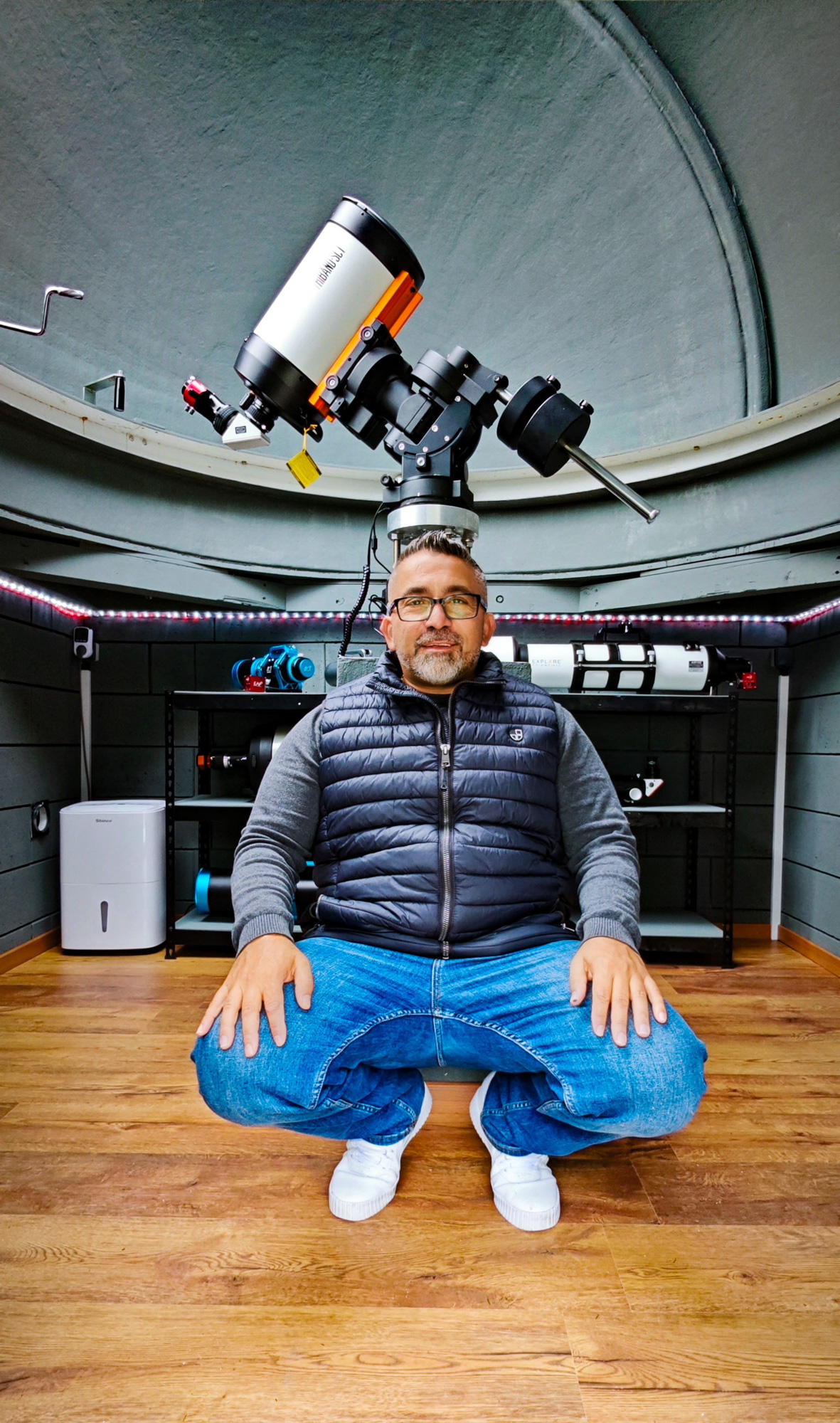
My name is Mehmet Ergün, and I acquired most of my passion for astronomy in a self-taught manner. In my youth, I spent nights under clear starry skies, far from the noise of the city, captivated by the beauty of the stars.
In 2010, I finally fulfilled my dream and acquired my first telescope. This unforgettable moment opened the door to the vastness of the cosmos and ignited my love for astrophotography. It is a pleasure for me to capture and share the fascination and mystery of the universe with others.
Note from Baader Planetarium
The Triband concept is unfortunately not achievable at a low cost due to the extremely complex manufacturing process—particularly the high production risk in coating the Schmidt plate.
However, as passionate solar observers, we accept the significant production and modification costs to offer dedicated CaK and H-alpha observers affordable large-aperture optics. When comparing an 11" Triband Celestron optic with a similarly powerful refractor equipped only with a red objective filter, it becomes clear how extraordinarily cost-effective this solution is for conducting high-resolution solar observations.