For the 60th anniversary of Baader Planetarium, an official corporate film has been produced for the first time. It not only shows which products and systems are developed and manufactured in Mammendorf, but above all how work is done at Baader Planetarium: with technical precision, close cooperation and a team that accompanies astronomical projects from the initial idea through to the completed installation.
What does Baader Planetarium do?
This question cannot be answered solely by looking at products, technical data or individual projects. Behind the company are many different areas that are closely interconnected: development, engineering, production, assembly, project planning, sales, marketing, service and support.
The new corporate film provides insight into precisely this working environment. It takes viewers through workshops, production areas, offices and the telescope integration center at the Mammendorf site. In doing so, it shows how technical requirements are transformed into concrete solutions – from optical and mechanical components through to complete, turnkey observatory systems.
On the occasion of the company’s 60th anniversary, the film does not primarily look back (please see our Baader Timeline for this), but instead shows what defines Baader Planetarium today: experience spanning three generations, short lines of communication between the individual specialist departments, and a working environment in which technical precision and personal responsibility come together.
Development, production and worldwide projects
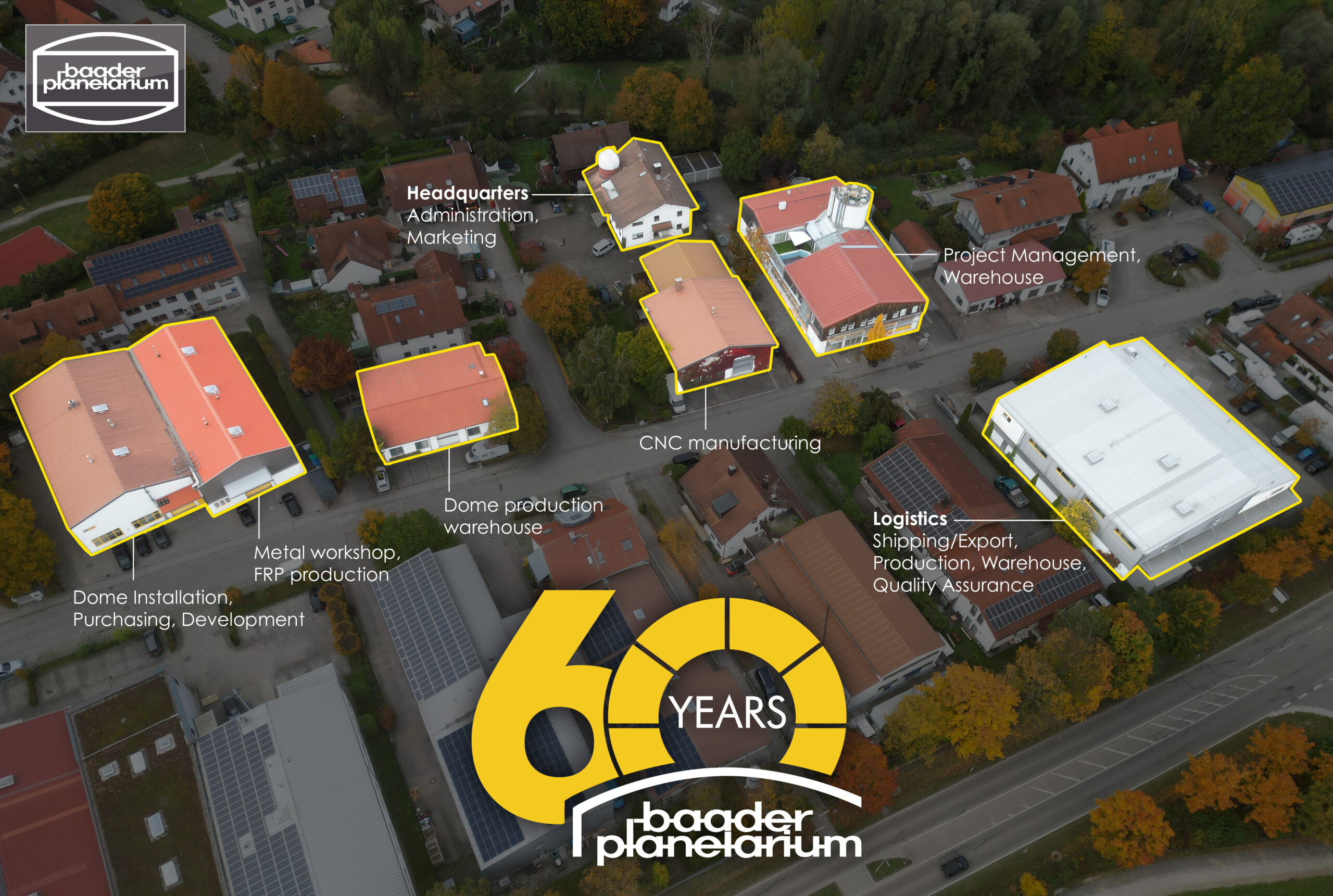
The film shows various stages of the work carried out at Baader Planetarium: the production of in-house components, the manufacture of observatory domes, the integration of large telescope systems, and the preparation of complex projects for customers worldwide.
Many of these projects begin long before the actual installation. Planning, coordination, engineering and testing are crucial steps in creating a system that ultimately operates reliably – even under demanding conditions. Baader Planetarium accompanies such projects from the initial idea and technical implementation through to ongoing operation.
The range extends from solutions for private observatories and educational institutions to applications in research, New Space applications and professional astronomy. Baader components and integrated systems are now in use worldwide – in observatories, scientific institutions and international organizations.
People, cooperation and responsibility
In addition to technology and production, the corporate film also shows the people behind Baader Planetarium. Complex astronomical systems are not created by machines, components and design data alone, but through experience, coordination and teamwork.
The footage provides insight into various areas of work and shows colleagues carrying out tasks that usually take place behind the scenes. This look behind the scenes was particularly important to us for the film: it shows how much care, communication and responsibility goes into every project.
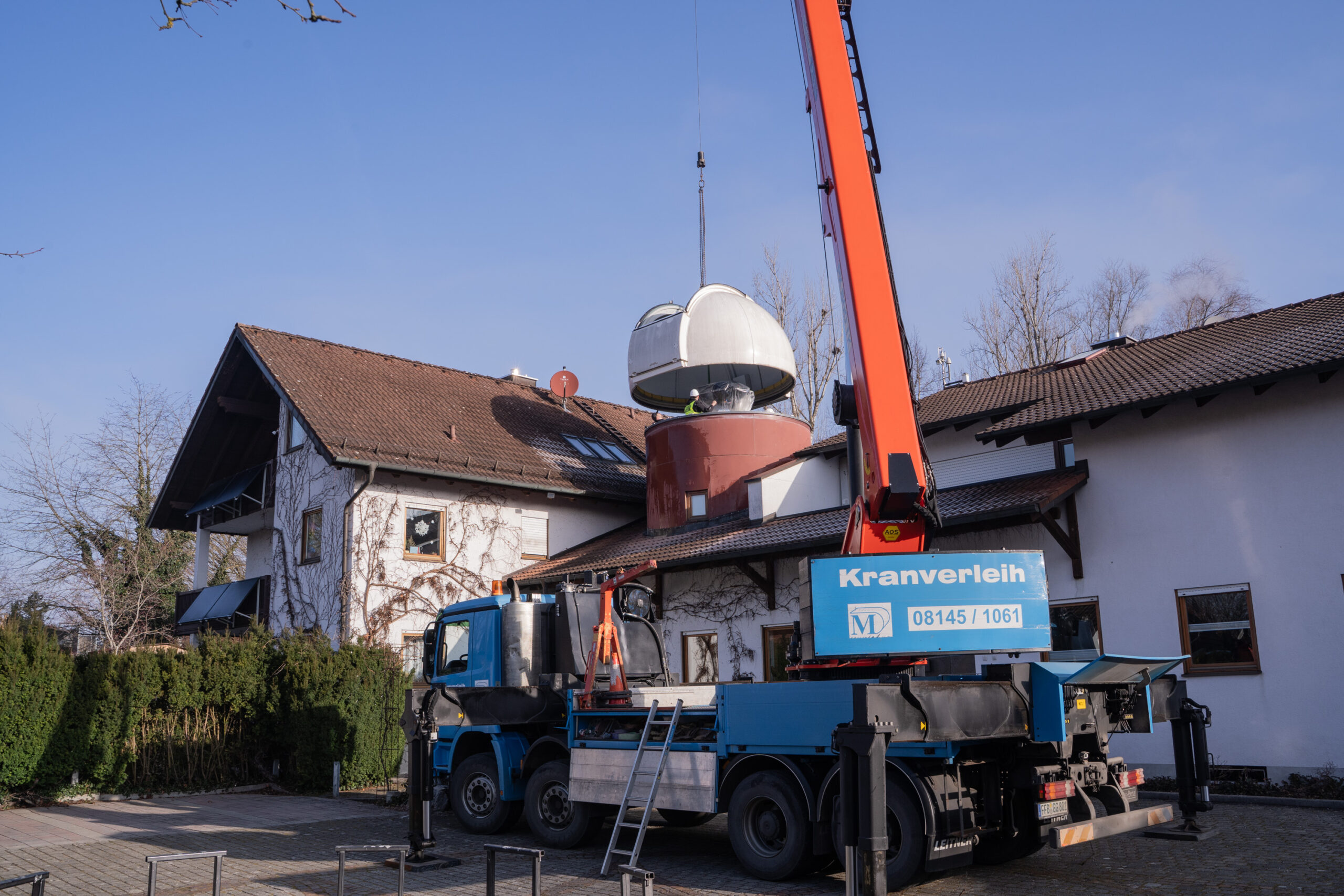
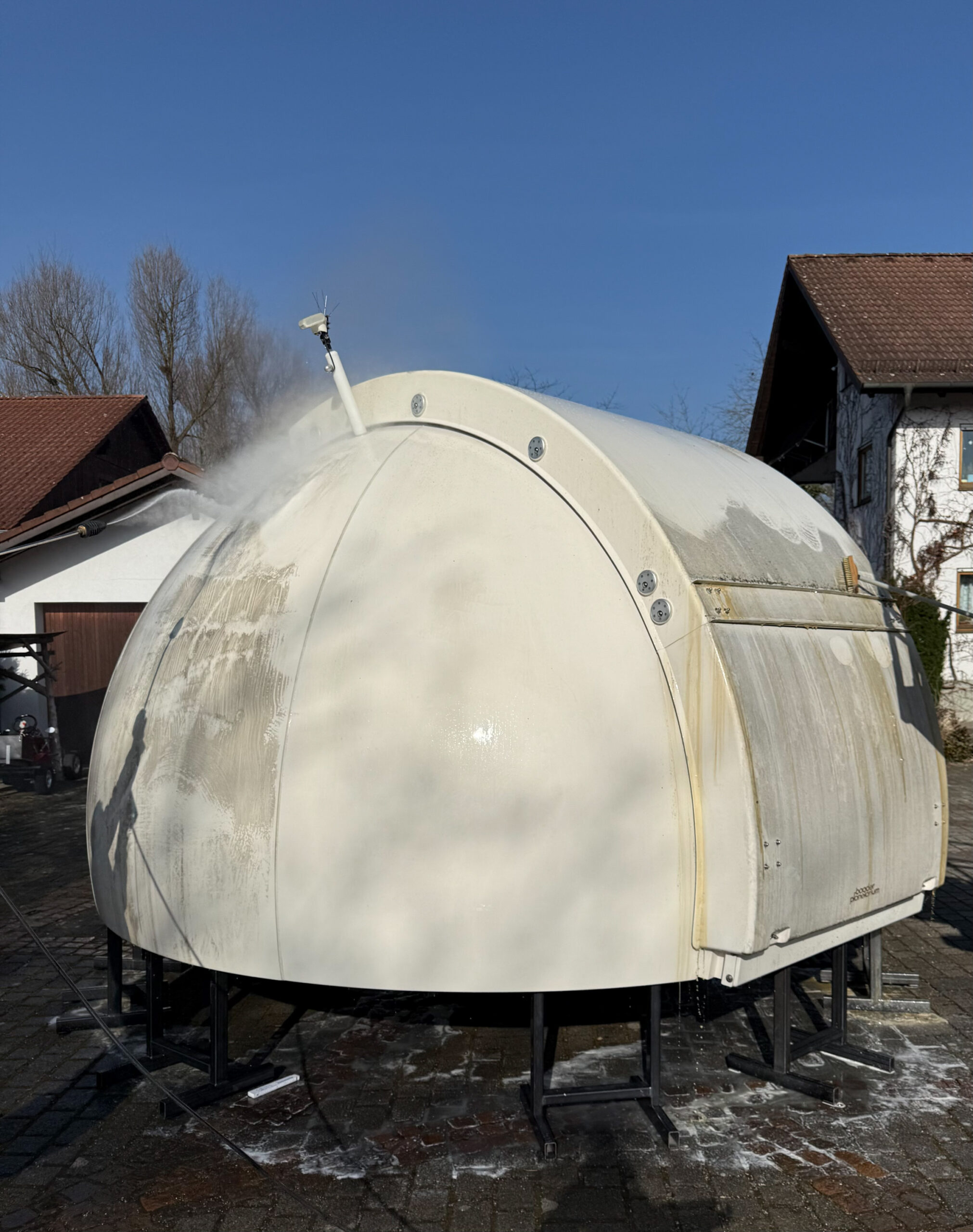
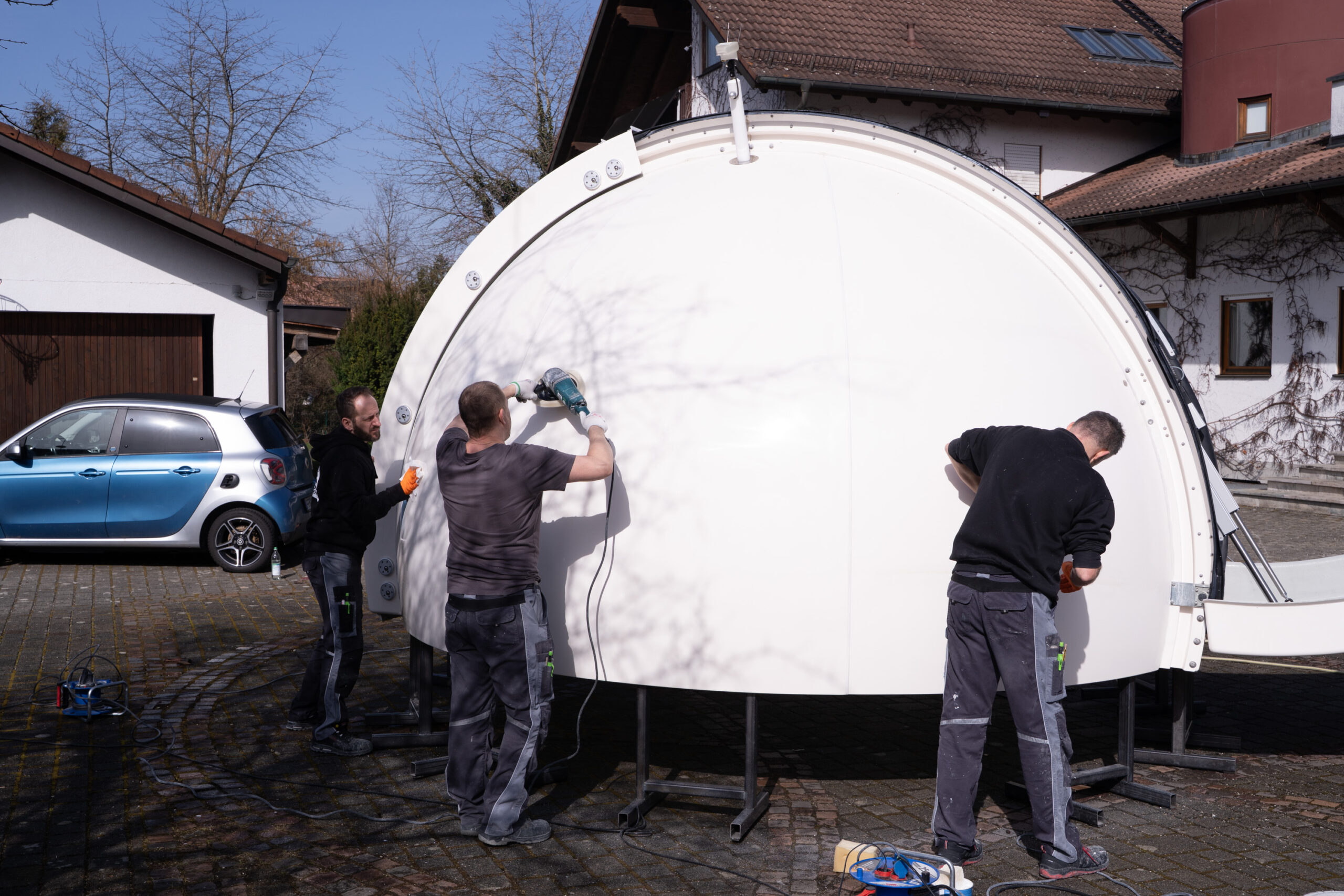
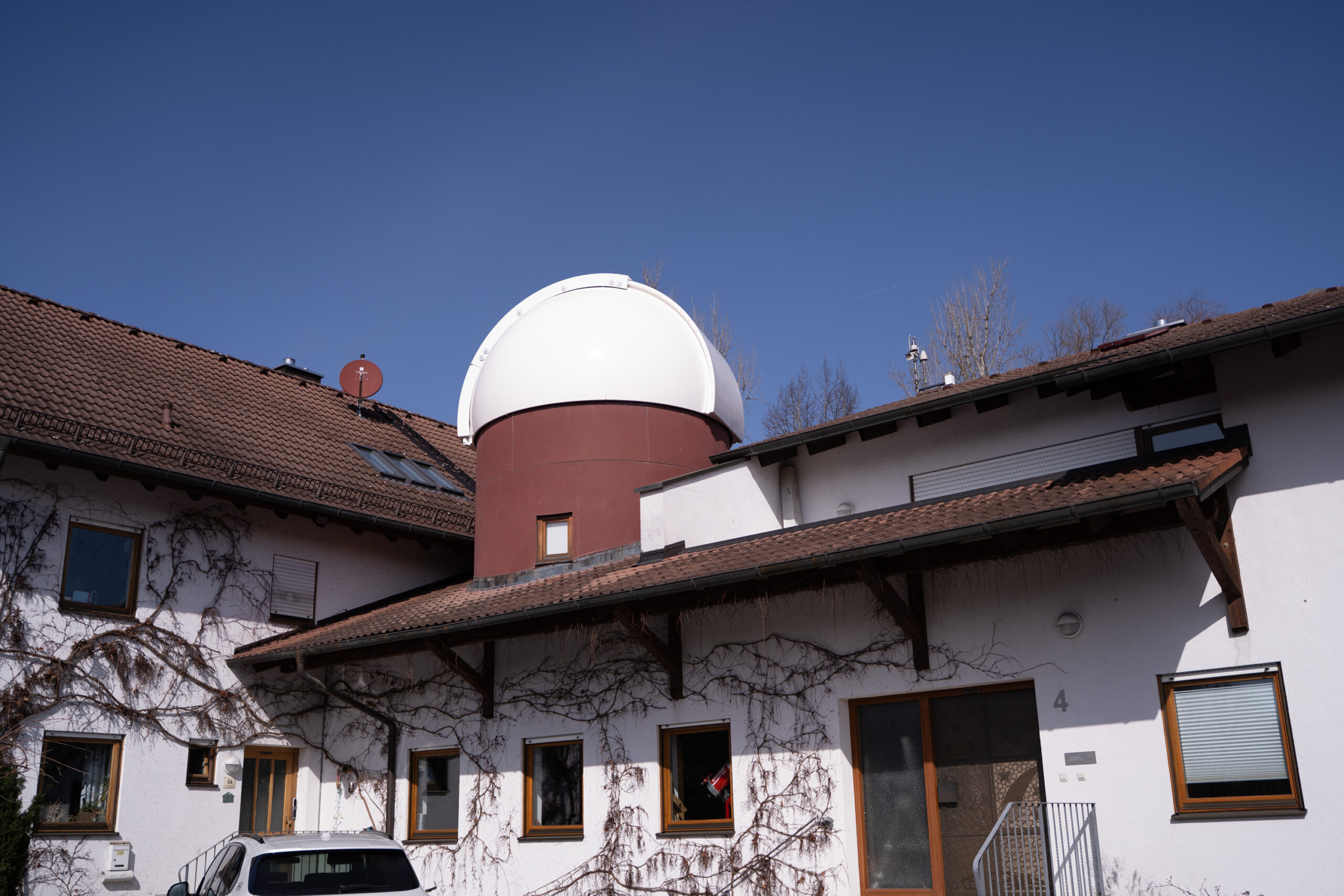
For the corporate film, even our in-house 4.2 m slit dome was polished back to its former glory
The atmosphere within the company also plays an important role. Trust, appreciation and good cooperation are part of our daily work – in production as well as in project meetings, service and development. If you would like to become part of our team, you can find our current job vacancies here.
Behind the scenes: How the film was made
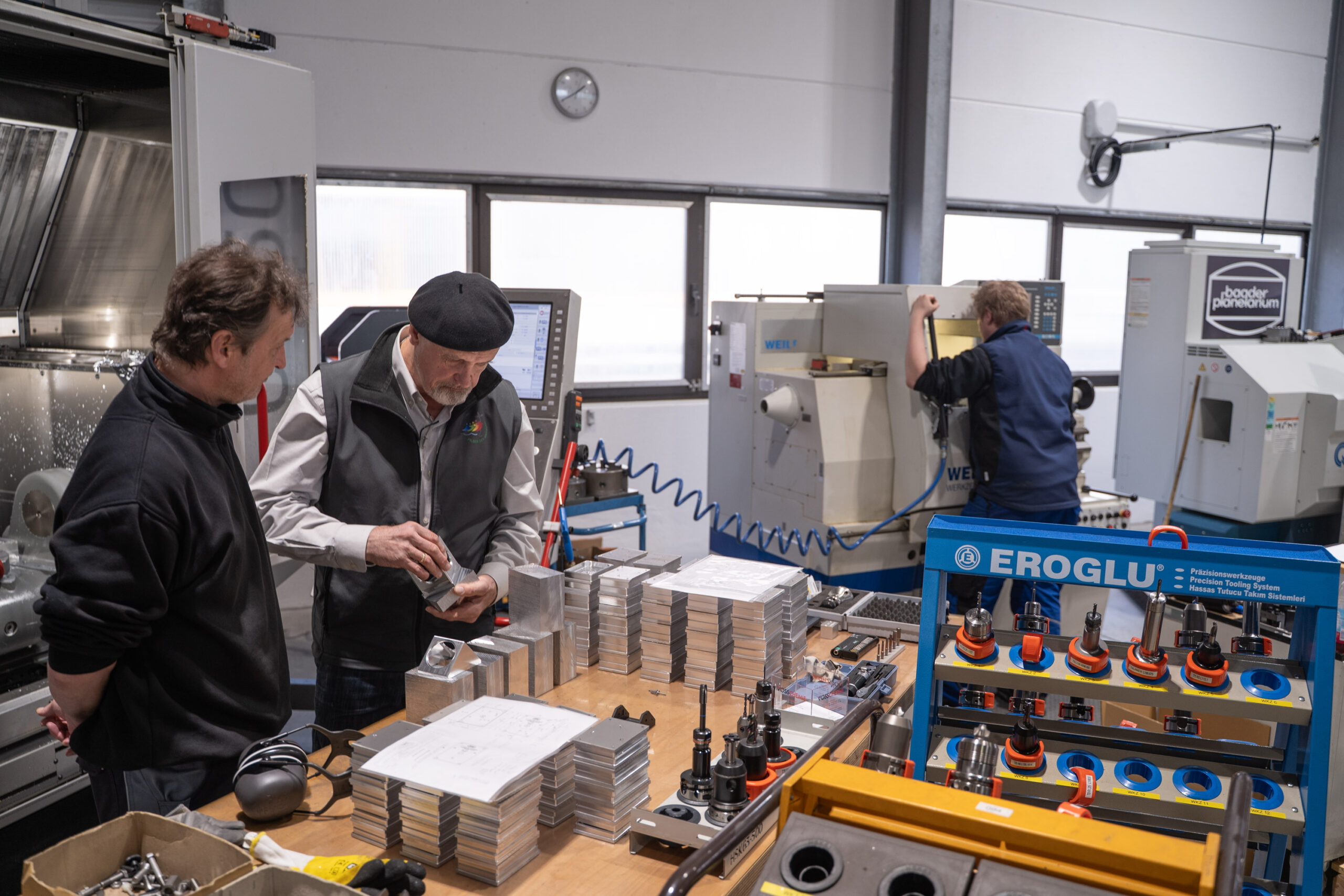
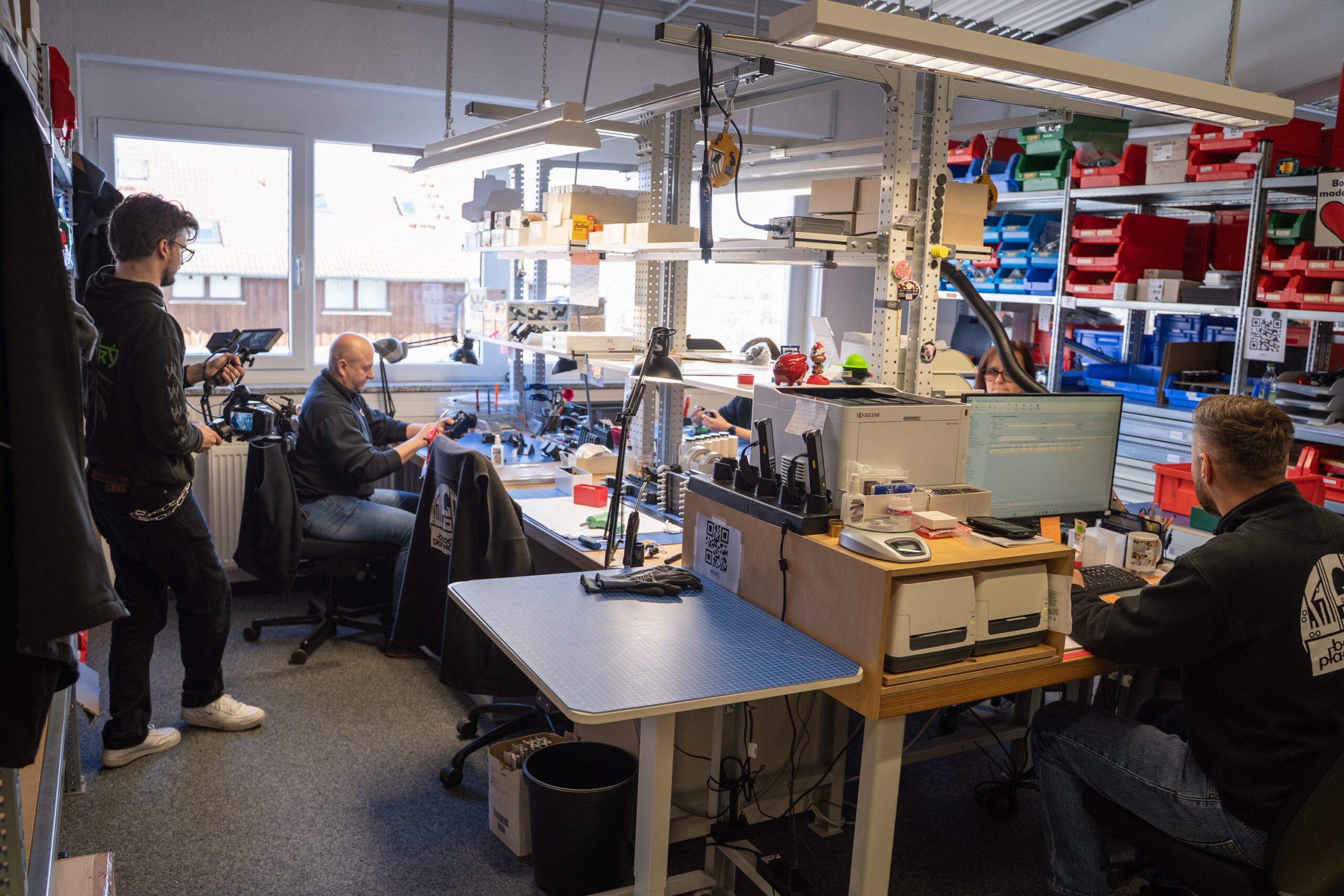
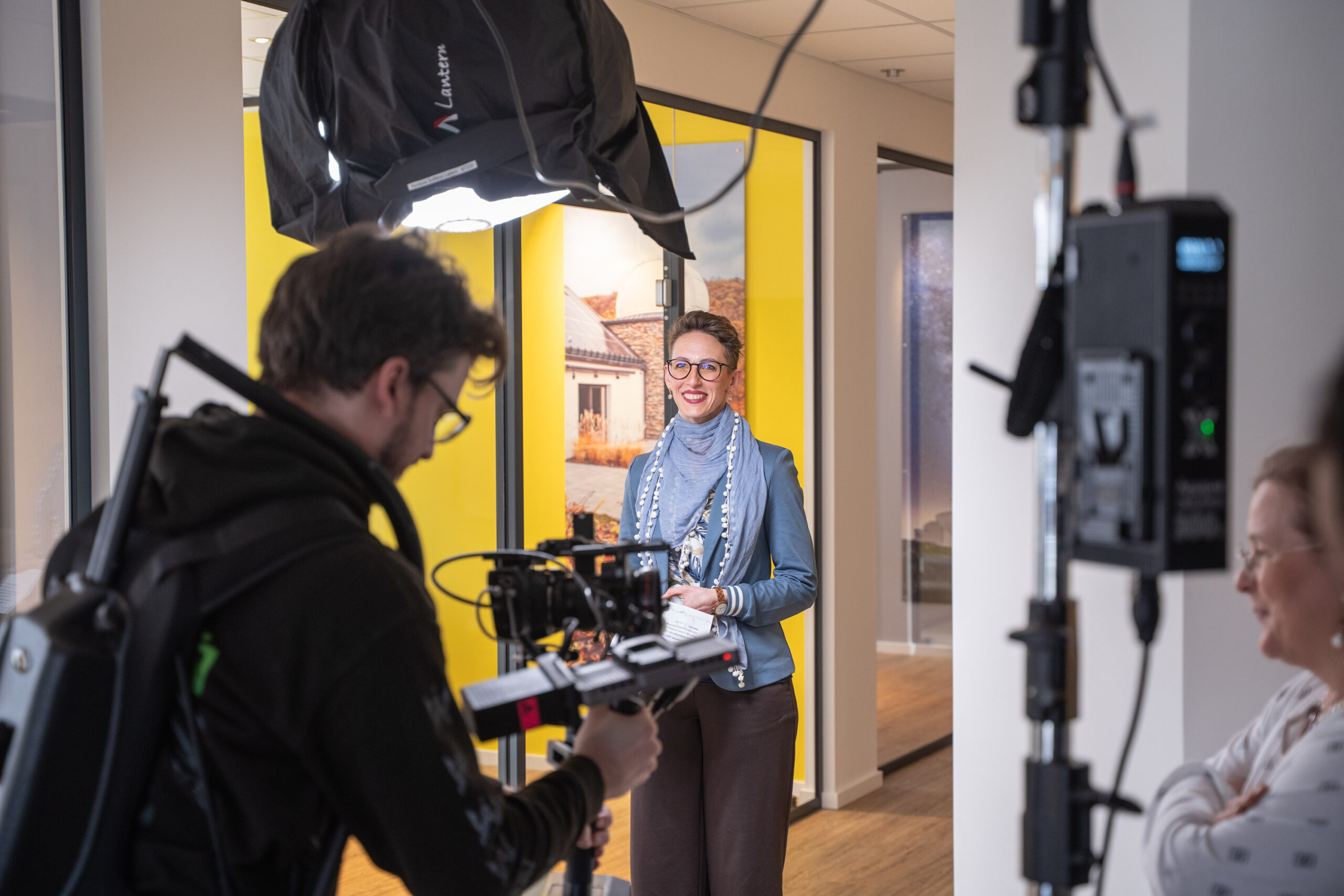
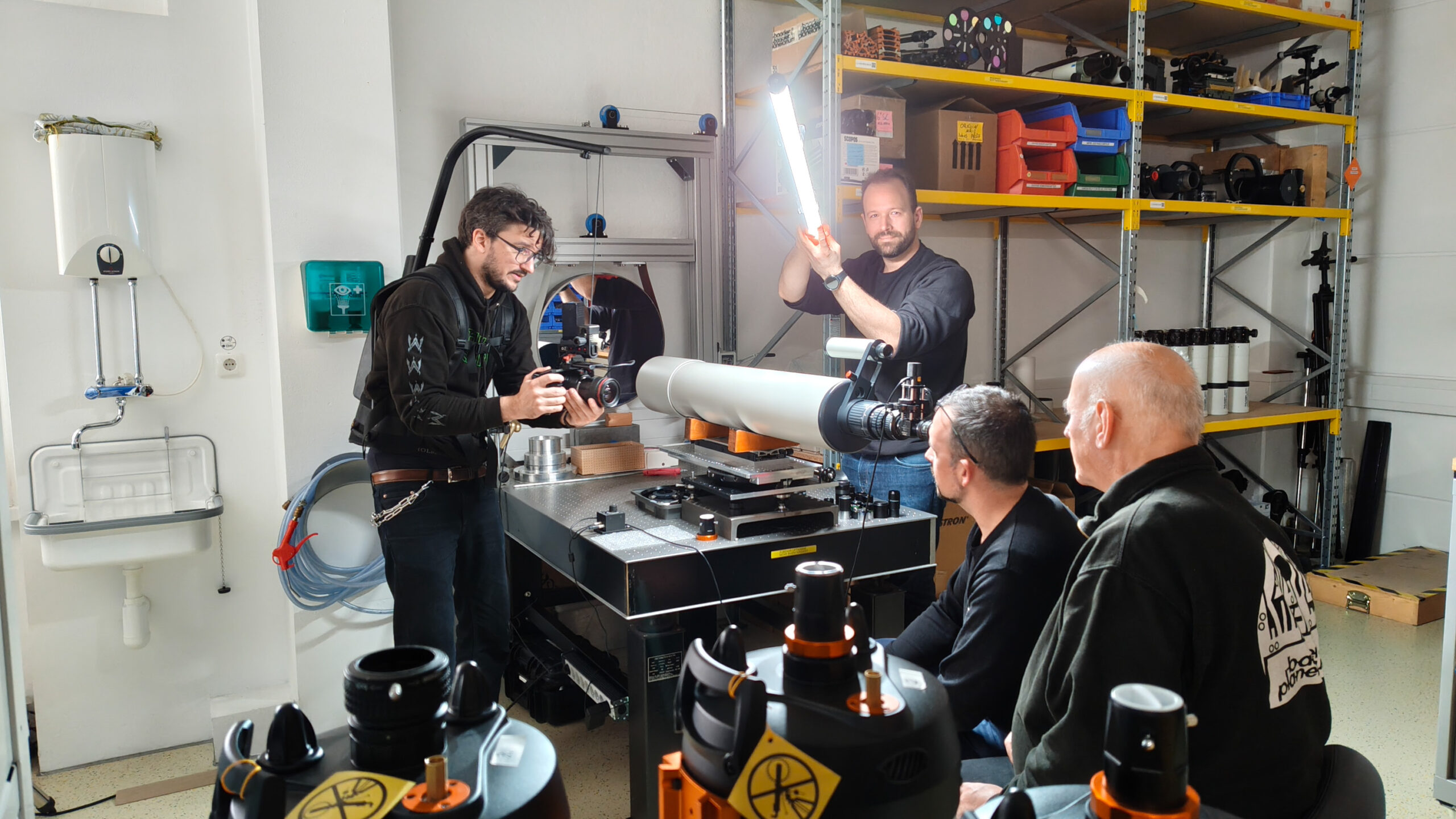
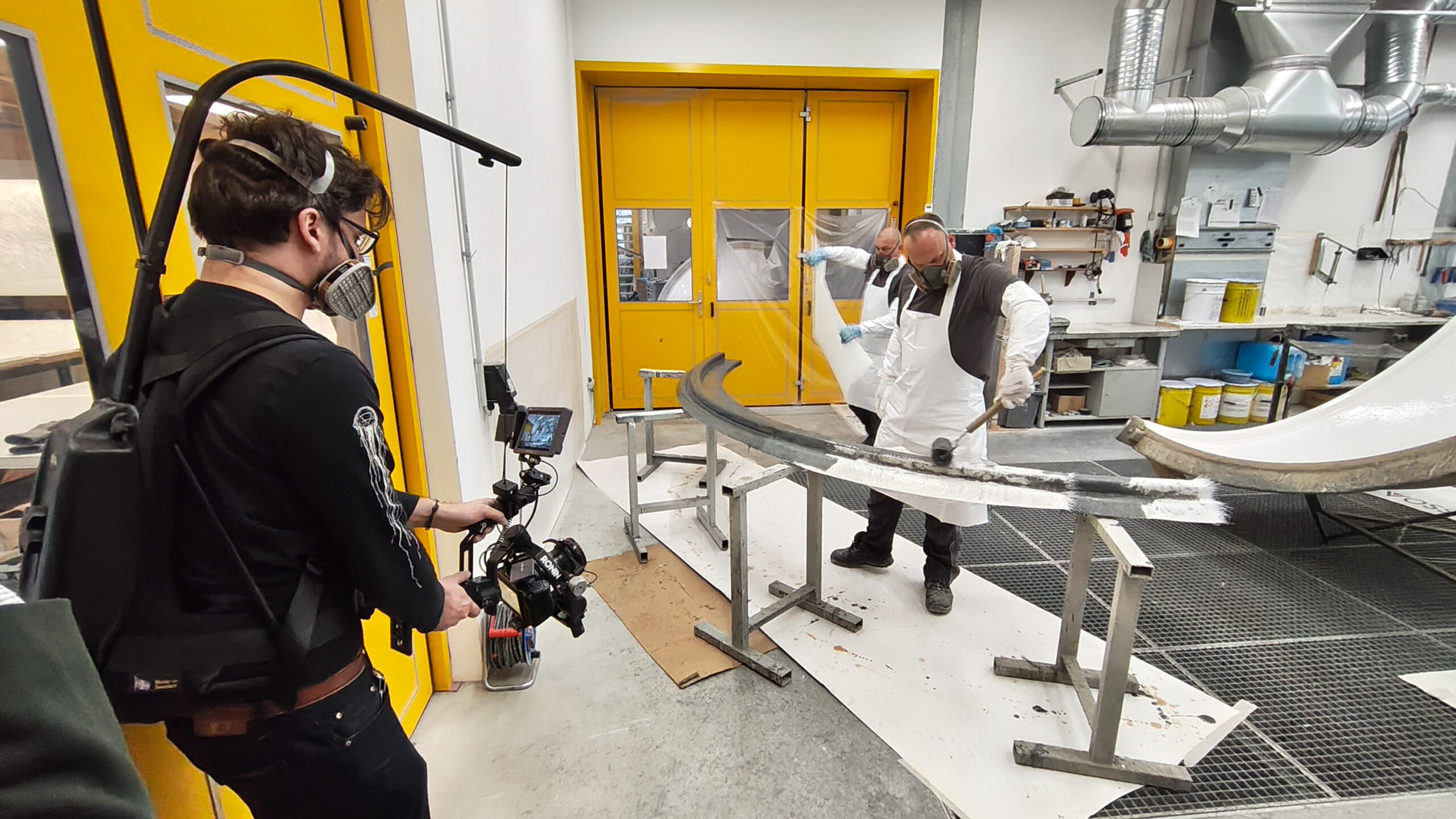
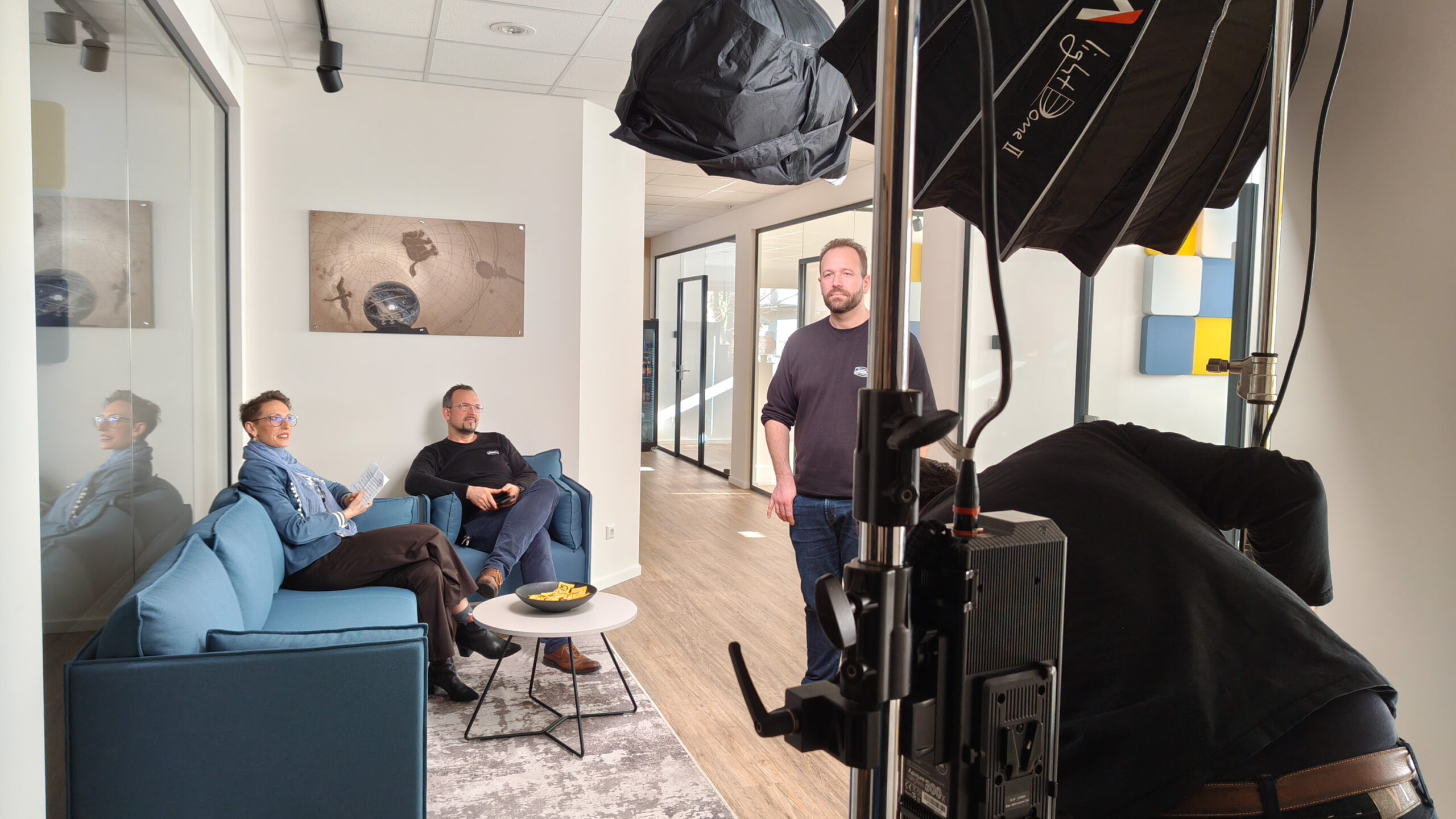
For the filming, Baader Planetarium was accompanied over several days in different areas. Filming took place, among other locations, in dome and CNC production, in the telescope integration center, in office and meeting situations, and during interviews with employees and management.
The following behind-the-scenes images show impressions from the shoot: camera and lighting setups, footage in the workshop and assembly areas, interview situations and moments from production. They provide an additional insight into the making of the film and show how many individual scenes, perspectives and work steps were ultimately brought together to create one overall picture.
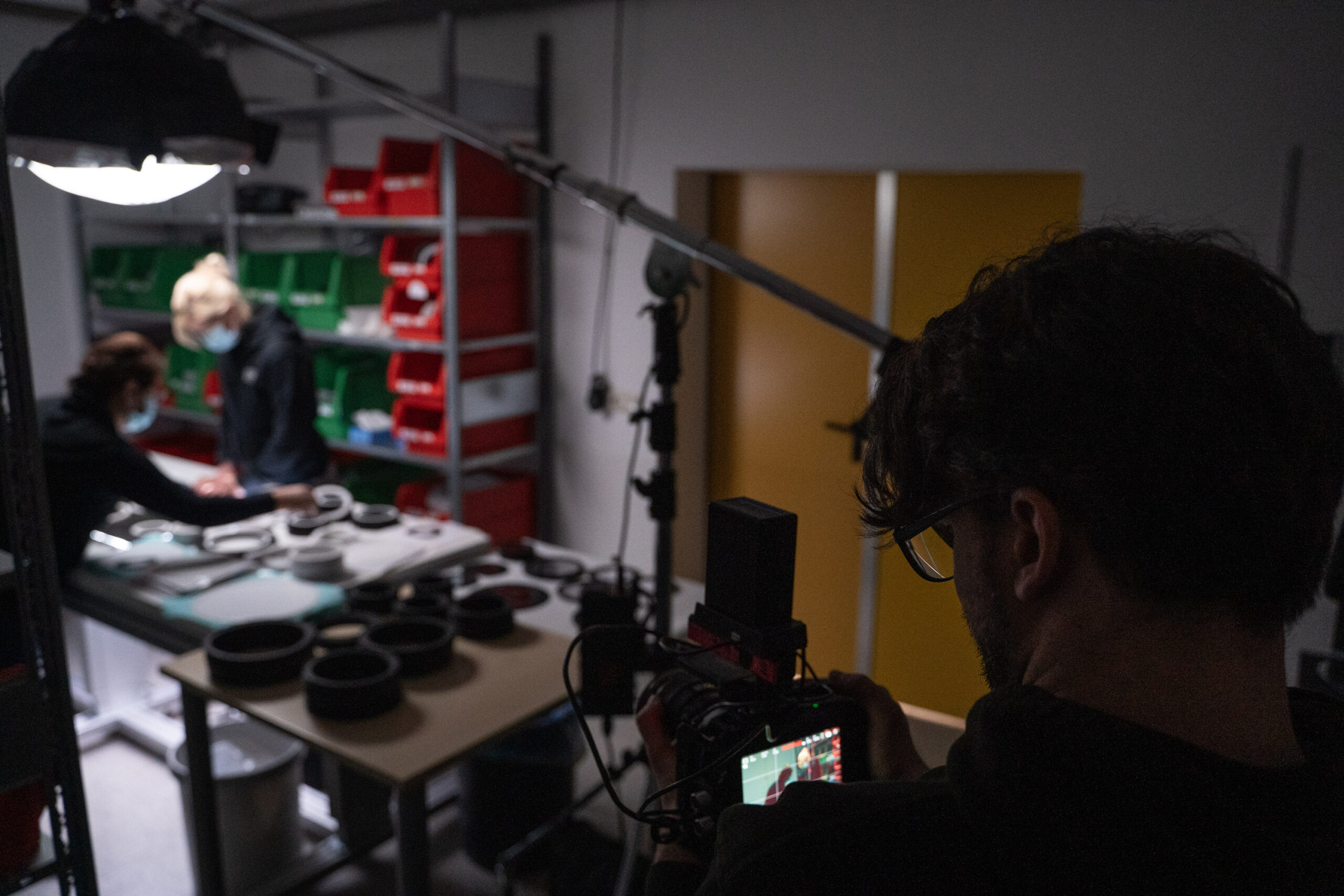
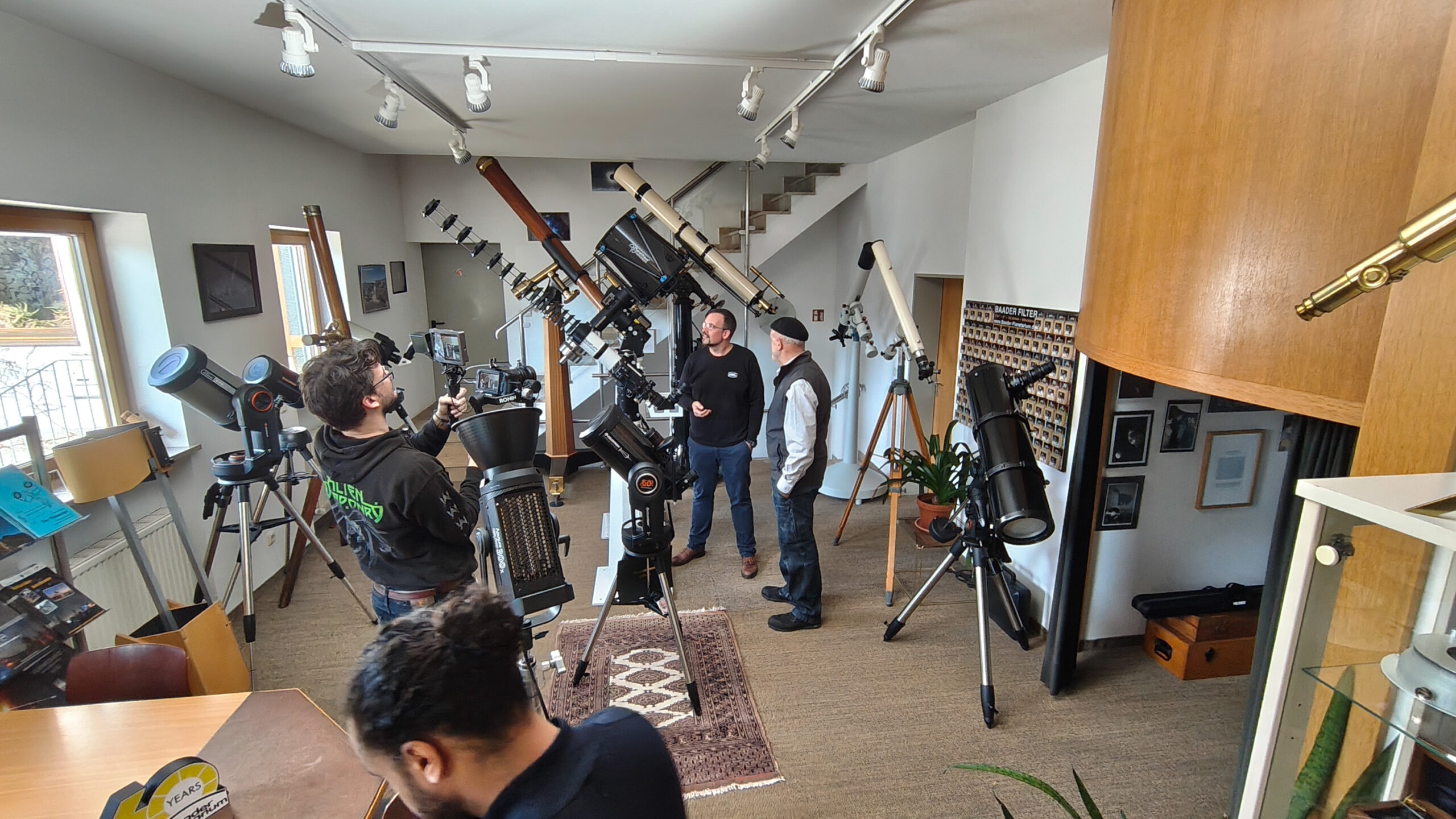
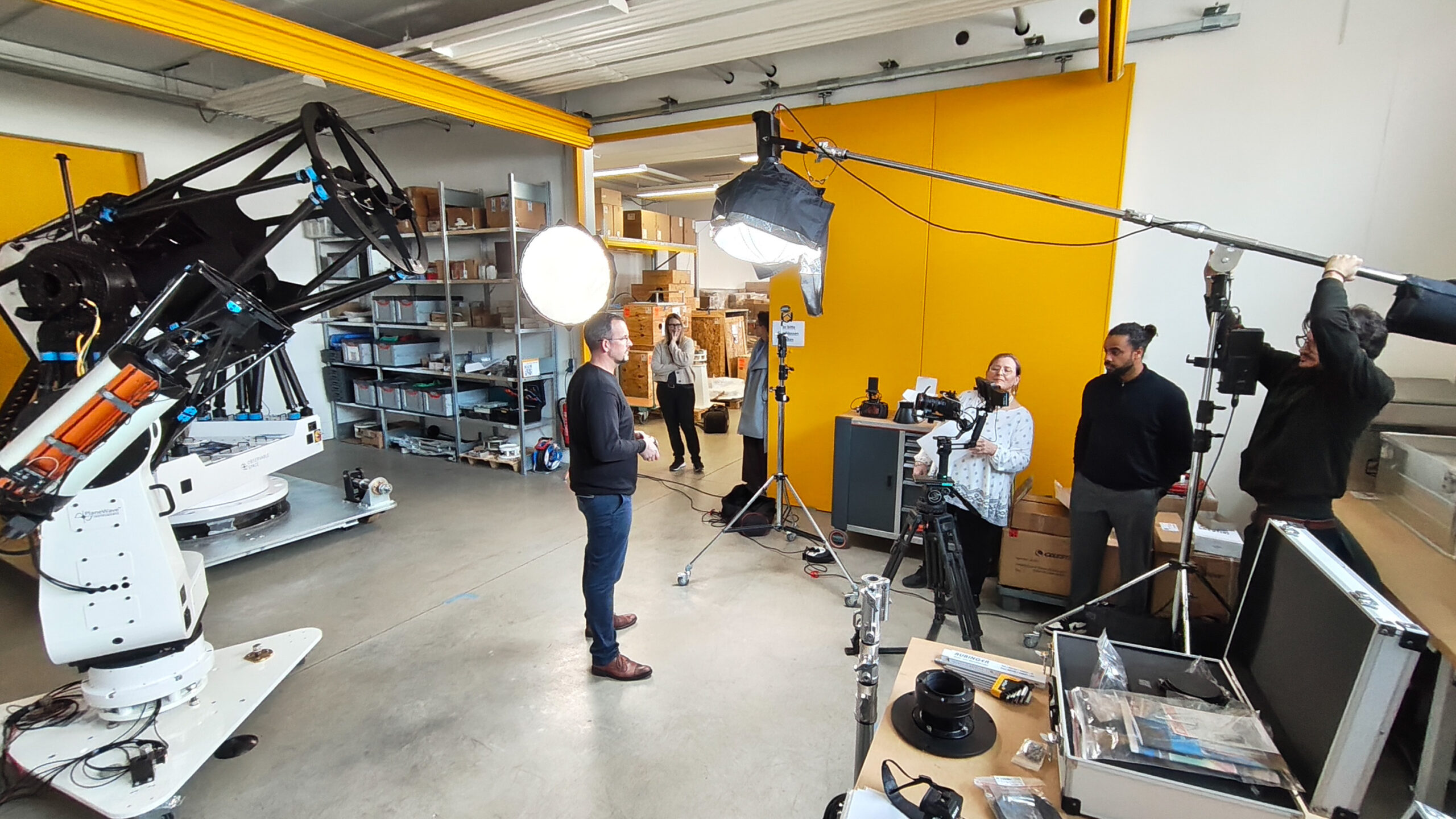
Many thanks to Ventisse

We would like to express our sincere thanks to the film crew and the production company Ventisse – creative agency for film & music for their professional cooperation, careful preparation and execution of this project. The film shows Baader Planetarium up close – technically, authentically and with an eye for the people who shape the company.
Watch the new corporate film now and gain insight into development, production, integration and teamwork at Baader Planetarium.
A look into the working world of Baader Planetarium: To mark the company’s 60th anniversary, the new corporate film shows development, production, integration and teamwork at the Mammendorf site – from precision components to complete observatory systems.

Coming Soon: FFC All-in-One T-2 Set – 3–4x magnification for 1¼" and T-2 cameras
- FlatField Converter (FFC) All-in-One Set with apochromatic, multi-coated lenses
- Preconfigured for 3-4x magnification
- Variable setting of the magnification, designed for 3x - 8x (2,5x-15x possible)
- Barlow lens with four lenses – two of them made of real Fluorite (CaF2) – in two cemented
elements. - Flat image, designed for 90mm image diameter at f/8 and sharpness without compromises
- Connection for T-2 threads and 2" focusers

FFC-Set contains:
- 2x [product sku="2456321"]
- [product sku="2458100"]
- [product sku="2458130"]
- [product sku="2458200"]
- [product sku="1508154"]
- [product sku="2458280"]
- 2x [product sku="1508155"]
- 2x [product sku="1508153"]
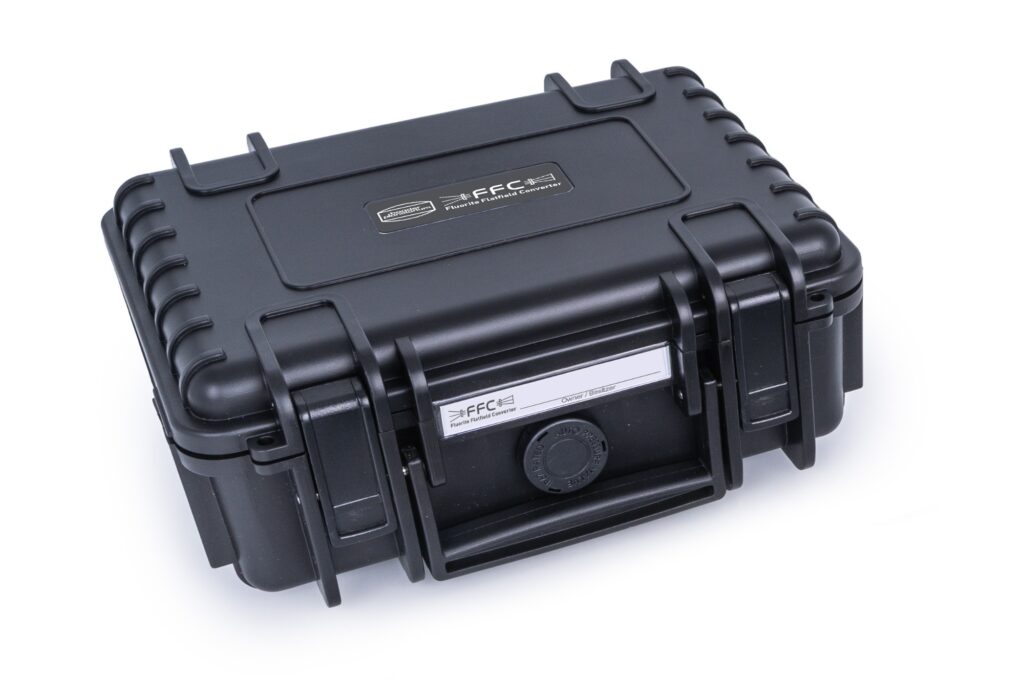
Coming Soon: Storage-Case (ABS) for FFC
- For safe storage and transport of the Fluorite Flatfield Converter (FFC) / 3x-8x and accessories
- Storage compartments for necessary accessories
- Included since 2026 in the scope of delivery of the [product sku="2458200"] and [product sku="2458281"]
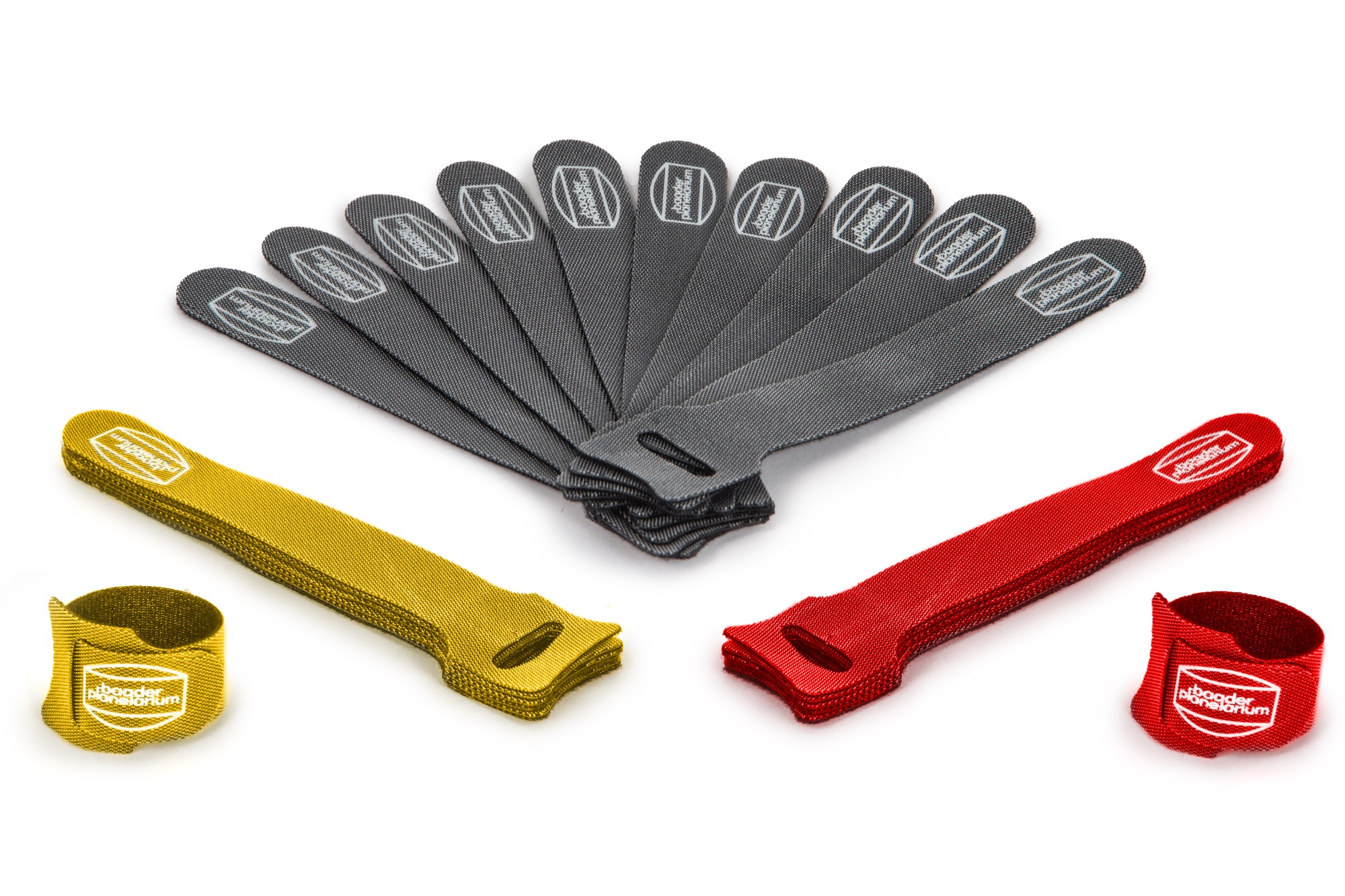
Now available: Cable Ties - Baader Design
- Hook-and-loop cable ties with Baader Planetarium logo
- Now with color coding for easy identification of different devices or systems
- Suitable length for typical cable setups on telescopes
- Reusable and reclosable
- Dimensions: 20 mm x 150 mm

Now available: Filter Crown Tool for 1¼" Baader Filter
- Tool for tension-free mounting and dismounting of hard-to-reach 1¼" Baader filters with milled grip crown.
- Suitable for all mounted Baader 1¼" filters with Low Profile (LPFC) or Ultra Low Profile (ULP) Filter Cell - fit not guaranteed for older filters. Not suitable for filters of other manufacturers without grip crown or with other/unknown mount diameters.
- The filter crown tool is made by3D printing. STL files for free download are available on the product site.
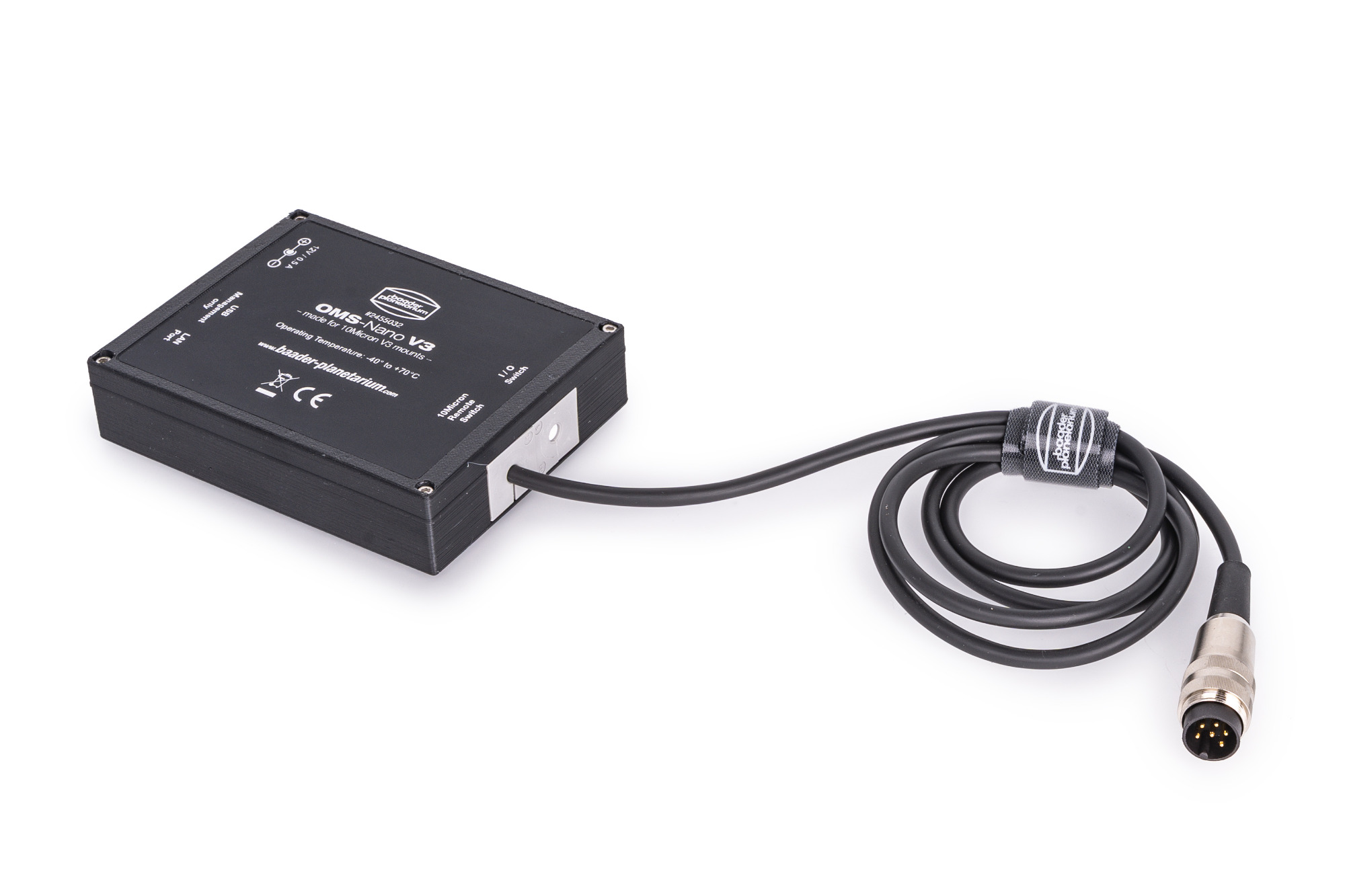
Now available: Baader OMS-Nano V3 – Remote Switch for 10Micron V3 Mounts
- Remote Switch OMS-Nano (Observation Management System) V3 used to turn your 10Micron mount, equipped with Control Box Version 3, on and off from remote
- With 1m connection cable, 3m long LAN-cable and 2m long USB-cable as well as 12V/100-240V Power Supply
- Incl. web interface and manual
- Successor to [product sku="2455031"]. Since April 2025, all 10Micron mounts have been supplied as standard with the Control Box Version 3. 10Micron has revised the hardware of the electronic control box
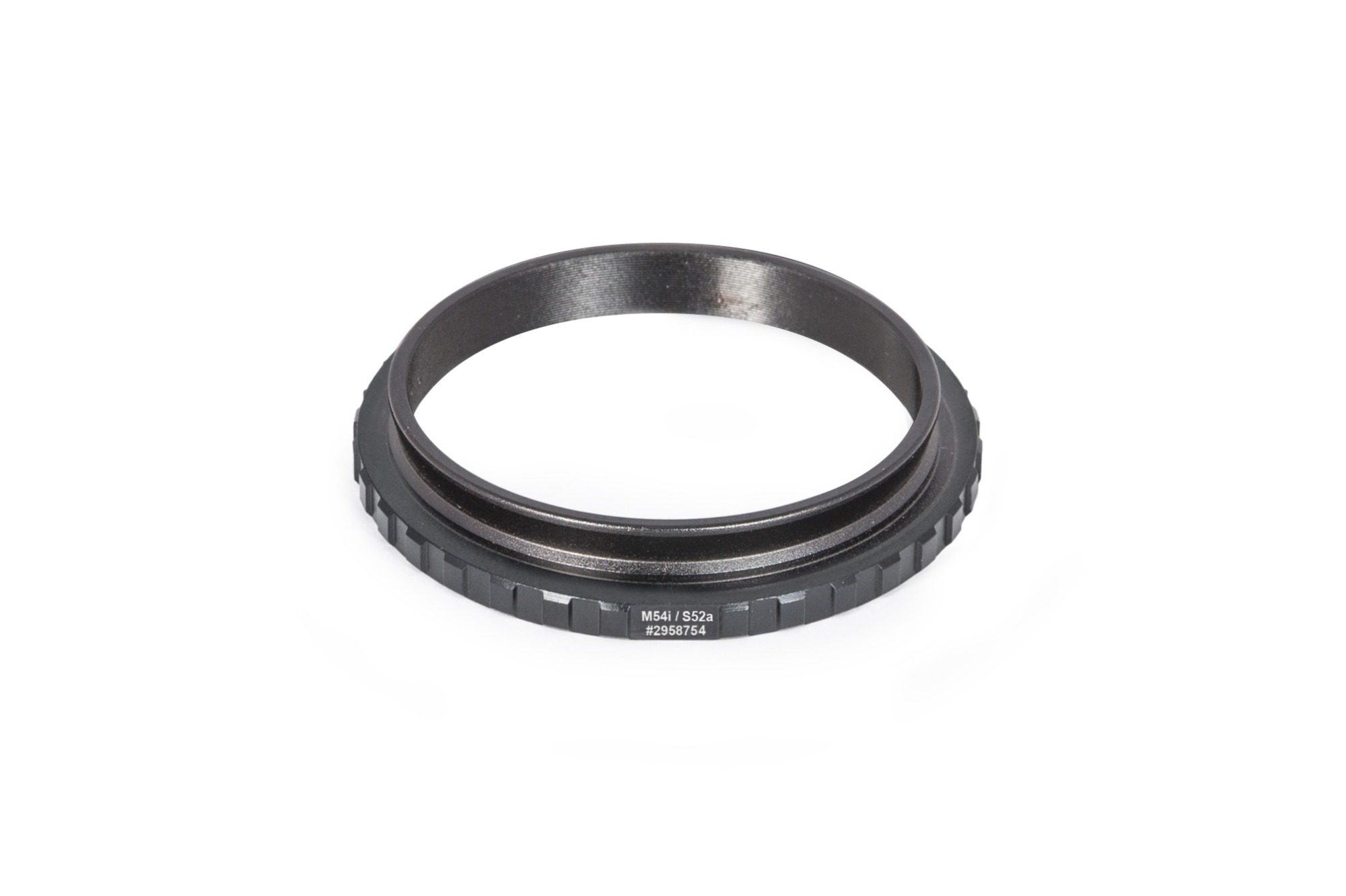
Now available: Adapter M54i to S52a
- With the S52a/M54i adapter, all Baader Wide T-rings can be adapted directly to an M54 male thread. This makes it possible to screw your camera securely onto telescopes or accessories with an M54 connection while maintaining the largest possible clear aperture.
- The S52a/M54i adapter fits all S52 dovetail clamps (D52) - for example our [product sku="2956252"] or the [product sku="2958550"]
- Camera-side: S52 dovetail
- Telescope-side: M54x0,75 female thread
Coming Soon: FFC All-in-One T-2 Set – 3–4x magnification for 1¼” and T-2 cameras FFC-Set contains: Coming Soon: Storage-Case (ABS) for FFC Now available: Cable Ties – Baader Design Now available: Filter Crown Tool for 1¼” Baader Filter Now available: Baader OMS-Nano V3 – Remote Switch for 10Micron V3 Mounts Now available: Adapter M54i to […]

Baader Planetarium announces the appointment of Auriga S.r.l as the official distributor for the Italian market.
As part of this strategic partnership, CEO Johannes Baader personally traveled to Italy to finalize the collaboration with the Auriga team on site. This direct exchange underlines the importance of the Italian market for Baader Planetarium as well as the long-term commitment of both companies.
Founded in 1983 and based in Milan, Auriga is one of the key players in the Italian market for optical instruments and astronomical accessories. As one of the country’s most important distributors, the company offers a nationwide dealer network, extensive technical expertise, and a strong infrastructure including its own warehouse and professional after-sales service.
“Italy has always been a strategically important market with great potential for us. With Auriga, we have gained a highly experienced and well-positioned partner who knows the market inside out and shares our high standards of quality and service. This partnership enables us to support our customers locally in a more direct and efficient way and to sustainably expand our presence in the region.”
- Johannes Baader, CEO of Baader Planetarium
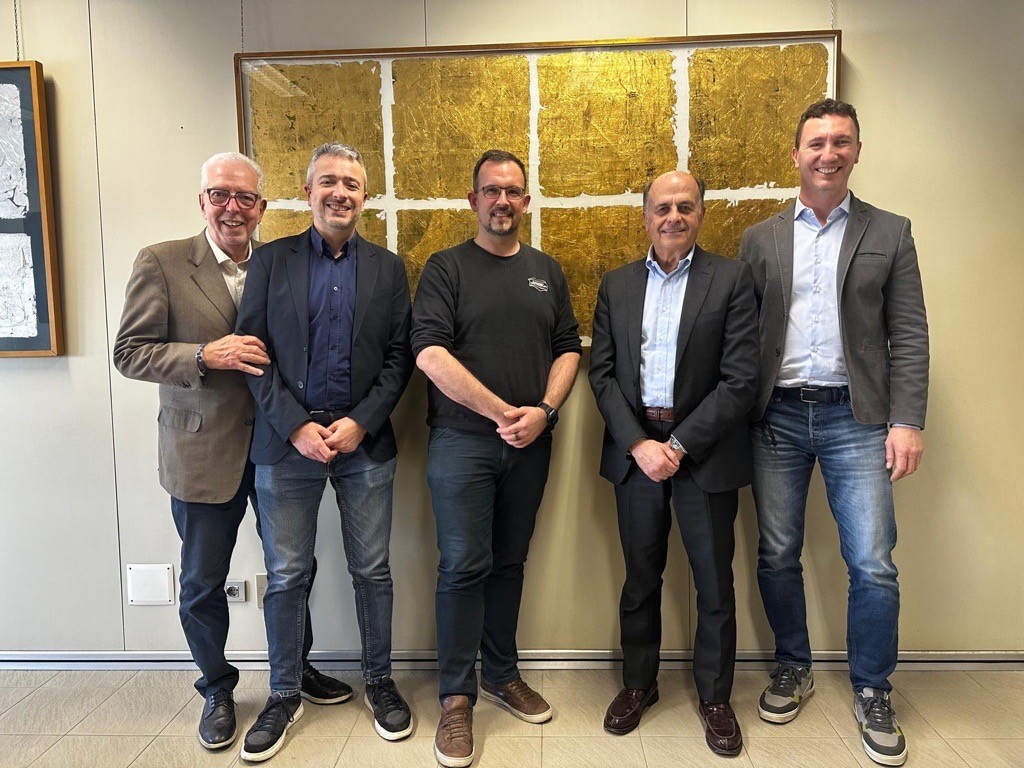
The collaboration has been prepared through intensive coordination and personal meetings and forms the foundation for long-term and sustainable development in the Italian market.
Auriga will take on a central role in supporting and further developing the Italian dealer network.
With this partnership, Baader Planetarium is strengthening its international distribution structure and sending a clear signal for further growth in Europe.
About AURIGA:
Founded in 1983 and headquartered in Milan, Auriga Srl has been a specialized reference point for the distribution of optical and astronomical instruments in Italy and Southern Europe for over forty years. Its extensive commercial network, the technical expertise gained over time, and a logistical infrastructure with warehouse and professional after‑sales service make Auriga an ideal partner for leading brands such as Baader Planetarium.
Baader Planetarium announces the appointment of Auriga S.r.l as the official distributor for the Italian market. As part of this strategic partnership, CEO Johannes Baader personally traveled to Italy to finalize the collaboration with the Auriga team on site. This direct exchange underlines the importance of the Italian market for Baader Planetarium as well as […]
In the 1960s, when the first crewed Moon landing was being promoted in the USA and the so-called “Space Age” began, a special idea emerged in Munich that would lay the foundation for today’s success story: Claus Baader (born 1924 in Schliersee, Germany), originally a journalist and photographer, founded Baader Planetarium KG together with his wife Inge Baader, driven by his love of physics and inspired by the curious questions of his son Thomas – yet not least by his foresight regarding the growing public interest in all aspects of spaceflight and celestial mechanics within the Solar System.
However, the big vision began small: as a basement company, where development, manufacturing, and assembly of the company’s first product were carried out by hand in the tiniest of spaces.
1966: The Baader School Planetarium
Patented worldwide, didactic, internationally recognized
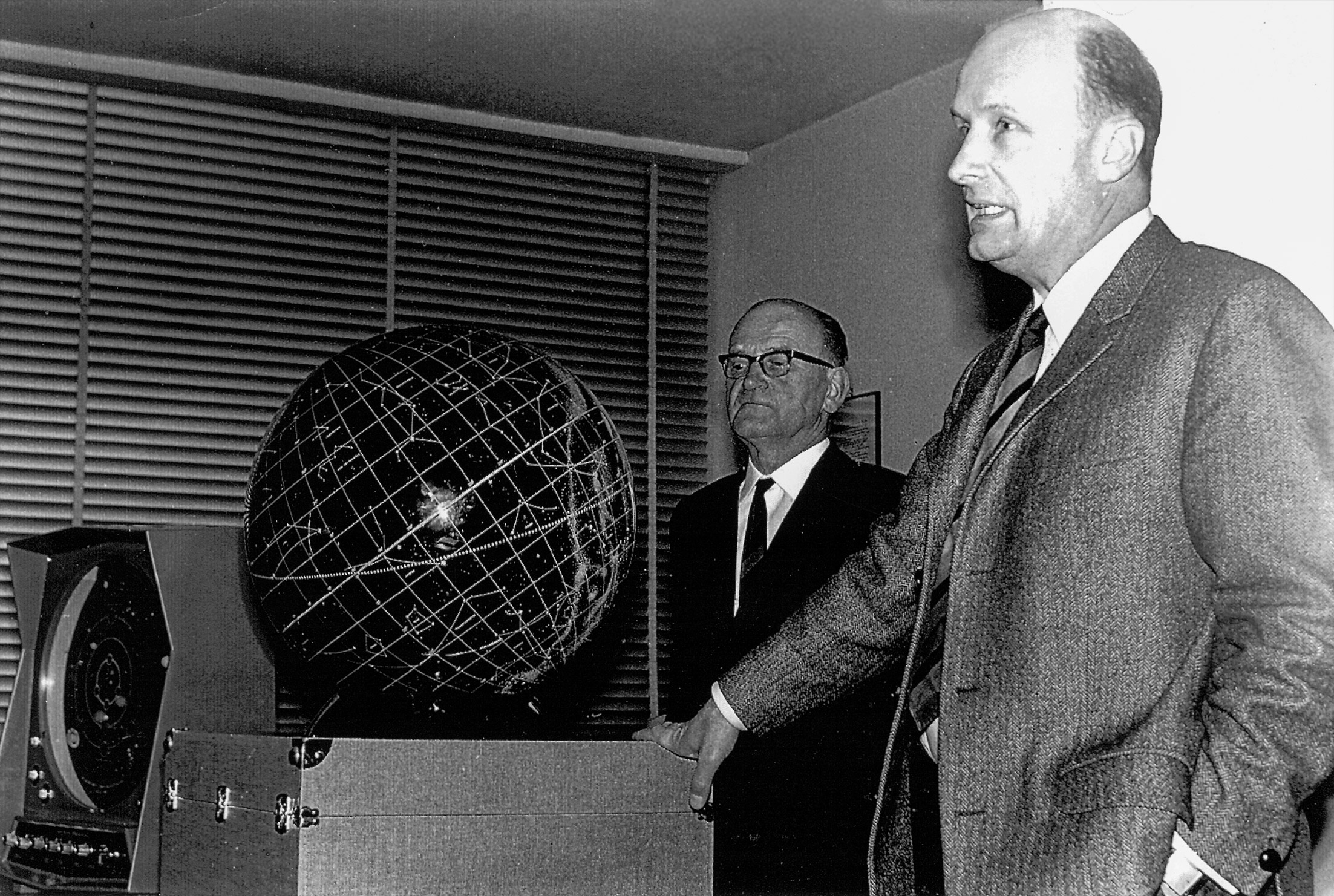
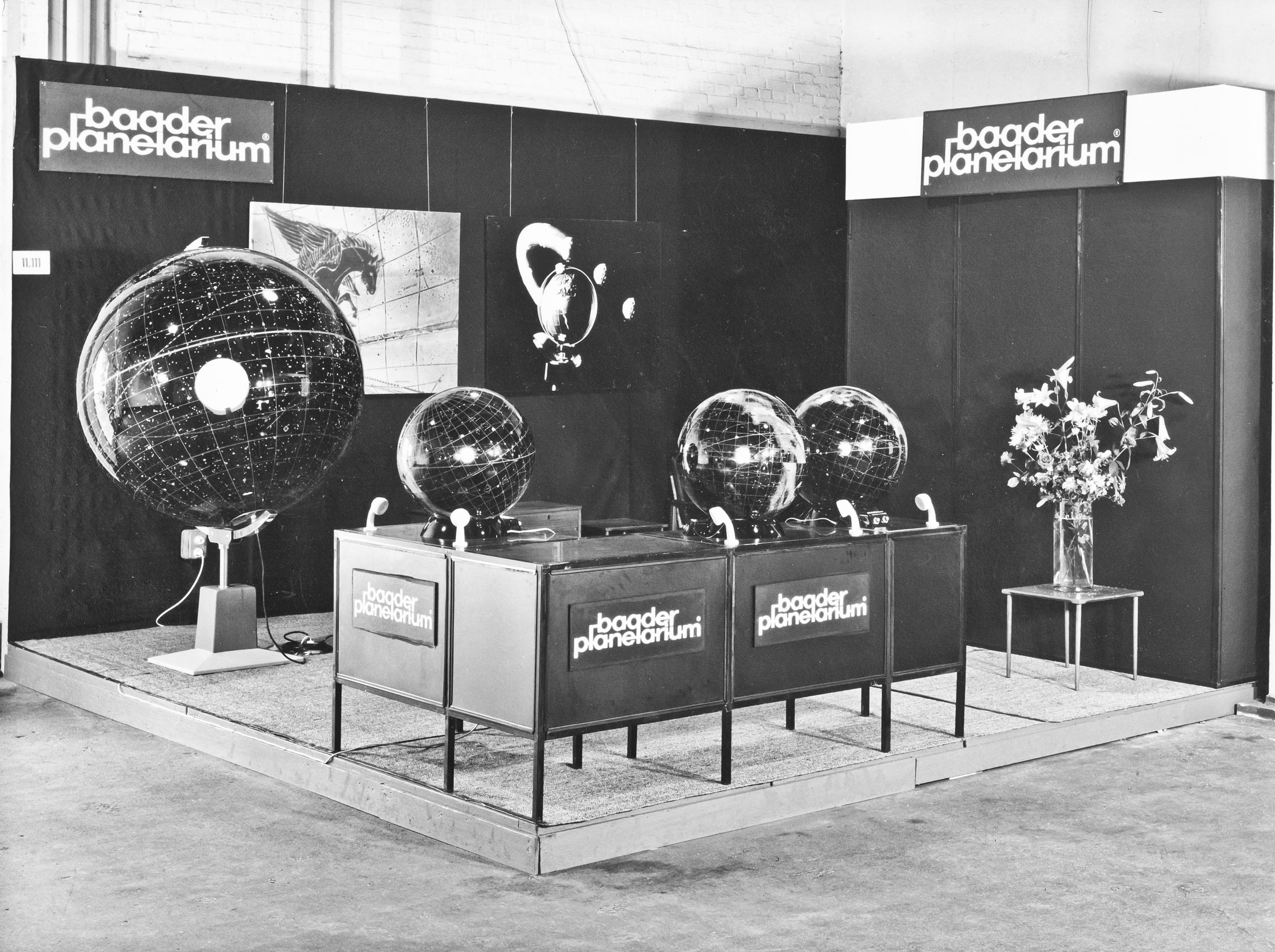
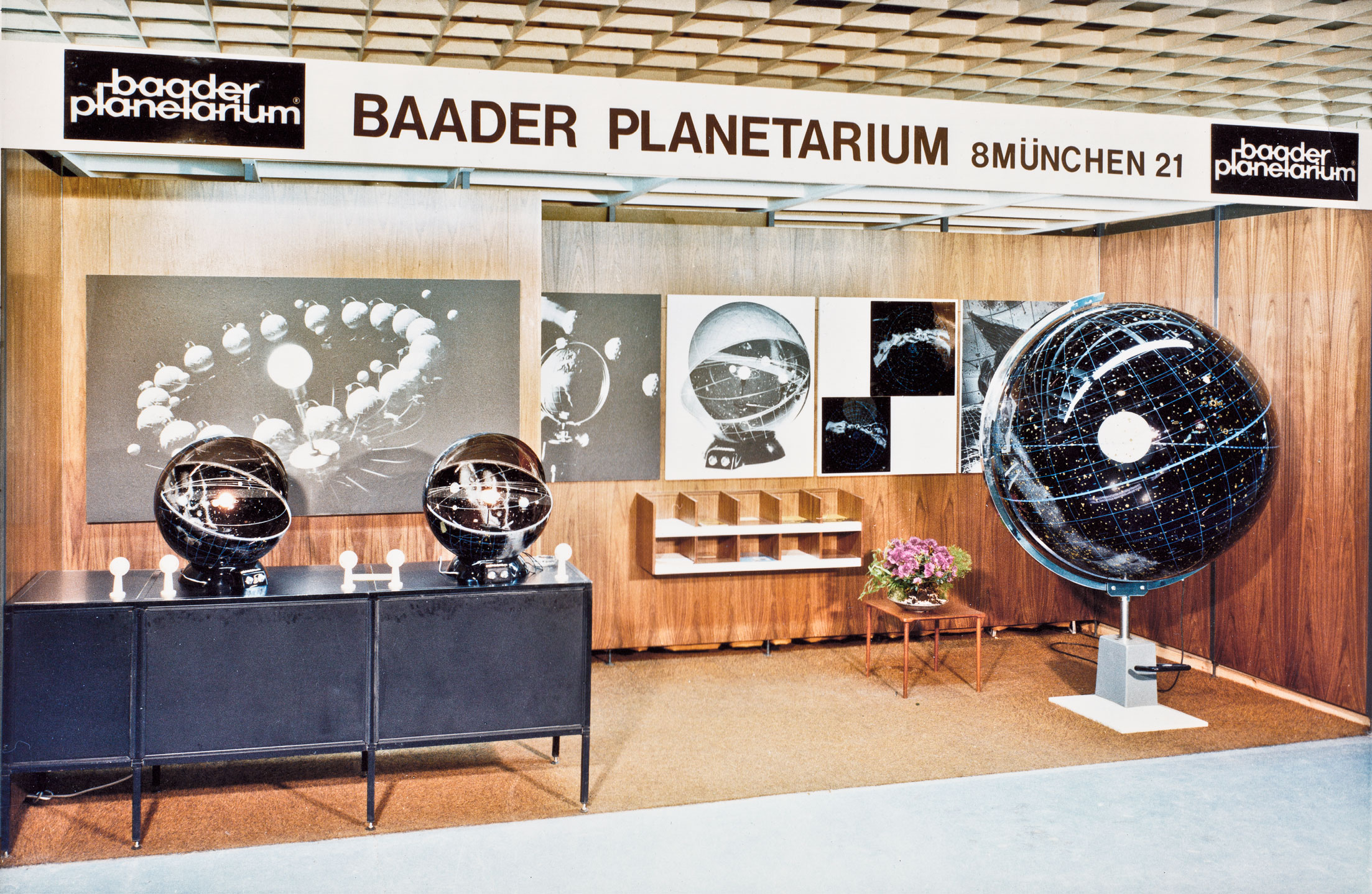
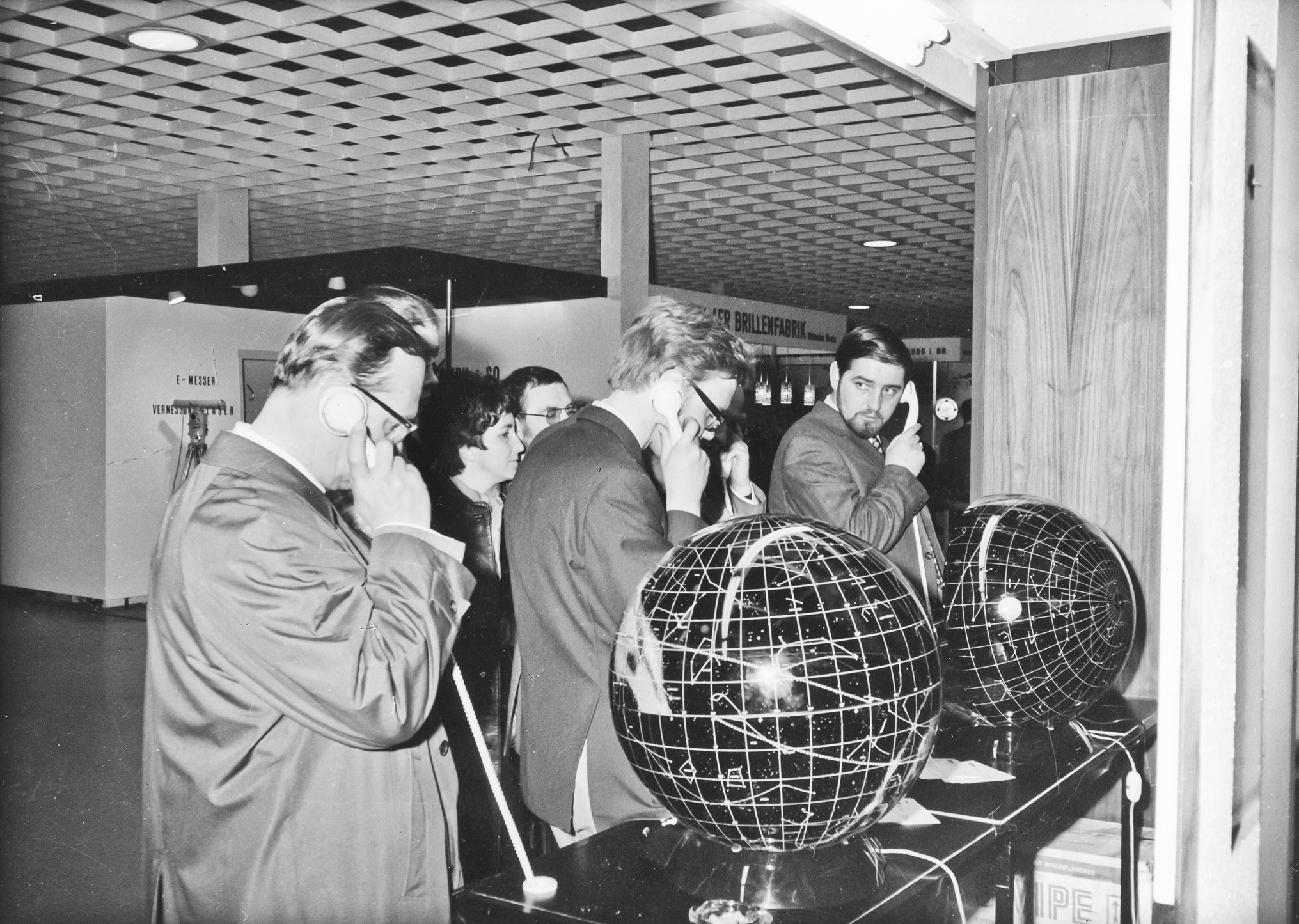
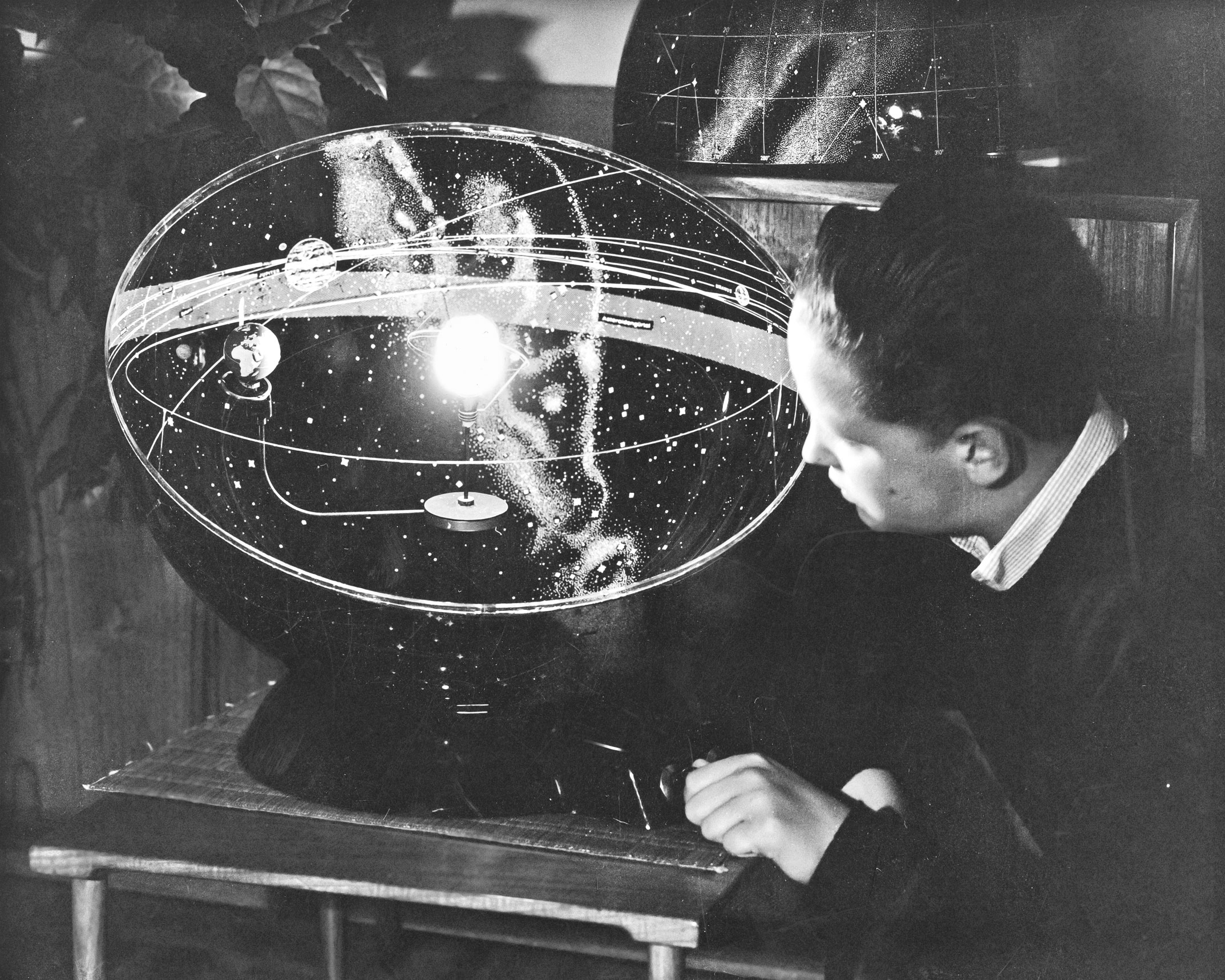
In the very year it was founded, the first product came onto the market: the Baader School Planetarium, equipped with worldwide patents and developed as a teaching device intended to foster a deeper understanding of celestial mechanics – i.e., to do more than just “show stars.”
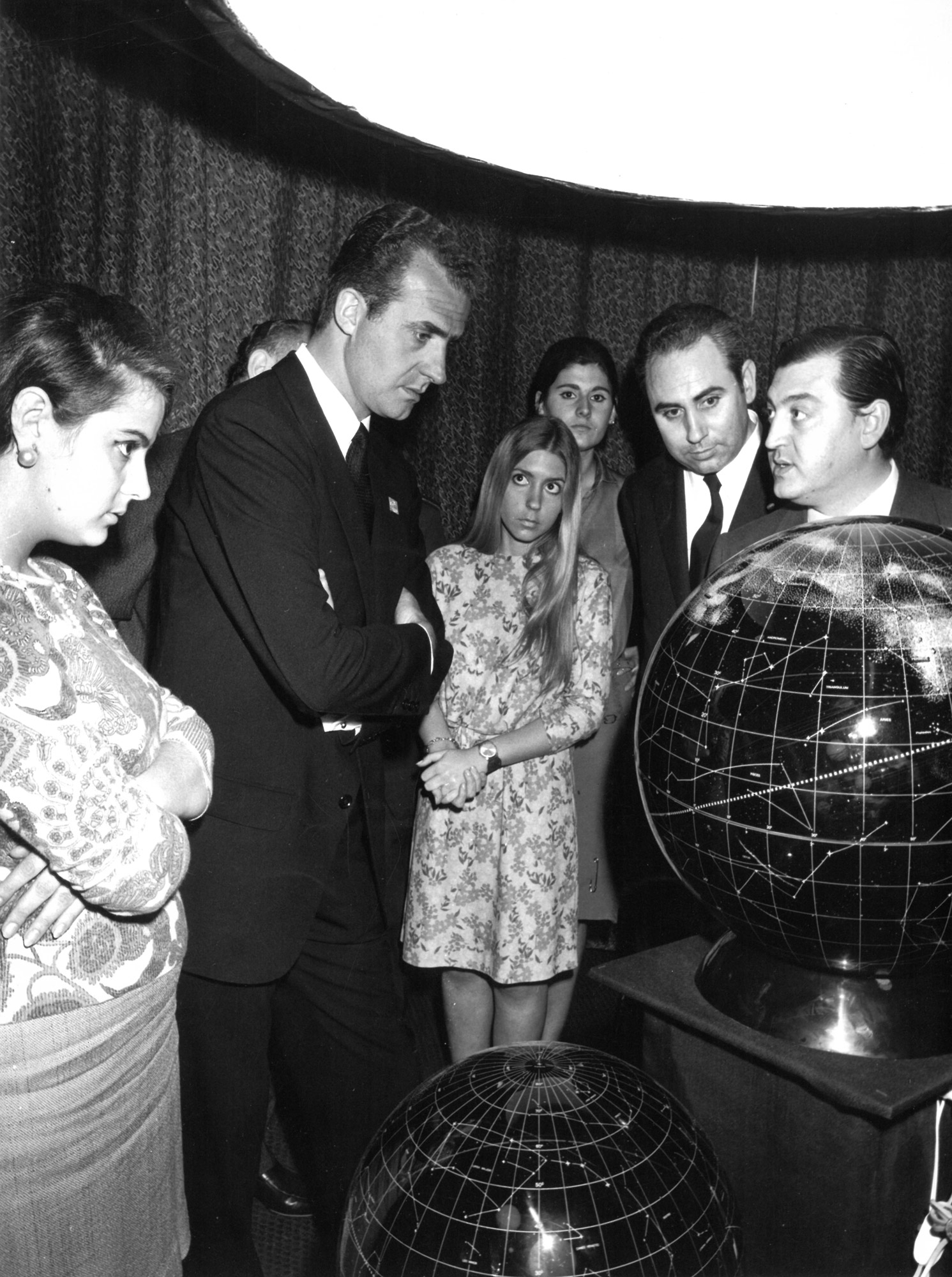
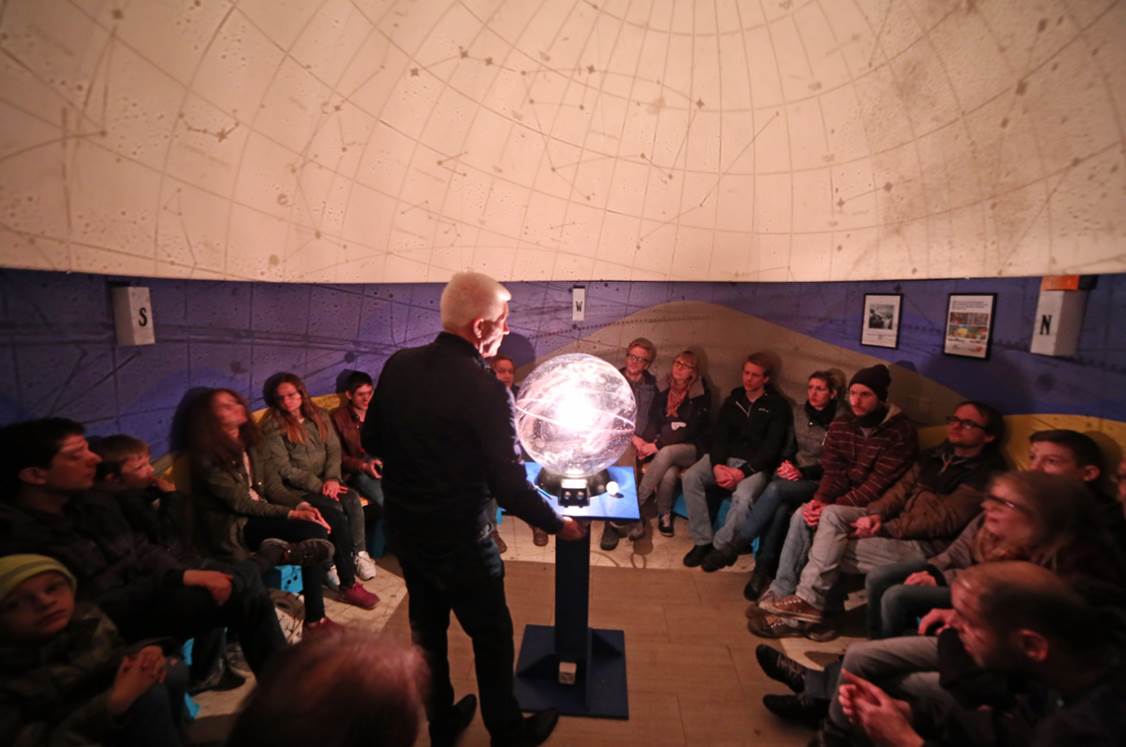
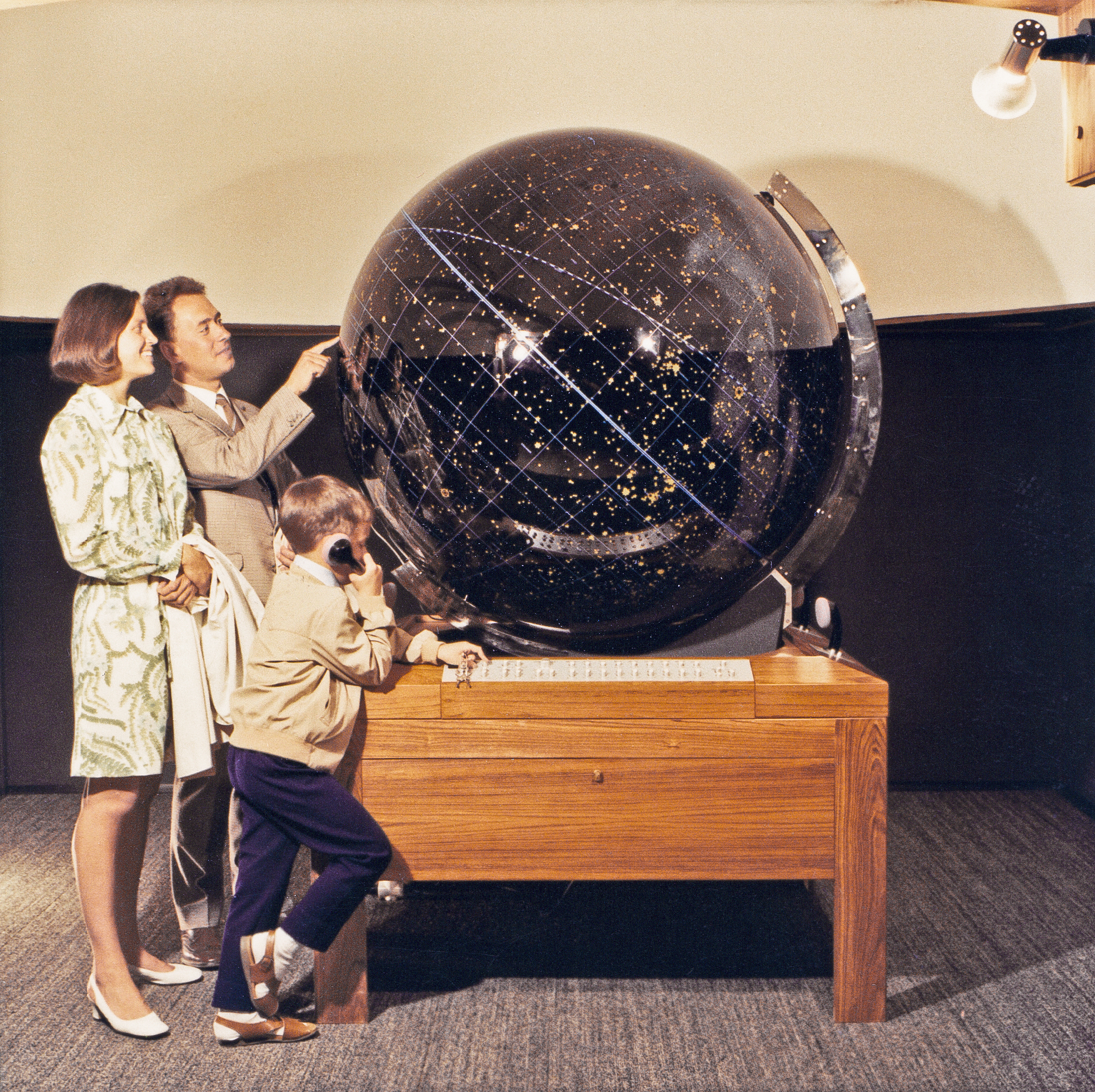
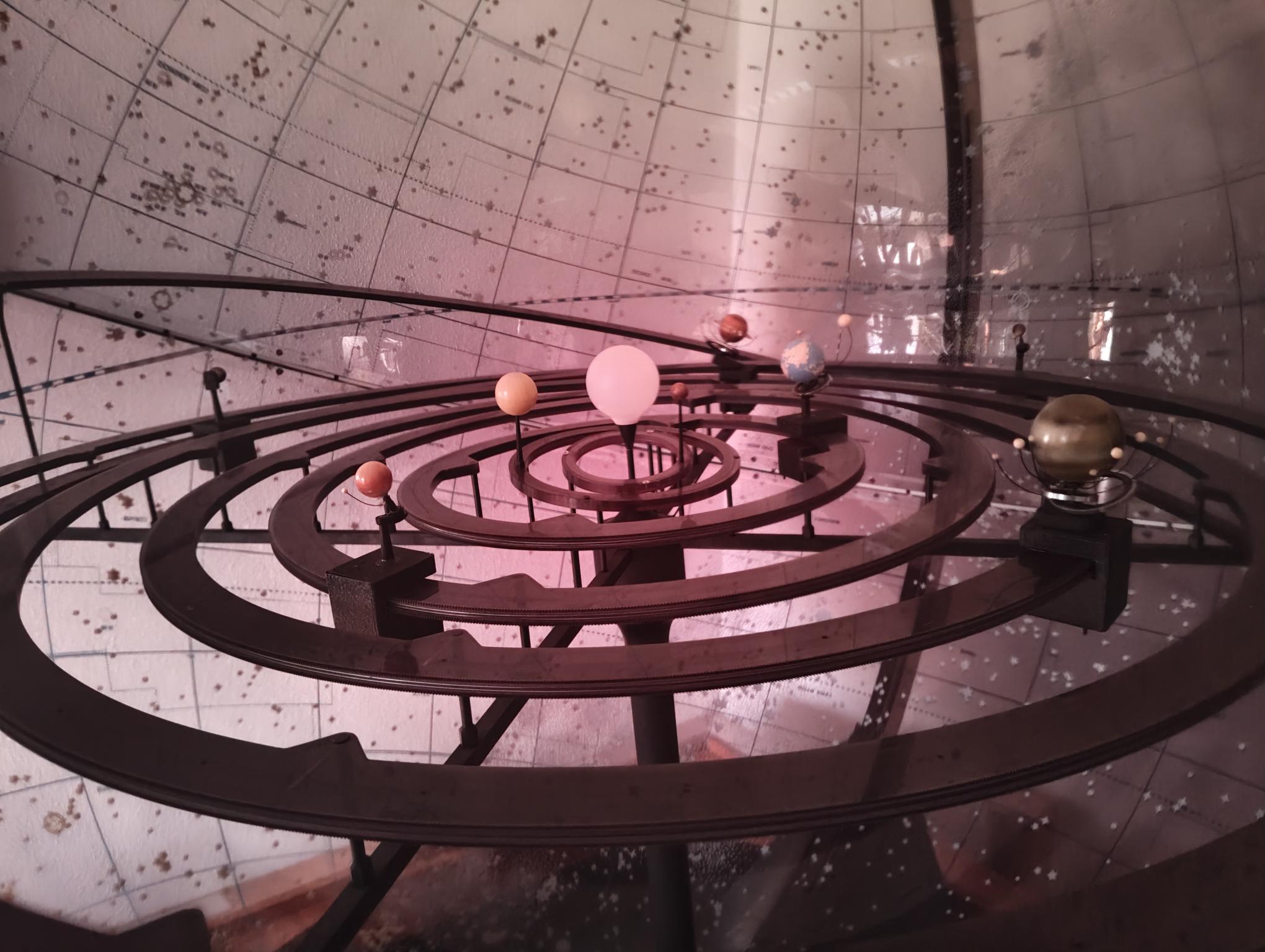
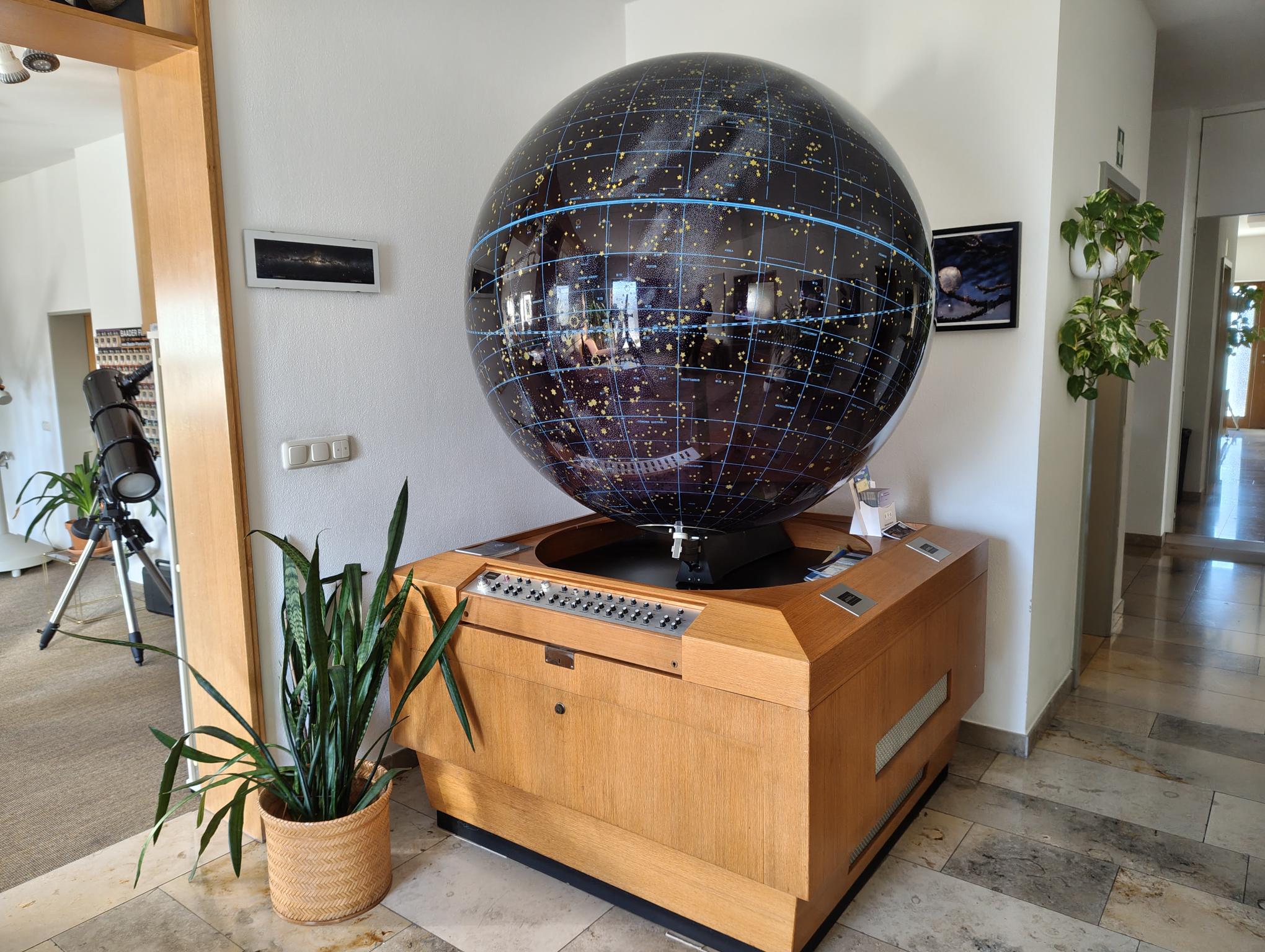
The Baader Planetarium has remained unchanged since 1966 and consists of a semi-transparent Ø50 cm star globe, printed identically on the inside and outside. Inside, a classically designed, electrically driven tellurium/orrery operates – a mechanical model of the Earth–Moon system that makes motions within the planetary system comprehensible. The special feature: the starry sky and the moving Earth–Moon system can be projected simultaneously – a didactic approach that made spatial relationships immediately understandable.
Many generations of teachers used the Baader School Planetarium with great enthusiasm, because as the only portable astronomical teaching device it could make the Sun-Earth-Moon system immediately understandable to students through the light-transmissive star globe illuminated from within. Students saw the Solar System through the front, transparent half of the globe in front of the correctly oriented, dark starry sky, since the rear half of the globe reflects the light. Numerous auxiliary constructions – among them various comet orbits – were built by enthusiastic teachers themselves; one such add-on was actually produced as a series product: the Zeuner lens, named after its inventor. It served to project the apparent motion of the Sun onto the ecliptic line of the star globe, enabling the heliocentric design of the device to also support geocentric perspectives.
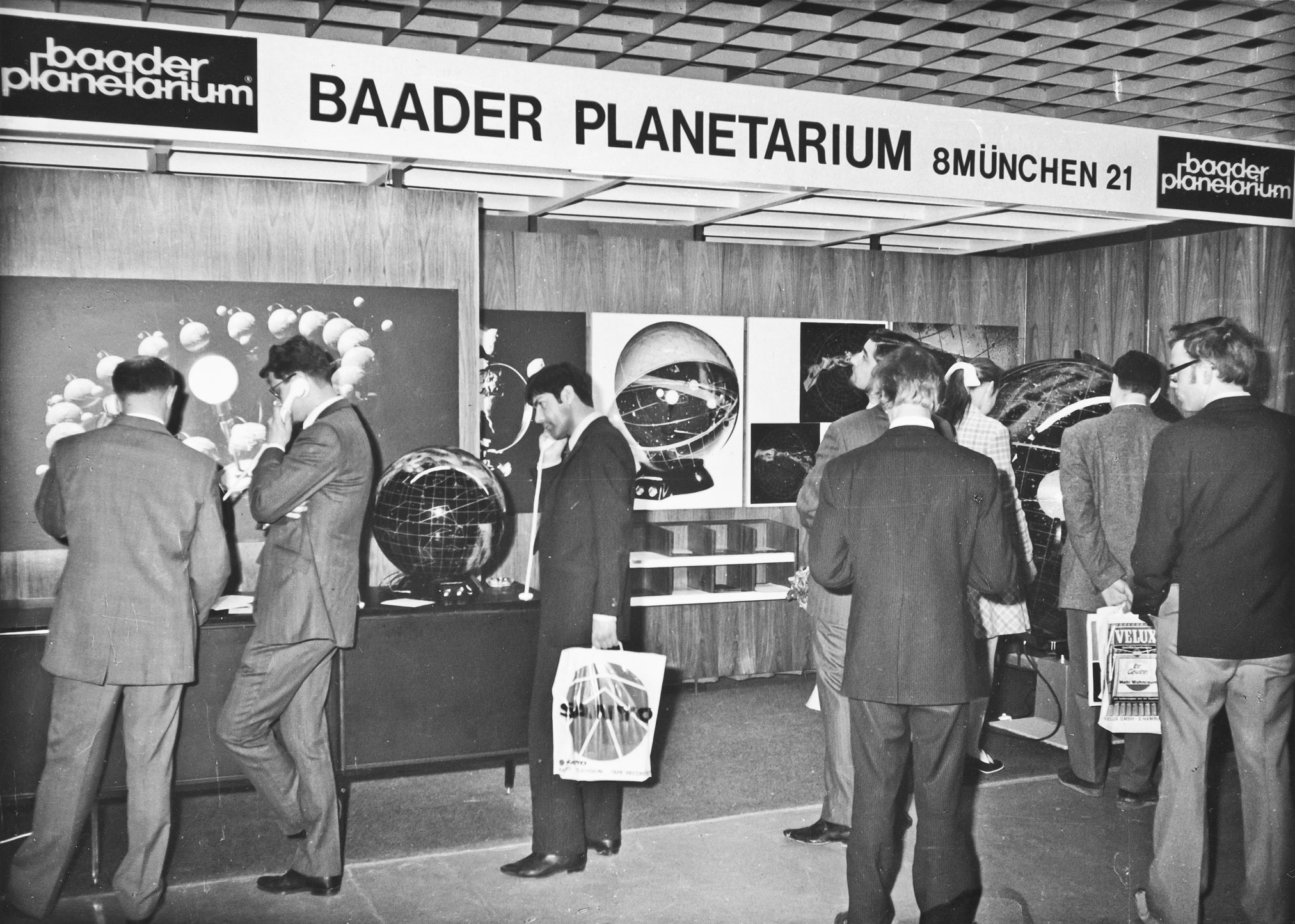
The Baader Planetarium did not go unnoticed: in 1967, Harvard astronomer Owen Gingerich praised the solution in Sky & Telescope as “the most ingenious orrery ever produced in series.” In the decades that followed, more than 15,000 devices were used at schools and universities worldwide—and the name Baader Planetarium became well known in the world of astronomical education.


1968: The “big brother” – the Baader Giant Planetarium
A masterwork of craftsmanship
Only a short time later, the School Planetarium gained a big brother: the Baader Giant Planetarium . It was designed as a museum-grade orrery – including playable instructional lectures – and set mechanical benchmarks: nine planets moved around a model Sun on accurately mounted and finely geared orbits up to 1.2 m in size. Each planet received its own highly complex precision gearbox and a stepper motor; even the moons known at the time moved along at the correct orbital speeds.
Surrounding this system was a motor-driven celestial sphere with a diameter of 1.3 m. The effort involved was accordingly substantial: the Giant Planetarium was handcrafted – a horologically and technically extremely demanding masterpiece, delivered in small numbers to universities and museums worldwide. However, the extremely elaborate mechanical complexity and the resulting price prevented serial production.
Among the locations where this last large so-called orrery was in operation for years were the Deutsches Museum and the University of Bamberg, as well as schools and other museums, and Qatar University (with one device each for the separately run girls’ and boys’ universities).



From 1970: Construction of projection domes
Materials expertise and first milestones
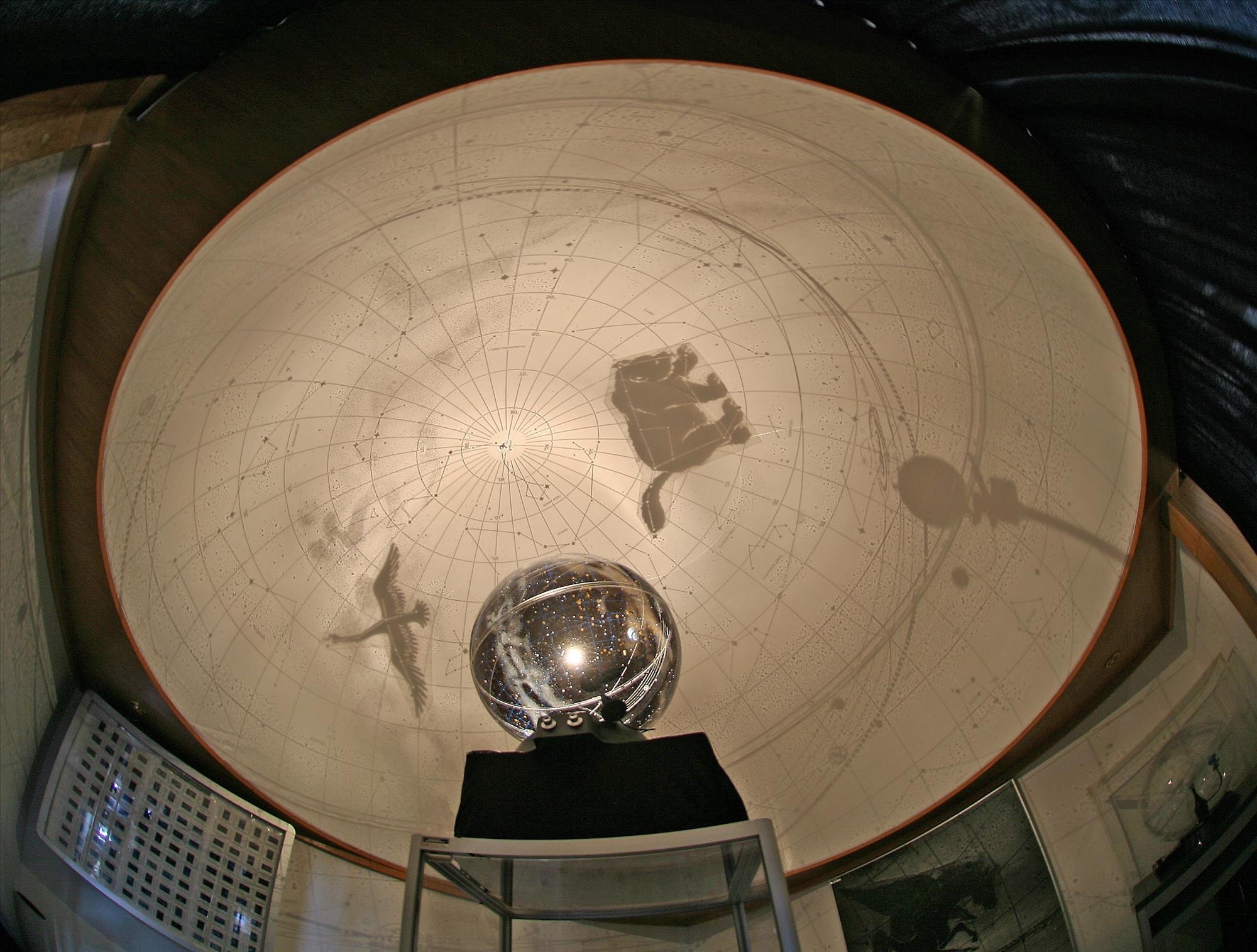
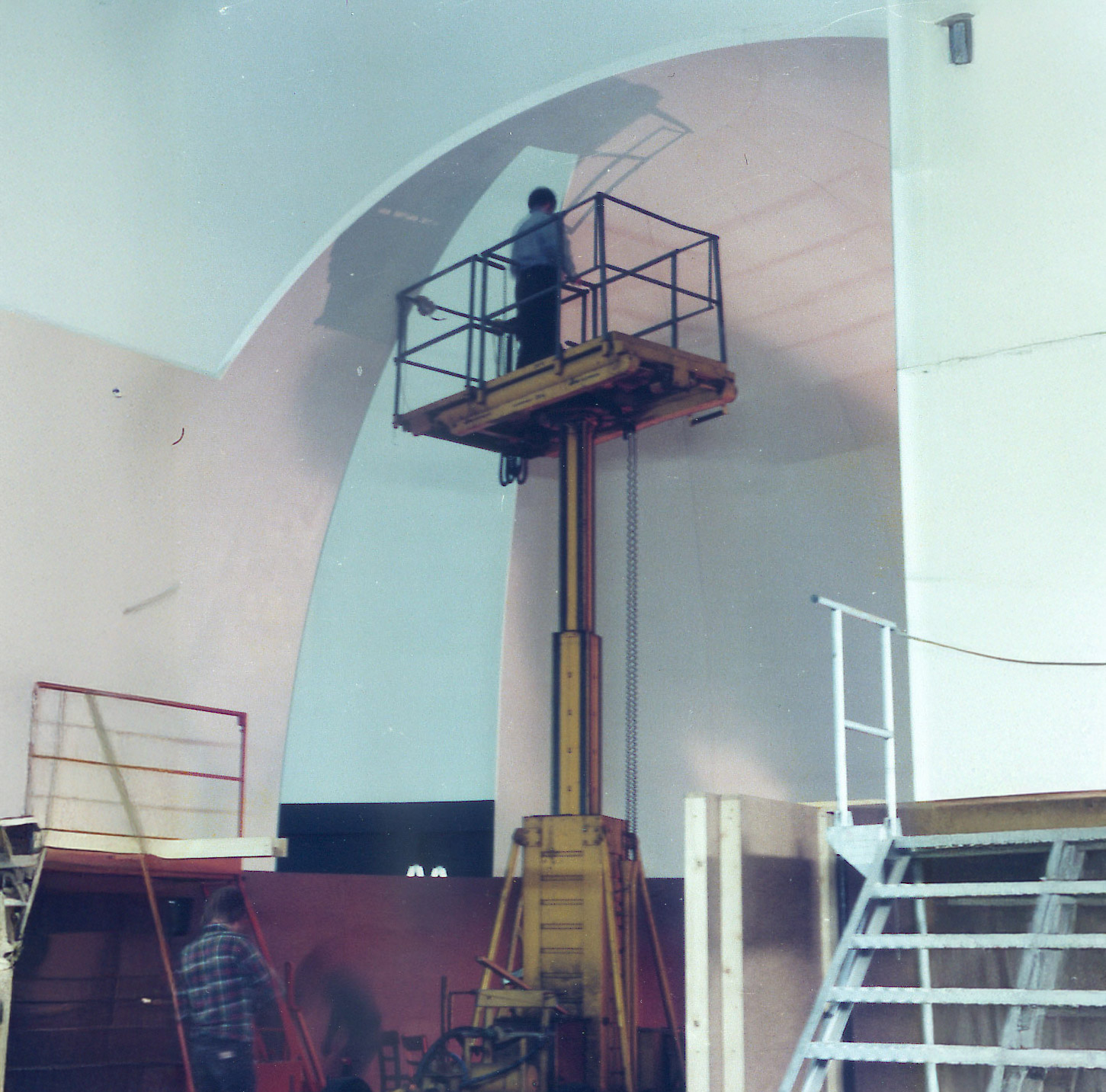
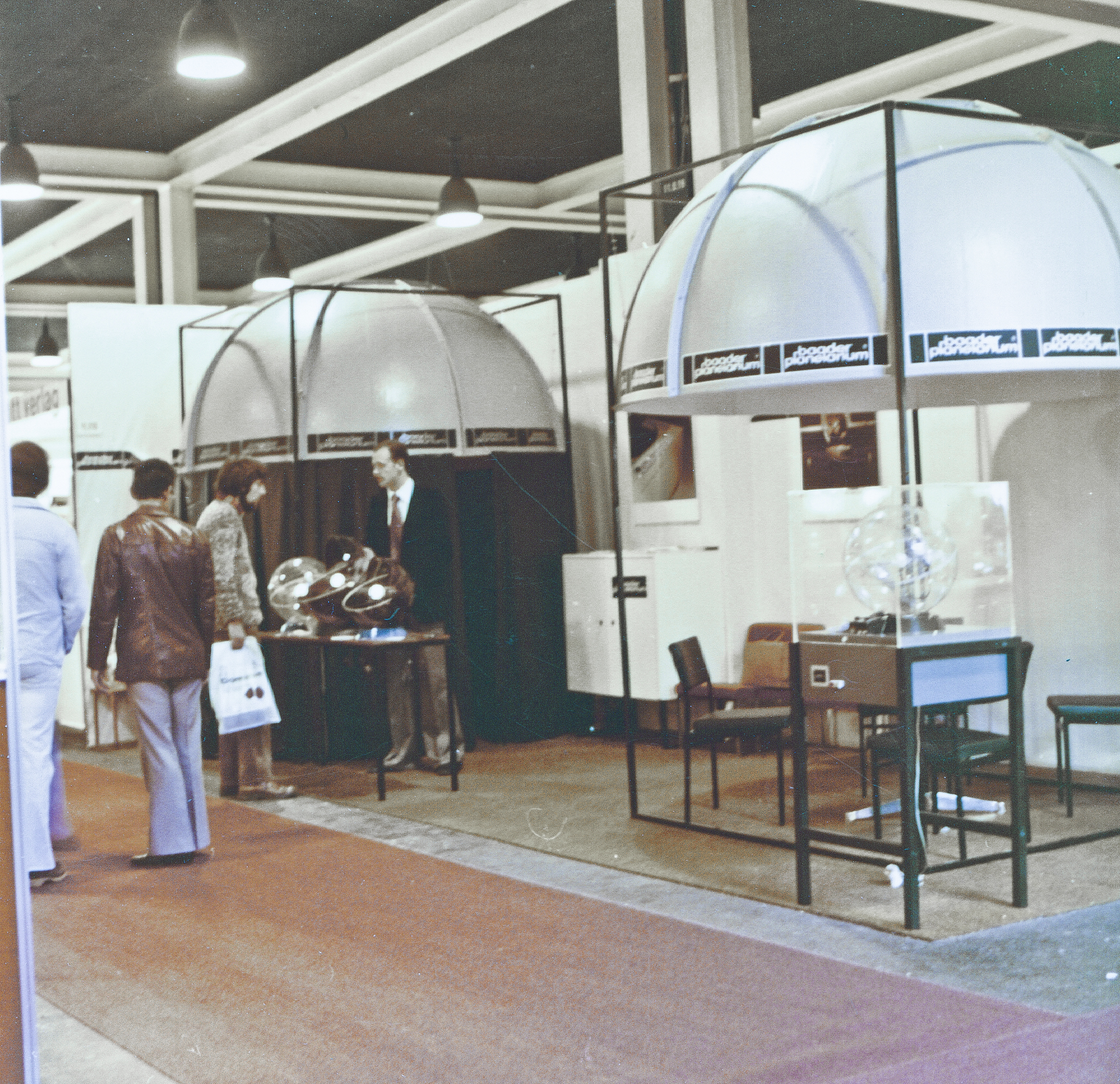
With the success of the educational planetariums, expectations for presentation grew: from 1970 onward, Baader Planetarium began manufacturing its own projection domes made of glass-fiber-reinforced plastic (GRP). This made it possible, for the first time, to show the unique didactic projection of the Baader Planetarium starry sky together with the visible orbit of Earth and Moon in a spherically correct representation. This is where the Zeuner lens in particular came into use, because it also allowed the Sun’s path along the ecliptic to be shown in projection at the same time.
Another major milestone followed in 1978: in that year, a 10-meter projection dome was produced for Carl Zeiss and installed at the Oberkochen factory. This made one thing clear: the company could not only build precision mechanical systems, but also realize large-format, installation-intensive dome structures.


1972 as a turning point: market changes and strategic expansion
In the internal chronicle, 1972 is considered a pivotal year. The Moon flights were discontinued – and this changed the environment in which many “space products” had previously enjoyed special attention. For Baader Planetarium, this meant: the product portfolio had to be rethought. Decisive in this was the customer base that had been established, especially in the education sector, with several thousand schools and universities.
Celestron distribution in Germany and the Middle East:
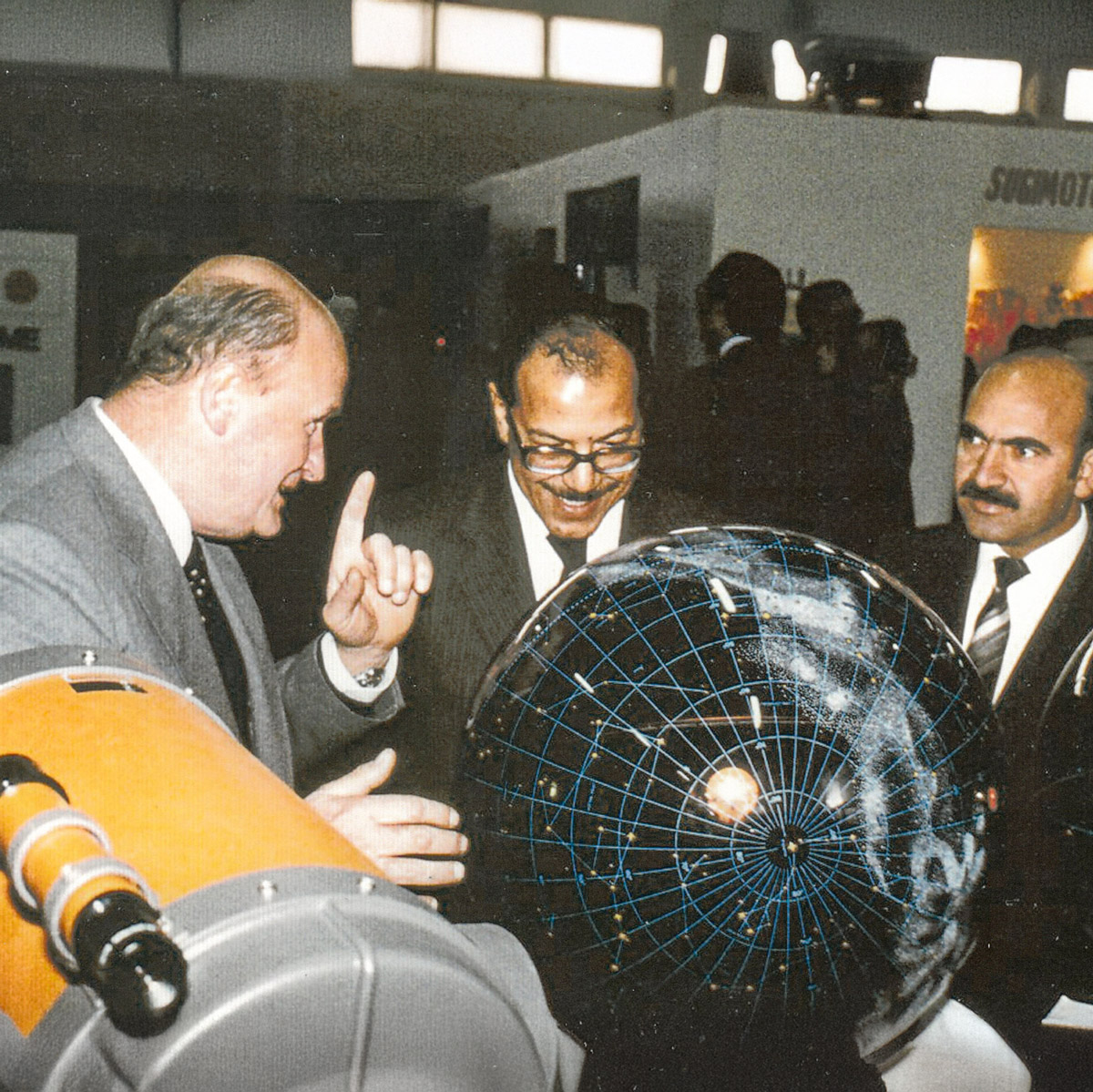
Based on this customer base, Baader Planetarium took over from the company Vehrenberg the distribution of Celestron telescopes for the German educational supply market and was able to significantly increase Celestron’s brand awareness in a short time. At the same time, Celestron/USA also began searching worldwide for distributors for its revolutionary Schmidt-Cassegrain optics. Through the mediation of Dr. Hans Vehrenberg (✝ 1991), Claus Baader was offered by Celestron/USA management the Celestron distributorship for the entire Middle East. Thus, Baader Planetarium became one of the first distributors for Celestron outside Europe and subsequently underwent rapid growth in the telescope market in the German-speaking countries and the Middle East.
Dome production – learning through practice:
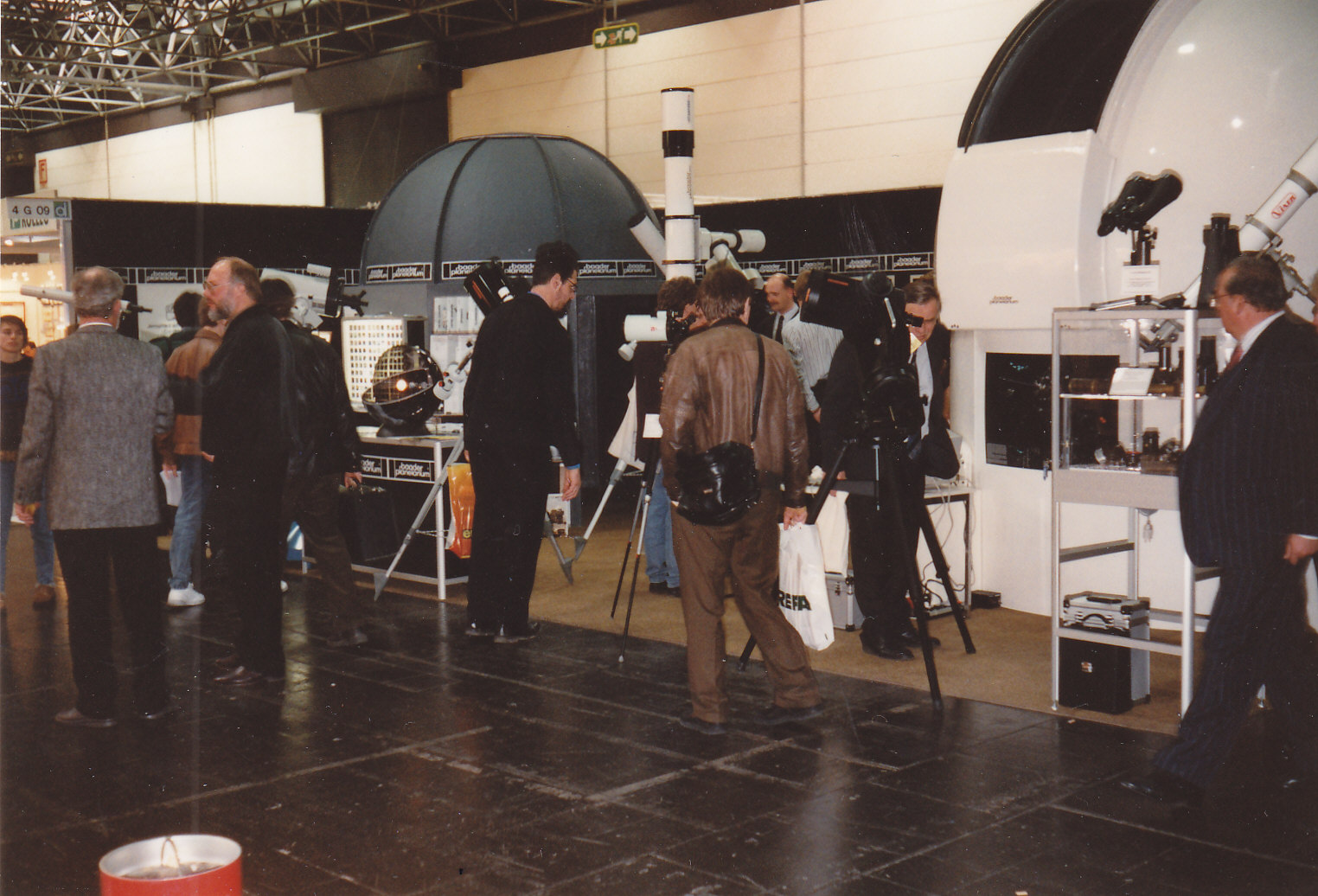
As an additional pillar – also because GRP projection domes were no longer being ordered in sufficient quantities – Claus Baader looked for other suitable representations and traveled, among other places, to Observa Dome in the USA, which at the time was promoting its first in-house 3 m GRP dome. Very soon, however, Observa Dome switched to aircraft aluminum as a material, using a special welding technique. In the years up to 1989, a larger number of Observa Dome domes were sourced under exclusive representation and delivered in Europe – including a 16.5 m dome to the ESO in Chile (1984).
This period was extraordinarily instructive and often accompanied by painful experiences – especially regarding the problems that can arise with metal domes. This was already, from 1977 onward, the decisive reason behind the decision to expand the existing production of GRP projection domes into a production line for rotatable observatory dome structures.
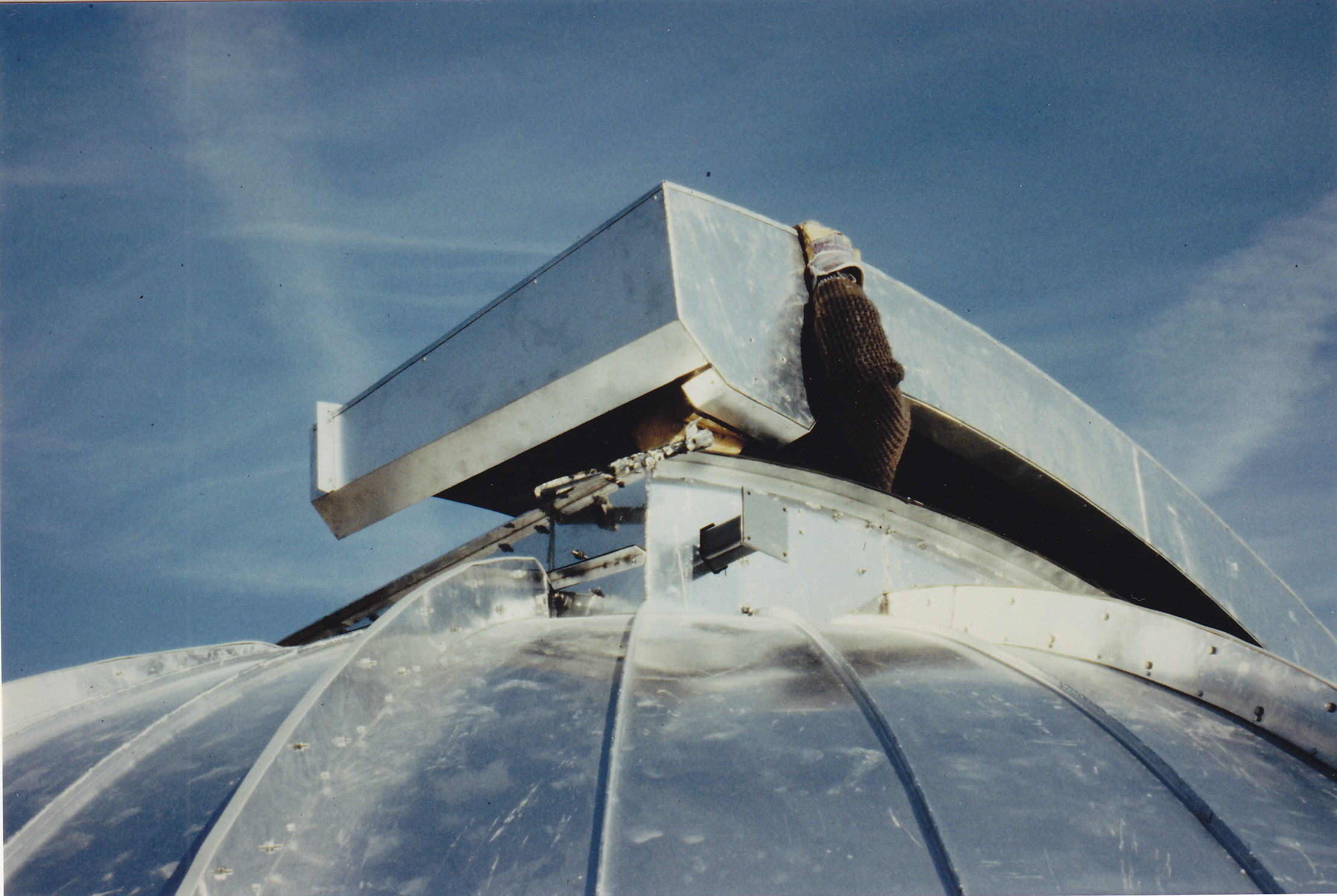
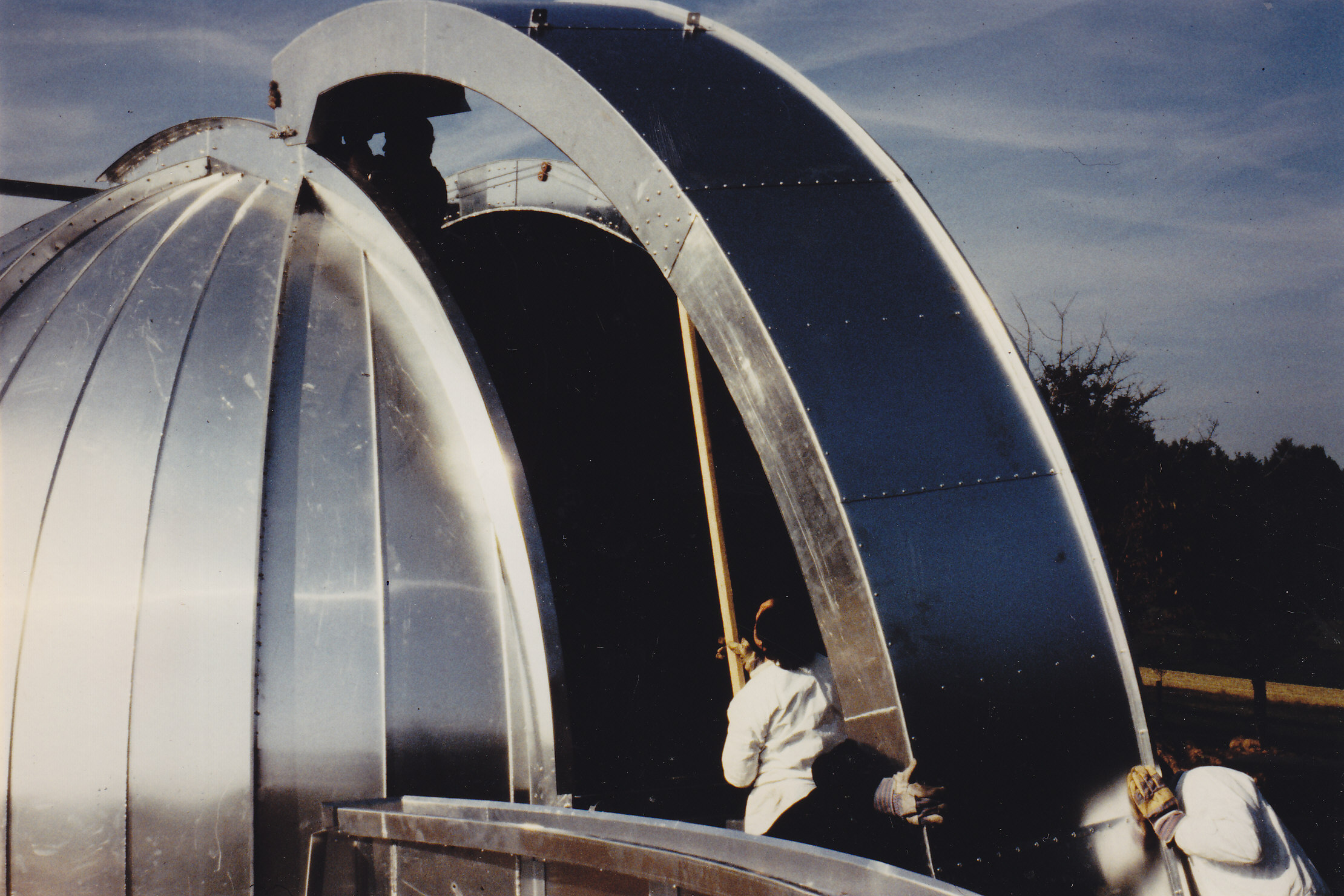
The initial spark came in 1979: a firm order for one 8 m and one 3 m metal dome in Iran near Qom absolutely had to be fulfilled. However, American products became impermissible overnight as a result of the Islamic Revolution in what was then “Persia” – unfortunately also a severe blow to Observa Dome in the USA. For Baader Planetarium, this created a dramatic race against time virtually overnight: within just a few months, both domes had to be fully developed and produced in GRP, including mold making and all mechanical components. The order was delivered on schedule, and both domes are still in service to this day at an altitude of approx. 3,000 m. Ultimately, it was the forced beginning of continuous production of observation domes from 2 to 8.5 meters, and at the same time a stark signal of how strongly international projects can depend on political conditions.



From 1978: In-house observatory domes
Rising to an international reference
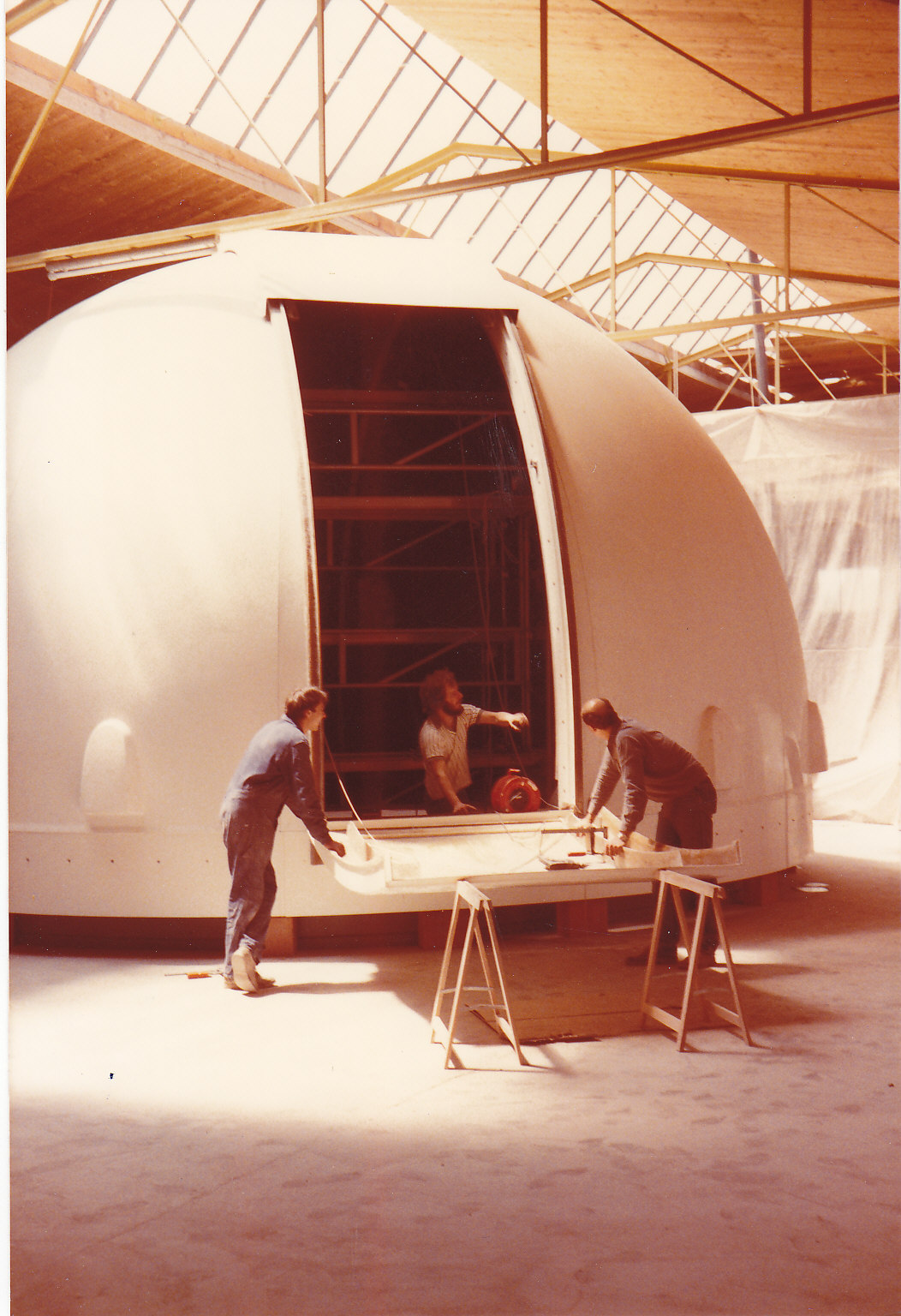
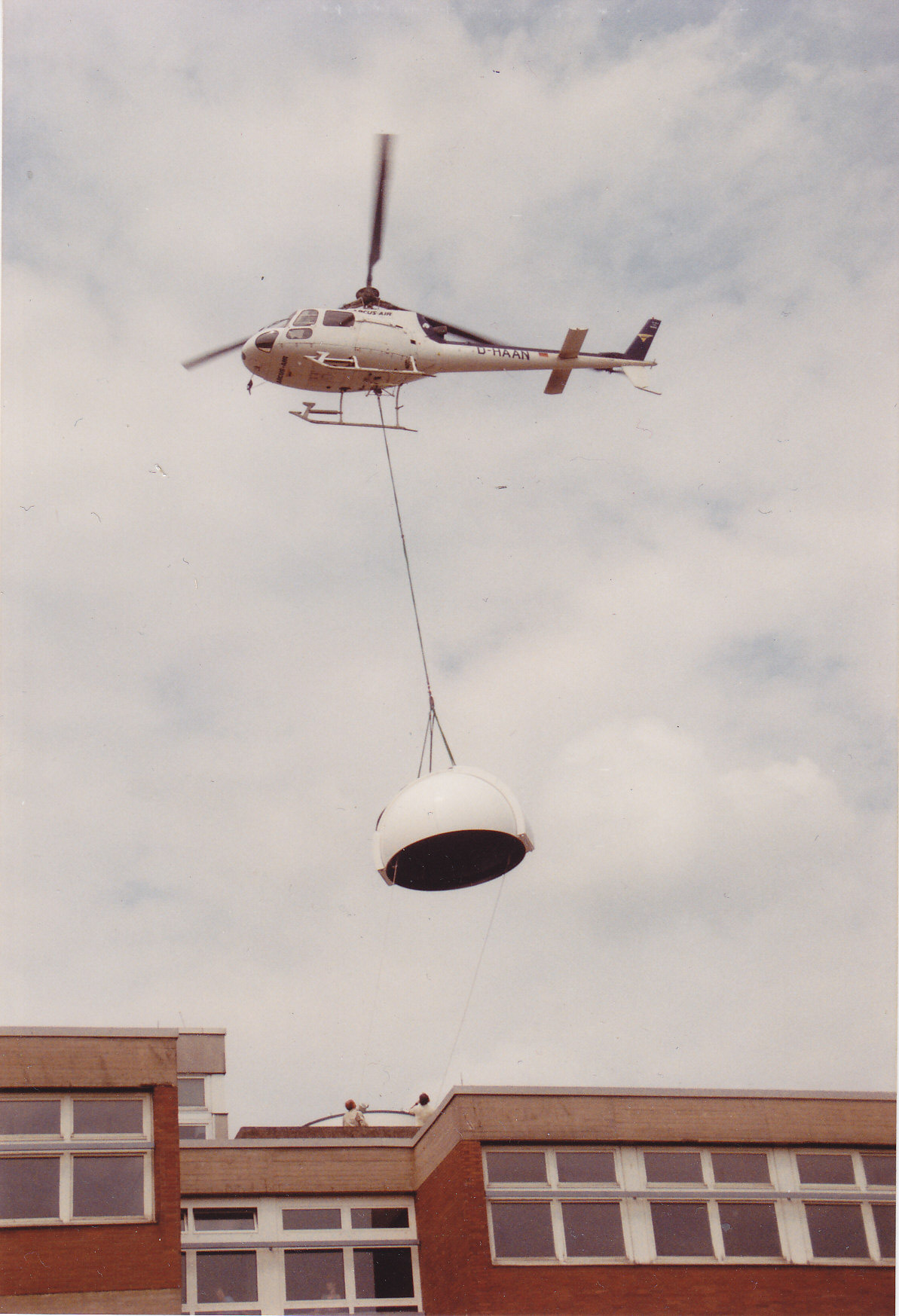
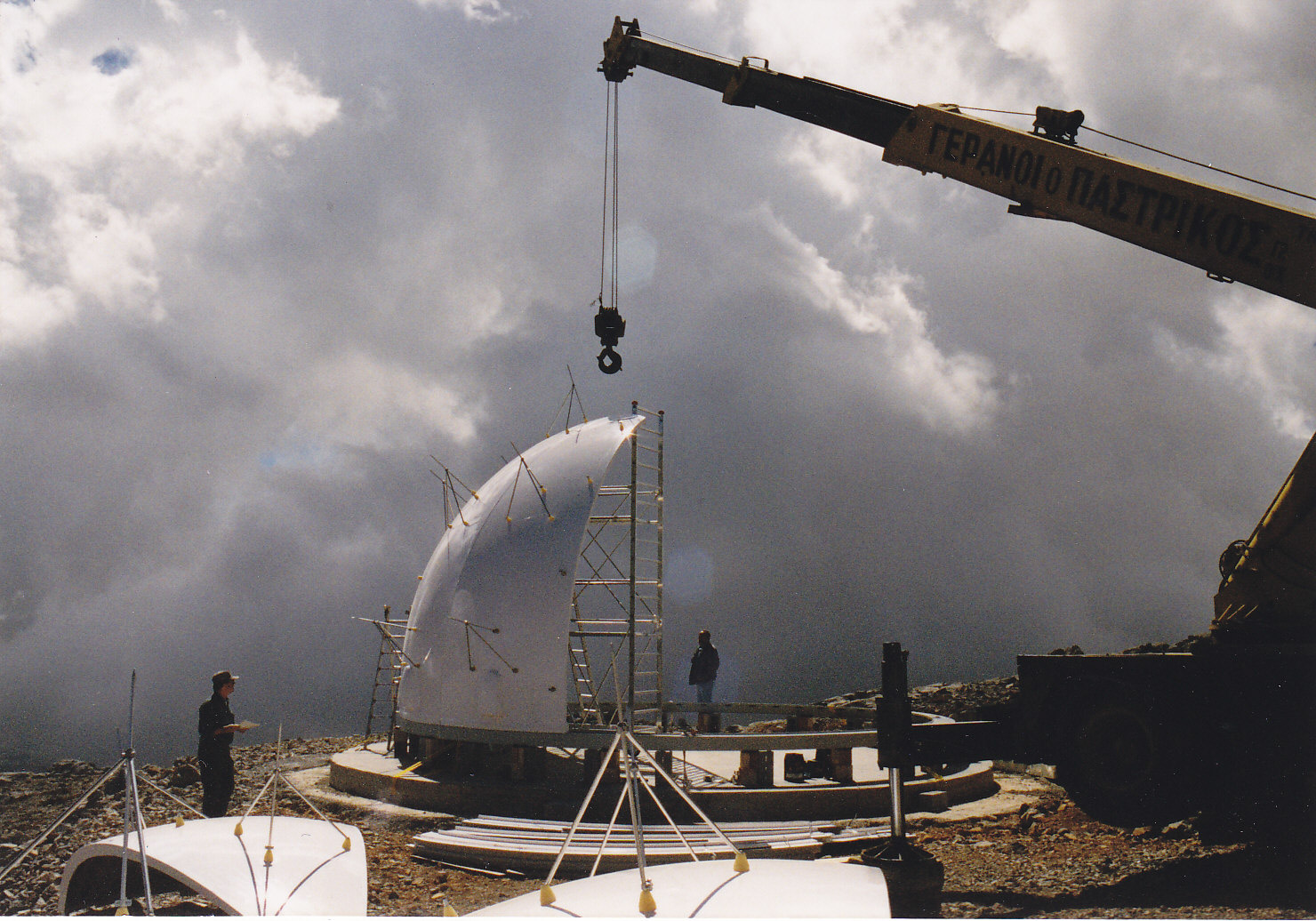
As early as around 1978 Baader Planetarium began making molds for a 2.1 m observation dome made of glass-fiber composite material. From 1979 (see above), a series of 3.2 m domes was developed – partly in true pioneering work – and delivered from 1980 onward.
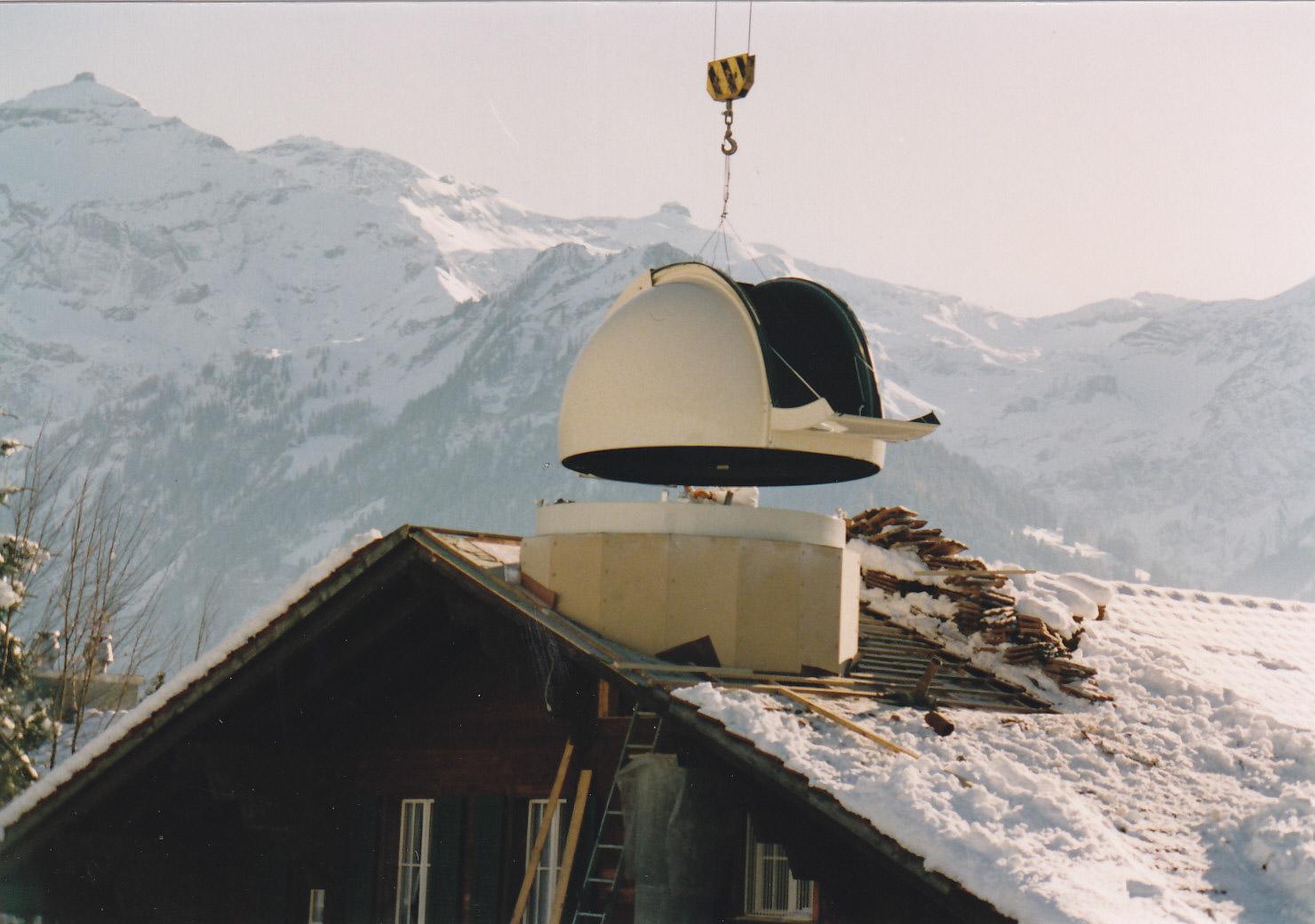
An early major project was the 1984 installation of an 8 m observation dome for the Gregory Telescope at the Izaña Observatory on Tenerife. In the mid-1980s, further international steps followed: at the Skinakas Observatory on Crete, a 3.2 m dome was first installed from 1986 onward; in 1997 an 8 m dome followed (there are now four domes there, the newest from 2025). The site is highly exposed to extreme wind speeds, seismic vibrations, and lightning strikes – an excellent test site for absolutely challenging design conditions.
By the end of the 1980s, Baader domes were in use at numerous schools, universities, public observatories, and research institutions worldwide.





Conclusion: craftsmanship, curiosity, and consistency
The early years of Baader Planetarium are characterized by a clear pattern: technical curiosity, didactic ambition, and comprehensive workshop practice that never shied away from complex tasks. From the patented School Planetarium to the Giant Planetarium as a masterpiece of precision mechanics, and on to projection and observatory domes, this laid the foundation for an international field of activity that continues to shape the company to this day.
The years and technical details mentioned are based on contemporary documents as well as internal records and eyewitness reports from within the company.
To find out what happened next, please visit our timeline:
How did a small basement workshop in Munich become an internationally recognized name in astronomical education? This retrospective highlights Baader Planetarium’s early milestones—from the patented School Planetarium and the highly complex Giant Planetarium to the first projection and observatory domes. A story of craftsmanship, didactic vision, and determined progress between 1966 and 1980.
In this article we will take a brief look at some astronomical events that will take place during 2026
Equinoxes and Solstices
Equinoxes and solstices are events linked to our Earth’s orbit around the Sun and which mark changes of the seasons with each occurring twice every year. The winter solstice occurs when the Sun is lowest in the sky northern hemisphere in December, which is the shortest day and the other, the summer solstice, when its highest in June and is the longest day. In March and September, there are two equinoxes where the lengths of day and night are similar. The dates of the equinoxes and solstices for 2026 are:
- March 20 – Spring Equinox: Takes place at 15:46 CET and marks the first day of spring in the Northern Hemisphere.
- June 21 – Summer Solstice: Takes place at 10:24 CEST and marks the first day of summer in the Northern Hemisphere.
- September 23 – Autumn Equinox at 02:05 CEST: Marks the first day of autumn in the northern hemisphere.
- December 21 – Winter Solstice: Takes place at 21:50 CET. For us in the northern hemisphere, it marks the beginning of winter.
Meteor Showers and Other Wide-Field Phenomena
Meteors, or shooting stars, are bright streaks of light you see in the sky when a space rock (meteoroid) enters our Earth’s atmosphere and burns up. Meteor showers occur when Earth passes through streams of debris left behind by comets and asteroids. The peak of a meteor shower is when we see the highest rate of meteors which happens as we pass through the densest part of the debris stream. Observing meteors or meteor showers requires nothing more than your eyes, maybe a comfortable chair or lounger and a warm blanket or hot water bottle for those long periods out under the stars waiting for a meteor to appear. Further information on meteor showers can be found here: VdS Meteor Working Group.
Below we list a selection of meteor showers that can be seen during 2026.
| Meteor Shower | Activity Dates | Maximum Date | Hourly rate(approx) | Moon phase |
| Quadrantids | 28 Dec-12 Jan | 3/4 January | 120 | Full moon |
| Lyrids | 14-30 April | 22/23 April | 18 | ~30% full waxing crescent |
| Eta Aquariids | 19 Apr - 28 May | 6 May | 40 | ~84% full waning gibbous |
| Perseids | 17 July-24 Aug | 13 August | 100 | New moon |
| Draconids | 6-10 October | 9 October | 10 | ~2% illuminated waning crescent |
| Orionids | 2 Oct-7 Nov | 21 October | 20 | ~80% full waxing gibbous |
| Leonids | 6-30 November | 18 November | 15 | ~45% full |
| Geminds | 4-20 December | 14 December | 120 | 21% full waxing crescent |
Apart from meteors other wide-field phenomena are the aurora and the glowing noctilucent clouds (NLC) that can be seen at northerly latitudes from late spring to late summer. There are many websites such as SpaceWeather.com and social media groups who regularly report latest events and sightings.
The Sun and Solar Eclipses
Our Sun
Our nearest star continued to be active in 2025 with many sunspots and sunspot groups as well as auroral displays being observed the photographed. Although the Sun has moved through the peak of its solar cycle, it should still produce frequent sunspots and sunspot groups, heightened solar activity, and dazzling auroras during the coming year. So 2026 is still a great time to study our dynamic and active Sun.
Never forget that extreme caution and the use of suitable, safe solar filters are imperative when observing or photographing the sun. When it comes to the sun, safety must ALWAYS come first: NEVER look at the sun without a suitable solar filter! Solar observation is dangerous and can permanently damage eyes or cameras. Always use a suitable sun filter!
To safely study the Sun visually or photographically (and to view the August solar eclipse), Baader Planetarium offers a range of safe solar accessories.
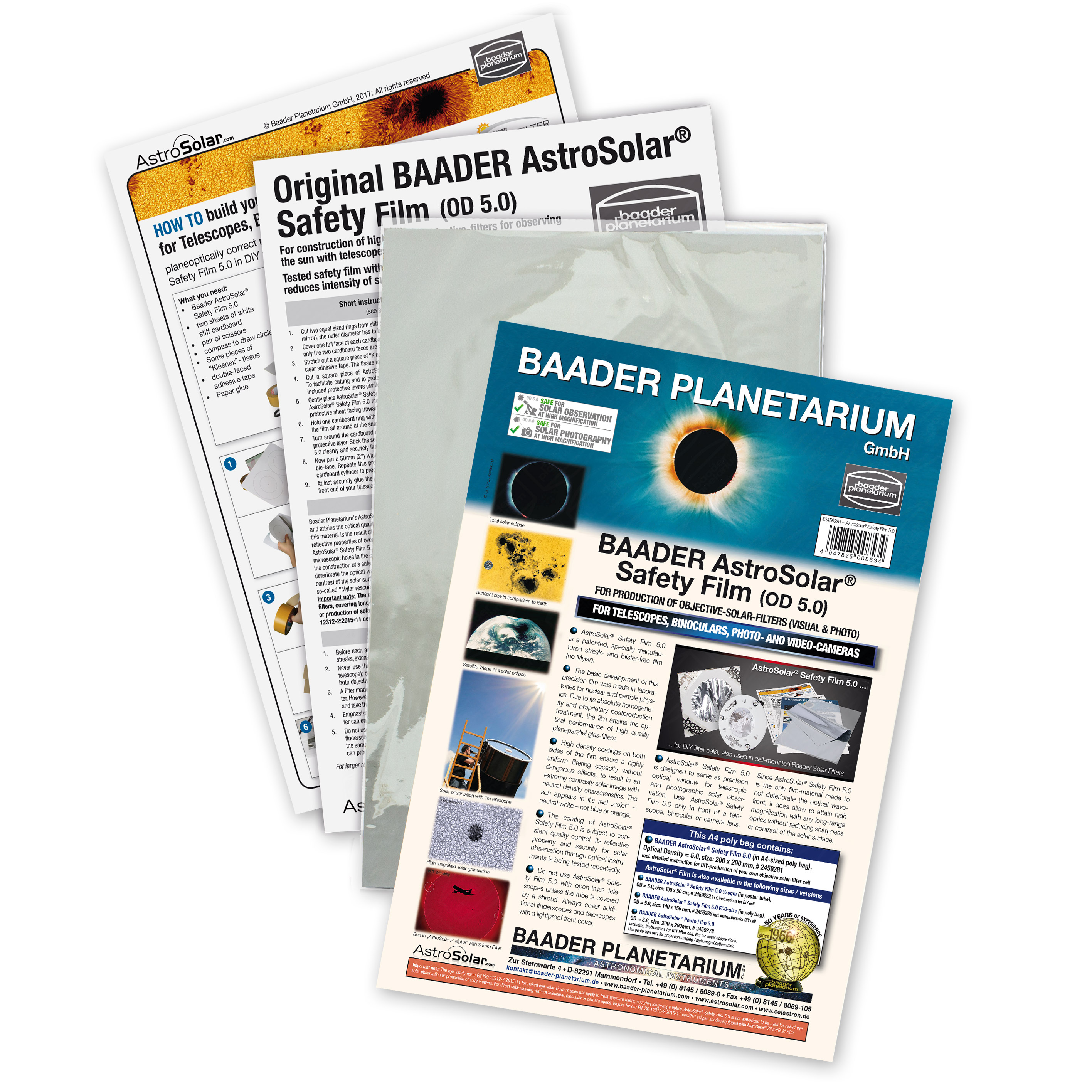

Their extremely popular visual and photographic AstroSolar film available in different sizes allows you to build your own filter holder to suit your equipment.
They also offer a range of different sized ready-made filters that use their AstroSolar film to fit camera lenses, binoculars, spotting scopes to large telescopes. You can find out more about their solar accessory range here: https://www.baader-planetarium.com/en/solar.html
Another way to safely observe or image the Sun safely is with the MK II Baader 2" Cool-Ceramic Safety Herschel Prism which you attach to your refracting telescope and which is available in visual and photographic variants. The Baader Herschel wedge allows you to use high magnifications for detailed up-close views of sunspots, sunspot groups and solar granulation. It is a versatile unit allowing a range of different telescope- and eyepiece-side adaptations.
Before you set up your solar equipment for viewing the Sun a good online resource where you can check the Solar activity is the GONG website, which uses real-time data from a range of solar observatories around the world which show the Sun in different wavelengths.

Solar Eclipse - 12th August 2026
The astronomical highlight of 2026 for many amateur astronomers is likely to be the solar eclipse that takes place on the evening of Wednesday 12th August. From Germany the solar eclipse will be a partial event. For those who want to see this as a total solar eclipse you will have to travel as the path of totality which runs from western Iceland down the Atlantic ocean to the west of the Ireland. The total eclipse path will then cross the northern coastline of Spain from the west of Bilbao and down the central region of Span to the south east coast including Valencia and then towards the island of Palma.

For those who will stay in Germany for this event, the maximum obscuration of the Sun by the Moon for some locations across Germany is given below.
- Hamburg/Berlin ~85%
- Dusseldorf/Frankfurt/Munich ~88%
- Stuttgart ~89%

From Munich the eclipse will begin around 1823 CEST. At this time our Sun will be around 10 degrees above the western horizon. Maximum eclipse is at 1915 CEST and the Sun will be just under 2 degrees above the horizon at this time with sunset occurring around 15 minutes later. To see or image the eclipse you will have to find a location with a low and flat horizon. However the low altitude at time of maximum eclipse may make for a fantastic landscape or city-scape photograph!
You can see how much of the Sun will be covered and the times of the start and end of the eclipse for your location using the interactive eclipse map: http://xjubier.free.fr/en/site_pages/solar_eclipses/TSE_2026_GoogleMapFull.html.
You can also read our article of this and other upcoming eclipses for the next few years visible from Europe here.
 Solar Eclipses in Spain – 2026, 2027 and 2028 18. June 2025 - For years now our colleagues have been hunting for the next Solar eclipse in the most remote places of the World. Please review our previous blog posts on AstroSolar.com, for example: 2015: Solar Eclipse Adventrue… Weiter lesen
When observing or imaging a partial solar eclipse (or partial phase of a total solar eclipse), extreme caution must be exercised and always use a suitable, safe solar filter. When it comes to the sun, safety must ALWAYS come first: NEVER look at the sun without a suitable solar filter! Solar observation is dangerous and can permanently damage eyes or cameras. Always use a suitable solar filter!
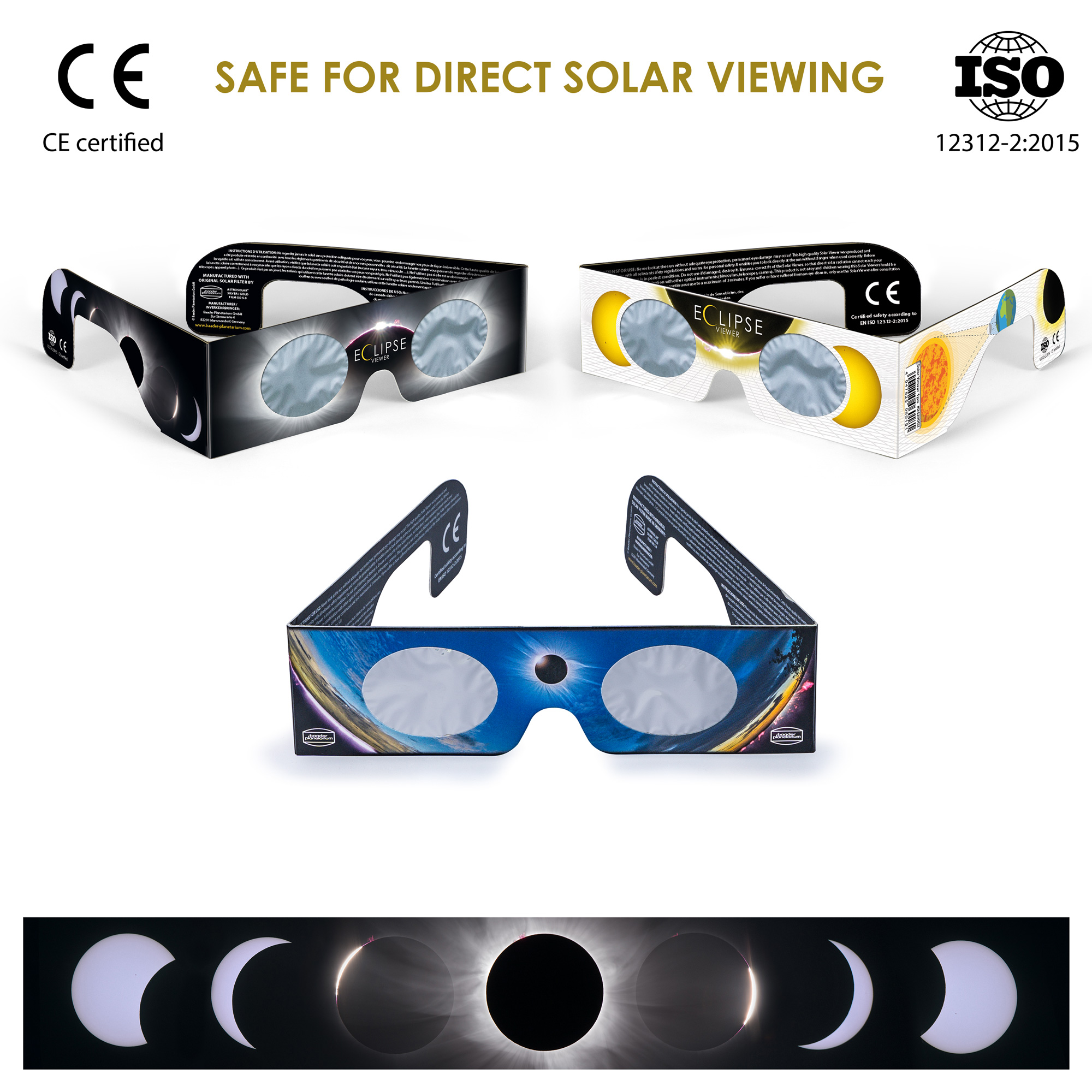
To observe this partial solar eclipse (or partial eclipse phases of the total solar eclipse) safely, Baader Planetarium offer their CE/ISO certified silver/gold solar eclipse viewer glasses that you wear like glasses. These wearable solar viewers block 99.999% of the sun and offer 100% UV- and IR- protection. These are now available in 3 different cardboard-frame designs.


The new [product sku="2420400"] offers a safe and convenient way to observe the Sun and is perfect for viewing the eclipse in small groups. It can be attached to a telescope suitable for solar and eyepiece projection and provides clear white‑light views of sunspots and solar eclipses through its closed rear‑projection design, which eliminates the risk of anyone accidentally looking into the eyepiece or touching the solar light beam. Supplied in kit-form, it is quickly and easy assembled with full instructions supplied and a video showing its construction can be view on the product page.


If you are uncertain about any aspects for viewing or imaging the Sun or the eclipse safely and want to ask any questions or need more advice please contact one of our helpful authorized Baader Planetarium dealers who will be happy to help.
The Moon and Lunar Eclipses
Our Moon
Our moon is a regular feature in our sky as it presents us with its different phases as it orbits the Earth. Its brightness and apparent size makes it easy to find which helps make it a popular target for observation and photography for amateur astronomers of all ages and abilities. It often can get close to other objects in the sky such as planets and some deep sky objects which can be nice to view through binoculars or telescopes and make nice photo opportunities too (check out our regular monthly sky highlight articles for such events).
With the unaided eye you can see the Moon’s phases as it completes a full cycle every ~29.5 days and the light bright areas and dark (Maria) regions on the lunar disc. If your lunar curiosity goes beyond naked-eye viewing and you want to see more detail, binoculars or a telescope is required. The moon is an impressive sight, regardless of its phase, even through a small beginner telescope where you will get up-close detailed views of its craters and other surface features.


If observing the Moon is of interest, a really useful accessory to have is the Baader Double Polarizing Filter available in 1.25" and 2". This filter, which screws into the barrel of an eyepiece or telescope diagonal can reduce the Moon's glare by varying the amount of light entering the eyepiece by simply rotating one of the filter cells. This filter can make lunar observing a far more comfortable experience especially near times around full moon when it is very bright.
Here are our top 5 selections of Craters, Mares and other features you can find and see on the Moon
- Craters: Tycho, Copernicus, Aristarchus, Clavius, Grimaldi
- Mares (dark “seas”): Mare Imbrium, Mare Serenitatis, Mare Tranquillitatis, Mare Crisium, Mare Frigoris
- Other Lunar features: Hadley Rille, Vallis Alpes, Rupes Recta, Lunar Appennies, Vallis Alpes
Lunar Eclipse - August 28th 2026
A partial Lunar eclipse visible across Germany where ~94% of the Moon will be in the Earths umbral shadow. It is an early morning event starting at 0323 CEST with maximum eclipse occurring around 0612 CEST. The eclipse ends at 0901 CEST.
However the Moon sets around 0632 CEST so the maximum eclipse phase of the eclipse will only be visible for around 20 minutes low near the western horizon in the morning twilight sky. However this may make a very nice photogenic landscape or cityscape opportunity!

Overview of the Planets
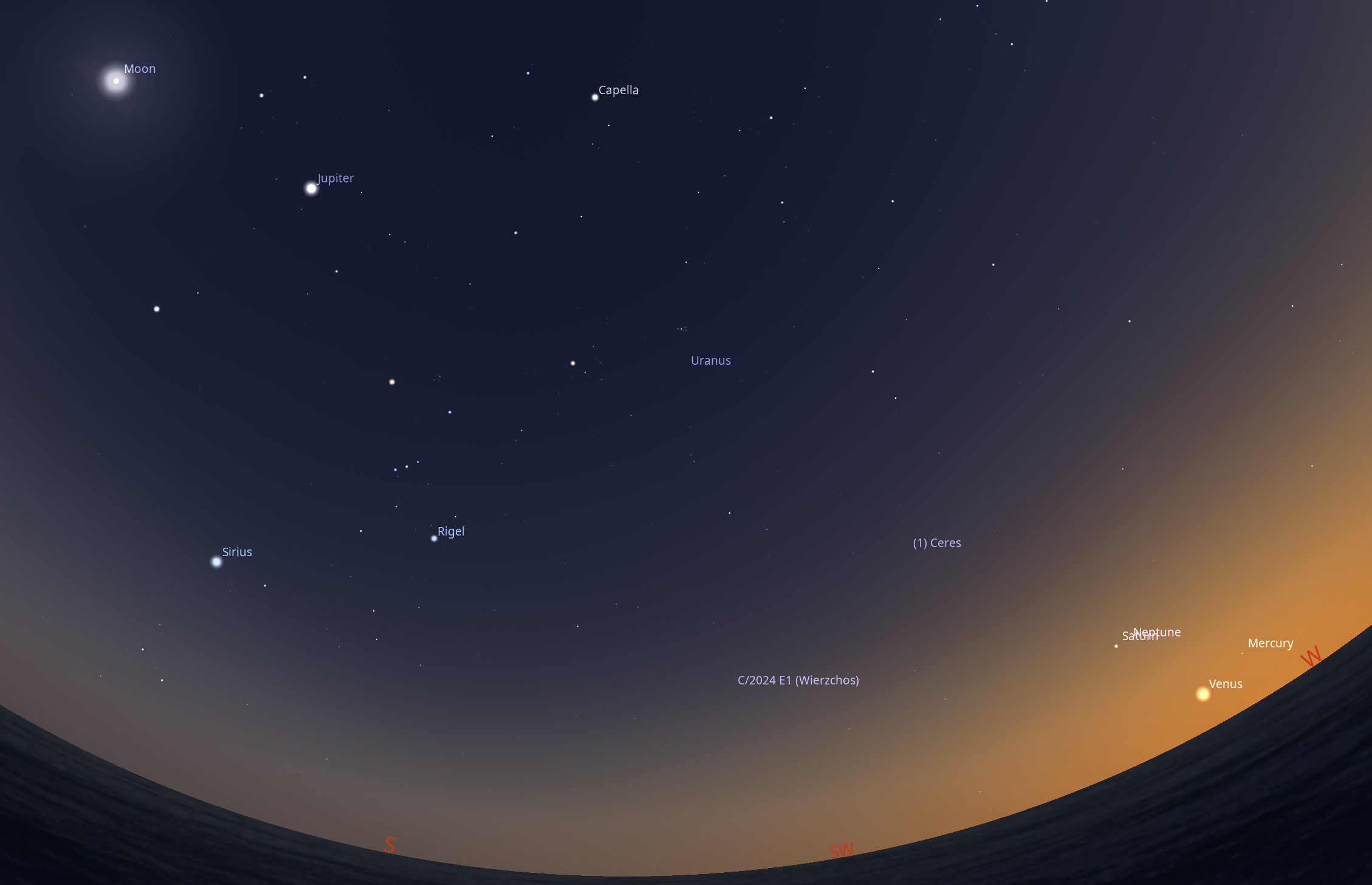
A brief summary of our solar system planet visibility during 2026 is given below. We will take a closer look at the planets throughout the year in our regular monthly sky guides.
Mercury: Mercury can be difficult to observe due to its proximity to our Sun. The best times to see or image the planet being around the times of western (morning) or eastern (evening) elongations when the planet has its largest angular separation from the Sun. Below is a list of Mercury’s maximum elongation (separation):
- Greatest Western Elongations for morning views: 3 Apr / 2 Aug / 21 Nov
- Greatest Eastern Elongations for evening views: 19 Feb / 16 Jun / 12 Oct
Venus: This near Earth sized but hot and hellish climate world is visible as an evening object from the months of February until September. It is at greatest eastern elongation on 14 August and is at its brightest at magnitude -4.6 on 22 September. It then becomes a morning object from early November and it is at its brightest on 27 November at its morning apparition. It remains a morning object for the rest of the year.
Mars: The red planet is not visible until early June in the low in the eastern morning sky. It will be at opposition in February 2027. At the end of the year it rises shortly before midnight.
Jupiter: This gas giant, the largest planet in our solar system, was at opposition on 10th January. It will remain visible in the evening sky until late June when it become lost in the evening twlight. From mid-August it will become visible low in the north east in the morning before the sky brightens.
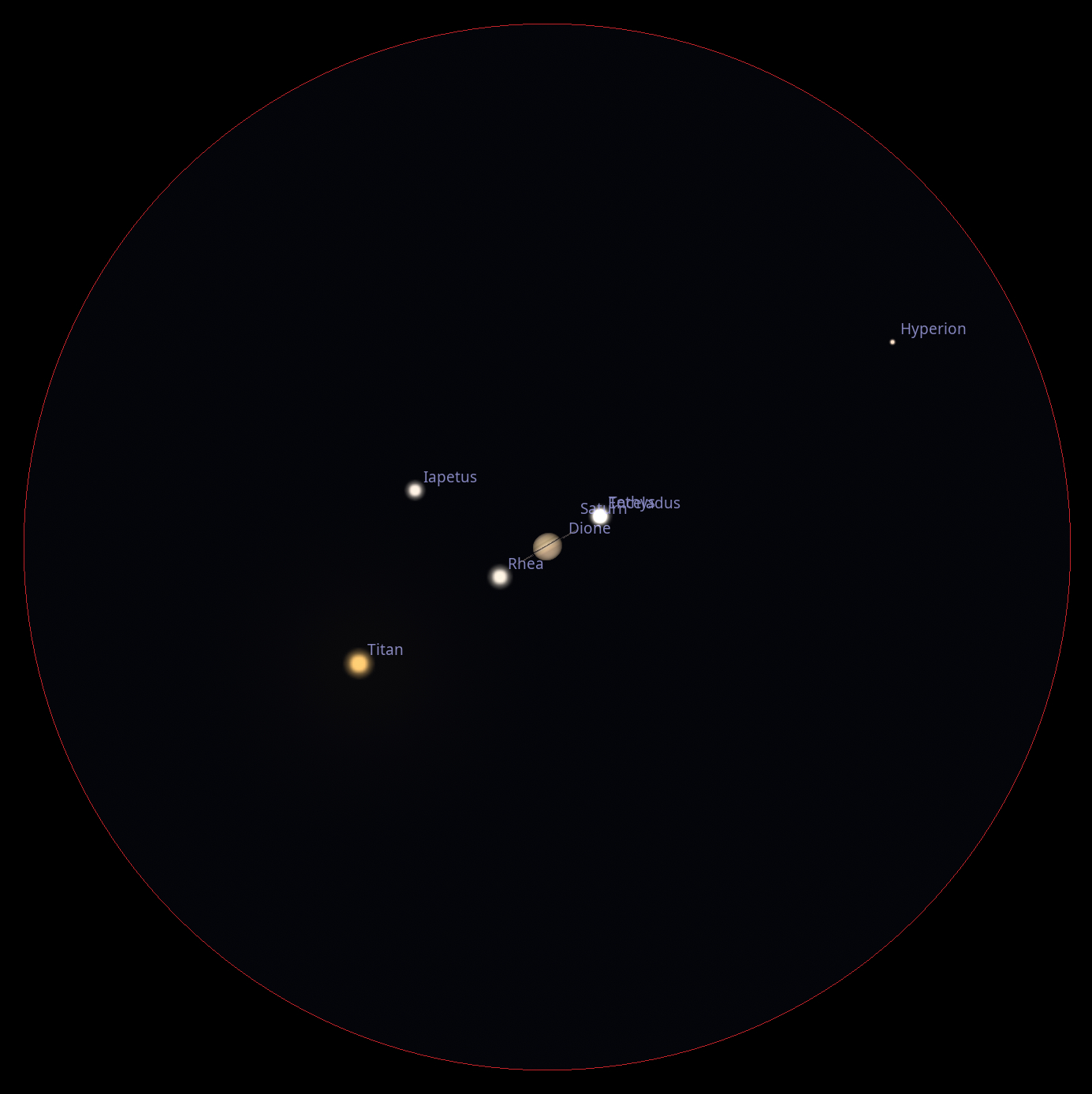
Saturn: Often considered by many to be the most beautiful planet to observe and image, the ringed planet wil be visible until early March. It will then be a morning object in May. It is at opposition on 4 October.
Uranus: Is and will remain in Taurus near the open cluster Messier 45 (the Pleiades) during 2026. It will be visible until early May and then becomes a morning object in July. It will be at opposition on 25 November.
Neptune: This outer planet will be visible until March in the evening sky and then in the morning from June onwards. Neptune will be at opposition on 25 September.

Celestron’s Schmidt-Cassegrain (SCT) and EdgeHD telescopes are very well-regarded for observing the Planets (and our Moon) because their optical design provides a long focal length and high magnification which is required for detailed planetary and lunar viewing and imaging, in a very compact and portable package. Celestron offer SCTs from 6” up to 14” (EdgeHD from 8” to 14”) available as optical tube assemblies and on a range of mounts from manual and computerized alt-azimuth to computerized GoTo equatorial mounts.
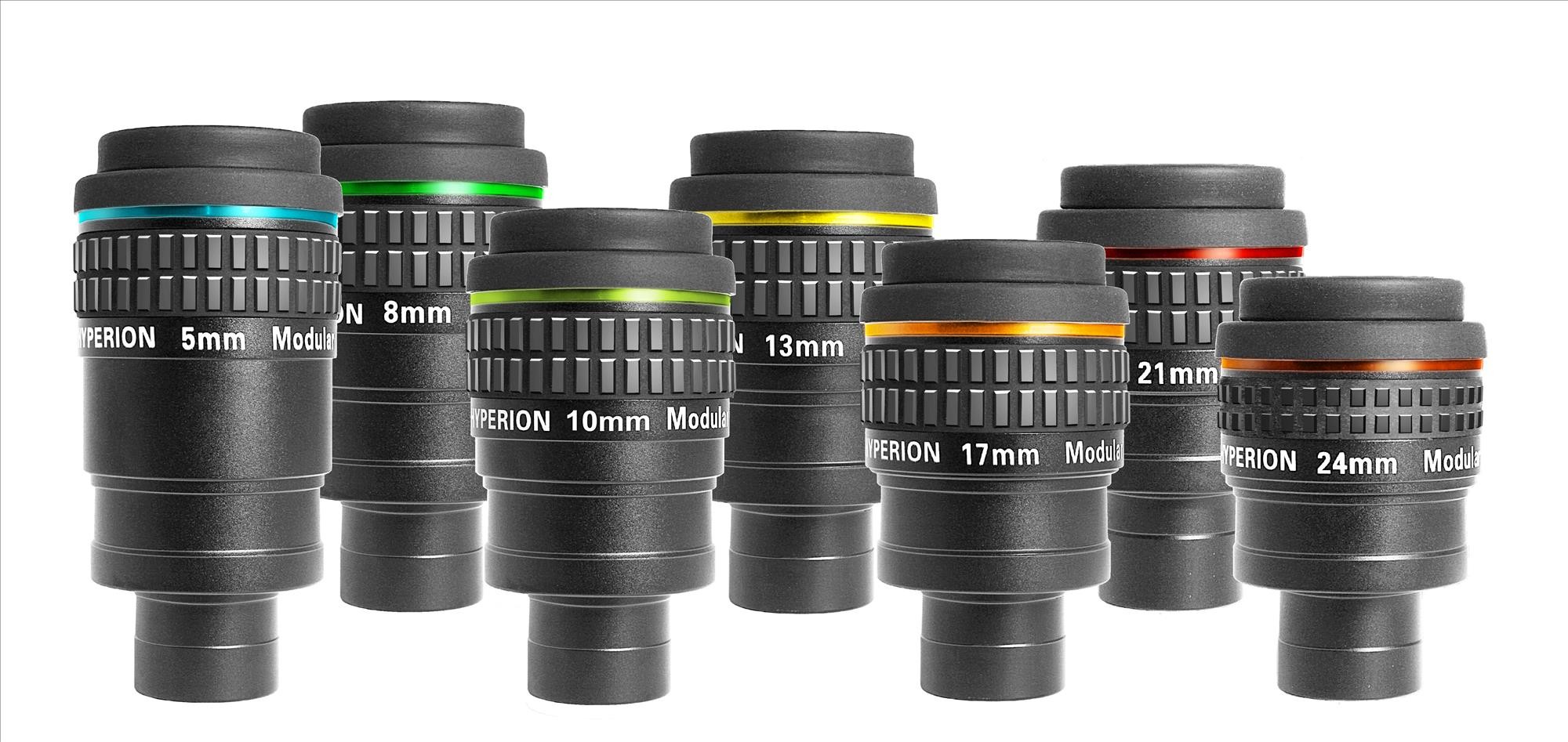
To view the planets (and our Moon) the versatile Baader Hyperion range of 68-degree apparent field of view eyepieces are popular. They are available in fixed focal lengths from 5 mm (high magnification) to 36mm for lower (low magnification). These affordable eyepieces are popular among amateur astronomers because they have a balance between visual observing comfort and practical imaging capabilities. Their 68° apparent field of view, combined with long eye relief and excellent Phantom Group multi-coatings, give bright, high‑contrast views that work well on everything from planetary and lunar detail to deep‑sky objects too. Their modular design allows them to be easily adapted for afocal or prime‑focus projection imaging. This versatility makes the Hyperion's a strong choice for observers and imagers.
In addition to the fixed focal length models, there is a [product sku="2454826"] that gives you five clearly defined click‑stop magnifications making it a favourite for observers who want flexibility without swapping individual eyepieces. As with the fixed eyepieces, the Zoom can also be easily adapted for imaging.
Comets
Once they spread fear and terror, today they are welcome visitors in our skies: Comets are rare guests in the inner solar system and usually appear in our skies without much warning. They are "dirty snowballs" of ice and rock from the edge of the solar system that often take many centuries to orbit the sun. Only a few are therefore regularly visible in our skies; many are only discovered a few months before they come close enough and become bright enough to be seen with binoculars or even the naked eye.
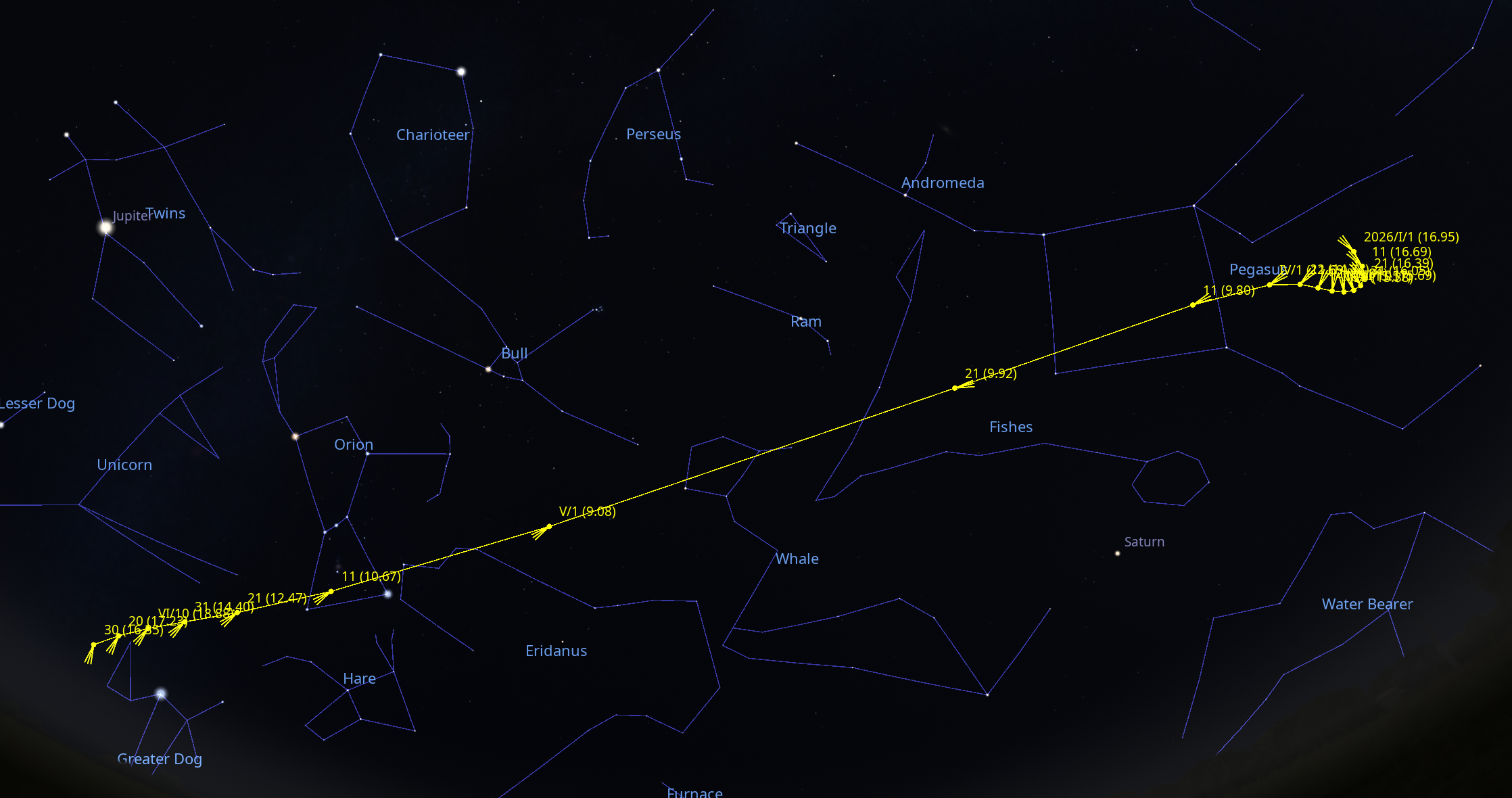
Comet C/2025 R3 (PanSTARRS) was only discovered in September 2025. On April 19, 2026, it will be at its closest point to the sun, and on April 26/27, it will be closest to Earth. When it passes between the orbits of Mercury and Venus at the end of April, it will be visible in the morning sky. In April, it will rapidly traverse the constellations Pegasus, Pisces, Cetus, and Taurus. It will likely remain a target for binoculars at magnitude 8. Depending on the development of the gas and dust cloud it sheds as it approaches the sun, and whether it brightens due to forward scattering of sunlight, it could even reach magnitude 3 and then be easily visible to the naked eye. Around May 1st, the bright full moon will interfere, so the last two weeks of April will be the best time to observe it.
How bright it will ultimately be is currently pure speculation, but it's definitely worth keeping an eye on. And who knows what other surprises await us this year?
To find out more about how this comet will develop and other comets and their visibility check out: Visual comets | astro.vanbuitenen.nl
Deep Sky Objects
The term “deep sky objects” (or DSO’s) refers to celestial objects such as galaxies, nebulae and star clusters. Depending on the time of year you can see a range of these in the night sky. For example there are a lot of nebulae and star clusters to view at the moment in the winter sky. In a few months time in the Spring our night sky is mainly dominated by galaxies and we refer this period to “galaxy season”.
Here is a small selection of three popular deep sky objects to observe for each of the four seasons for beginners. They are also great targets for deep sky imaging too!
Winter
- Orion Nebula (M42)
- Pleiades Star Cluster (M45)
- Crab Nebula (M1)
Spring
- Leo Triplet (M65, M66, and NGC 3628)
- Whirlpool Galaxy (M51)
- Bode's Galaxy (M81) and Cigar Galaxy (M82)
Summer
- Hercules Cluster (M13)
- Ring Nebula (M57)
- Lagoon Nebula (M8)
Autumn
- Andromeda Galaxy (M31)
- Perseus Double Cluster (NGC 869 and NGC 884)
- Great Globular Cluster in Pegasus (M15)
Each month we focus on a particular constellation and their celestial objects that are well placed for observing or imaging at that time so keep an eye out for these each month.
There are many deep sky objects that can be seen in binoculars but a telescope can help you see more detail and observe more numerous fainter targets too. Newtonian telescopes are well-suited for deep sky observing because their simple mirror-based design allows them to be manufactured at relatively low cost. You can therefore obtain large aperture telescopes which collect more light at an affordable price.
For those interested in photographing deep sky objects the Celestron SCT/EdgeHD scopes, both optical tubes as well as complete telescope+mount packages such as the 8" EdgeHD telescope on the heavy duty stable CGX German equatorial mount are often used by astrophotographers. For those wanting a wide-field of view for imaging larger objects such as the Orion nebula or clusters of galaxies, the fast f/2 Celestron RASA 8", 11" and 14" telescopes are popular. To go with these imaging telescopes, Baader Planetarium offer a range of high quality cooled CMOS cameras, filter wheels and accessories manufactured by Moravian Instruments suitable for deep sky imaging and lunar and planetary imaging applications. For more information see their product range page on our website.

Astrophotographers often use filters when imaging deep sky objects. Baader Planetarium produce one of the widest and most technically advanced ranges of astro‑imaging filters suitable for use with different f-ratio optics and covering everything from broadband LRGB to narrowband Ha/OIII/SII. They also offer specialist solar, planetary and comet filters. For those wanting to contribute to science projects they also offer Bessell and Sloan-SDSS photometric filters. You can find out more here.
In our regular monthly overviews of the night sky, we will report even more about the above and other astronomical events in our sky.
From all of us at Baader Planetarium we wish you a great 2026 and clear skies!
If you need help in choosing or using a Baader Planetarium product to observe or image the night sky, please contact one of our authorized Baader Planetarium dealers who will be happy to answer any questions you may have.
In this article we will take a brief look at some astronomical events that will take place during 2026.
We regularly take part in various trade fairs and events that are aimed at the general public or specifically at specialist audiences. We attend these events either with our own booth as Baader Planetarium, or specifically in our role as distributor of brands such as Celestron, Planewave or 10Micron, which we look after for Europe. At events outside Germany, we are either represented by our national distributors or are on site ourselves.
We look forward to your visit!
| Event | Location | Represented by | Ad to calendar | |
|---|---|---|---|---|
 | 06. - 07. February 2026 European AstroFest | [br]Kensington Conference and Events Centre, London [br] | Baader Planetarium UK representative[br] |  |
 | 04. - 05. March 2026 SpaceComm Expo London | [br]ExCeL London International Exhibition and Convention Centre [br] | Baader Planetarium (PlaneWave & 10Micron)[br] | |
 | 07. March 2026 Practical Astronomy Show (PAS) | [br]NEAC Stoneleigh Park, Kenilworth [br] | Baader Planetarium UK representative[br] | |
 | 17. - 20. March 2026 Ringfoto Roadshow (Retailer event) | [br]Hannover (17.), Neuss (18.), Sinsheim (19.), Fürth (20.) [br] | Celestron[br] | |
 | 23. - 27. March 2026 Munich Space Summit | [br]Alte Kongresshalle, München [br] | Baader Planetarium[br] | |
 | 11. - 12. April 2026 Northeast Astronomy Forum (NEAF) | [br]Rockland Community College, New York [br] | Baader Planetarium[br] | |
 | 24. - 26. April 2026 Internationale Fürstenfelder Naturfototage | [br]Veranstaltungsforum Fürstenfeldbruck [br] | Baader Planetarium & Celestron[br] | |
 | 09. May 2026 ATT (Astronomie und Techniktreff) | [br]Gymnasium Am Stoppenberg, Essen [br] | Baader Planetarium & Celestron[br] | |
 | 27. June 2026 Astro-Messe-Friedrichshafen | [br]Neue Messe, Friedrichshafen [br] | Baader Planetarium & Celestron[br] |  |
 | 07. - 09. July 2026 SPIE Astronomical Telescopes | [br]Bella Center, Kopenhagen [br] | Baader Planetarium[br] | |
 | 20. - 24. July 2026 National Astronomy Meeting (NAM) | [br]University of Birmingham [br] | Baader Planetarium UK representative[br] | |
 | 02. - 04. October 2026 Imaging World | [br] Frankenhalle Messe Nürnberg [br] | Celestron[br] | |
 | 05. - 11. October 2026 Kelling Heath Star Party | [br]LAS Autumn Equinox Sky Camp [br] | Baader Planetarium UK representative[br] | |
 | 30. - 31. October 2026 The International Astronomy Show (IAS) | [br]Sports Connexion Leisure Club & Venue, Warwickshire [br] | Baader Planetarium UK representative[br] | |
 | 05. - 07. November 2026 Lehrerfortbildung Haus der Astronomie | [br]Haus der Astronomie, Heidelberg [br] | Baader Planetarium[br] | |
 | November 2026 Cesena Astro Fair | [br]Via Dismano, Cesena [br] | Baader Planetarium[br] | |
 | 13. - 15. November 2026 RCE Paris | [br]Cité des sciences et de l’industrie, Paris [br] | Baader Planetarium[br] | |
 | 17. - 19. November 2026 SpaceTech Expo Europe | [br]Findorffstrasse 101, Messe Bremen [br] | Baader Planetarium (PlaneWave & 10Micron)[br] | |
 Event review 2025 16. January 2026 - 2024 was once again an eventful year for Baader Planetarium, marked by numerous international events and exhibitions. In this blog post, we would like to look back on the experiences we gathered throughout the year.… Weiter lesen
Baader Planetarium regularly attends trade fairs and public events, either with its own stand or as a distributor for brands such as Celestron, PlaneWave Instruments, TEC, 10Micron, and many more.
2024 was once again an eventful year for Baader Planetarium, marked by numerous international events and exhibitions. In this blog post, we would like to look back on the experiences we gathered throughout the year.
European AstroFest, Feburary 7-8, 2025
Together with our UK representative, we participated in the two-day event held at the Kensington Conference and Events Centre in London. The exhibition spanned three floors with display areas where a variety of suppliers and retailers showcased the latest astronomy equipment.

The Widescreen Centre (WSC) hosted two large booths and presented an impressive selection of Baader Planetarium products. Over 300 items were on display, including:
- Small spacer rings, T-2/M48 adapters,
- Universal Filter Changer (UFC) System,
- the complete range of Hyperion-, Morpheus and Classci Orthos Eyepieces
- as well as numerous filters in standard sizes.
[br]
Space-Comm Expo UK, March 11-12, 2025
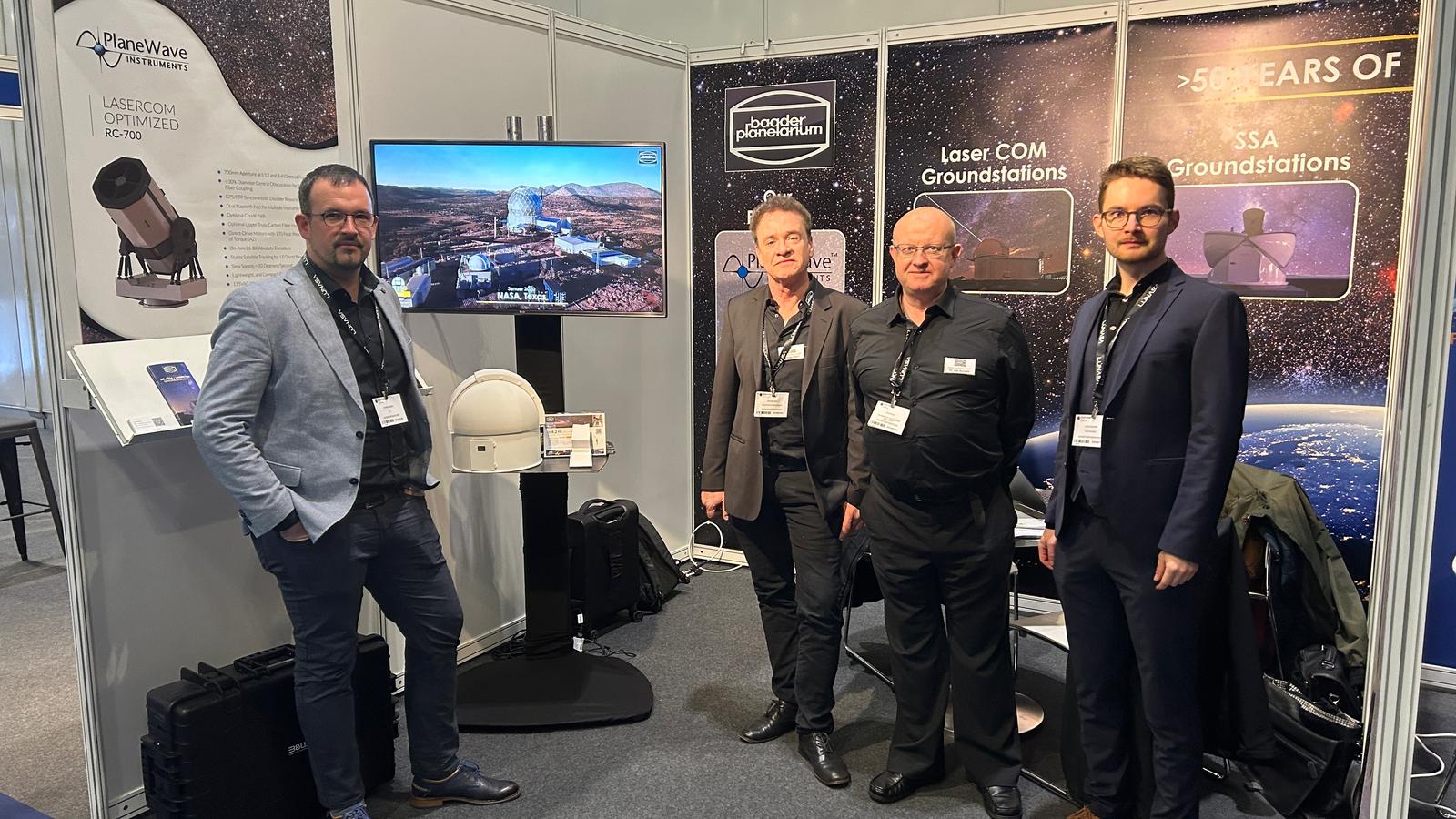
We were present at Space-Comm Expo UK 2025 at ExCeL London, where we showcased innovative observatory solutions designed for a wide range of scientific applications, including Space Situational Awareness (SSA), laser communication, and astronomy. Baader Planetarium specializes in the development and manufacture of advanced ground station domes for Satellite Laser Ranging (SLR), SSA, and Lasercom applications, as well as in fully integrated, turnkey optical observatories.
More information is available at baader.space.
Our experts Johannes Baader, Linus Niekamp, Lee Sproats, and Michael Risch were available on site for technical discussions and provided insights into the integration of modern telescope, mount, and dome systems for scientific use.
[br]
Practical Astronomy Show (PAS), 15. März 2025
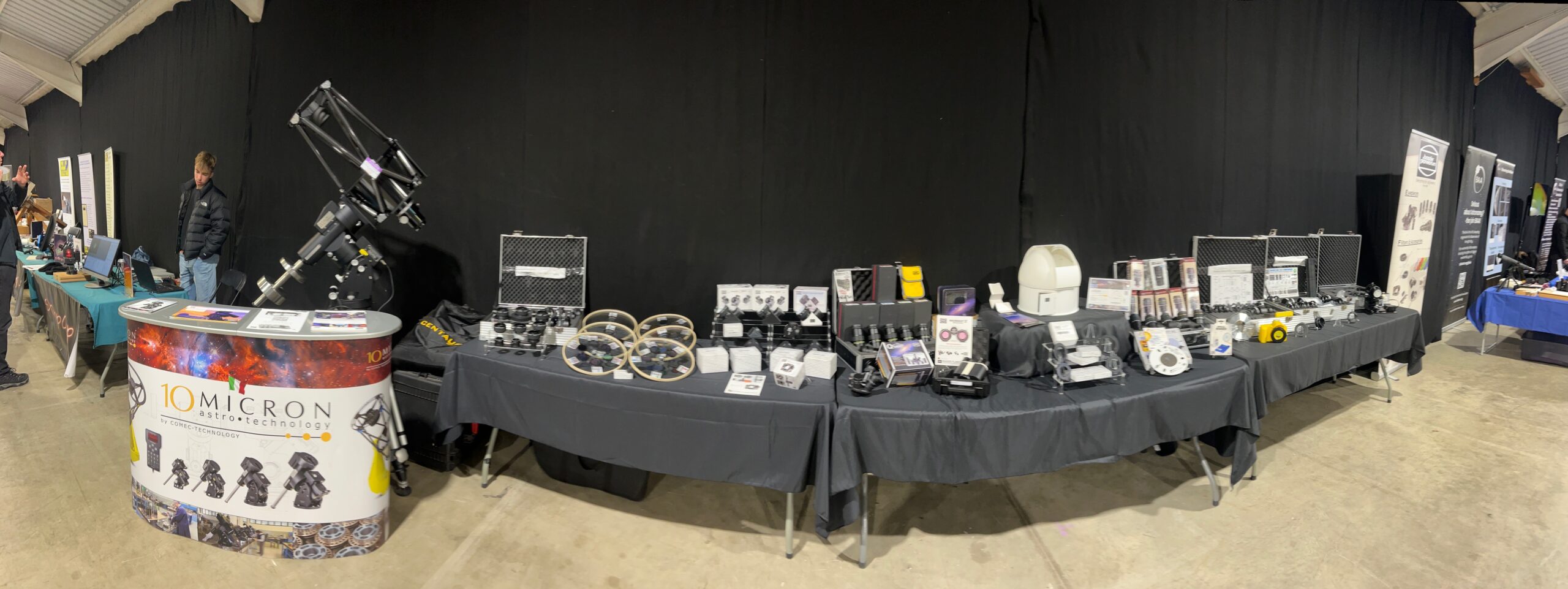
On Saturday, March 15th, the one-day Practical Astronomy Show (PAS) took place at the NAEC Exhibition Centre at Stoneleigh in the heart of England. The Practical Astronomy Show 2025 was very well attended throughout the day, leading to numerous and in-depth discussions at our booth.
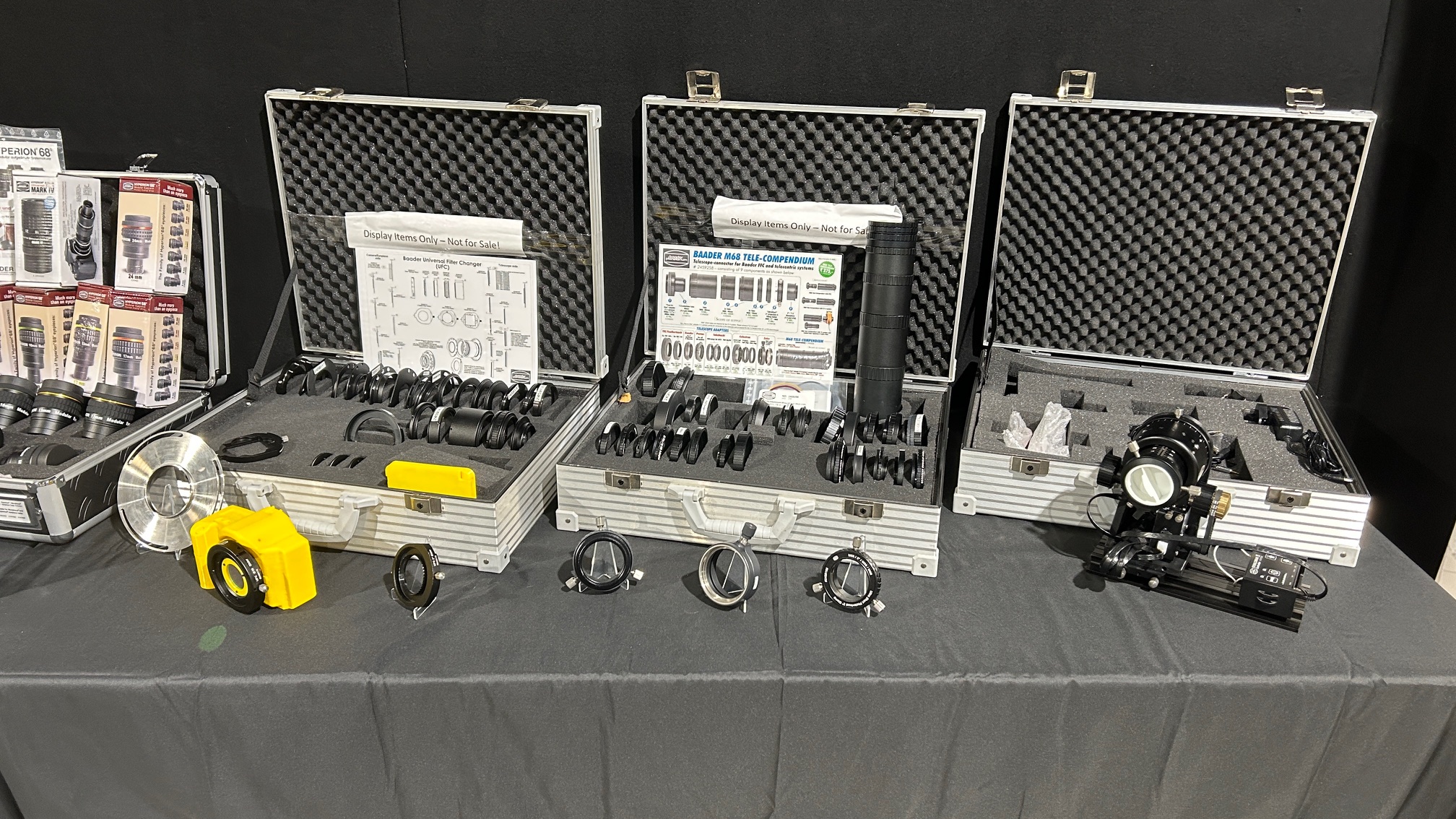
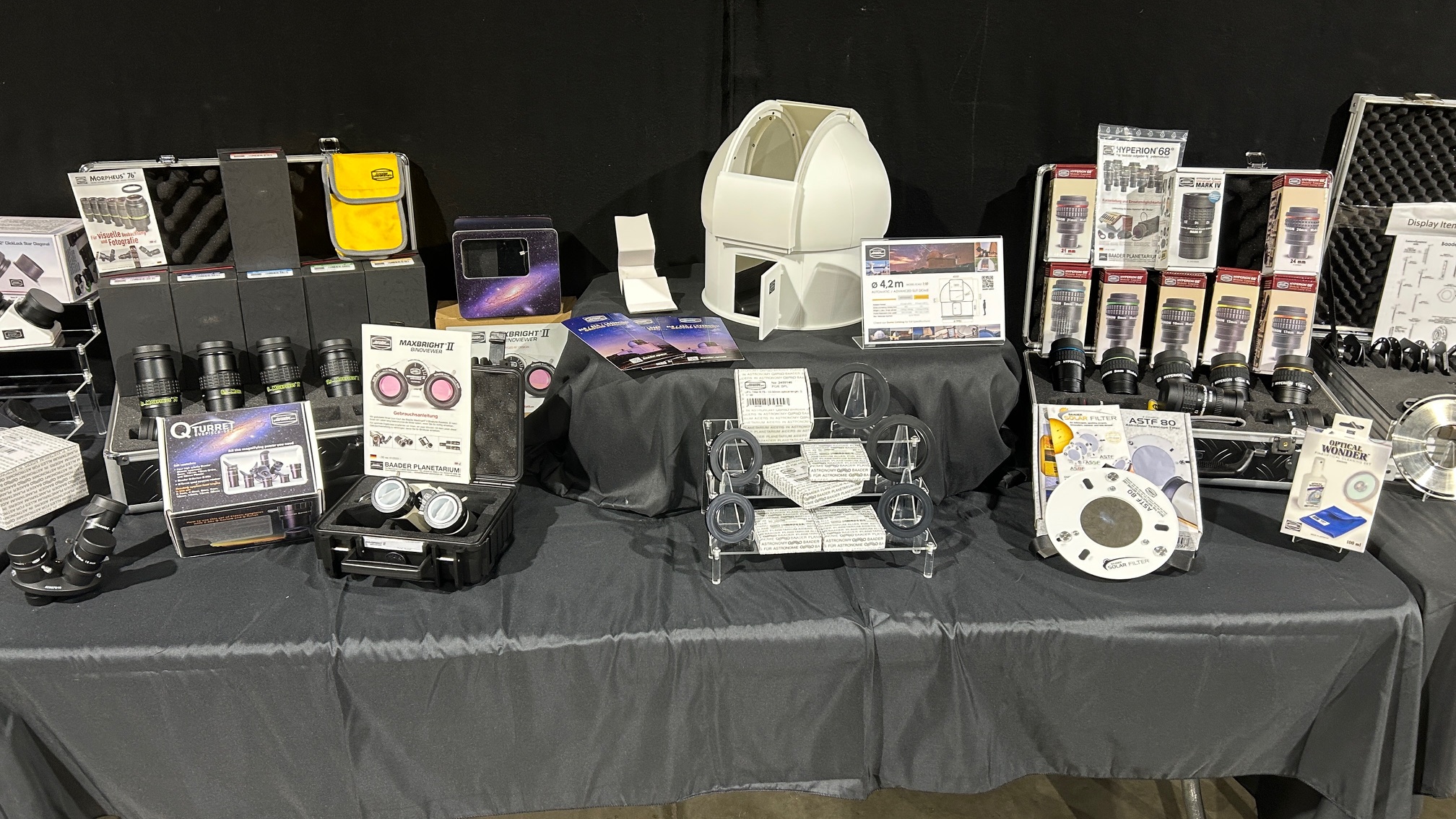
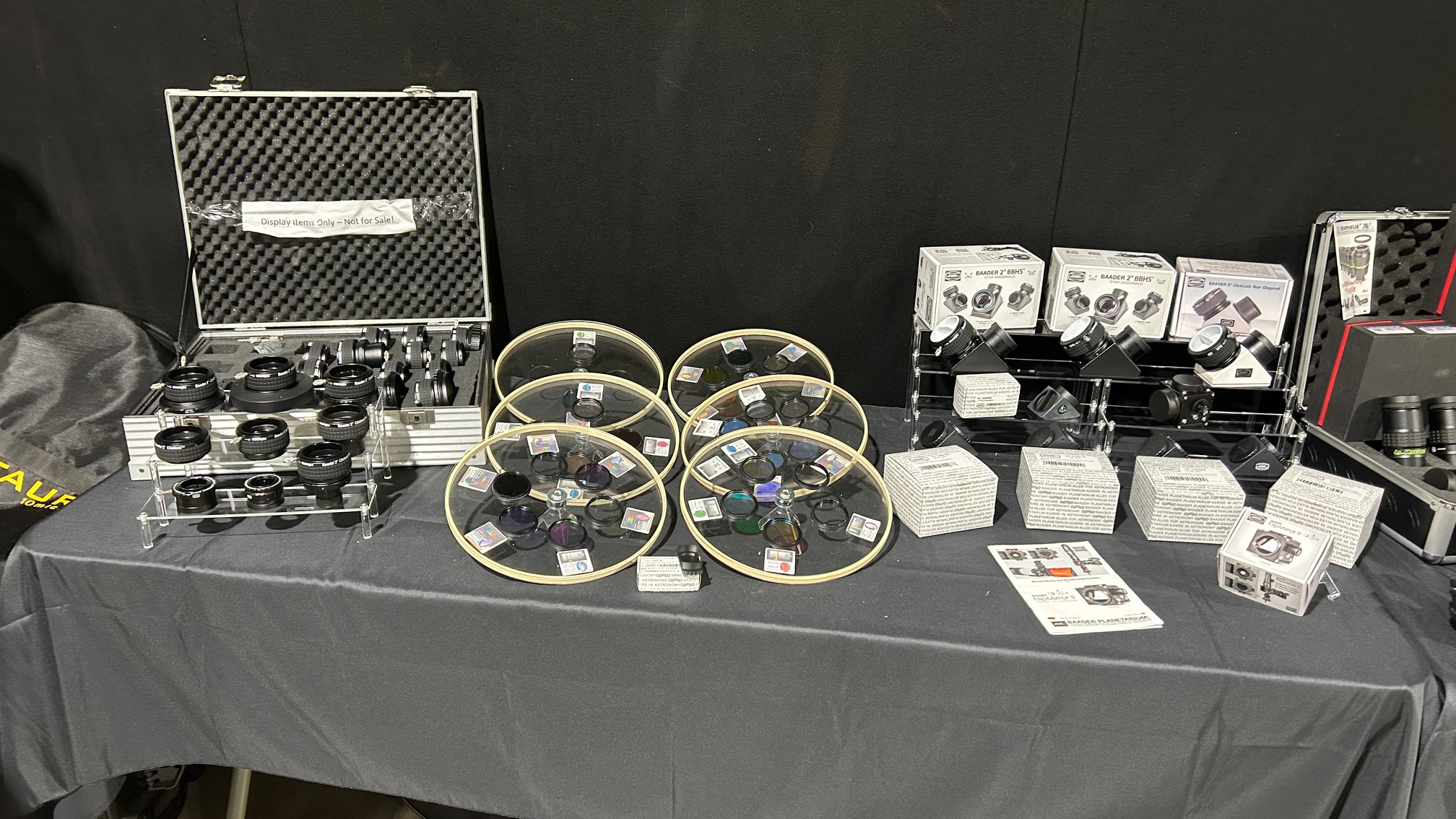
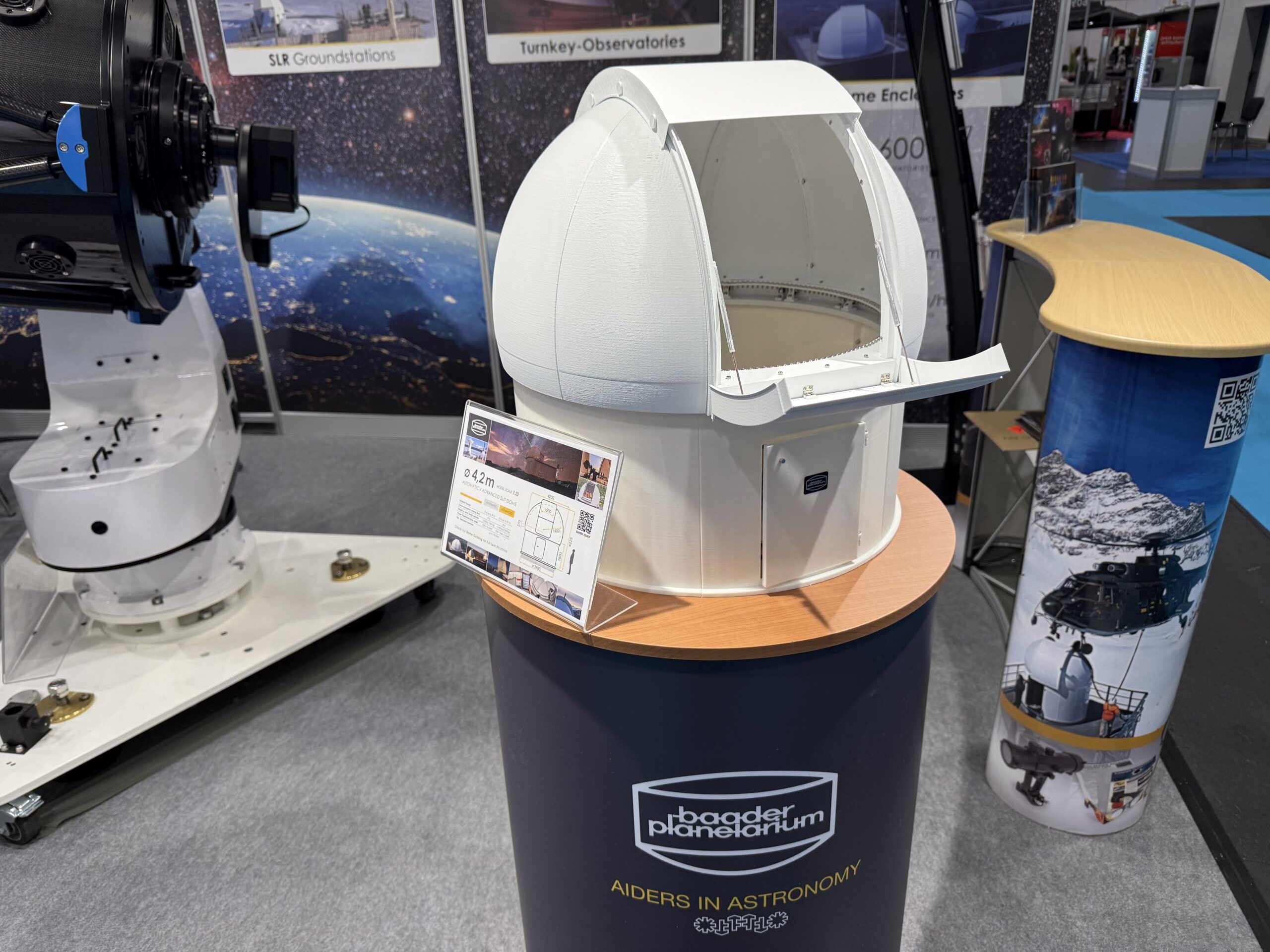
The most frequently discussed products included Hyperion & Morpheus eyepieces, star diagonals, filters, and additional accessories. The main visual highlight of the booth, however, was the scale model of a 4.2-meter Baader dome, which initially attracted visitors out of curiosity and then served as an excellent starting point for conversations about our observatory and dome solutions.
Overall, PAS 2025 provided an excellent opportunity for professional exchange, detailed product discussions, and many new contacts within the amateur astronomy community.
[br]
Celestron – Ringfoto Roadshow, March 17-20, 2025
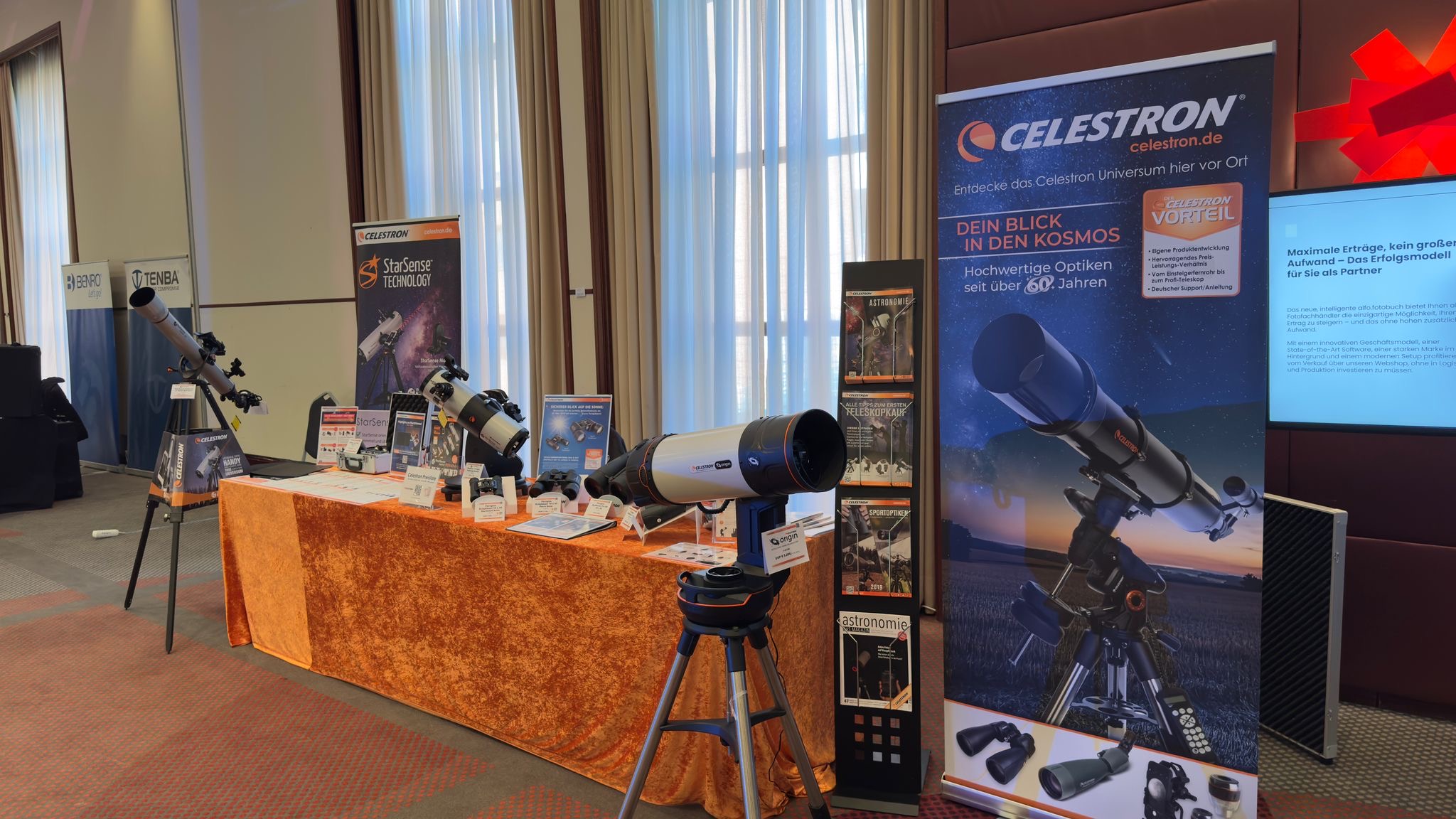
We participated in the Ringfoto Roadshow in Germany with our Celestron product range. Over the course of four days in four cities, we presented the Celestron portfolio to representatives from more than 100 photographic retail stores across Germany.


[br]

Conference of the Society of German-Speaking Planetariums, 5. - 7. April 2025
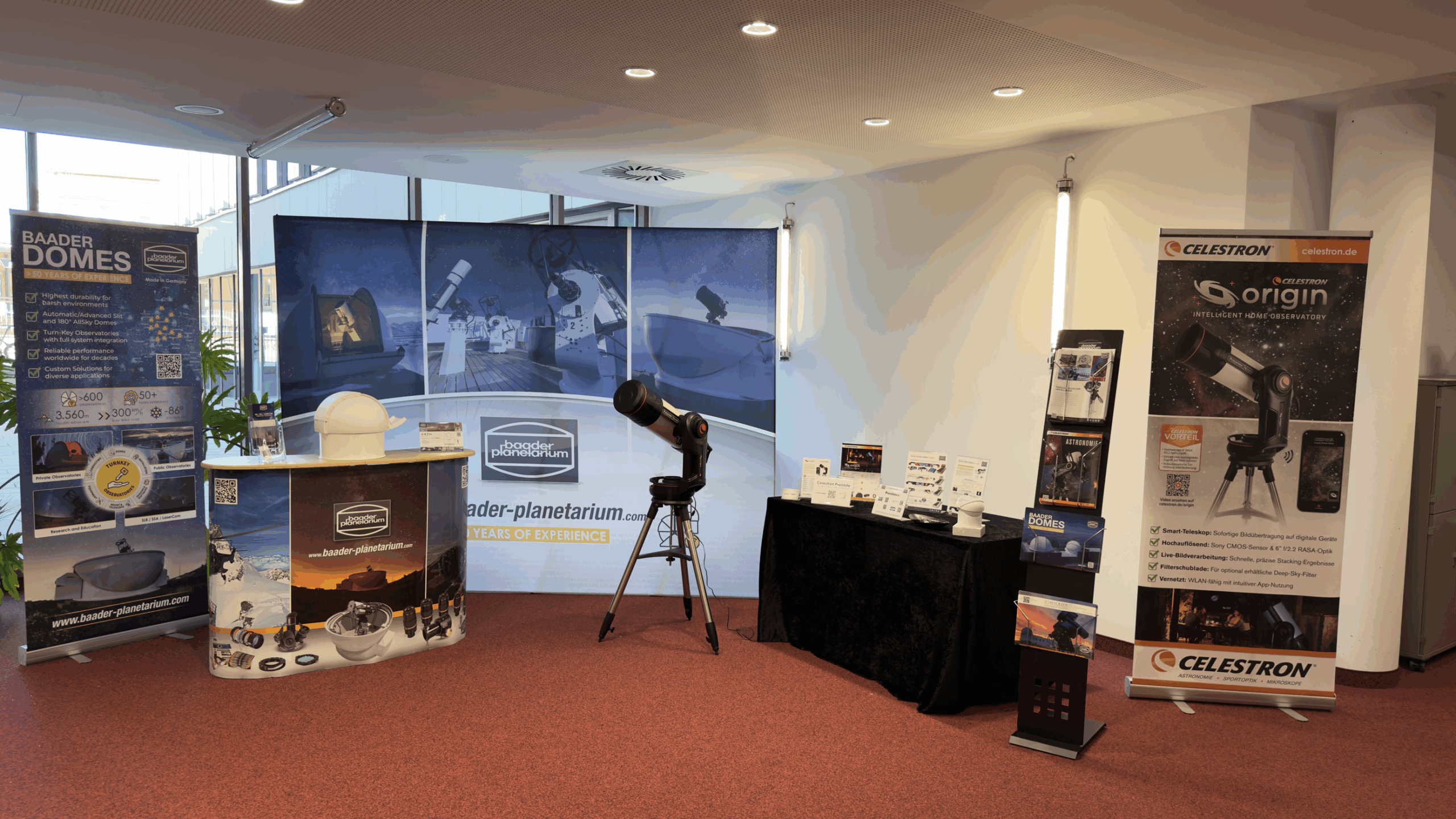
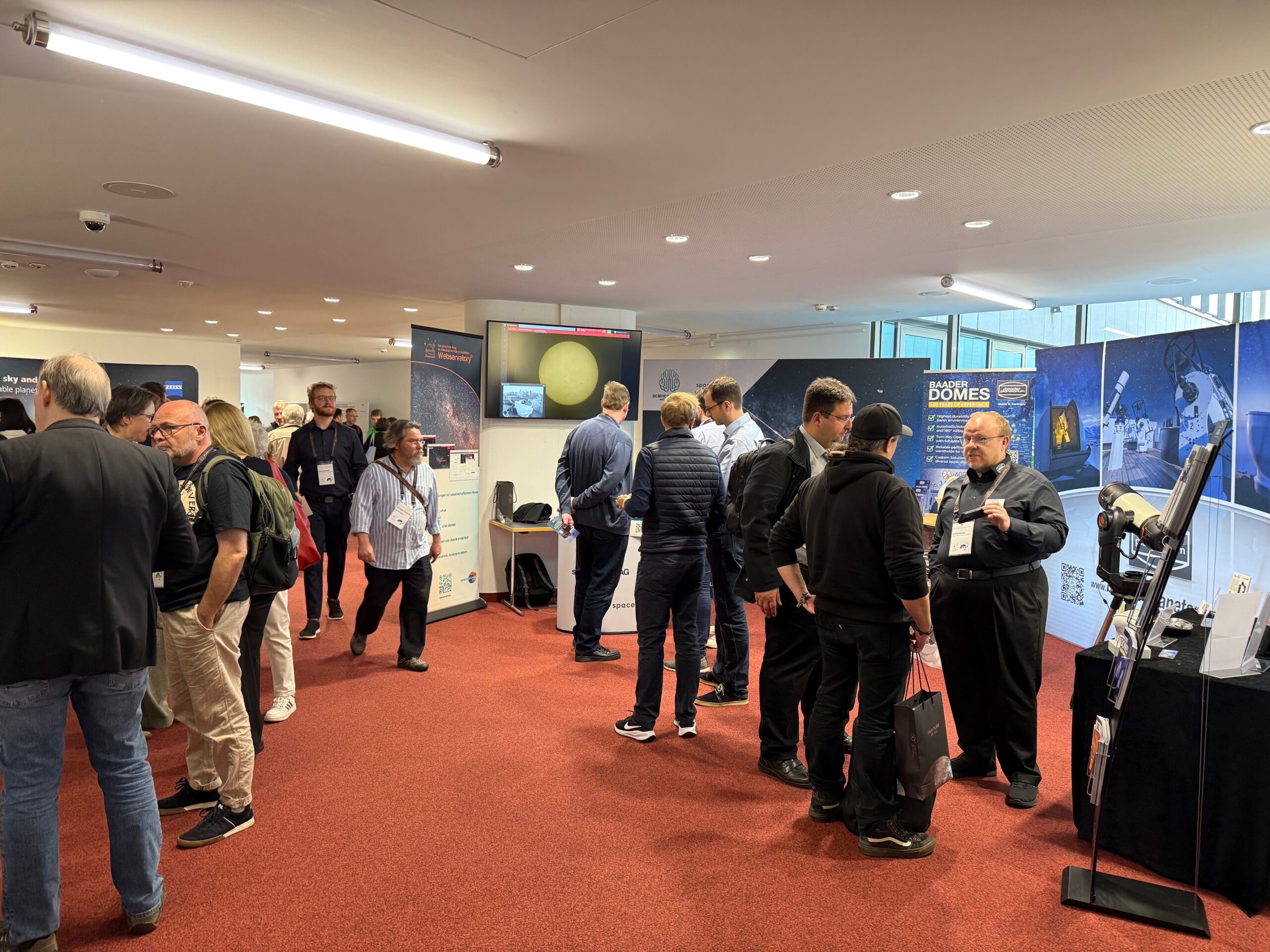
Every year, the operators of German planetariums come together for a multi-day professional conference. In 2025, the event was hosted by the Planetarium Halle, which operates an observatory built and installed by Baader Planetarium.
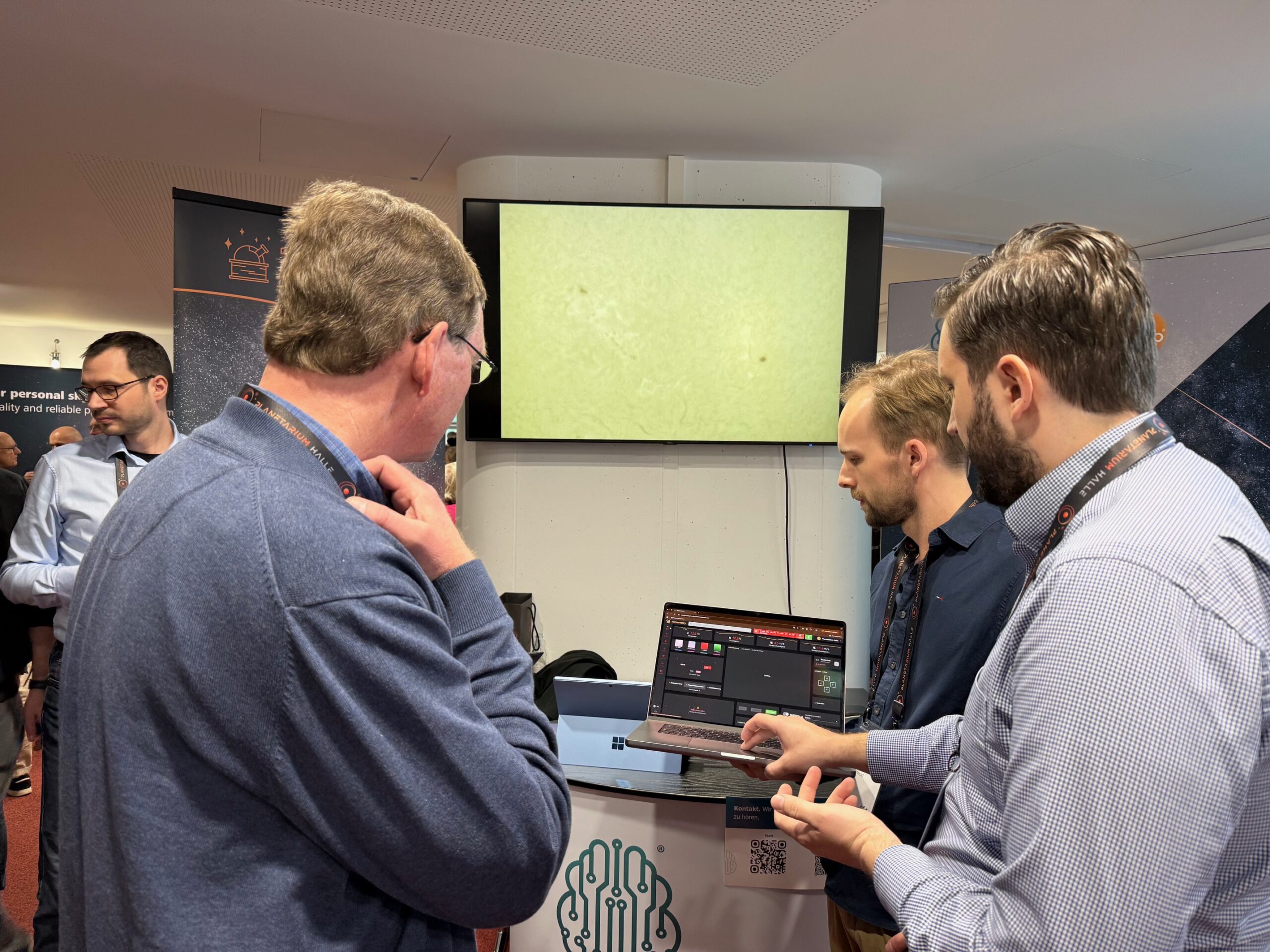
As the manufacturer of the observatory, we were invited to participate in the event with a joint exhibition stand together with our software partner sciencentric®. With its Webservatory® software, Sciencentric enables the remote integration of all observatory instruments. The streamlined software architecture operates without manufacturer-specific programs or drivers, significantly simplifying setup, training, and operation. From a single user interface, the mount, dome, cameras, and all other components can be controlled. These capabilities were presented in an afternoon lecture and, thanks to clear skies, a live real time demonstration was given with the telescope pointed at the Sun, Moon, and galaxies, inspiring several planetarium operators to further explore the topic of observatories.
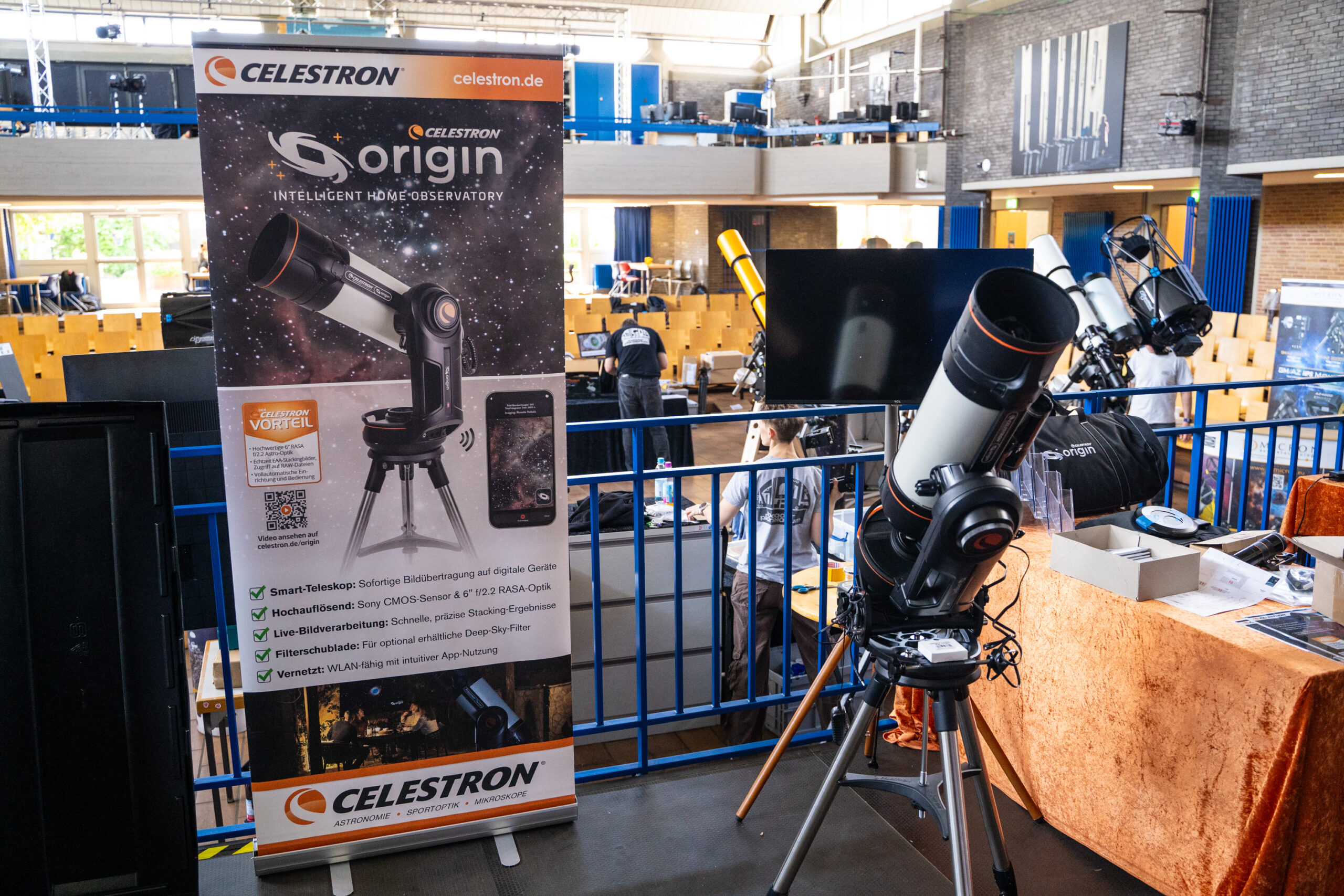
While not every city can afford a large observatory in addition to a planetarium, a much more cost-effective alternative was also demonstrated and received great interest. Our colleague Herwig Diessner installed the Celestron Origin – Intelligent Home Observatory – on the rooftop and captured galaxy images via live stacking in front of an enthusiastic audience.


[br]
Northeast Astronomy Forum & Space Expo (NEAF), April 5-6, 2025
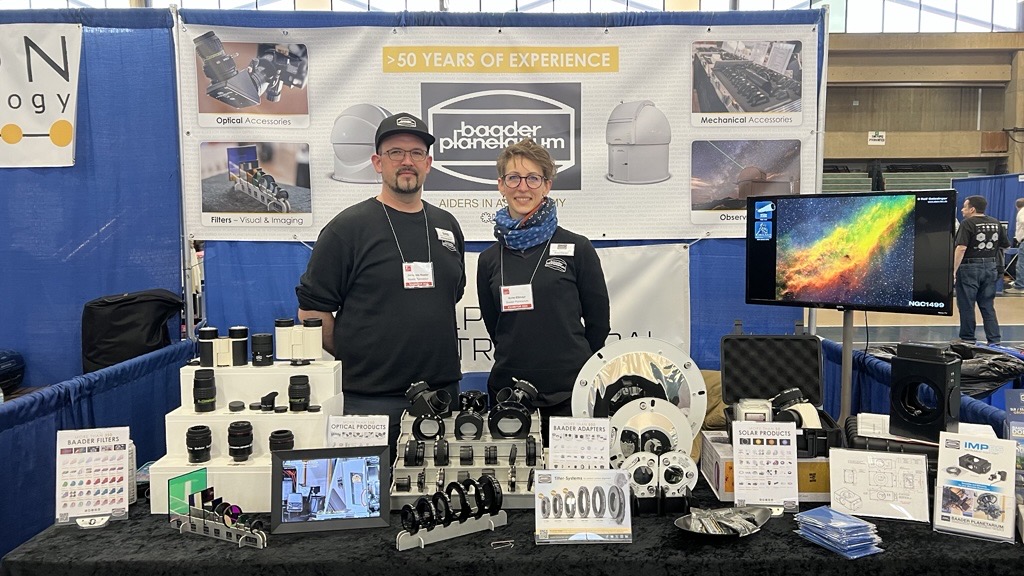
We were represented at the 34th Northeast Astronomy Forum & Space Expo (NEAF) 2025 at Rockland Community College in Suffern, New York.
At our booth, we presented a concise overview of our key product lines, including optical accessories, eyepieces, filters, and a wide range of mechanical adapters. The display was complemented by information on Baader observatory domes.
With a presence on the US market spanning several decades, supported by our distributor Alpine Astronomical, NEAF 2025 provided an excellent opportunity for direct exchange with US customers, dealers, and the international astronomy community, and was marked by many engaging discussions and strong visitor interest.
[br]
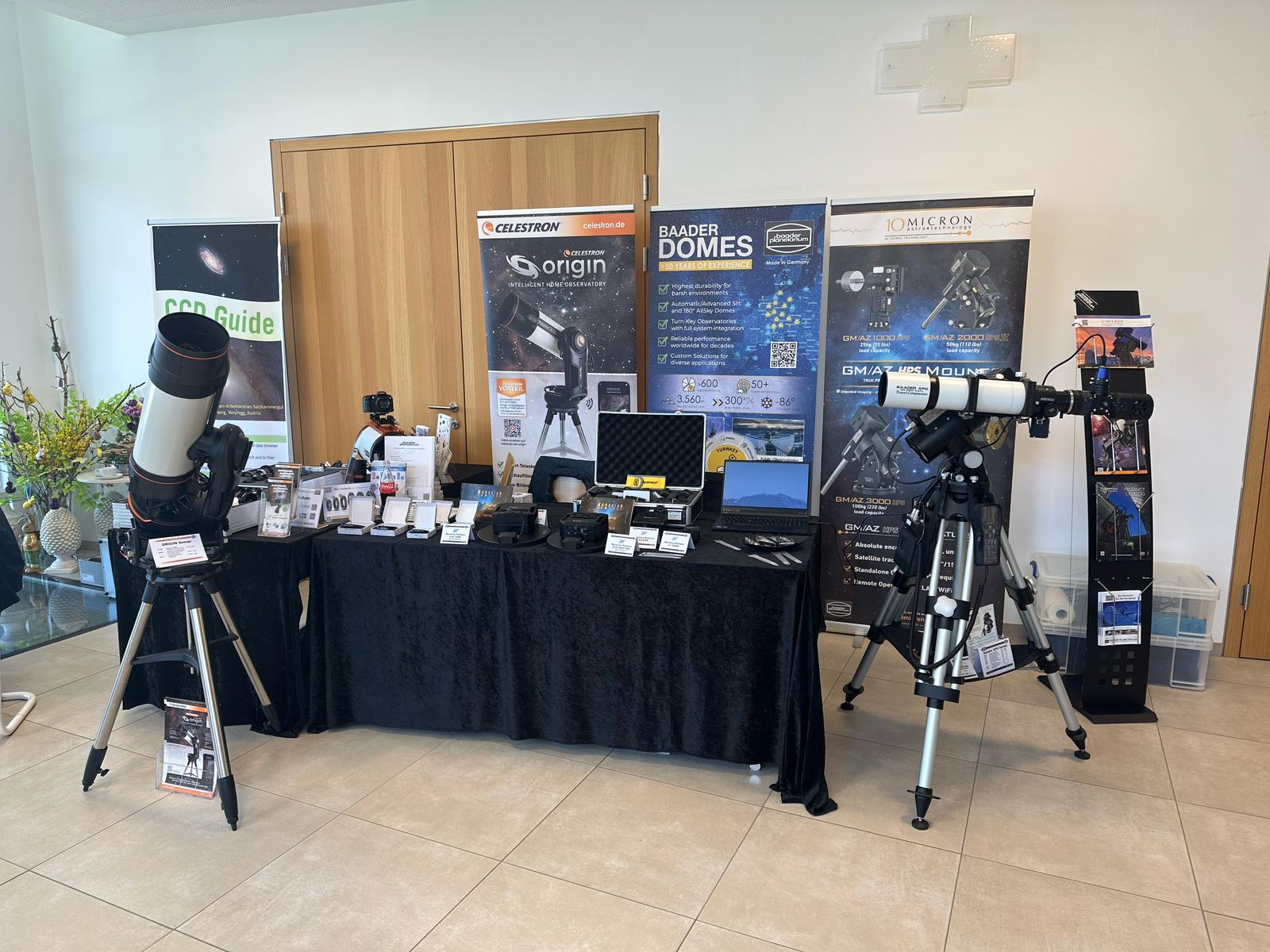
Astronomieworkshop Weyregg 2025, 12. - 13. April 2025
Baader Planetarium, together with the Celestron team, participated in the Astronomy Workshop in Weyregg am Attersee, organized by the Astronomical Working Group Salzkammergut.
With an exhibition booth at the Parish and Community Center in Weyregg, the event provided an excellent opportunity for personal exchange with astronomy enthusiasts and workshop participants in a relaxed atmosphere.
[br]

International Fürstenfelder Nature Photography Days, April 19-21, 2025
We participated in the International Fürstenfeld Nature Photography Days, where we presented the Celestron Sport Optics Portfolio. In addition to binoculars and spotting scopes, we also demonstrated various ways to adapt different types of cameras to Celestron sport optics for photography and digiscoping applications.


[br]
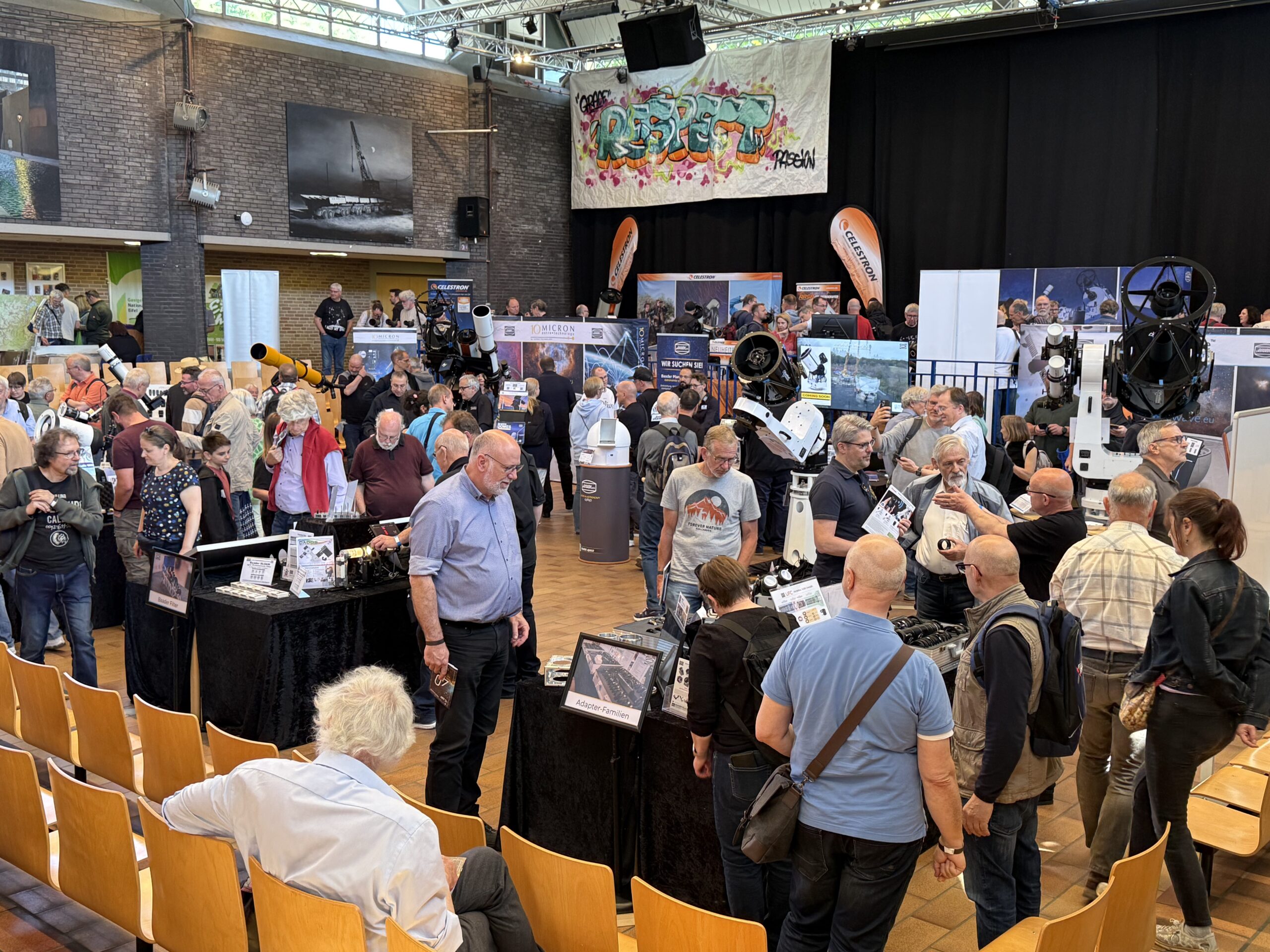
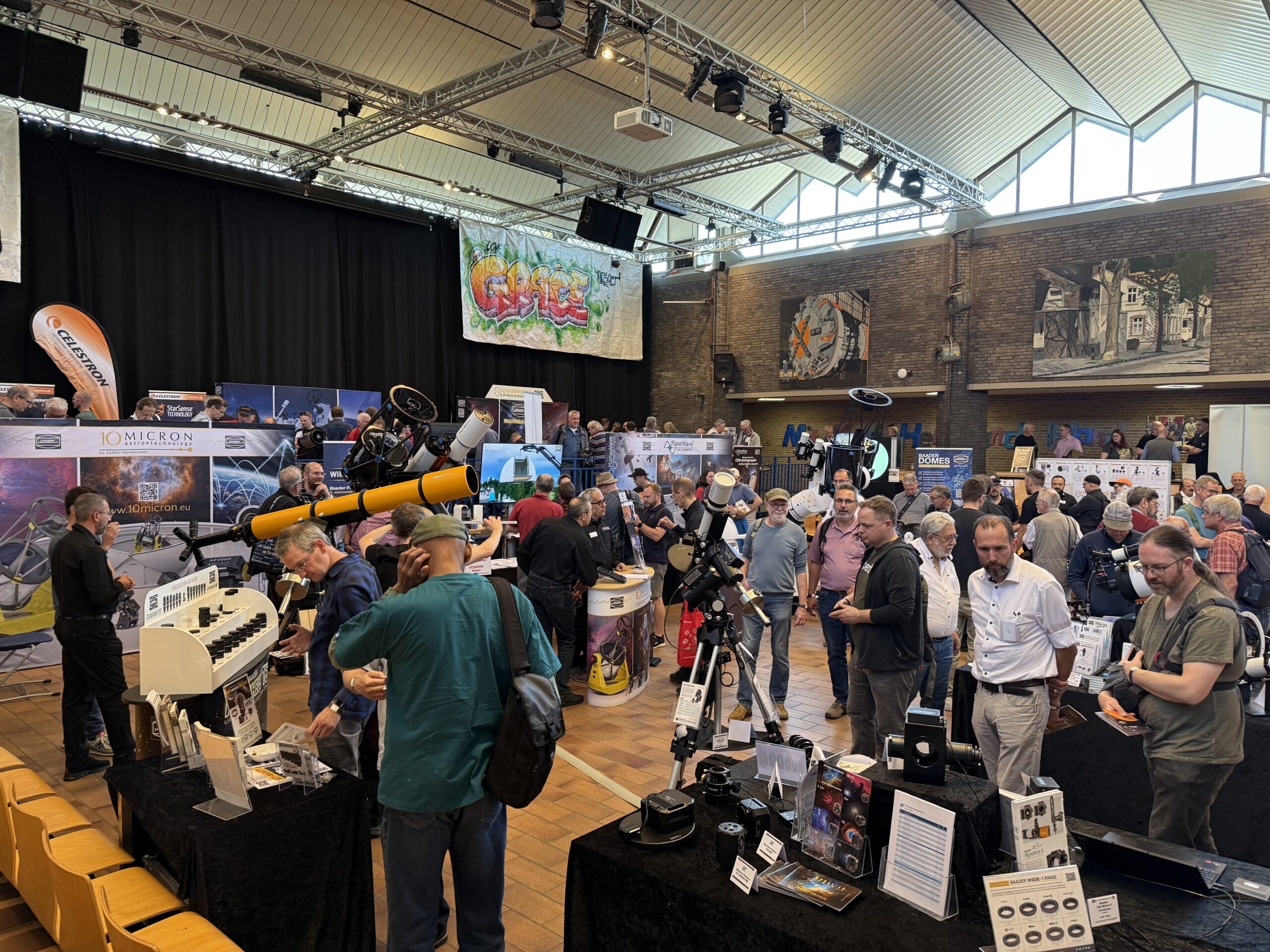
ATT, May 10, 2025
The ATT is a trade fair especially for amateur astronomers, which we enjoy attending every year. It is the largest event of its kind in Europe. [br]
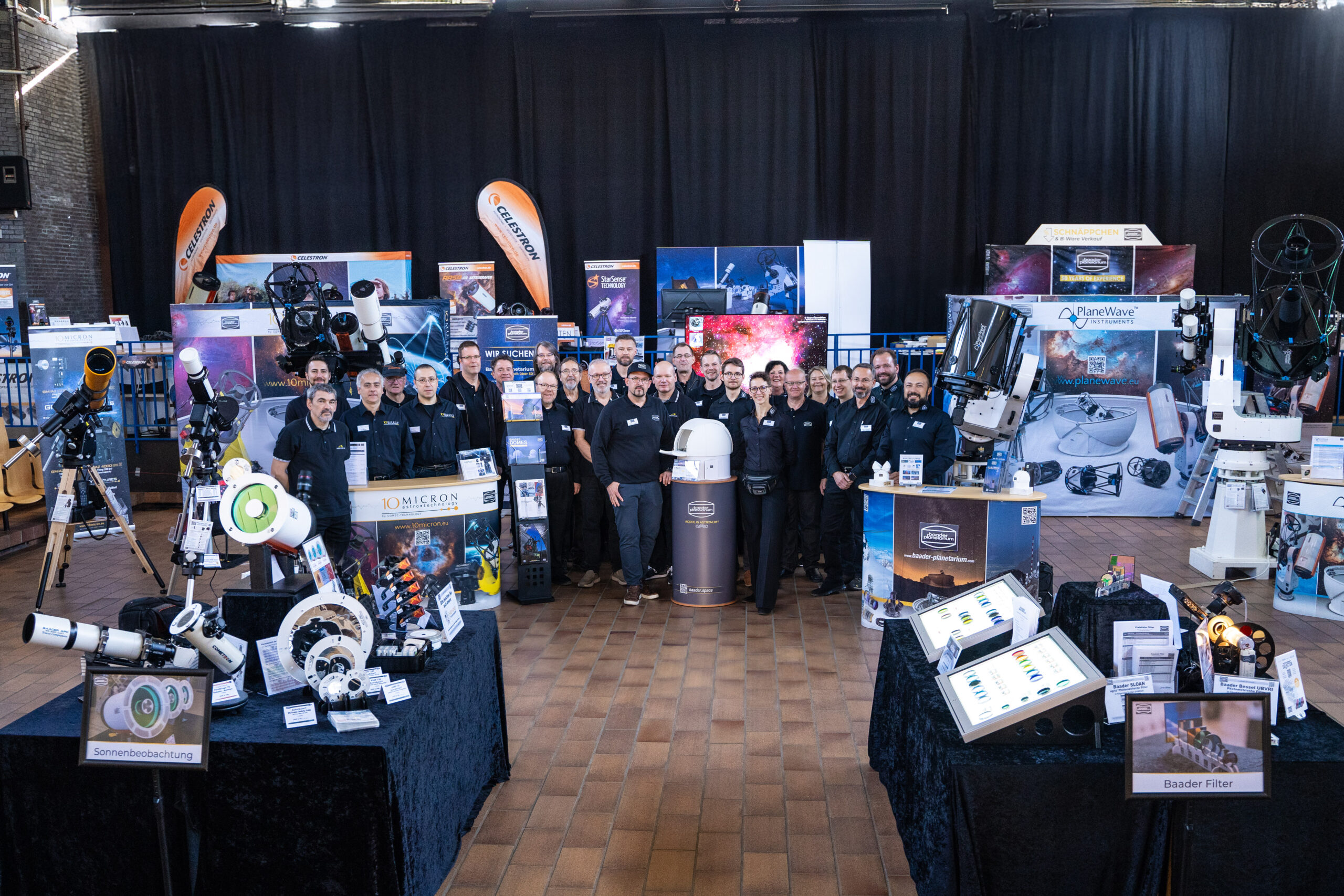
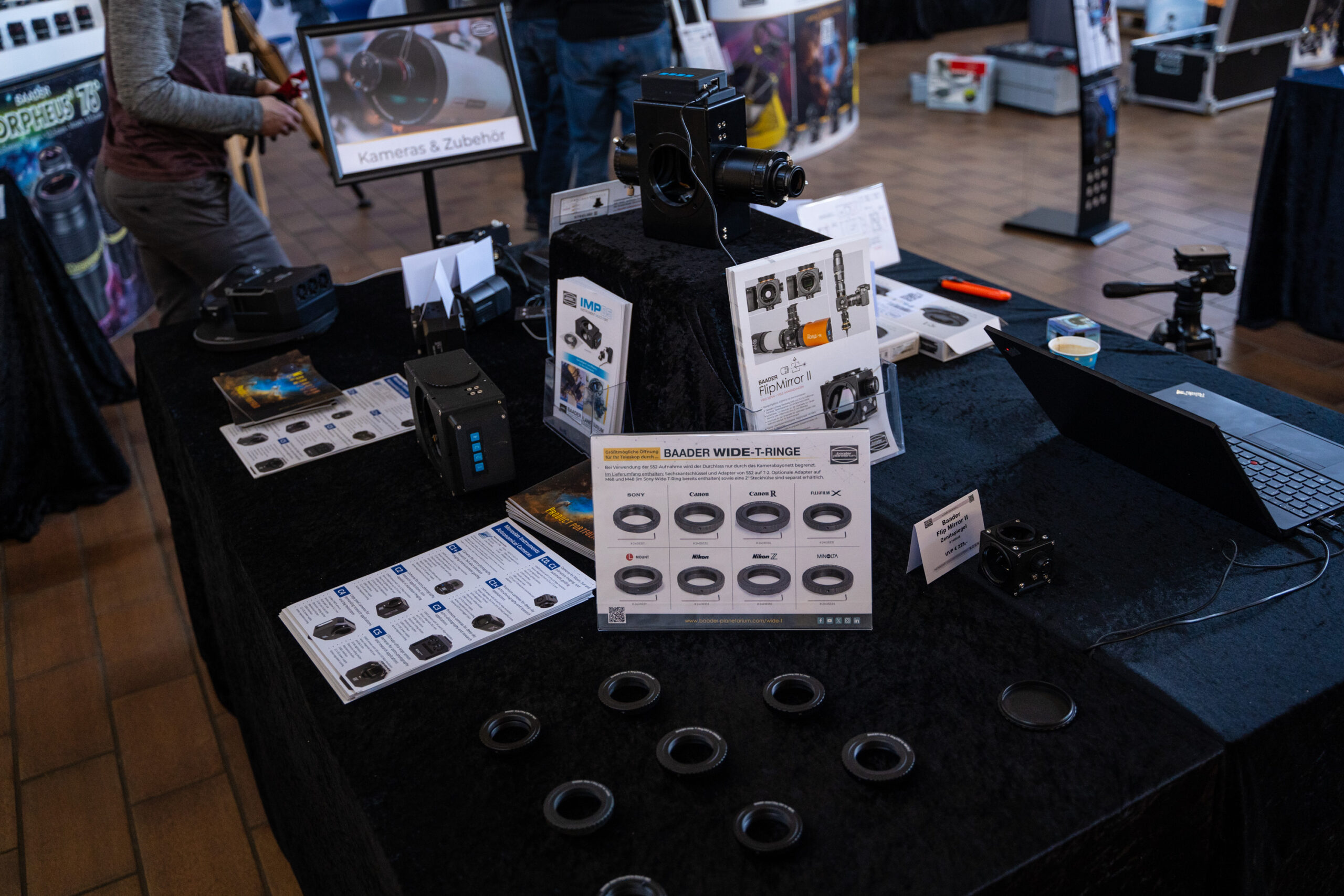
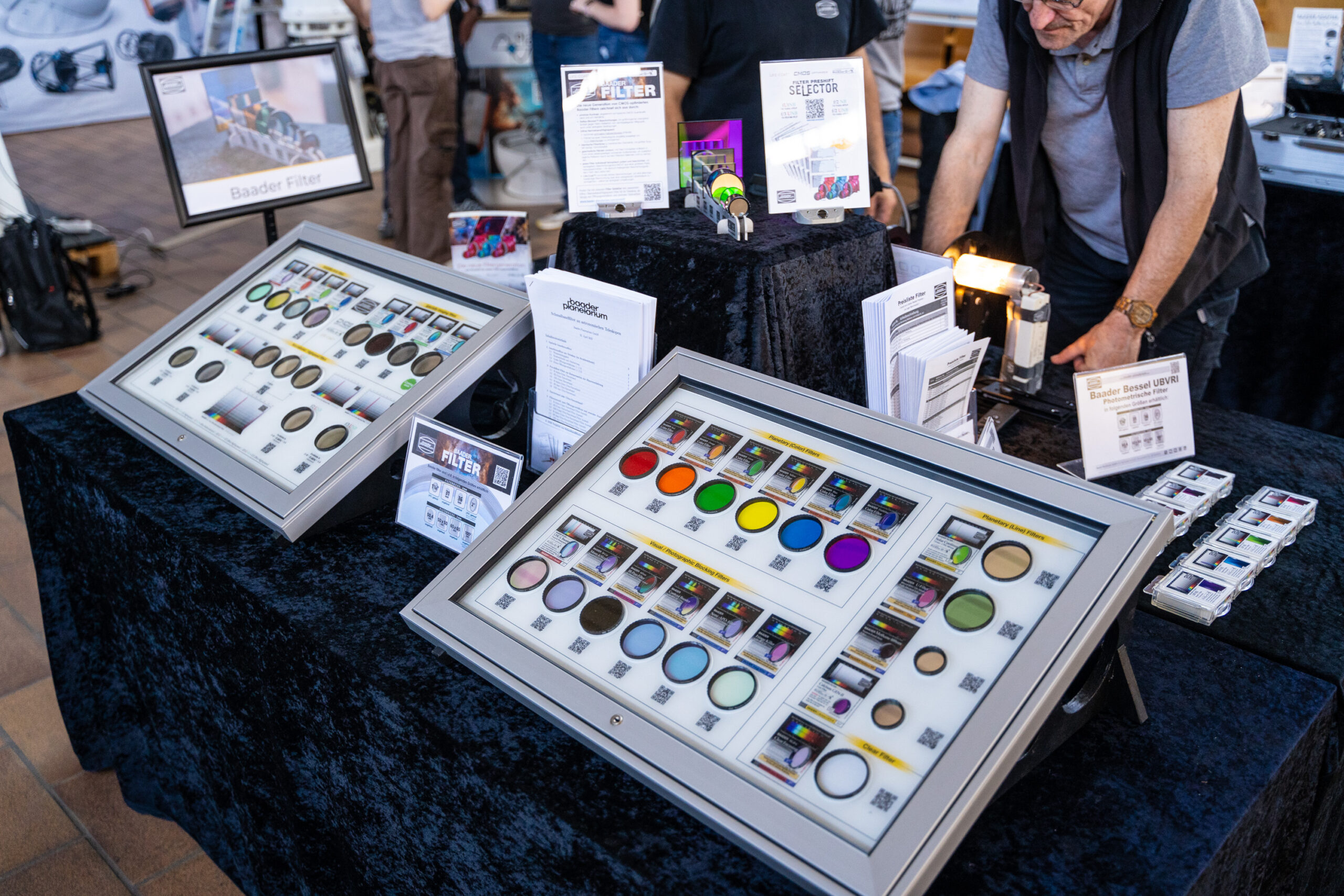
At this year's ATT in Essen we offered a wide range ofinteresting bargains directly for sale: including eyepieces, various accessories, Celestron binoculars, spotting scopes, telescopes and much more.
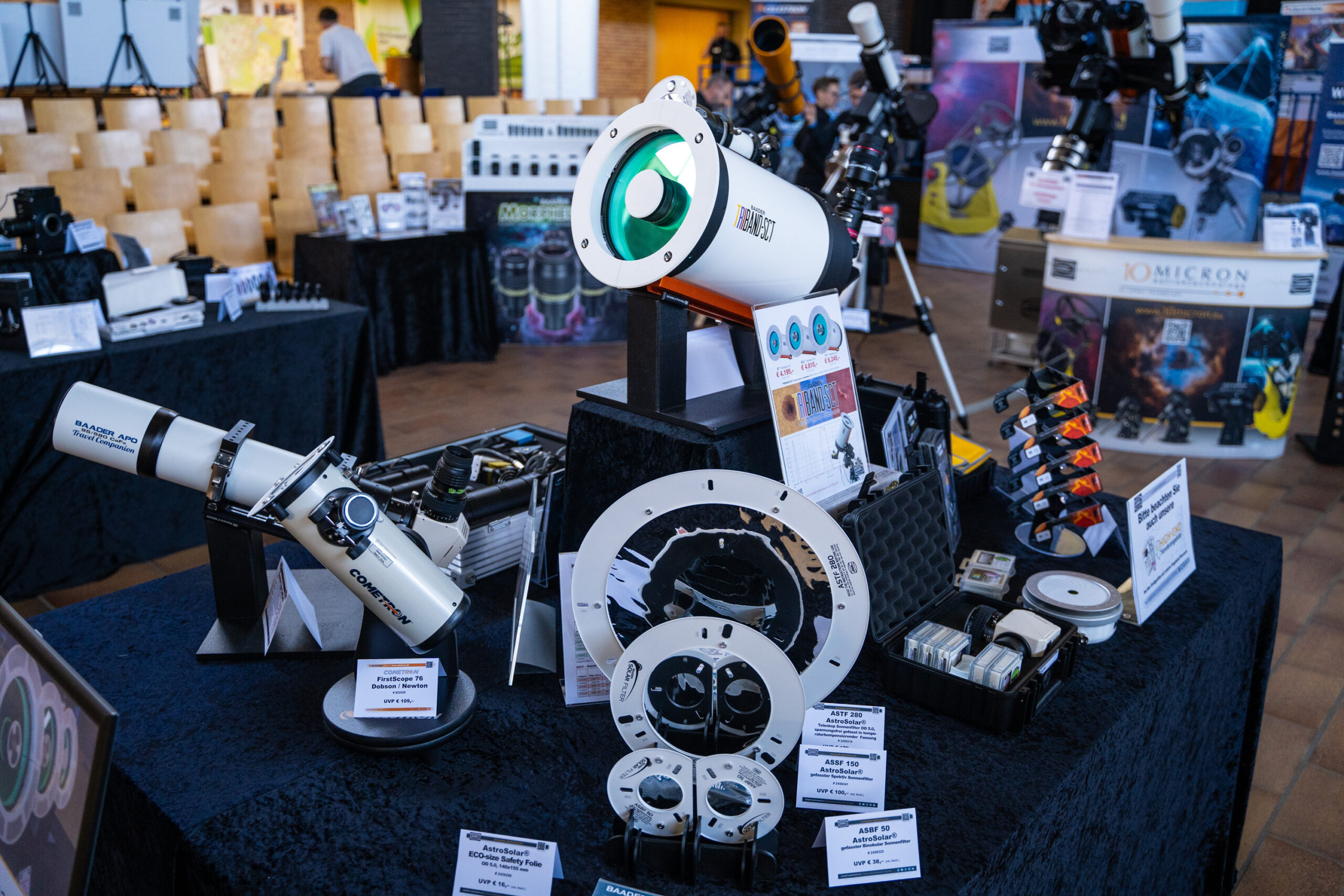
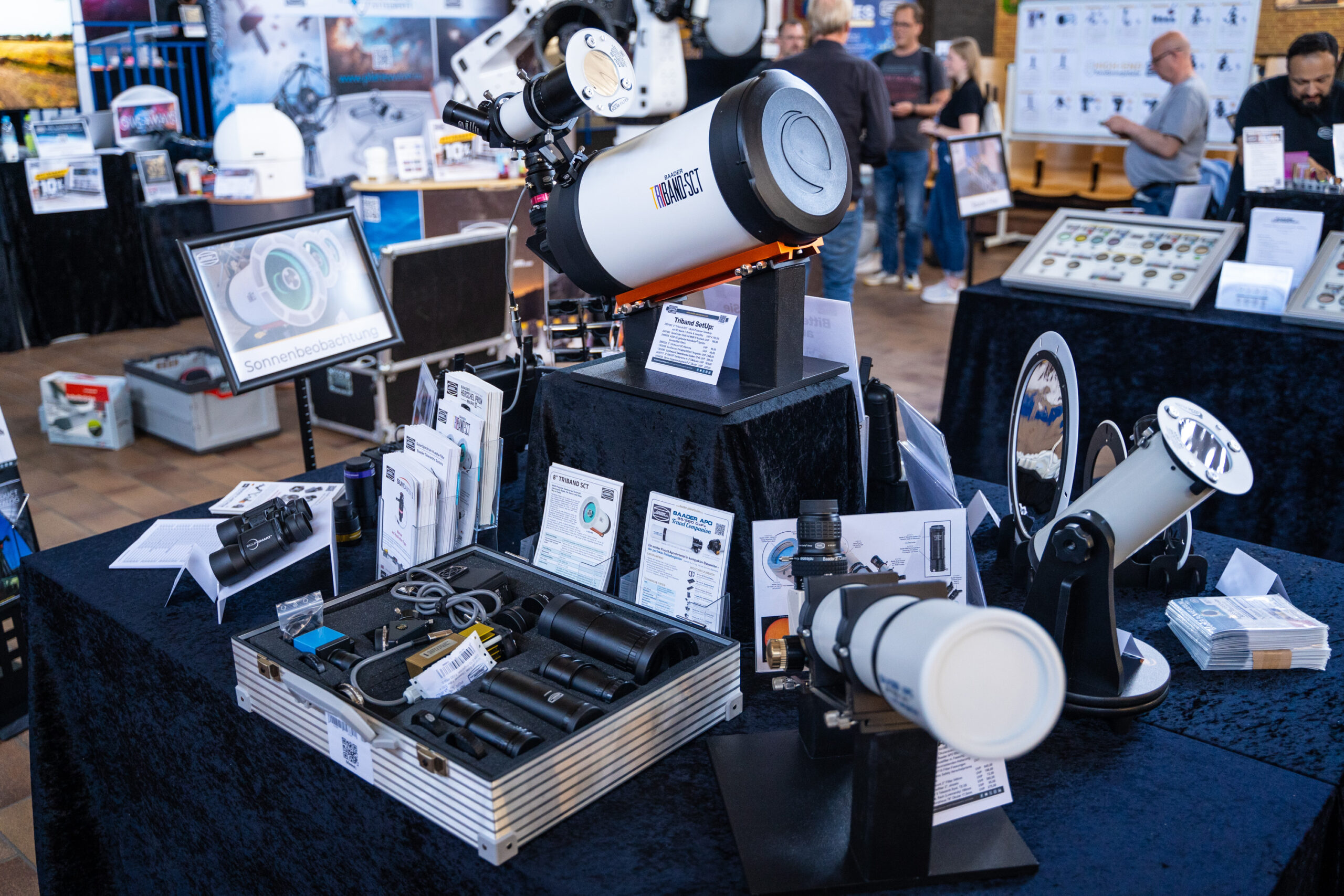
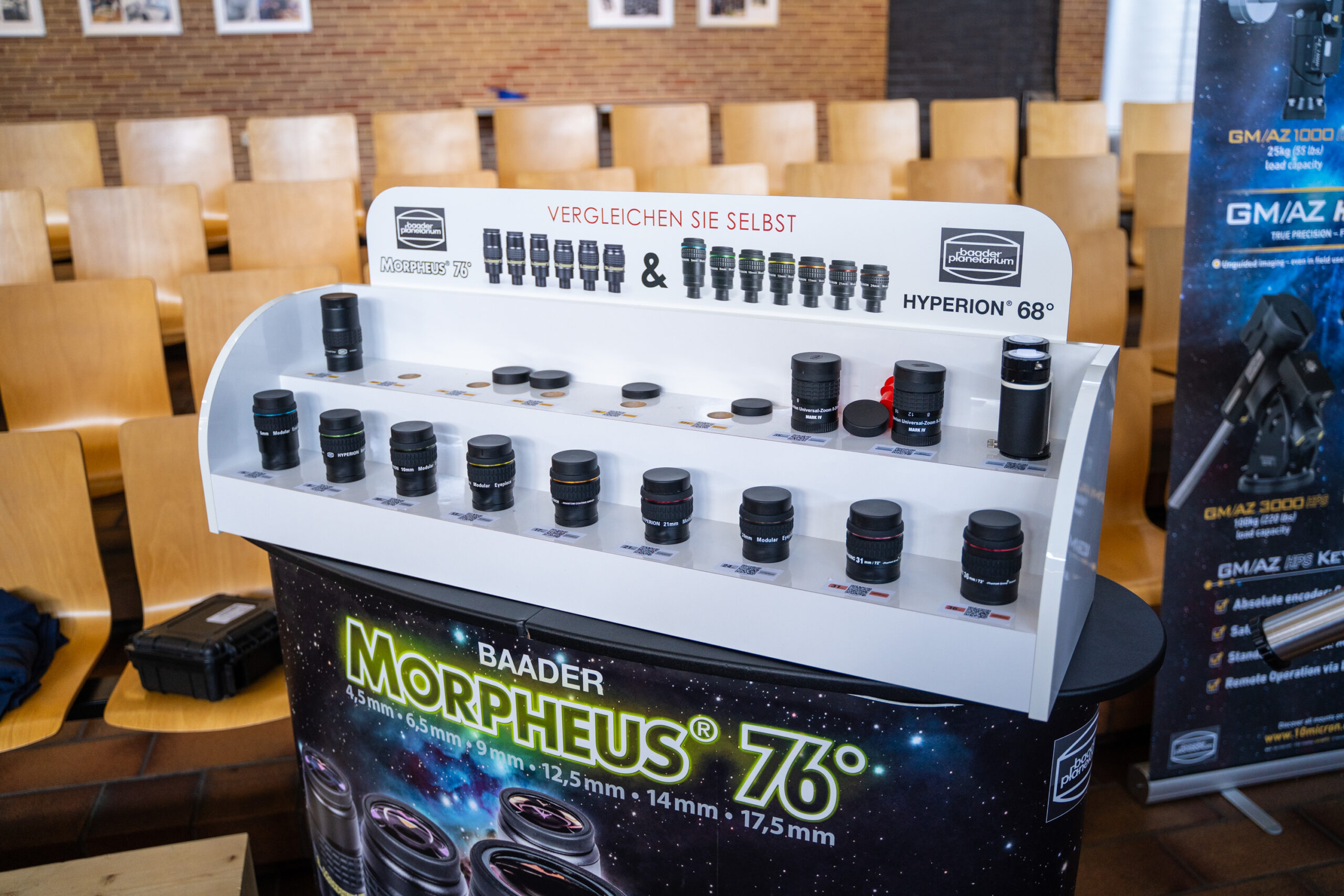
At the 40th ATT in addition to our standard product range, we presented the latest telescopes from PlaneWave and 10Micron Mounts, our Filter-Portfolio, our products for solar oberservation, interesting accessories for astrophotography, such as the IMP85 - Instrument Mulit Port 85 and the Baader Tilter systems as well as Moravian cameras and the brand new Celestron Origin and the Celestron RASA 6 at our Celestron booth.
[br]
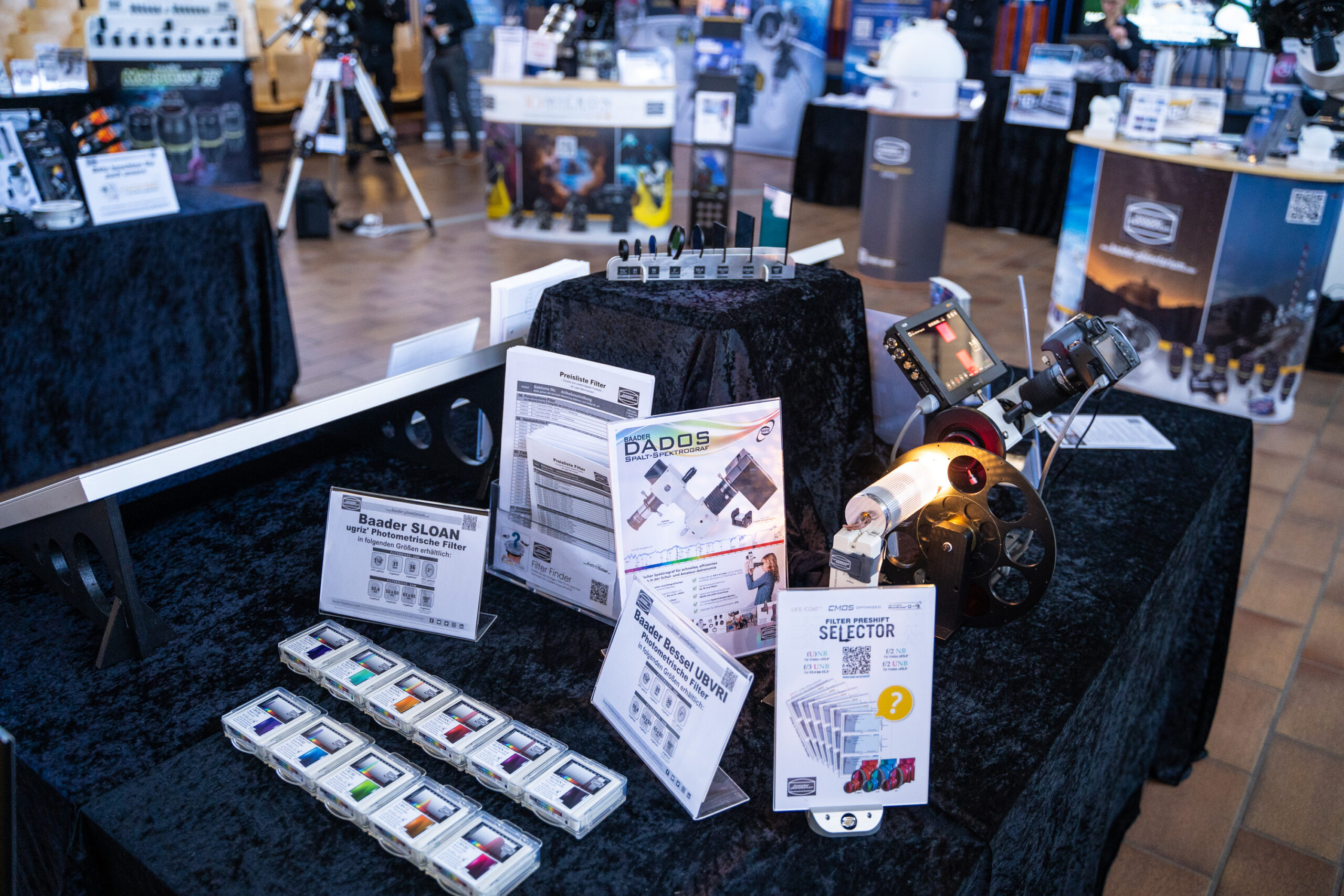
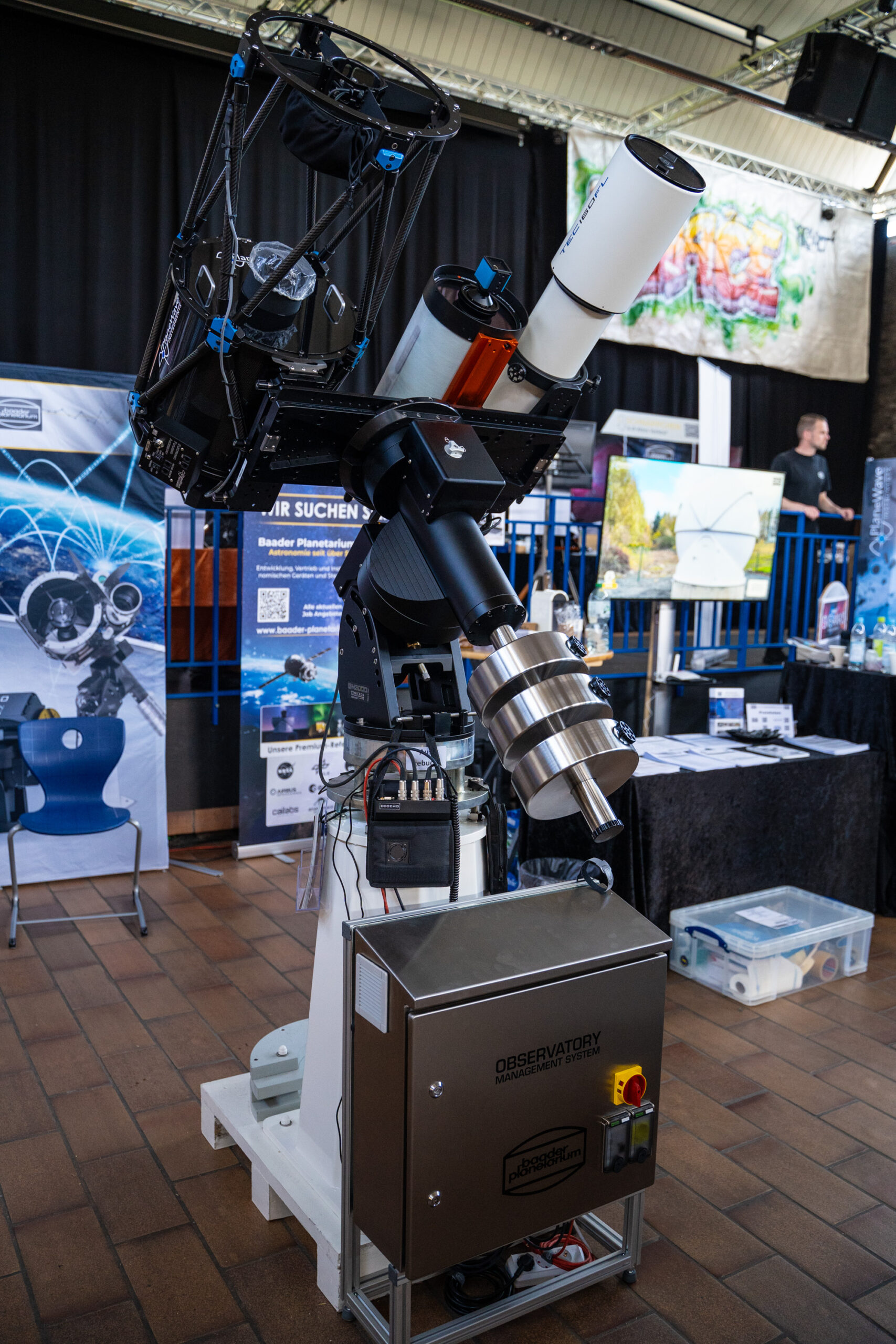
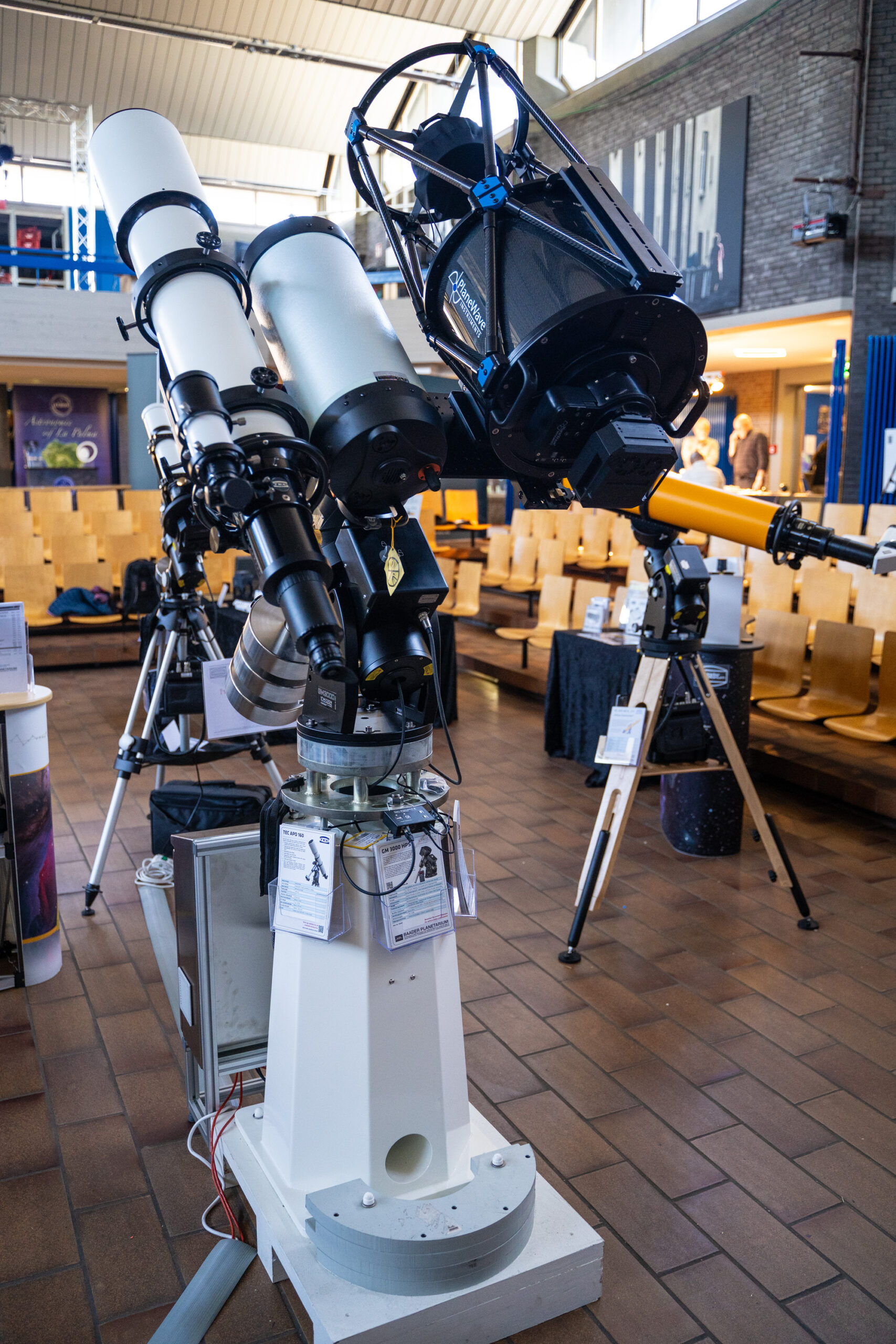
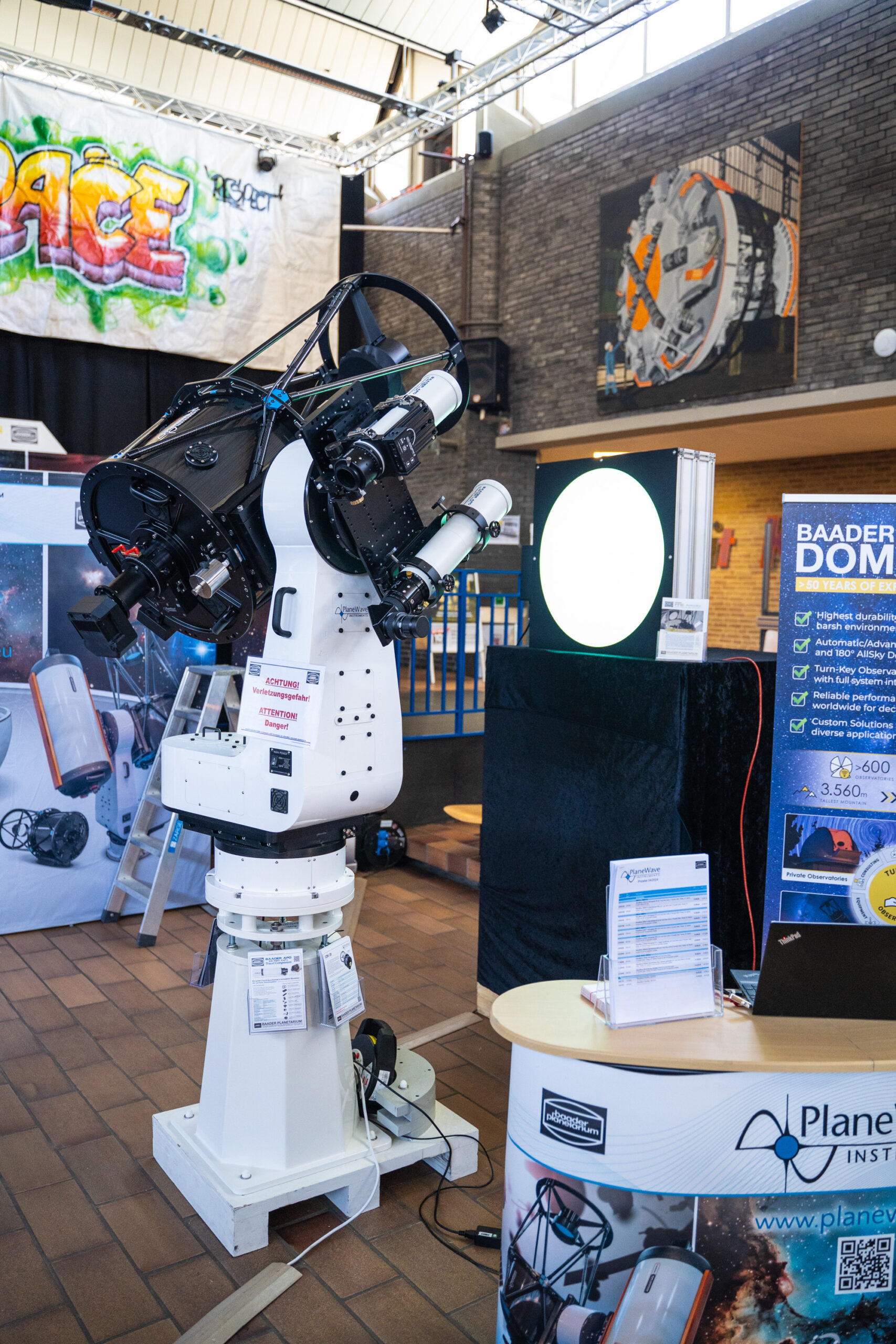
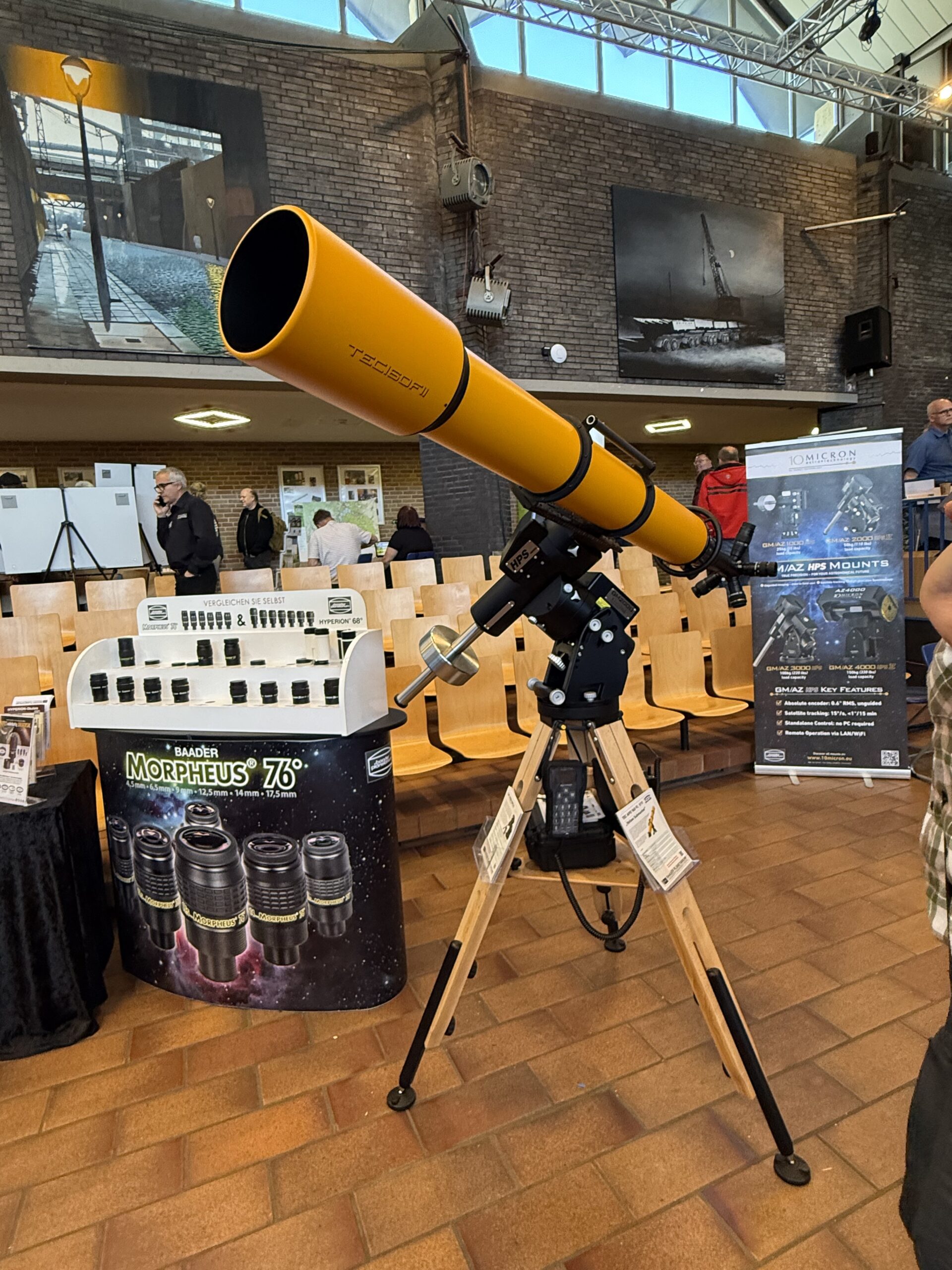
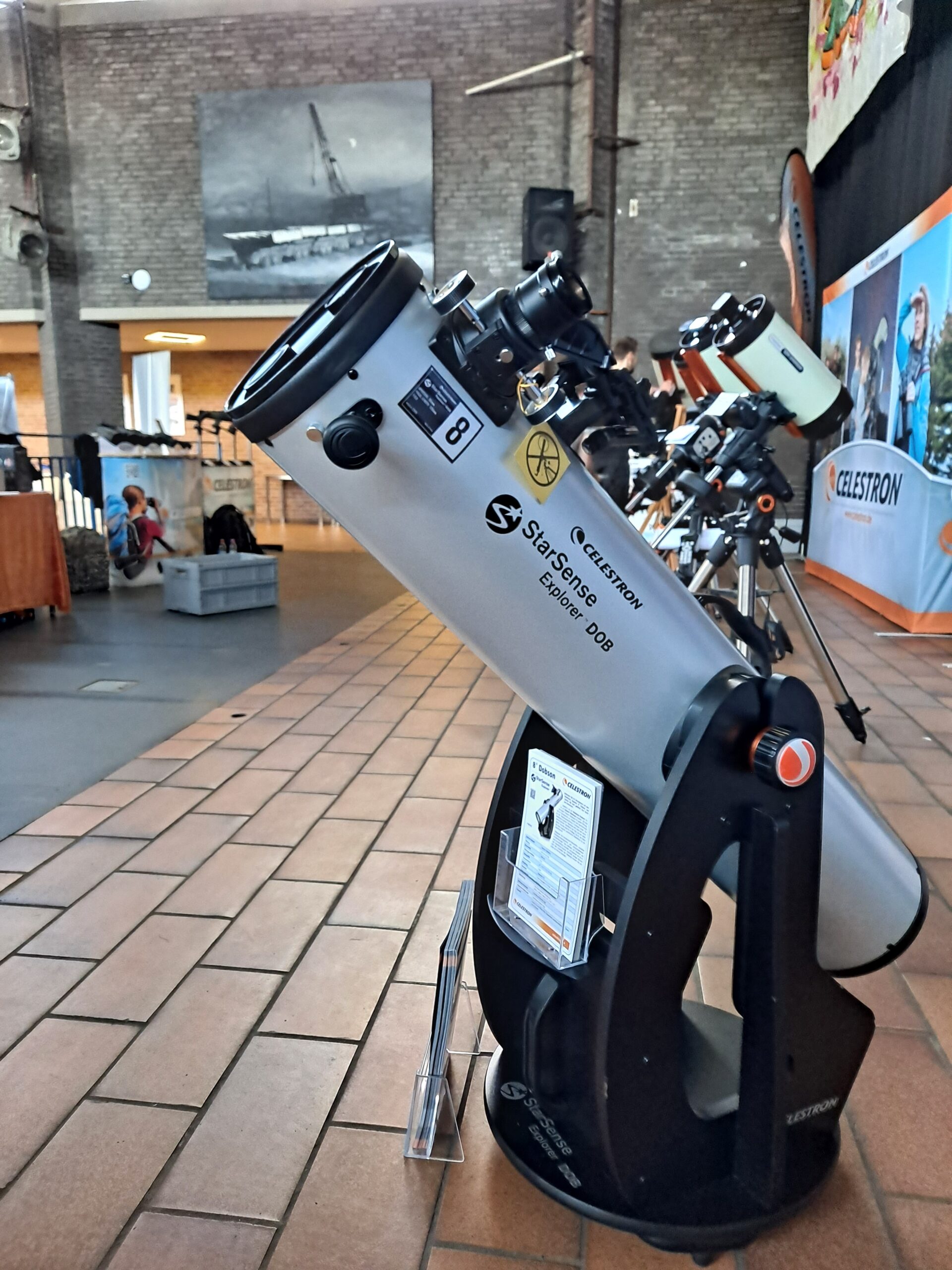
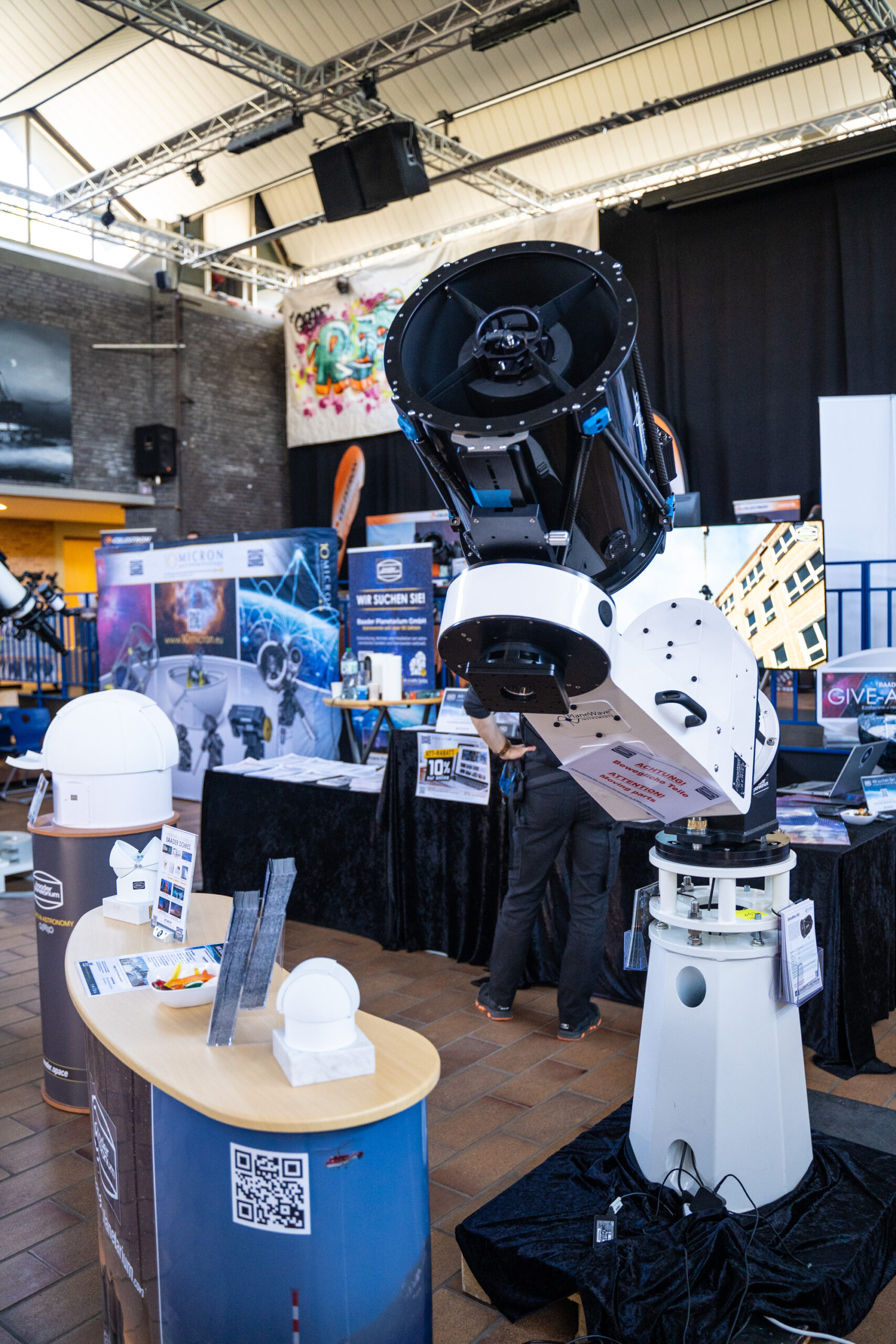
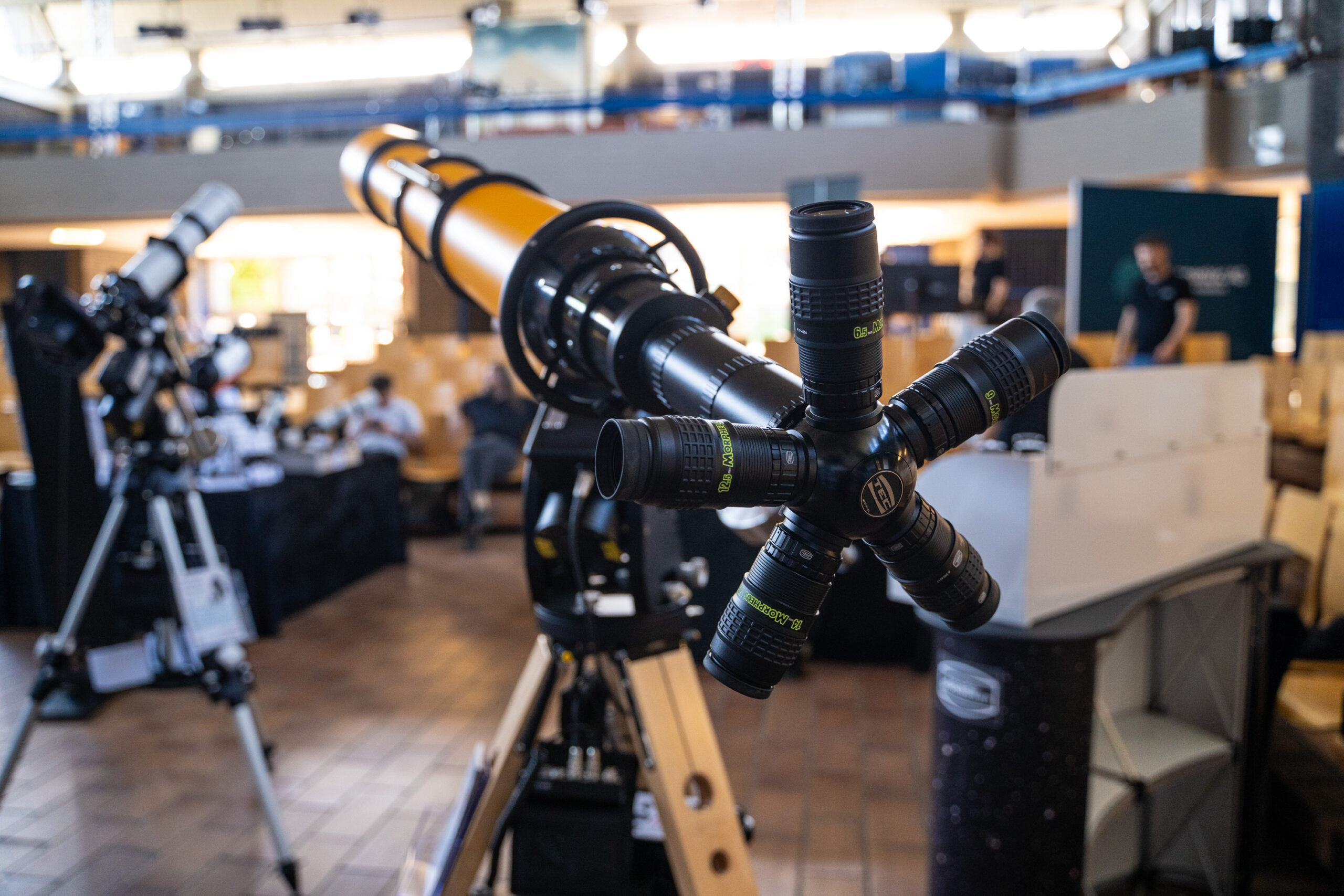
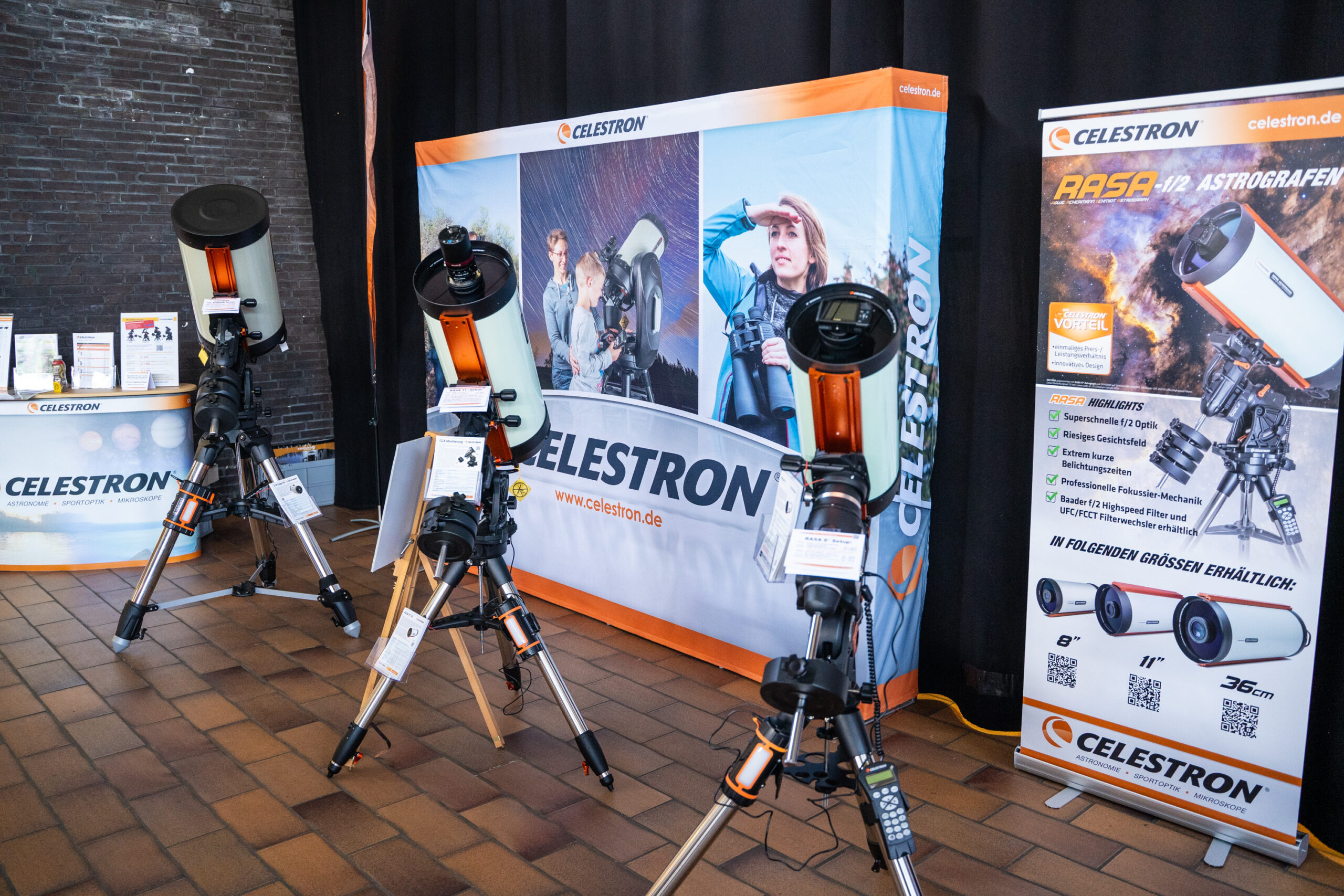

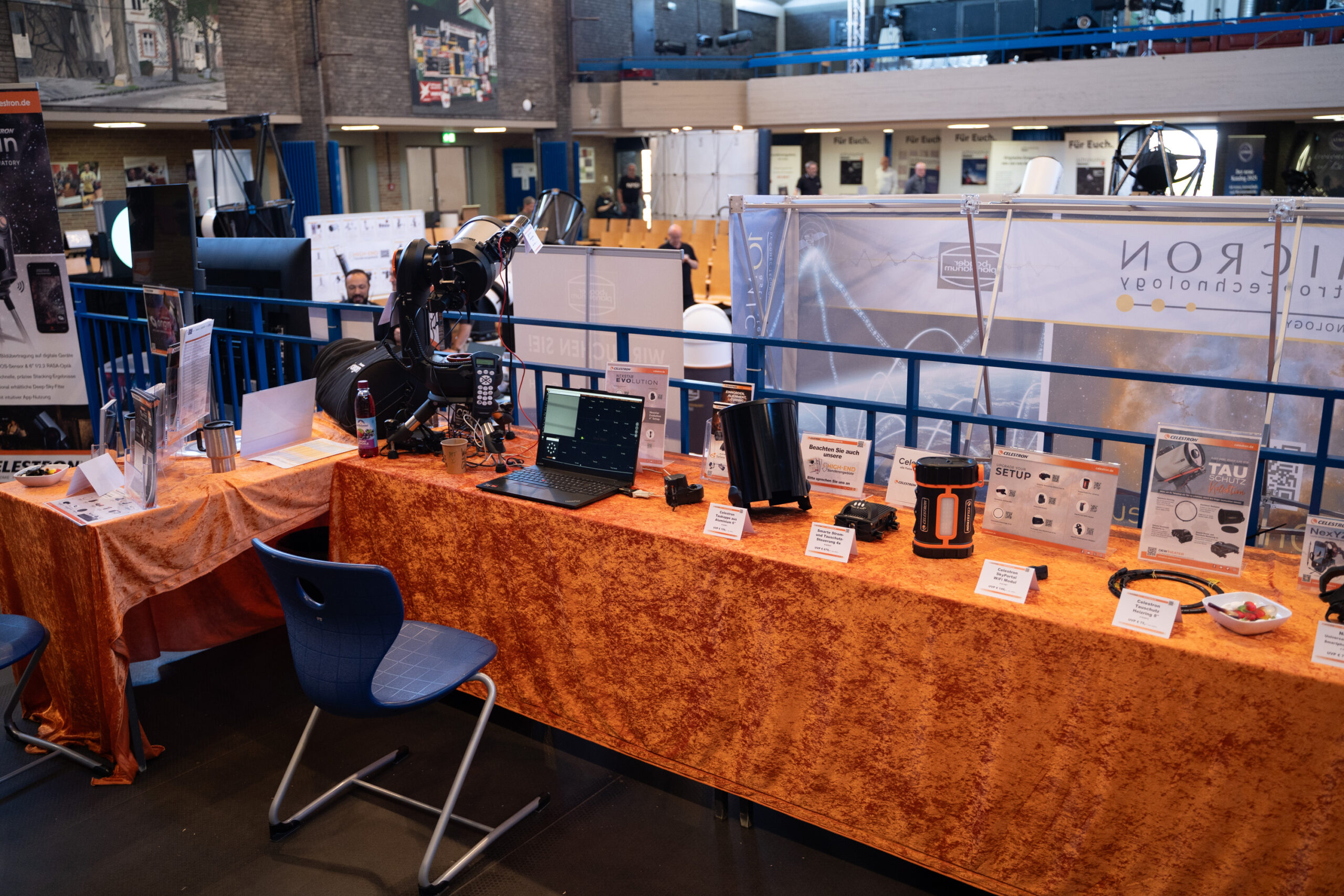
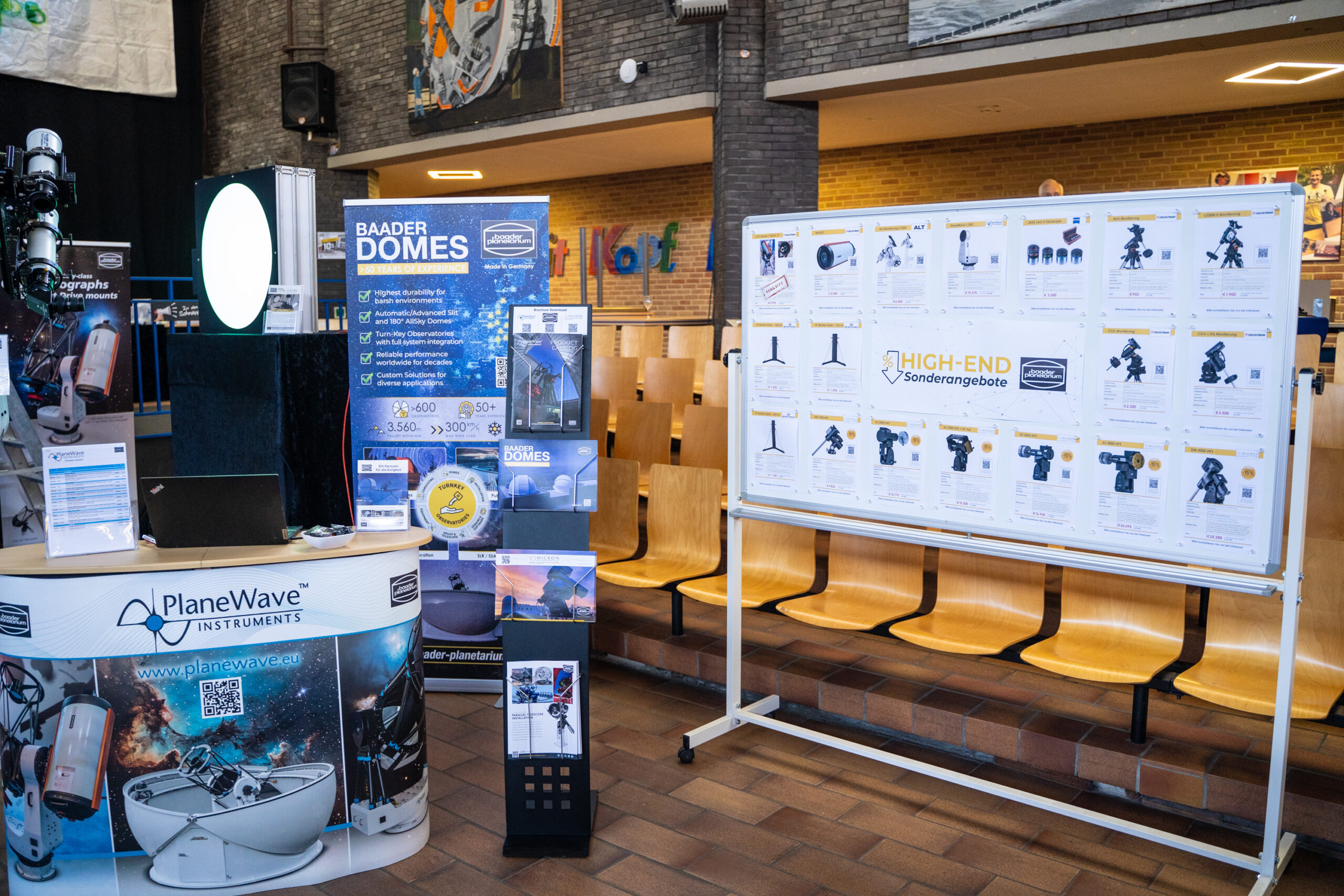
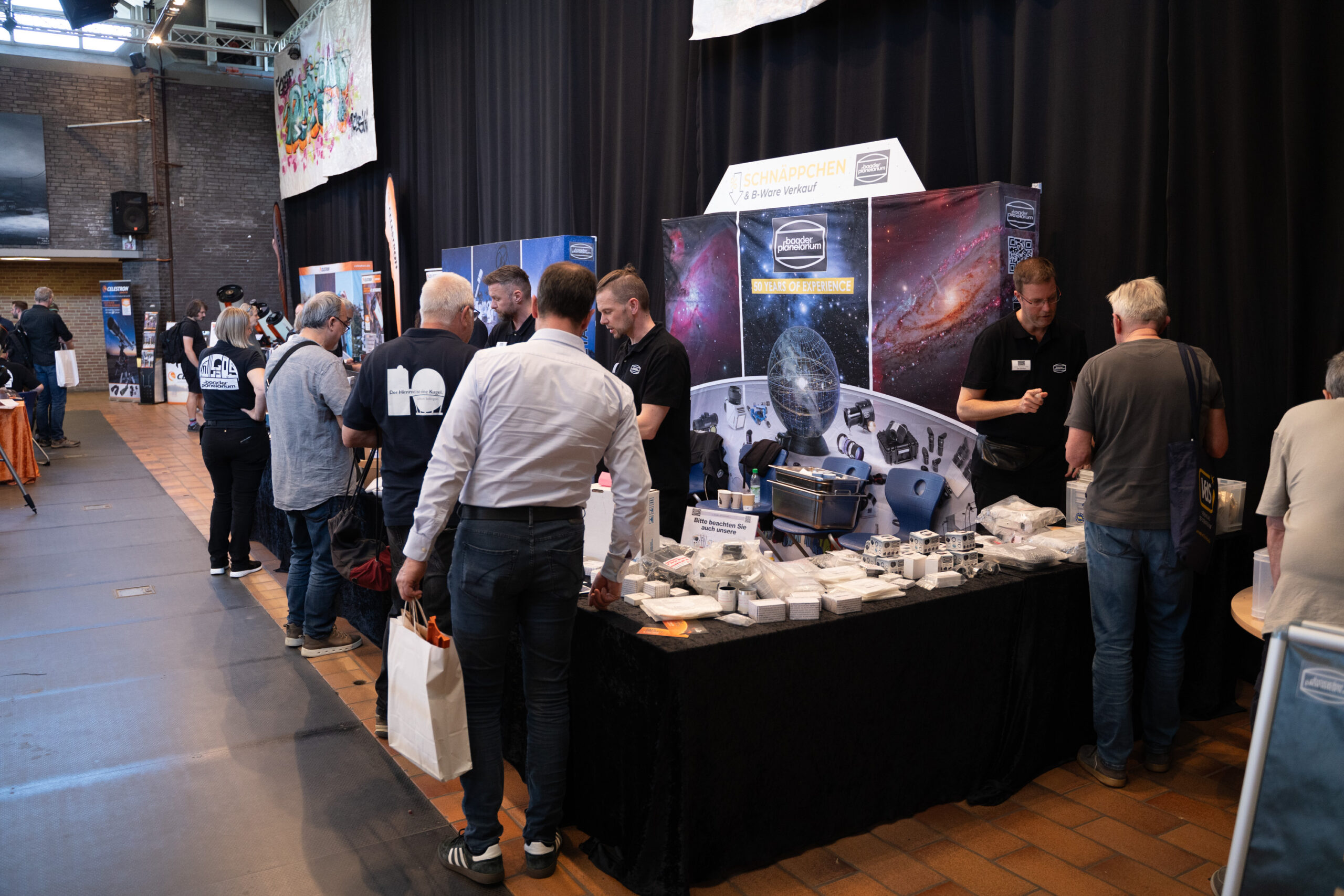
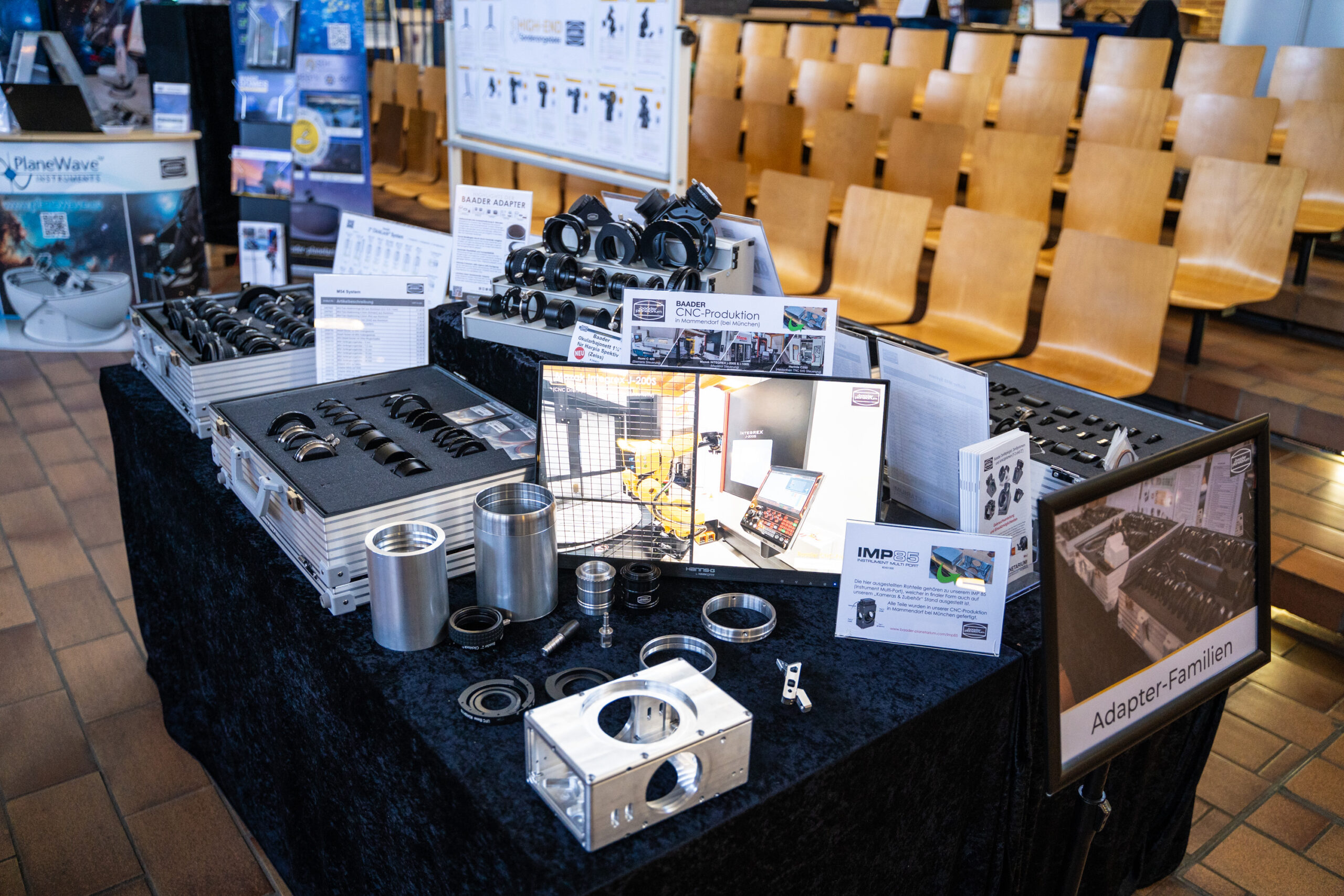
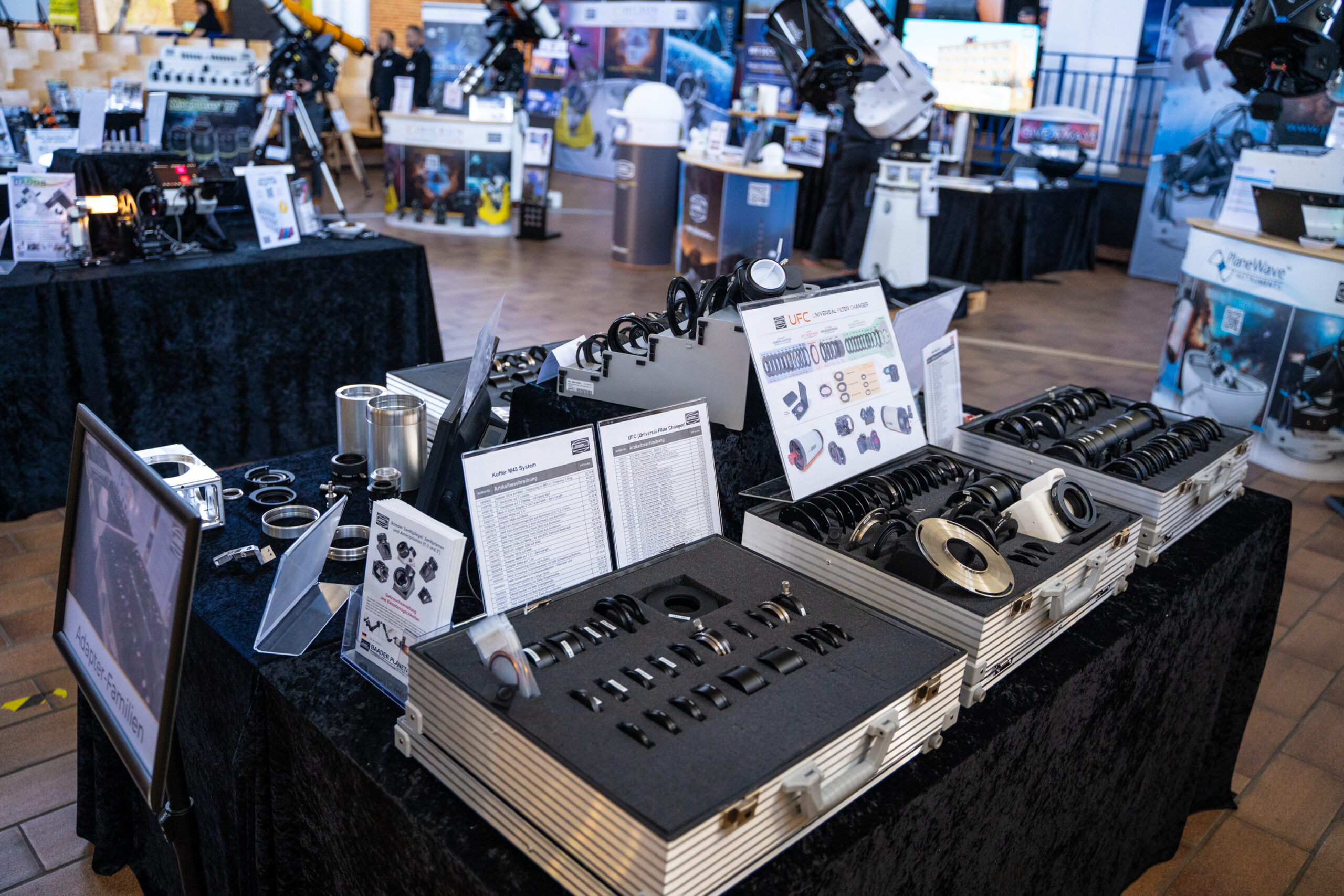
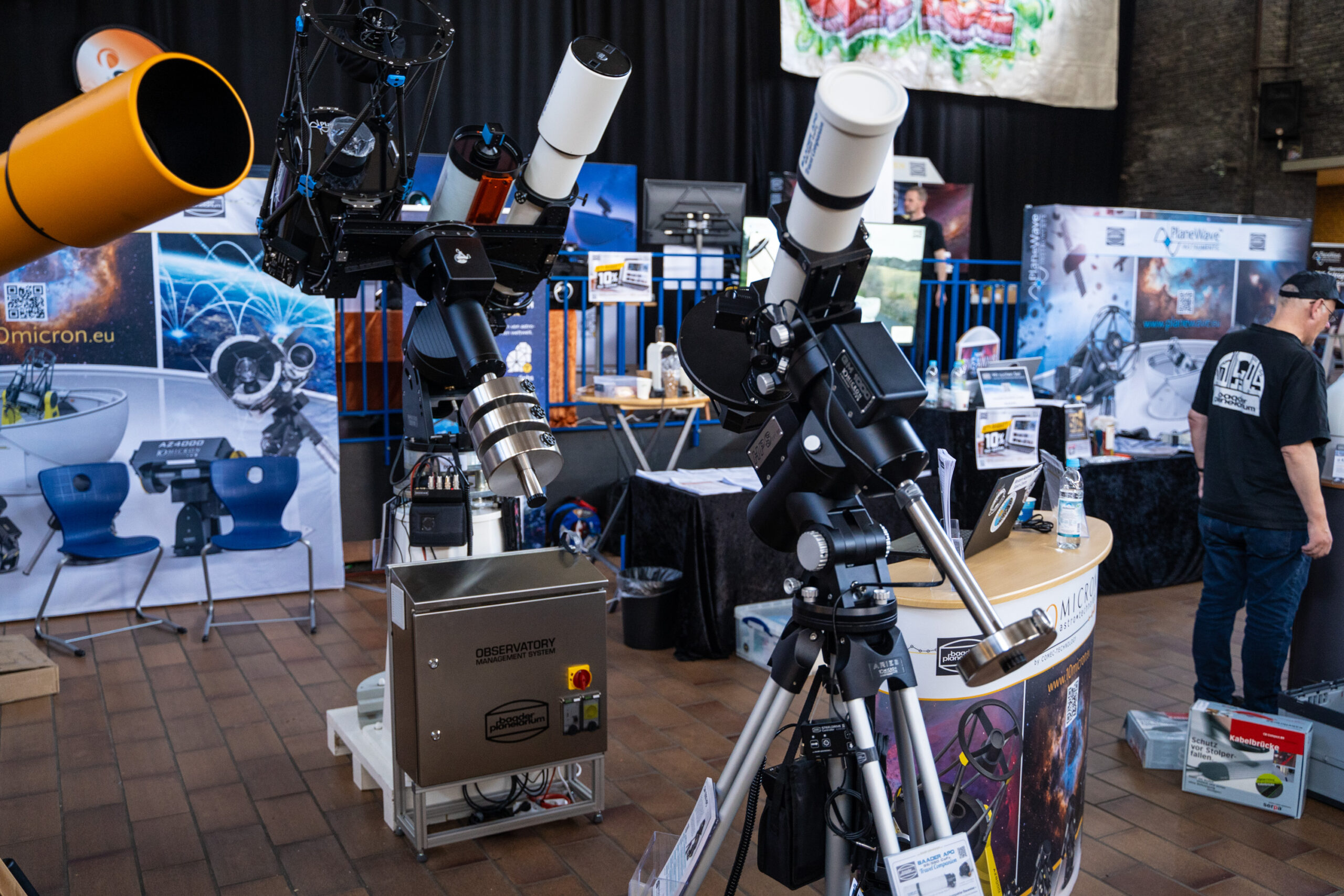
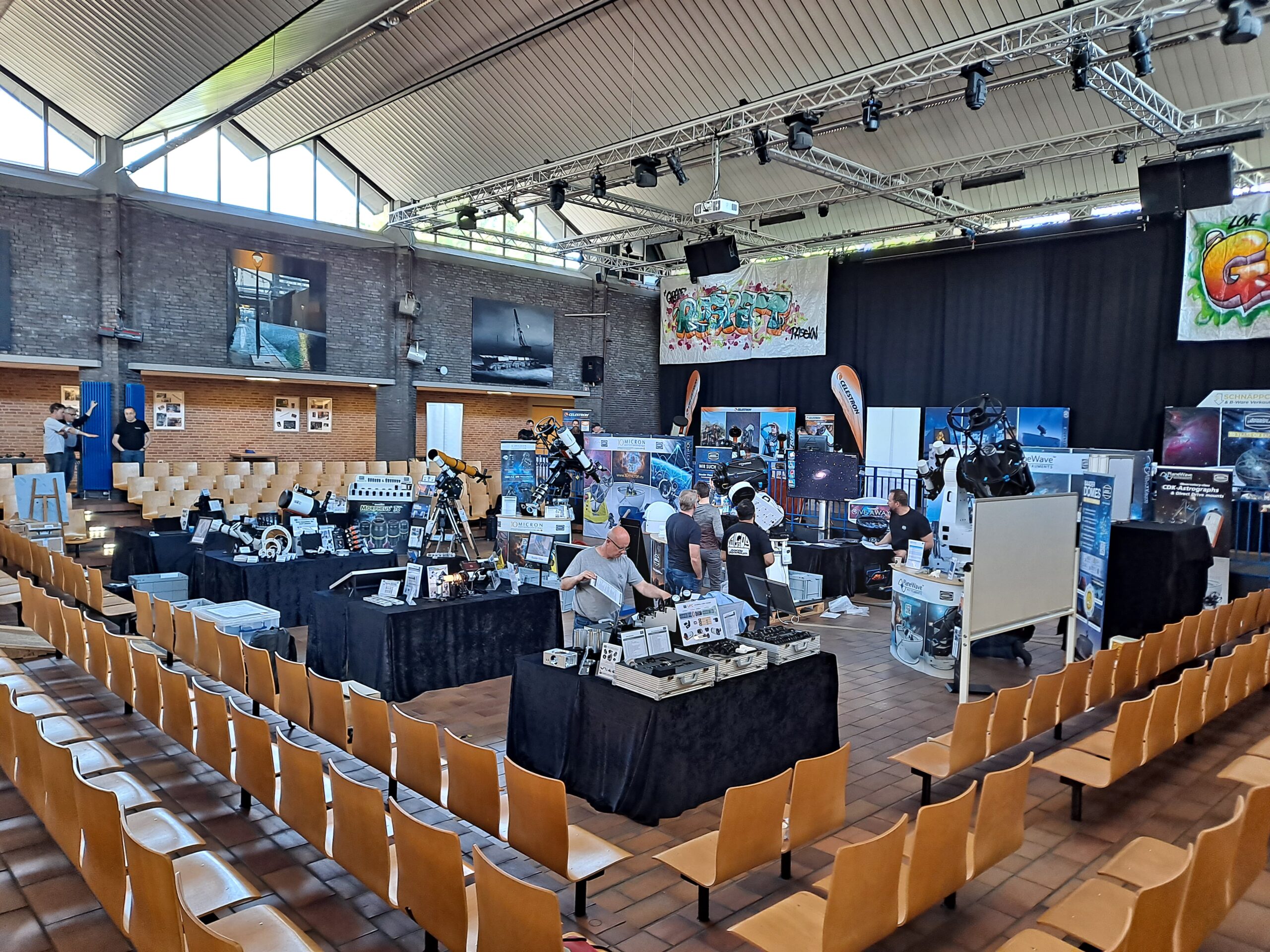
[br]

National Astronomy Meeting (NAM), July 7-12, 2025
We were present at the UK National Astronomy Meeting (NAM) in Durham with our UK representative. At our booth, we presented a selection of high-end instrumentation and observatory solutions, including a dome model as well as additional components for professional astronomical applications.
In addition to the exhibition, a technical presentation by our representative attracted strong interest and led to numerous discussions with participants from research and academia. With more than 1,100 registered attendees, the NAM provided an excellent platform for in-depth professional exchange, particularly on instrumentation solutions and observatory technology.


[br]
Kelling Heath Star Party, September 19-20, 2025
On September 19 - 20, our UK representative participated in the Equinox Sky Camp at Kelling Heath Holiday Park in North Norfolk. Under the region’s dark skies, the UK’s largest star party took place, bringing together hundreds of amateur astronomers for a week of observing and astrophotography.
Baader Planetarium presented a selection of accessories that visitors were able to view and try out on site.

[br]

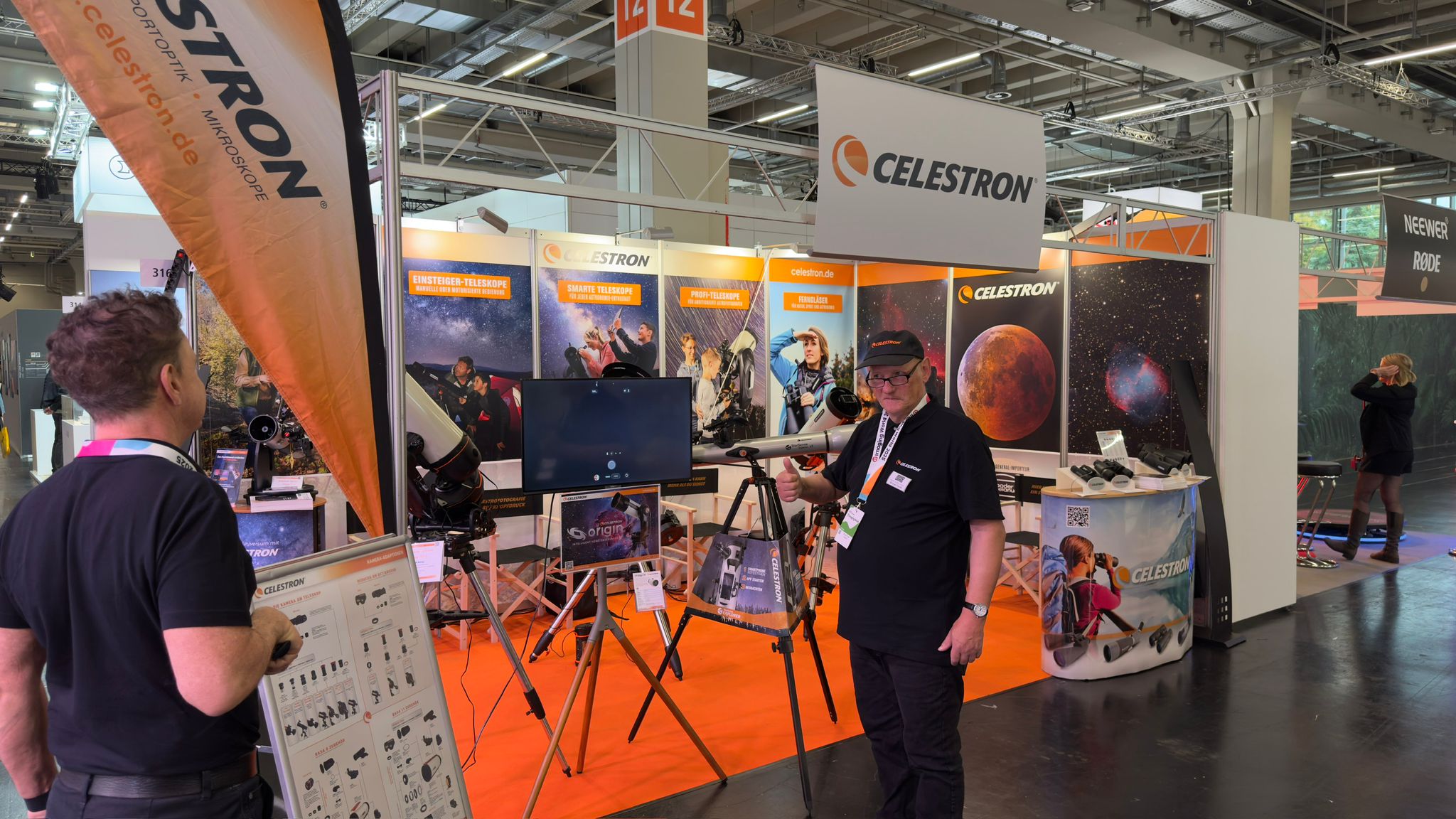
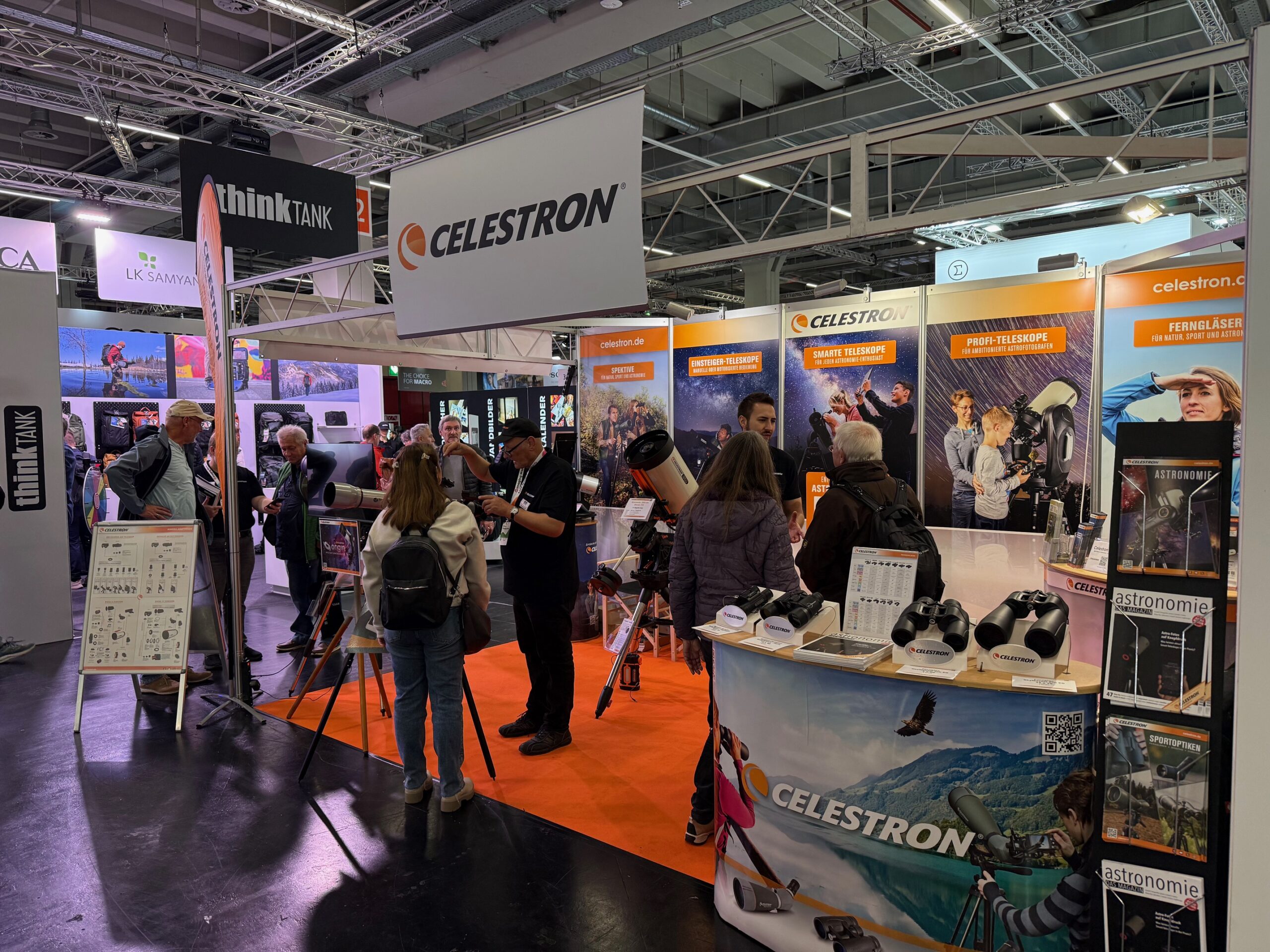
Imaging World , September 10-12, 2025
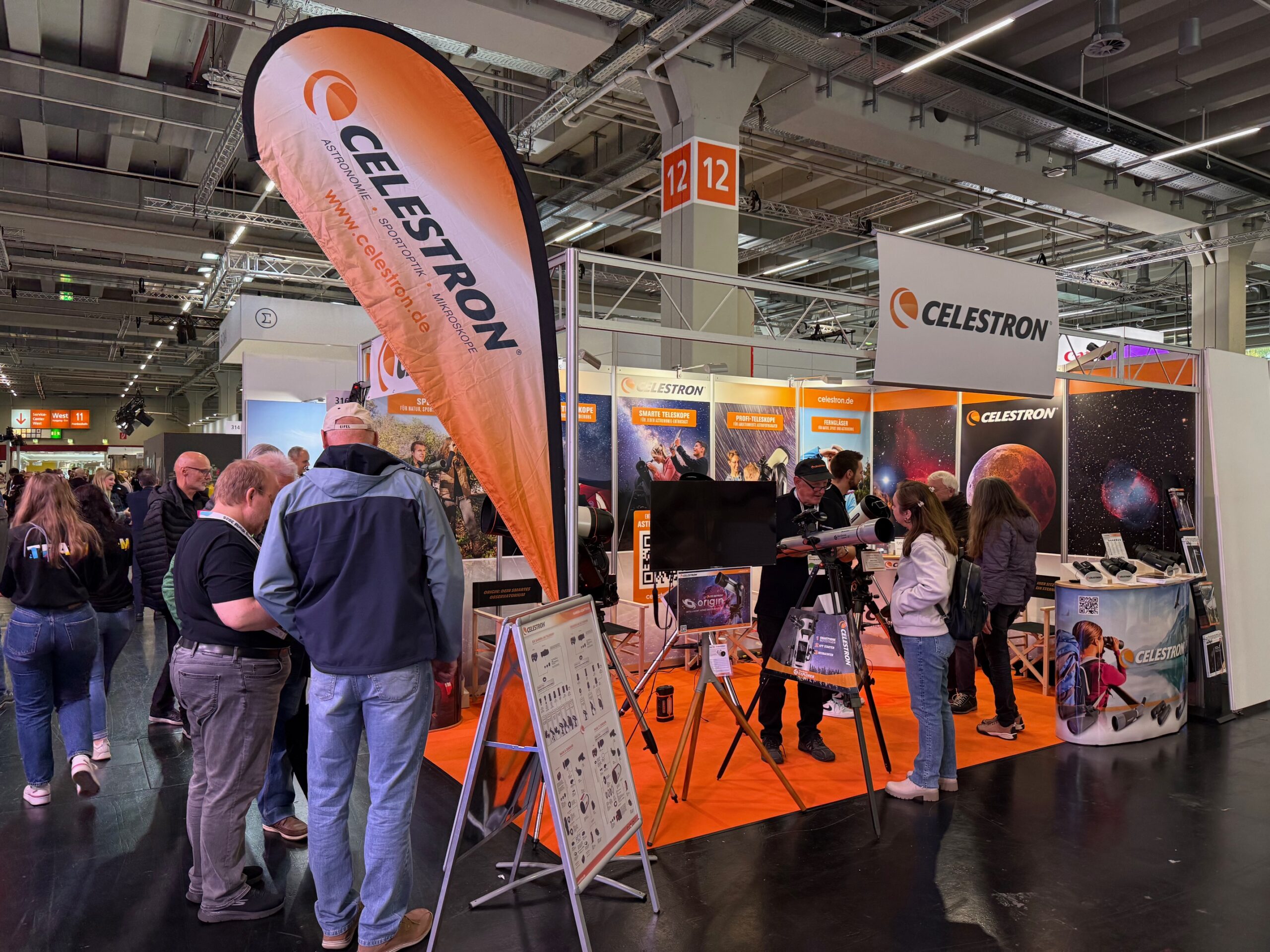
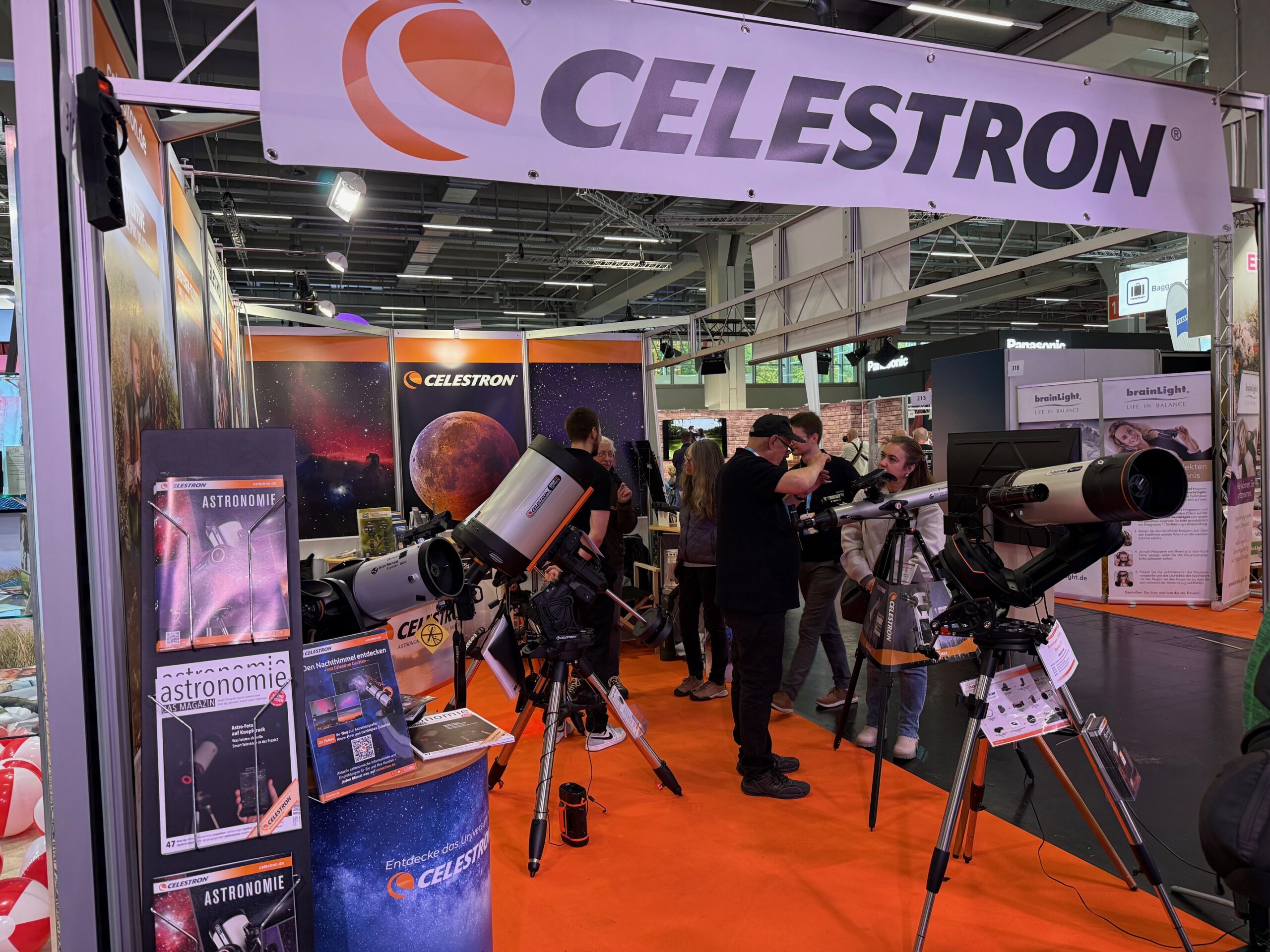
Baader Planetarium, together with the Celestron team, was represented at Imaging World 2025 at the Nuremberg Exhibition Center. The focus was on astrophotography solutions, including RASA- and EdgeHD optics, the StarSense Explorer and the Celestron Origin All-in-One Smart Telescope as well as camera and imaging systems for deep-sky and planetary photography.
Many discussions centered on setup optimization, autoguiding, and imaging workflows, as well as the growing demand for beginner-friendly astrophotography equipment. The goal was to inspire daytime photographers to explore the world of astrophotography.

[br]

VdS Conference and Members’ General Assembly, October 24-26, 2025
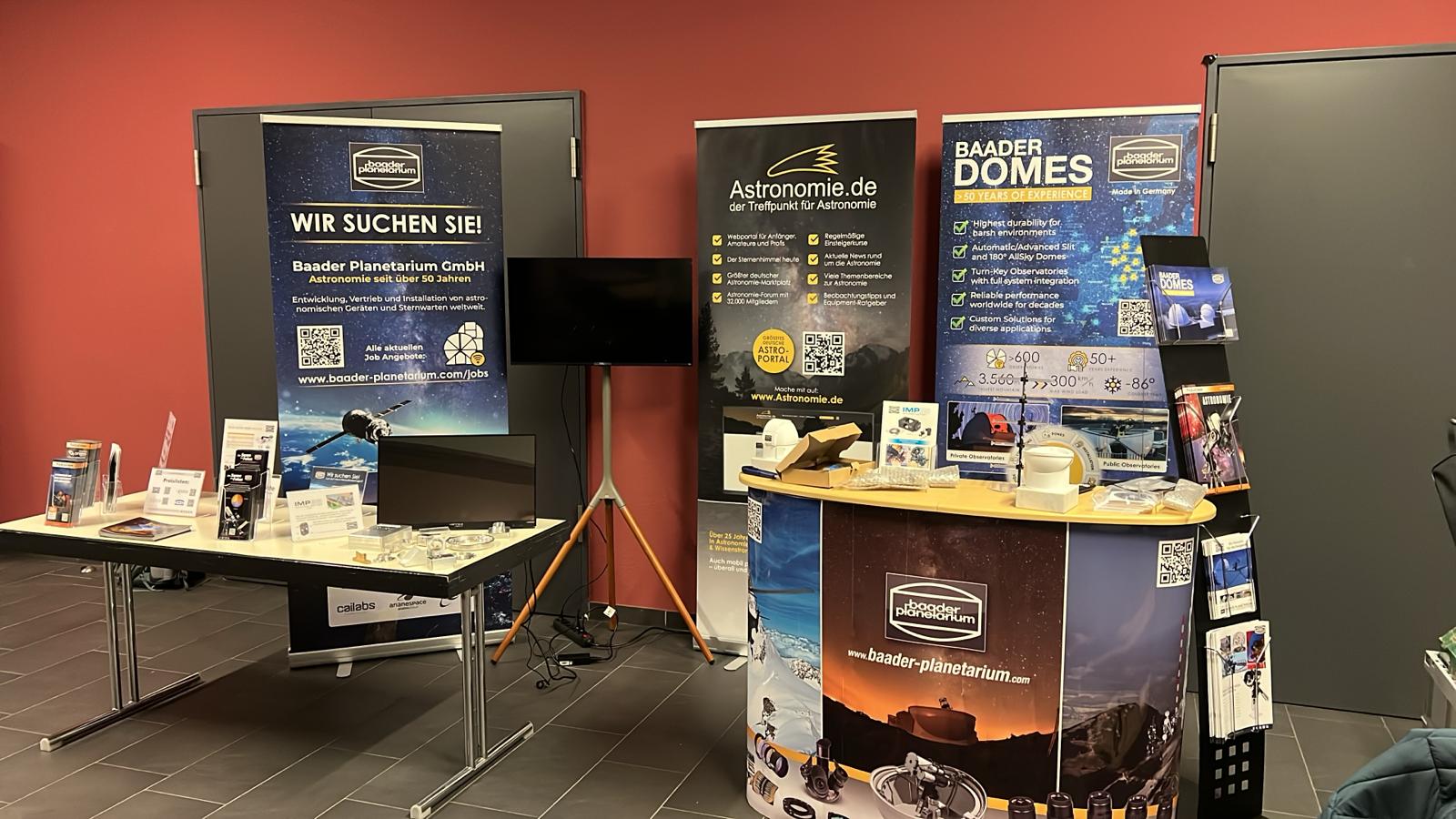
We were represented at the 37th Conference of the Association of Friends of the Stars (VdS) in Hofheim, taking part in the accompanying exhibition.
In addition to the technical lectures, the exhibition provided an excellent opportunity for personal exchange and discussions with participants.

[br]

Teacher Workshop House of Astronomy, November 6-7, 2025
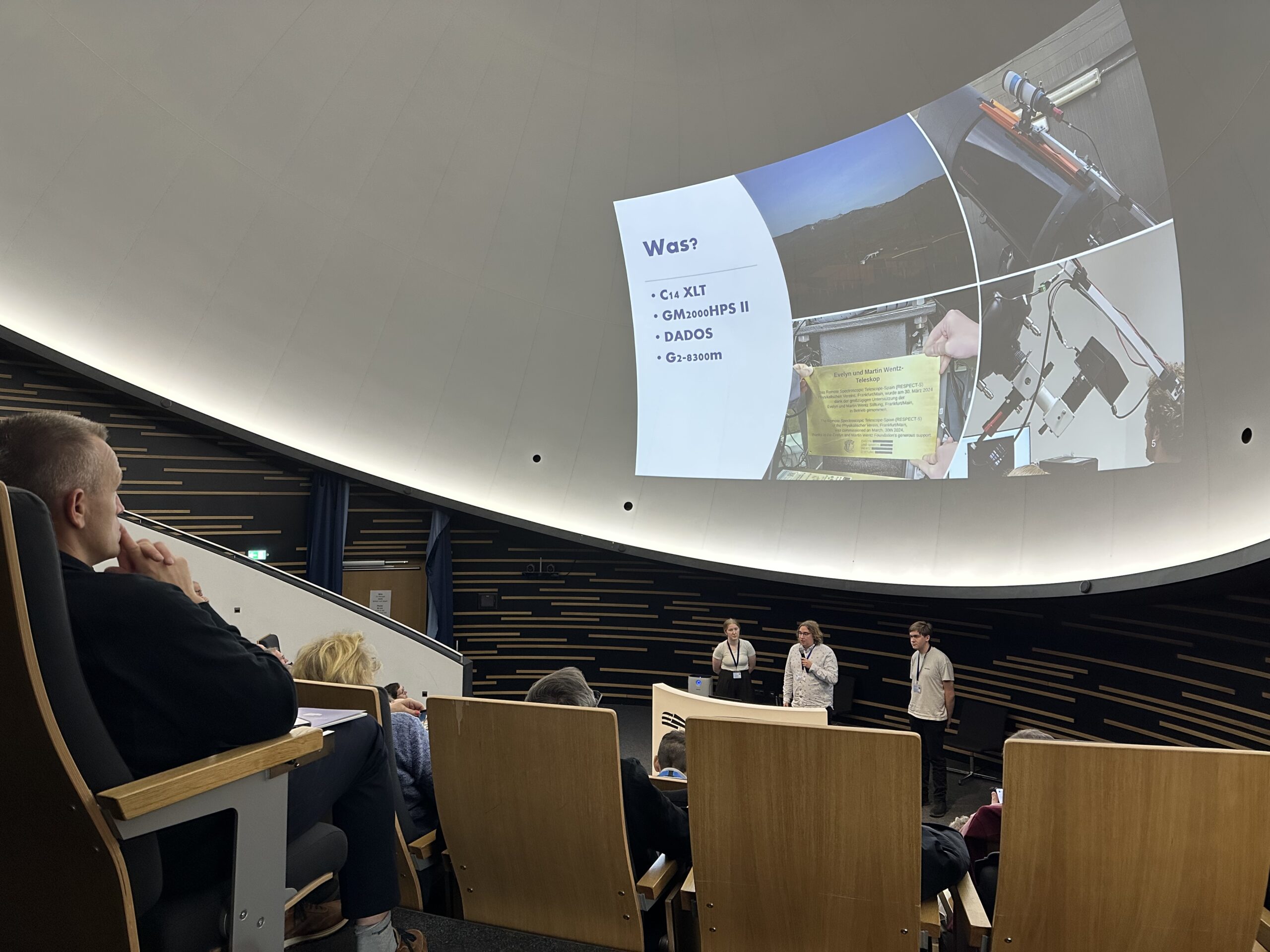
On November 6–7, 2025, we participated in the Teacher Workshop at the House of Astronomy. Educators from across Germany used the event to deepen their astronomical knowledge and gain new inspiration for teaching astronomy in the classroom.
A particular highlight was the presentation of the Celestron Origin by Mr. Winkhaus, who demonstrated the system’s versatile capabilities and its potential as a practical teaching and demonstration tool, as well as the Baader Solar Projection Screen (BSPS) for safe group solar observation – making it especially suitable for schools.
[br]

The International Astronomy Show (IAS), November 1, 2025
On Saturday, November 1, the International Astronomy Show (IAS) took place at the Sports Connexion Leisure Club & Venue in Warwickshire. The event was very well attended throughout the day and offered numerous opportunities for personal exchange with customers and dealers from across the United Kingdom.
Baader Planetarium showcased a wide range of products, including the UFC System, M68 Adapter, ClickLock clamps, diagonals, the Hyperion eyepieces and MaxBright II binoviewers.


[br]
SpaceTech Expo Europe, November 18-20, 2025
Baader Planetarium was represented at Space Tech Expo Europe from November 18–20, 2025, together with PlaneWave Instruments (Observable Space) and our partner 10Micron.
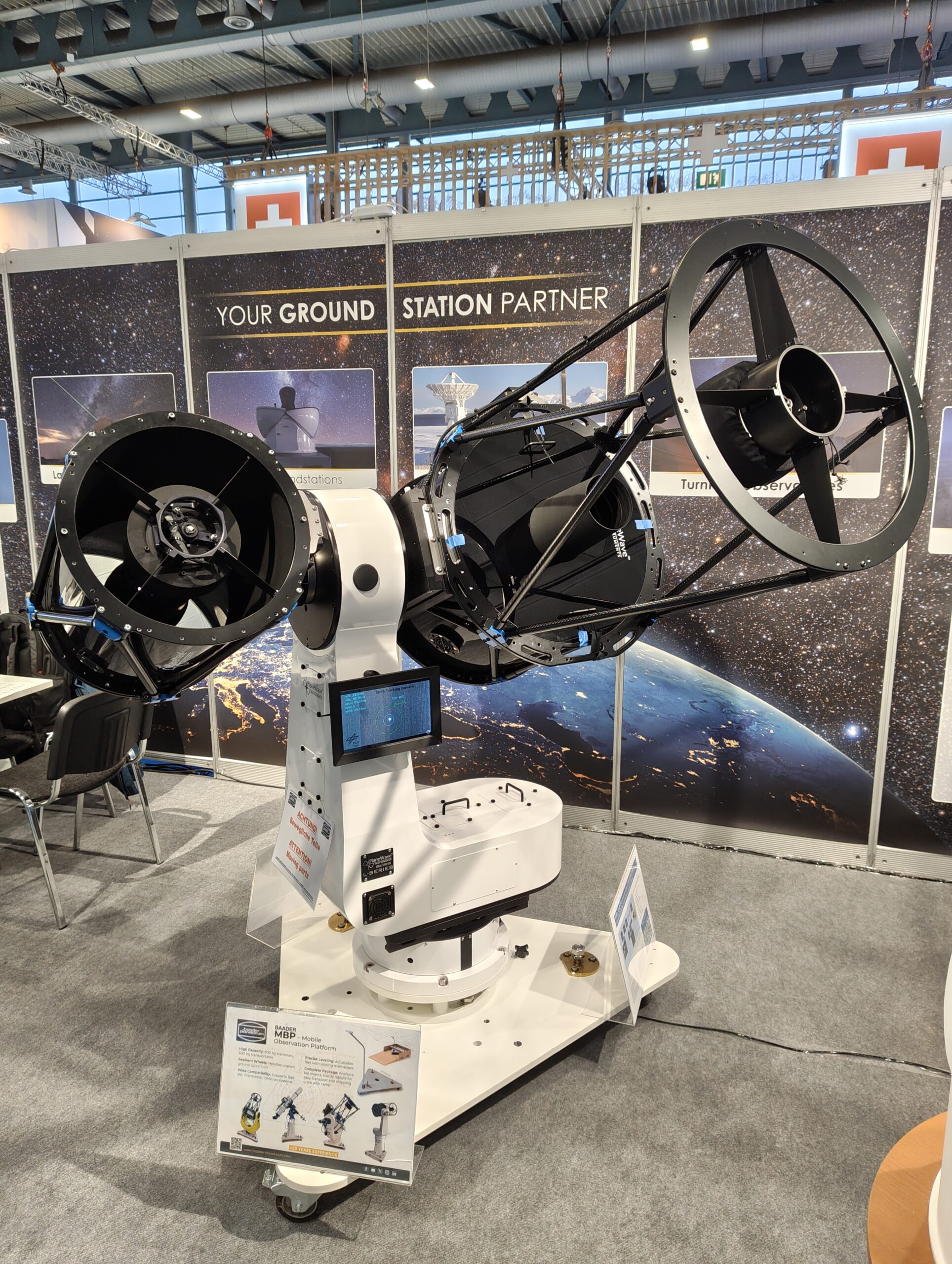
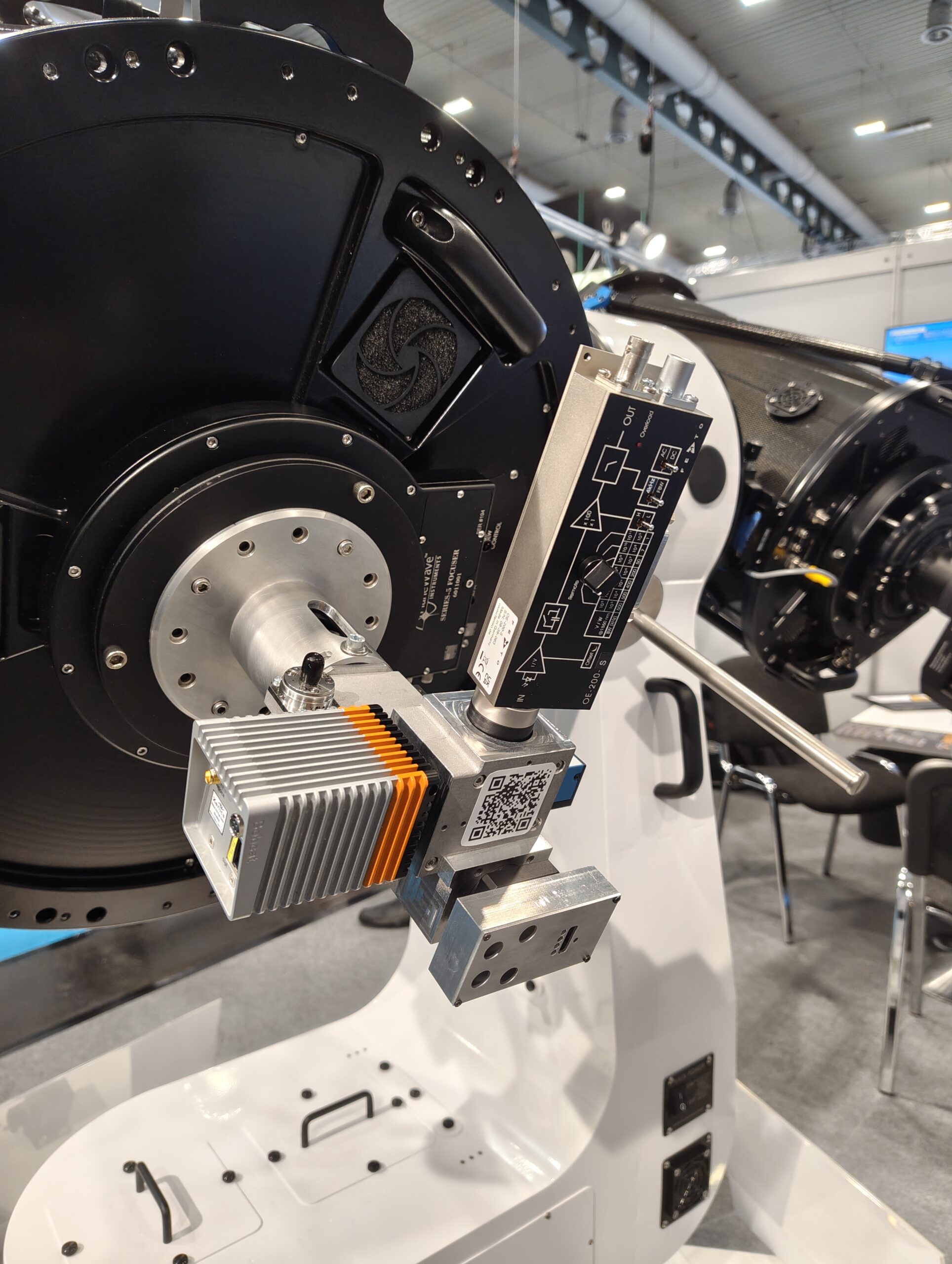
At the Baader booth, we presented our dome models as well as the PlaneWave telescopes DeltaRho 350 and CDK20, mounted on an L-550 direct-drive mount. A particular highlight was the presentation of the SOFA module (Small Optical Ground Station Focal-Optics Assembly) from the German Aerospace Center (DLR), integrated on the CDK20. SOFA upgrades standard telescopes into powerful optical ground stations, combining precision pointing, IR tracking, a daylight camera, an uplink launcher, and the receiver front end for high-rate LEO downlinks in a compact and cost-effective system.
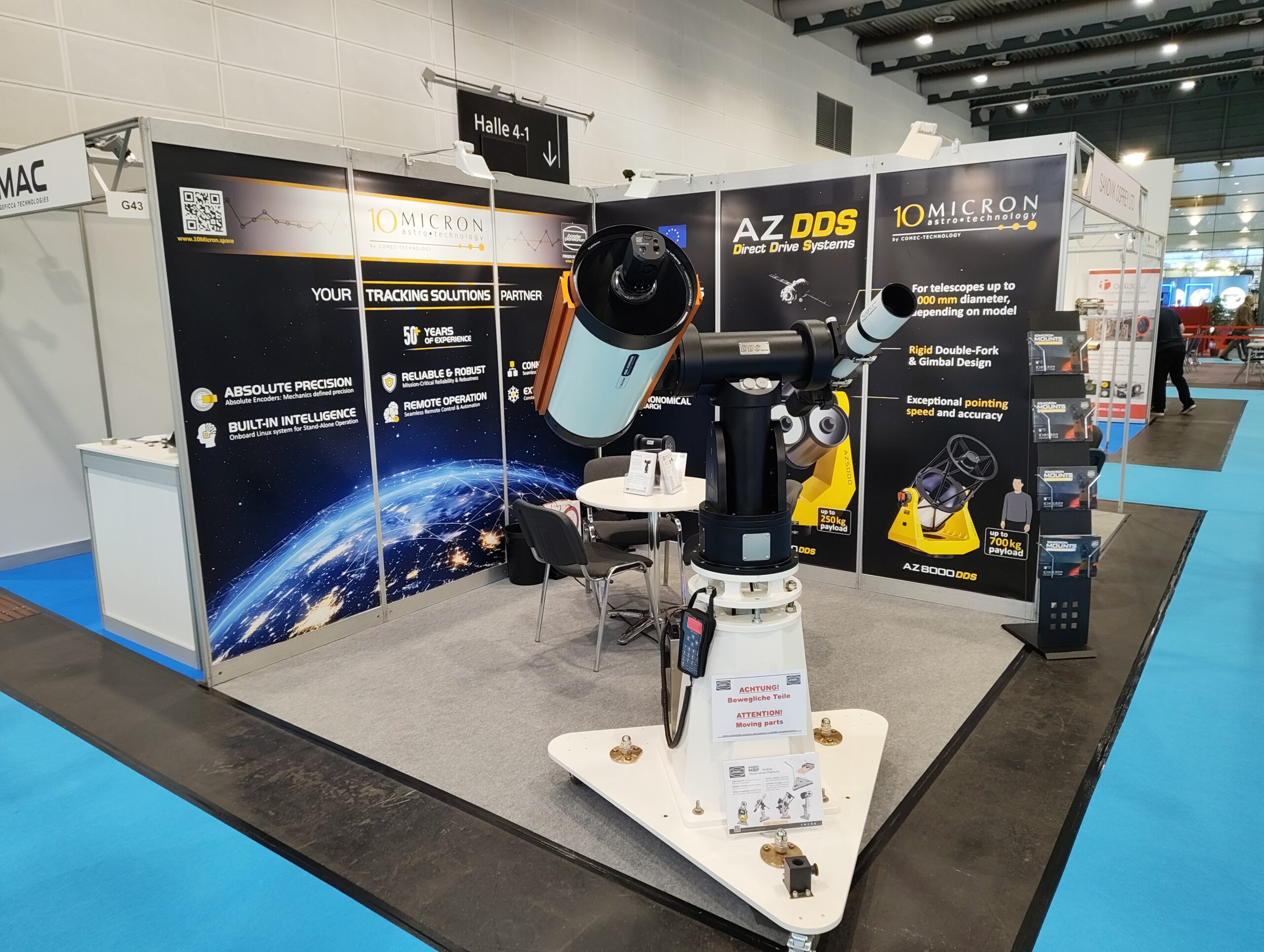
At the 10Micron booth, the AZ2500 direct-drive mount was showcased, equipped with a Celestron RASA 11 and the Baader APO 95/580 CaF₂ Travel Companion, installed on the Baader MBP – Mobile Observation Platform.
The exhibition was complemented by comprehensive information on our custom observatory solutions, supporting applications such as Space Situational Awareness (SSA), laser communication, and astronomy. These and many other products are integrated into our turnkey observatories and optical ground stations for SLR, SSA, and Lasercom applications.
More information is available at baader.space





2024 was once again an eventful year for Baader Planetarium, marked by numerous international events and exhibitions. In this blog post, we would like to look back on the experiences we gathered throughout the year. European AstroFest, Feburary 7-8, 2025 Together with our UK representative, we participated in the two-day event held at the Kensington […]
Baader Planetarium is supporting a major international initiative to expand global space surveillance capabilities. The US-based company Slingshot Aerospace is enhancing the United Kingdom’s satellite-based observation infrastructure on behalf of the UK Space Agency – relying on technology from Germany. Our proven AllSky Domes form the foundation for several new observation stations across five continents.
Technology Partner for Space Surveillance
Slingshot Aerospace is one of the world’s leading providers of AI-enabled solutions for satellite tracking, space traffic management, and orbital simulation. For the current expansion of the UK’s tracking capabilities, Baader Planetarium is supplying 13 AllSky Domes specifically engineered for continuous operation in demanding environments.
The domes ensure reliable, fully automatic / autonomous operation of sensitive instruments – regardless of climate, weather, or time of day. From extreme cold zones to tropical regions, they provide ideal operating conditions and offer long-term protection for the deployed sensors against environmental influences.
“We are very pleased that our systems contribute to the future space surveillance infrastructure of the United Kingdom,” says Johannes Baader, CEO of Baader Planetarium. “The AllSky Domes are designed to provide stable, precise, and low-maintenance infrastructure anywhere in the world.”

Why Space Surveillance Is Becoming Increasingly Important
Low Earth orbit is more densely populated than ever before. Around 12,000 active satellites currently orbit the Earth – and with the rapid growth of commercial constellations, this number could rise to more than 100,000 by 2030. As a result, the risk of collisions or break-ups that create new debris and endanger operational satellites is increasing.
International partnerships such as that between Slingshot Aerospace and the UK Space Agency are essential to detect potential hazards at an early stage, make accurate orbit predictions, and ensure safe operations in space. Modern sensor technologies and robust ground infrastructure play a key role in this effort.
The project will create additional observation capacity at multiple international sites. This new infrastructure expands the geographical coverage of the existing Slingshot network and enhances the ability to evaluate orbital activity in real time.
“Through our partnership with the UK Space Agency, we are laying a solid foundation for expanding the UK’s space technology capabilities”, explains Tim Solms, CEO of Slingshot Aerospace.

German Expertise for Global Space Safety
Slingshot Aerospace currently operates more than 200 optical sensors at 21 sites across five continents. The current project will further expand this network. The integration of Baader Planetarium’s AllSky Domes ensures a long-term reliable, modular infrastructure that remains scalable for future national and international satellite observation solutions.
With this project, Baader Planetarium strengthens its position as a leading provider of robust high-tech solutions for industrial ground stations, research institutions, and space-related applications. From classical observatories to advanced SSA / SLR / LaserCom installations – partners worldwide rely on the durability, quality, and precision of our systems.

www.baader-observatories.com
Baader Planetarium is supplying 13 AllSky Domes for an international space surveillance project led by Slingshot Aerospace on behalf of the UK Space Agency. The robust domes expand the global network of optical sensors and provide new infrastructure for the safe monitoring of satellites and orbital activity.

The Royal Holloway University of London (RHUL) is located in Egham, Surrey, about 30km west of central London. It is a prestigious research-intensive university with a rich history and a stunning campus with a strong research profile, and diverse student community of nearly 13,000 students across arts, humanities and sciences including physics and astronomy. Baader Planetarium were honoured to be chosen to supply and install a substantial upgrade to their existing telescope which resides in a metal 3.8m diameter observatory slit-type dome on the roof of their physics department’s Tolansky building.
Discussions about a telescope and accessories that would be suitable for astronomical teaching and research projects began shortly after the beginning of 2025. After a number of meetings with departmental staff the following setup was chosen:
- Telescope System:
- PlaneWave CDK17 and L-500 Direct Drive Mount mounted atop an Equatorial Wedge.
- Series 5 controller for operating the focuser, telescope fans and internal heater pads
- Series 5 focuser
- The whole telescope would be fixed on top of a [product sku="2451188"] which would be attached to the top of the observatory's existing concrete pier using a Baader levelling flange base.
- An imaging system for photometry, astrometry and astrophotography :
- [product sku="1941100"] with a [product sku="1942101"]
- [product sku="2961755"].
- For spectroscopy projects :
- [product sku="2458550"]
- [product sku="2458557"], [product sku="2458556"], [product sku="2458559"] for different resolutions
- The DADOS was also equipped with a [product sku="2458645"] to bring the telescope to f/10 for best use with DADOS
- To image spectra a [product sku="1941500"] is attached and a Moravian C0 mono USB camera for slit viewing and guiding.
- Visual use for occasional public and outreach events :
- appropriate M68 ClickLock adaptors and [product sku="2956268"]
- [product sku="2954200"].
In order to avoid having to keep removing and re-mounting the imaging, spectroscopic and visual equipment, the [product sku="2451300"] was also added to their equipment list. The telescope with all the equipment was set up, balanced, adjusted and tested at our facility in Mammendorf in the summer ready to be shipped and installed later in the year.
The telescope was delivered at RHUL in early October and the installation took place just after delivery over two days and just in time for an important University-wide open day event for prospective students.


The first day involved unpacking the equipment, sorting and preparing it all ready for installation the following day. The accessories were taken to a teaching laboratory where all the necessary and most up-to-date software and drivers were installed and configured on the observatory PC and tested and the photometric filters were installed in the filter wheel. Time was also spent demonstrating the operation of various software applications to some of the staff.
The next task centered around the observatory's existing short concrete pier onto which the whole CDK400 would be mounted. Measurements of this pier made earlier in the year showed that it would be suitable to allow the Baader pier adaptor to be attached with the wedge and support the telescope. It was also found that its height was also suitable to allow the telescope to reach the minimum required altitude. The pier was then drilled and chemical anchors put in place with the Baader flange adaptor then put in position.

The last job of the day was to partly dismantle the wedge and carry it up the (very) narrow spiral staircase that leads into the observatory so it was there ready to be fitted the following day.
It was not possible to use a crane at the time of the installation so an external “transport team” who have previous experience of moving delicate heavy equipment for the department were chosen to carefully move the L-mount and telescope to the roof and into the observatory. The mount and telescope had to be moved from the ground to first floor, then into a narrow room, up a steep and narrow staircase and up through a small access door and onto the roof before being finally installed in the observatory. Measurements of the mount and telescope has been given earlier and it was found that although space was tight, both of the large heavy items should just about fit and be able to be moved onto the roof and into the observatory.
The telescope installation day started early with the arrival of the team setting up a portable gantry lifting system on the roof which would take the weight of the heavy mount and telescope (separately) and enable the items to be raised onto the roof. After discussing how to move and safely lift each item, the L-500 and CDK17 were removed from their crates on the ground floor and the journey to the roof top observatory began. The L-mount was the first to go up and after wrapping it to protect it from damage it was safely hoisted up onto the roof. The CDK17 was next where it also was safely moved onto the rooftop. After less than an hour both the mount and telescope were ready to go into the observatory.


Inside the dome, the Baader levelling flange was put in place and levelled with the wedge being attached next. The transport crew helped with lifting the L-500 onto the wedge where it was then secured. After a well deserved coffee the CDK17 OTA was then clamped onto the L-500 mount ready for the accessories to be attached.
The IMP85 was fitted to the OTA followed by the imaging system, DADOS spectroscopy accessories and then the visual items. The department’s small APO refractor telescope with imaging camera was then mounted on top of the CDK17 and positioned so the telescope was perfectly balanced in DEC. Temporary cable routing was done as the department was going to purchase an industrial mini PC a short time afterwards which would be mounted on the L-mount and also use much shorter length data cables from the various accessories.


The day ended by testing the equipment operation and tuning the mount. Time as also taken to explain further operation of the equipment such as camera operation and how to undertake the mount modelling and polar alignment.
It was great to do this telescope installation in such a nice and friendly campus environment and the whole process went very smoothly. The departmental technicians Ian Murray and Adriana Dias were great to work with and their help and support was greatly appreciated. The "moving crew" were also great to work with and very helpful. Thank you to Adriana too for the use of the timelapse and drone videos too.
Update 19/11/2025: The department obtained an industrial mini PC and shorter length data cables allowing the computer to mounted on the side of the DEC arm with modified cable routing. They have also had a recent clear night which allowed them to undertake mount modelling and get towards a good polar alignment.

Royal Holloway University of London (RHUL) has significantly upgraded its rooftop observatory on the Tolansky Building. Baader Planetarium installed a new PlaneWave CDK17 telescope on an L-500 direct-drive mount along with advanced imaging, photometry and spectroscopy equipment.

Baader Solar Projection Screen (BSPS)
- Safe solar projection on refractors with star diagonals
- Simple observation of the Sun in white light – individually or in groups
- Quick and easy assembly of pre-cut cardboard parts with pre-mounted adhesive strips
- Also suitable for tracking control, e.g., for public outreach. Optimized for viewing from the side
- For operation you will need (not included)
- a lens telescope suitable for solar projection with a star diagonal/prism and at least 3 cm of backfocus. Recommended for focal ratios of ~f/6 or slower
- eyepiece projection adapter with T-2 thread, e.g., the Baader OPFA - Eyepiece Projection adapter (I - VII) (various versions available)
- a glass/metal eyepiece suitable for solar projection with an appropriate focal length to project a solar image at least 6 cm in diameter. The BSPS has been tested with Baader Classic Ortho/Plössl eyepieces.

Baader FFB - Flatfieldbox with 450 / 650 / 850 / 1250mm clear aperture
- PPerfect for astrophotography: Optimize your images with Flats to correct vignetting and dust particles
- Even light distribution: Achieved through a sophisticated design, ideal for filters in the visual spectrum
- Easy operation: Control via a web interface
- Adjustable brightness: Integrated dimmer for optimal adjustment of illumination intensity
- Color tuning and multi-color options: Fine color adjustment possible through WRGB, ensures uniform illumination of color and dual-band cameras
- Flexible mounting options: Can be mounted on a wall, placed on a table, or used in rotating domes
- Available in different sizes: Covers a wide range of telescope apertures, offering versatile applications
- For shipping, the corresponding is also required. It is charged separately and must be ordered together with the FlatFieldBox.
Important note: The Baader FlatFieldBox (FFB) is now available for pre-order. The delivery time is approximately 4–6 weeks. Please make sure to include the appropriate shipping crate with your order.

Baader 2“ BBHS® Prism – Adjustable Star Diagonal
- 2" BBHS prism star diagonal with 2" ClickLock
- Prism made of BaK4 glass with sealed BBHS® coating
- CNC-milled black aluminum housing with adjustable wedge
- Including [product sku="2408156"] with additional grip and security from inadvertent slipping.
- Provides greatest reflectance over most spectral range from 390 to 2000nm
- BBHS = Broadband Hardsilver coating with dielectric protective overcoating
- Much higher in brilliance than cheap dielectric coatings
- Ideal for visual observation and astrophotography with maximum brilliance, even in the infrared spectrum
- Successor to [product sku="2456117"]

Baader 2“ BBHS® Mirror – Adjustable Star Diagonal
- 2" BBHS star diagonal with 2" ClickLock clamp
- CNC-milled black aluminum housing with adjustable wedge
- Including [product sku="2408156"] with additional grip and security from inadvertent slipping.
- Mirror material made of glass-ceramic with 1/10 lambda surface accuracy
- Provides greatest reflectance over large spectral range from 390 to 2000nm
- Much higher in brilliance than standard dielectric coatings
- BBHS = Broadband Hardsilver coating with dielectric protective overcoating
- Ideal for visual observation and astrophotography with maximum brilliance, even in the infrared spectrum
- Successor to [product sku="2456115"]

Coming Soon: Baader OMS-Nano V3 – Remote Switch for 10Micron Mounts
- Remote Switch OMS-Nano (Observation Management System) V3 used to turn your 10Micron mount, equipped with Control Box Version 3, on and off from remote
- With 1m connection cable, 3m long LAN-cable and 2m long USB-cable as well as 12V/100-240V Power Supply
- Incl. web interface and manual
- Successor to [product sku="2455031"]. Since April 2025, all 10Micron mounts have been supplied as standard with the Control Box Version 3. 10Micron has revised the hardware of the electronic control box

Coming Soon: TEC APO 110 f/5.6 Fluorite Apochromat
- Apochromatic precision lens with modern coating
- Oil-spaced and fully encapsulated triplet lens for fastest thermal adaptation and to prevent haze and reflections
- Retractable dew shield
- Lightweight tube
- Free aperture of 110 mm, focal length of 616 mm
- Outstanding image quality and color correction thanks to its central element fluorite crystal
- Residual chromatic aberration between 436 and 1000 nm = 0.02% of the focal length
- Permanently stabilized and oil-spaced - Why oil-spaced lenses?
- 3.5" TEC dual-speed focuser with fine focus on both sides
- Eyepiece clamp with tension ring
Important note: If you are interested, please send us an inquiry including your contact details by email. We accept pre-orders.
Product Highlights from Baader Planetarium for October 2025: Baader Solar Projection Screen (BSPS) for safe solar projection on refractors with star diagonals, Baader FFB-Flatfieldbox – No more Sky-Flats in the (Remote) Observatory and more.